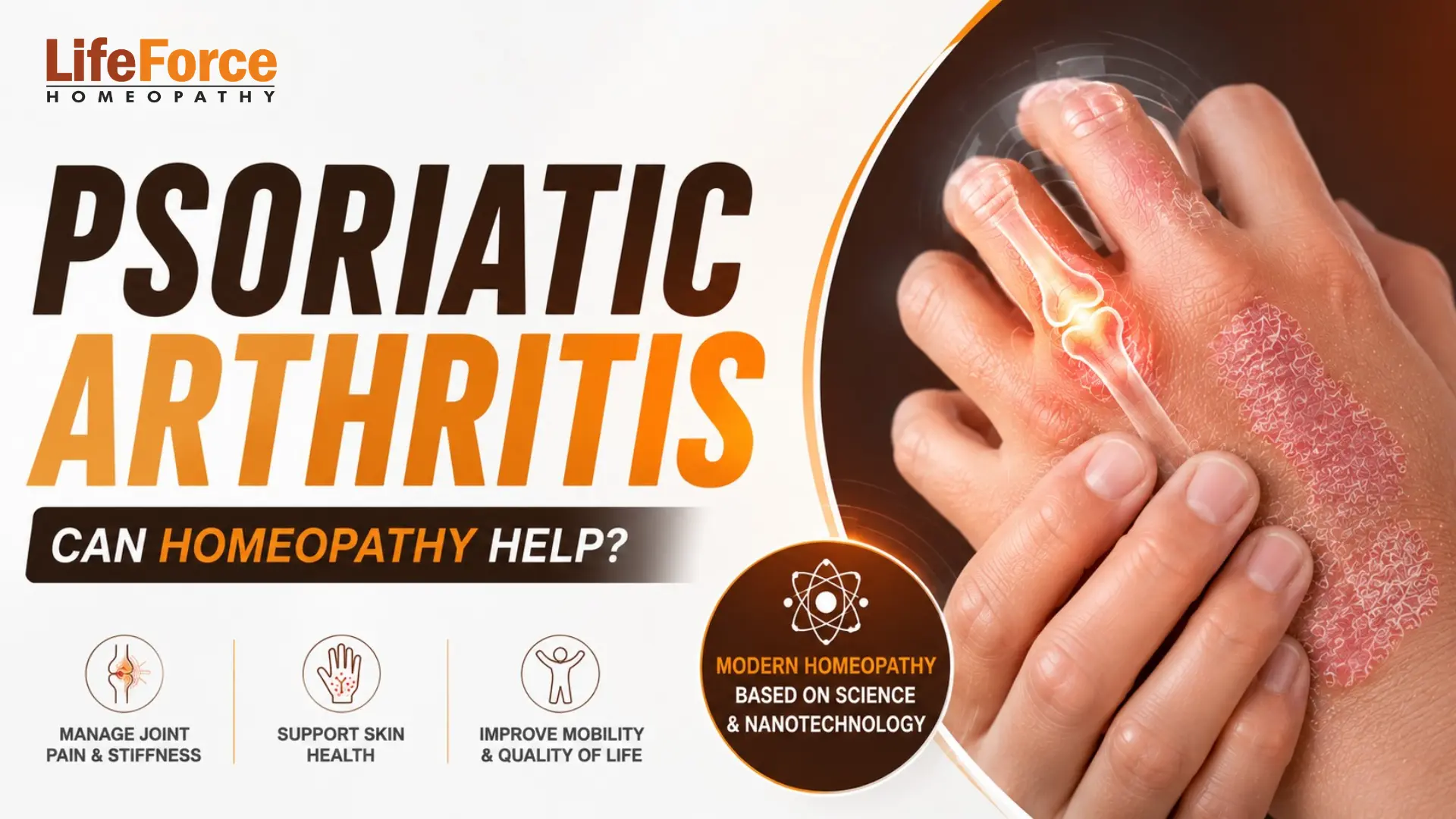
Psoriatic Arthritis: Can Homeopathy Help in Managing Joint Pain and Stiffness?

Stiff, swollen fingers in the morning can make even simple tasks feel difficult. When joint discomfort is accompanied by red, flaky skin patches, many people wonder whether these symptoms are connected.

Psoriatic arthritis is a condition where inflammation affects both the joints and skin. It is a chronic autoimmune condition that can vary significantly from person to person. Individuals exploring homeopathy treatment for psoriatic arthritis may consider it as a supportive, personalized approach alongside regular medical care.

For many individuals, psoriasis appears years before joint symptoms develop. However, in some cases, joint pain and stiffness may appear before noticeable skin changes.

What Is Psoriatic Arthritis?

Psoriatic arthritis is a chronic inflammatory autoimmune condition where the immune system causes inflammation affecting the joints, skin, and sometimes nails.

It is commonly linked with psoriasis, a skin condition that causes red, thickened, scaly patches on different areas of the body.

Psoriatic arthritis may affect:

  • Small joints of fingers and toes
  • Knees, ankles, and other larger joints
  • Tendons and ligaments around joints
  • Skin and nails

The severity and pattern of symptoms can differ widely between individuals, which makes early evaluation and personalized management important.

Symptoms of Psoriatic Arthritis

The symptoms of psoriatic arthritis may involve the joints, skin, nails, and overall health.

Joint Symptoms

Common joint-related symptoms include:

  • Joint pain and tenderness
  • Morning stiffness lasting more than 30 minutes
  • Swelling around joints
  • Reduced flexibility and movement
  • Difficulty performing daily activities

Some individuals may experience swelling of an entire finger or toe, commonly described as sausage-like swelling.

Skin Symptoms

Psoriatic arthritis is often associated with psoriasis-related skin changes, including:

  • Red patches on the skin
  • Thick, scaly skin lesions
  • Dryness and peeling
  • Itching or irritation

Changes in nails, such as pitting, thickening, or separation from the nail bed, may also occur.

For more information about psoriasis and related skin conditions, you can explore our detailed guide on skin disease treatments.

General Symptoms

Some people may also experience:

  • Fatigue
  • Reduced physical activity
  • General body discomfort
  • Sleep disturbances
  • Reduced quality of life

Early Warning Signs of Psoriatic Arthritis

Recognizing early symptoms can help with timely diagnosis and management.

Important signs to watch for include:

  • Morning stiffness lasting more than 30 minutes
  • Joint pain that keeps returning
  • Swollen fingers or toes
  • Joint discomfort appearing before psoriasis symptoms
  • Recurring stiffness and reduced movement

People with psoriasis who develop persistent joint symptoms should discuss them with a healthcare professional.

Causes and Triggers of Psoriatic Arthritis

The exact cause of psoriatic arthritis is not completely understood. However, several factors may contribute to its development.

Autoimmune Response

Psoriatic arthritis occurs due to abnormal immune activity that causes inflammation in the joints and skin.

Genetic Factors

A family history of psoriasis or autoimmune conditions may increase susceptibility.

Infections

Certain infections may act as triggers in individuals who are genetically predisposed.

Stress and Environmental Factors

Stress, lifestyle factors, and environmental triggers may contribute to flare-ups in some individuals.

Other factors that may influence symptoms include weight, smoking, and overall health.

How Psoriatic Arthritis Affects Daily Life

Psoriatic arthritis can affect more than just physical health.

Joint pain and stiffness may make activities such as:

  • Walking
  • Climbing stairs
  • Holding objects
  • Exercising
  • Performing household tasks

more difficult.

Skin symptoms may also affect confidence and emotional well-being. Itching, discomfort, and disturbed sleep can further impact daily life.

Managing both joint and skin symptoms is an important part of improving overall quality of life.

Conventional Treatment Approaches for Psoriatic Arthritis

Treatment for psoriatic arthritis depends on symptom severity, affected joints, and disease progression.

Common treatment approaches include:

NSAIDs

Non-steroidal anti-inflammatory drugs may be used to help reduce pain and inflammation.

DMARDs

Disease-modifying anti-rheumatic drugs may help slow disease progression in suitable patients.

Biologic Medicines

Biologic therapies target specific immune pathways involved in inflammation.

Physiotherapy

Physical therapy, stretching, and exercises may help maintain joint mobility and function.

A rheumatologist usually determines the most suitable treatment approach based on individual needs.

Role of Homeopathy in Psoriatic Arthritis

A Supportive and Individualized Approach

Some individuals explore homeopathy treatment as a supportive approach alongside conventional care.

Homeopathy focuses on understanding the complete symptom pattern of an individual rather than only the diagnosis.

During evaluation, factors considered may include:

  • Pattern of joint pain
  • Severity of stiffness
  • Timing of symptoms
  • Skin symptoms
  • Flare-up triggers
  • Overall health profile
  • Previous treatment history

The aim is to create an individualized approach based on the person’s unique symptoms and health background.

You can also explore our case study on Homeopathic treatment for arthritis and chronic joint pain, which documents 80% improvement in one patient without frequent painkillers. Individual results may vary.

Homeopathy should not replace prescribed medical treatment. Patients should continue consulting their treating doctors and should not stop or modify conventional medicines without medical guidance.

Why Individualized Care Matters

Psoriatic arthritis does not affect every person in the same way.

Some individuals may experience more joint involvement, while others may have more prominent skin symptoms.

A personalized approach considers:

  • Severity of symptoms
  • Stage of disease
  • Joint involvement
  • Skin condition
  • Previous treatments
  • Overall health status

Understanding these differences helps create a more suitable long-term management plan.

Lifestyle and Daily Support Strategies

Along with medical treatment, certain lifestyle measures may support joint health and overall wellness.

Stay Physically Active

Low-impact activities such as walking, swimming, yoga, and stretching exercises may help maintain flexibility and mobility.

Maintain Healthy Weight

Managing weight can reduce additional stress on weight-bearing joints.

Manage Stress

Relaxation techniques, meditation, and proper sleep may support overall well-being.

Protect Joints

Using supportive footwear and ergonomic tools may help reduce unnecessary strain during daily activities.

Balanced Diet

A balanced diet with fruits, vegetables, whole grains, and lean protein supports general health.

When Should You See a Doctor?

Seek medical advice if you experience:

  • Persistent joint pain
  • Increasing morning stiffness
  • Swelling in joints
  • Reduced movement
  • Psoriasis symptoms along with joint problems
  • Symptoms affecting daily activities

Early diagnosis may help in preventing worsening symptoms and planning appropriate management.

Life Force Homeopathy Approach

At Life Force Homeopathy, chronic and recurring conditions are approached through detailed case evaluation and individualized treatment planning.

Individuals searching for the Best Homeopathy clinic in India may consider factors such as the doctors’ experience, treatment approach, case evaluation process, follow-up system, and clinical expertise before selecting a clinic.

The approach includes:

  • Understanding the complete symptom pattern
  • Evaluating triggers and health history
  • Creating personalized treatment plans
  • Regular follow-up and monitoring

With more than 40 years of clinical experience, Life Force Homeopathy focuses on chronic health conditions, including autoimmune conditions, through an individualized approach.

Life Force has supported patients across more than 180 countries.

Assessment Test for Personalized Guidance

Every person’s experience with psoriatic arthritis is different. Factors such as symptom severity, duration, triggers, and previous treatments influence the possible scope of improvement.

The Assessment Test can help you understand whether an individualized approach may be suitable for your condition.

Conclusion

Psoriatic arthritis is a chronic inflammatory condition that affects both joints and skin. Symptoms like joint pain, stiffness, swelling, and psoriasis-related skin changes can significantly impact daily life.

Early diagnosis, appropriate medical care, lifestyle support, and regular monitoring play an important role in long-term management.

Homeopathy for psoriatic arthritis may be considered as a supportive approach alongside conventional treatment, with care planned according to the individual’s symptoms and overall health profile.

For personalized guidance, you can Book Appointment with experienced doctors.
Recurrent Tonsillitis in Children: Causes, Symptoms and Homeopathic Support

A Homeopathic Approach to Recurrent Tonsillitis in Children: Insights from Dr. Rajesh Shah

For many parents, watching their child struggle with repeated sore throats, fever, and throat discomfort can be stressful. What starts as an occasional infection may become a recurring concern when the child falls sick every few weeks or months.

Recurrent tonsillitis is one of the common reasons parents seek pediatric and ENT consultations. Many families find themselves wondering why the infections keep returning, whether repeated antibiotics are the only option, and when surgery should be considered, and whether homeopathy treatment may offer additional support.

This blog explains what recurrent tonsillitis is, why it happens, its symptoms, diagnosis, and how an individualized homeopathic approach may support children as part of their overall healthcare plan.

What Is Recurrent Tonsillitis in Children?

Tonsils are two small oval-shaped tissues located at the back of the throat. They are a part of the immune system and help the body recognize and respond to germs, especially during childhood.

When the tonsils become inflamed due to an infection, it is known as tonsillitis. When these episodes happen repeatedly over months or years, it is called recurrent tonsillitis.

Children are more prone to throat infections because their immune systems are still developing. Regular exposure to viruses and bacteria in schools, daycare centers, and social environments can also increase the chances of repeated infections.

Parents can also read our case study on recurrent tonsillitis cured with homeopathy in a child to understand how individualized homeopathic care was used and how the child’s progress was monitored over time. Treatment outcomes may vary from one child to another.

Types of Tonsillitis

Acute Tonsillitis

Acute tonsillitis is a sudden infection of the tonsils, usually caused by viruses or bacteria. Symptoms often appear quickly and may improve with appropriate treatment.

Recurrent Tonsillitis

Recurrent tonsillitis refers to repeated episodes of tonsil inflammation. These infections may interfere with school attendance, daily activities, and the child’s overall routine.

Chronic Tonsillitis

Chronic tonsillitis refers to long-lasting inflammation of the tonsils. Children may experience ongoing throat discomfort, enlarged tonsils, bad breath, or repeated mild symptoms.

Why Does Tonsillitis Keep Coming Back in Children?

There is usually no single reason why a child develops recurrent tonsillitis. Several factors may contribute:

Repeated Viral Infections

Children are frequently exposed to common cold viruses and respiratory infections. Since immunity is still developing, repeated infections can occur.

Bacterial Infections

Some children are more prone to bacterial throat infections. This can create a cycle where the child recovers from one episode and develops another infection later.

School and Daycare Exposure

Children spend a lot of time around other children, making it easier for infections to spread through close contact.

Enlarged Tonsils or Adenoids

Larger tonsils or adenoids may make it easier for bacteria and debris to accumulate, increasing the possibility of repeated infections.

Environmental and Lifestyle Factors

Certain factors may increase susceptibility, including:

  • Exposure to tobacco smoke
  • Air pollution
  • Poor sleep
  • Nutritional deficiencies
  • Allergic conditions
  • Frequent contact with infected individuals

Symptoms of Tonsillitis in Children

Symptoms may vary depending on the cause and severity of the infection. A sore throat in children is one of the most commonly noticed symptoms during an episode of tonsillitis.

Common symptoms include:

  • Pain while swallowing
  • Red and swollen tonsils
  • Fever
  • White patches or pus on tonsils
  • Swollen glands in the neck
  • Bad breath
  • Fatigue
  • Irritability
  • Reduced appetite
  • Hoarse voice
  • Ear discomfort due to throat pain

If a child repeatedly experiences these symptoms, doctors usually evaluate how often the infections occur, how severe they are, and how the child responds to treatment.

Diagnosis and Evaluation

When evaluating recurrent tonsillitis, doctors usually consider:

  • How many episodes the child has had
  • Frequency of infections
  • Severity of symptoms
  • Duration of each episode
  • Previous medicines and treatment response

The doctor may examine:

  • Throat and tonsils
  • Neck lymph nodes
  • General health condition

In some cases, an ENT specialist may be consulted to evaluate tonsil size, adenoids, and whether further treatment options need to be considered.

A Homeopathic Approach to Recurrent Tonsillitis in Children

Many parents explore homeopathy for recurrent tonsillitis when their child experiences frequent throat infections, and they want to understand the underlying pattern behind recurring episodes.

Homeopathy follows an individualized approach. Instead of selecting treatment only based on the diagnosis, a homeopathic doctor considers factors such as:

  • Frequency and pattern of infections
  • Triggers that worsen symptoms
  • Child’s general health
  • Physical and emotional constitution
  • Family medical history

Every child may have a different symptom pattern, and the treatment approach is planned accordingly. To understand more about the principles behind this system of medicine, you can read more about what homeopathy is.

Homeopathic care should complement proper medical evaluation. Severe infections, breathing difficulty, dehydration, or suspected complications require timely medical attention

How Is Treatment Progress Monitored?

Since recurrent tonsillitis develops over multiple episodes, improvement is usually observed over time rather than after a single infection.

Doctors may monitor:

  • How frequently infections occur
  • Severity and duration of episodes
  • Fever and throat pain intensity
  • Recovery time
  • School attendance and daily activities
  • Need for antibiotics during flare-ups

Regular follow-ups help understand the child’s progress and whether any changes are needed in the management plan.

Can Homeopathy Help Avoid Tonsil Surgery?

Tonsil surgery, also known as tonsillectomy, may be recommended in certain situations, such as:

  • Frequent severe infections
  • Breathing difficulties
  • Sleep-related breathing problems
  • Complications due to enlarged tonsils

Some parents consider homeopathic treatment for tonsillitis in children before surgery when their child does not meet surgical criteria or when they want to explore additional supportive options.

An individualized approach focuses on understanding the child’s overall health and tendency toward recurring infections.

However, surgery should not be delayed when it is medically recommended. Parents should discuss all available options with their pediatrician and ENT specialist.

Practical Tips for Parents

Along with medical care, parents can support their child by:

  • Ensuring proper sleep
  • Encouraging good hydration
  • Maintaining hand hygiene
  • Avoiding exposure to cigarette smoke
  • Providing a balanced diet
  • Keeping children home during contagious infections
  • Following prescribed treatment plans
  • Maintaining a healthy daily routine

Life Force Homeopathy Approach

At Life Force Homeopathy, recurrent conditions are approached by understanding the individual health profile of each patient.

The approach includes:

  • Detailed evaluation of symptoms and triggers
  • Individualized homeopathic treatment plans
  • Regular follow-ups
  • Monitoring of progress over time

Life Force Homeopathy has been practicing since 1985 and follows a personalized approach for chronic and recurring health concerns. Parents searching for the best homeopathy clinic for tonsillitis in Mumbai can consult experienced doctors at Life Force Homeopathy for a detailed evaluation and an individualized treatment plan.

Life Force also focuses on research in homeopathy, including published work and studies related to homeopathic medicines. You can explore our Peer-reviewed research in homeopathy carried out by our experts.

Assessment Test for Personalized Guidance

Every child’s condition is different. Factors such as infection frequency, severity, triggers, previous treatments, and overall health influence the management approach.

Parents can take the Assessment Test to understand the possible scope of improvement and whether an individualized approach may be suitable.

Conclusion

Recurrent tonsillitis can affect a child’s comfort, routine, school life, and overall well-being. Understanding why infections keep returning is an important step toward choosing the right management approach.

An individualized plan that considers the child’s complete health profile may help support long-term management of recurring throat infections.

For personalized guidance, parents can discuss their child’s condition with experienced doctors and understand the available options.

Rainy Season Cold and Flu: Why It Keeps Coming Back and How to Manage It

The rainy season brings much-needed relief from the summer heat, but for many people, it also brings a familiar problem: sneezing, runny nose, cough, sore throat, and repeated cold episodes.

Have you noticed that every monsoon, someone in the family starts falling sick? For some people, it is not just a one-time cold. The symptoms return every rainy season and start affecting work, school, sleep, and daily activities.

Why do some people catch cold and flu more often during the monsoon? What makes these infections come back repeatedly? And how can an individualized approach help manage recurring seasonal complaints?

This blog explains the causes, symptoms, warning signs, and management approach for recurrent cold and flu during the rainy season.

Why Are Cold and Flu More Common During the Rainy Season?

The rainy season creates conditions where respiratory infections may spread more easily. Several environmental and lifestyle factors contribute to this increase.

Sudden Weather Changes

During monsoon, temperatures can change quickly between humid outdoor weather and cooler indoor environments. Some individuals may find it difficult for their body to adapt to these changes, making them more prone to respiratory symptoms.

Increased Humidity

High humidity can encourage the survival and spread of certain viruses and may also worsen respiratory allergies in sensitive individuals.

Damp Surroundings

Wet clothes, damp footwear, moisture inside homes, and mold growth can irritate the respiratory system and trigger symptoms, especially in people with allergies.

Increased Viral Exposure

Many viruses responsible for common cold and seasonal flu spread more easily when people come in close contact with each other. Spending more time indoors during heavy rains may increase transmission.

Reduced Sunlight Exposure

Cloudy weather during monsoon may reduce sunlight exposure, which can indirectly affect overall health and immunity.

Increased Sensitivity in Some Individuals

Children, older adults, and people with chronic respiratory conditions may be more susceptible to repeated infections.

Common Symptoms of Rainy Season Cold and Flu

Rainy season infections often begin with mild symptoms and may gradually progress.

Common symptoms include:

  • Sneezing
  • Runny nose
  • Blocked or stuffy nose
  • Post-nasal drip
  • Sore throat
  • Throat irritation
  • Dry or productive cough
  • Mild fever
  • Headache
  • Body ache
  • Watery eyes
  • Weakness and fatigue

Most common colds improve within a few days. However, repeated episodes or prolonged symptoms may require medical evaluation.

Why Do Some People Get Recurrent Cold and Cough Every Monsoon?

While some people recover after a single episode, others experience cold and cough repeatedly every rainy season.

Several factors may contribute:

Allergic Tendency

People with allergies may experience repeated sneezing, runny nose, throat irritation, and cough when exposed to dust, mold, or weather changes.

Chronic Sinus Problems

Underlying sinus issues may contribute to repeated nasal congestion, post-nasal drip, and throat irritation.

Respiratory Sensitivity

Individuals with asthma tendency or sensitive airways may experience frequent respiratory symptoms during seasonal changes.

Developing Immunity in Children

Children often experience frequent infections because their immune systems are still developing and they are exposed to many viruses at school.

Lifestyle Factors

Factors that may influence susceptibility include:

  • Poor sleep
  • Ongoing stress
  • Irregular eating habits
  • Exposure to damp environments
  • Frequent exposure to dust or mold

When Should You See a Doctor?

Most mild colds improve with supportive care. However, medical evaluation is important when symptoms become severe, persistent, or keep returning.

Consult a doctor if you experience:

  • High fever
  • Difficulty breathing
  • Chest pain
  • Wheezing
  • Persistent cough
  • Symptoms lasting longer than 5 to 7 days
  • Recurrent fever
  • Severe throat pain
  • Ear pain
  • Green or blood-stained mucus

Medical guidance is especially important for:

  • Young children
  • Elderly individuals
  • Pregnant women
  • People with asthma
  • Individuals with diabetes
  • People with chronic lung conditions
  • Those with weakened immunity

Avoid self-medication, especially when symptoms are severe or frequently recurring.

How Homeopathy Looks at Recurrent Cold and Flu

Through our research in Homeopathy, we follow an individualized approach rather than using the same medicine for everyone with similar symptoms.

During evaluation, a homeopathic doctor considers:

  • Current symptoms
  • Frequency of recurrence
  • Individual triggers
  • Allergic tendencies
  • Medical history
  • Lifestyle factors
  • Environmental influences

The aim is to understand the complete symptom pattern and create a treatment approach suited to the individual.

Homeopathic Treatment for Recurrent Cold and Flu

Many people explore homeopathy for cold and cough when they experience repeated seasonal infections, especially during monsoon.

At Life Force Homeopathy, treatment is planned after understanding the individual pattern of recurring complaints.

The approach may include:

  • Selection of individualized homeopathic medicines
  • Understanding recurrence patterns
  • Identifying possible triggers
  • Evaluating allergic tendencies
  • Monitoring progress over time

Homeopathic treatment should not replace emergency medical care. Severe infections or complications require appropriate medical attention.

Homeopathy for Children With Recurrent Monsoon Cold

Children commonly experience frequent colds during rainy seasons because their immunity is still developing and they are exposed to multiple infections.

An individualized approach considers:

  • Child’s symptom pattern
  • Frequency of infections
  • Possible triggers
  • General health
  • Associated allergic or respiratory tendencies

Children with high fever, breathing difficulty, dehydration, poor feeding, or persistent symptoms should be examined by a doctor promptly

Simple Rainy Season Care Tips to Reduce Cold and Flu Risk

While infections cannot always be completely prevented, healthy habits may help reduce the risk.

  • Change wet clothes and footwear quickly after getting drenched
  • Keep yourself warm and dry
  • Drink enough fluids
  • Wash hands regularly
  • Avoid close contact with people having active infections
  • Eat freshly prepared nutritious meals
  • Maintain a clean and dry home environment
  • Reduce exposure to dust and mold
  • Get adequate sleep
  • Follow a healthy daily routine

Why Choose Life Force Homeopathy for Recurrent Cold and Flu Care?

Life Force Homeopathy has been providing individualized homeopathic treatment since 1985.

Patients choose Life Force because of:

  • Over four decades of clinical experience
  • Focus on chronic and recurring health concerns
  • Individualized case assessment
  • Treatment planning by experienced homeopathic doctors
  • Clinics across Mumbai, Pune, and Bengaluru
  • Consultation support for patients across India and internationally

Every treatment plan is developed after understanding the patient’s symptoms, medical history, lifestyle, and recurrence pattern.

Learn more about Life Force Homeopathy.

Assessment Test for Personalized Guidance

Recurring cold and cough can have different causes in different individuals. There are many myths surrounding the usability of homeopathic medicines, While factors such as symptom pattern, frequency, triggers, and overall health play a major role in determining the possible scope of improvement. Clear your myths and doubts about homeopathy with lifeforce. 

You can take the Assessment Test to understand whether an individualized homeopathic approach may be suitable for your recurring seasonal complaints.

Conclusion

Rainy season cold and flu are common, but repeated infections every monsoon can affect daily life and overall well-being.

Understanding why these symptoms keep returning is an important step toward better management. An individualized approach that considers personal triggers, health history, and recurring patterns may help support people dealing with frequent seasonal respiratory complaints.

For personalized guidance, you can discuss your concerns with experienced doctors at Life Force Homeopathy.

Book Appointment for a detailed consultation.

Tired of Recurring Acid Reflux, Heartburn & GERD Symptoms? A Doctor’s Guide to Homeopathic Treatment

Introduction

Living with recurring acid reflux can be more than an occasional inconvenience. Each meal may bring uncertainty, and eating cannot always be enjoyable. Questions like “Will the burning start again?” or “Will I sleep peacefully tonight?” can dominate your thoughts, affecting both physical and mental well-being.

If you are experiencing similar challenges, this blog explains what may be happening in your body, why the symptoms recur, and how homeopathy treatment for GERD may provide supportive care alongside conventional medical guidance.

What Is Acid Reflux, Heartburn & GERD?

Although the terms are sometimes used interchangeably, they represent different stages:

Acid Reflux: Stomach acid flows back into the esophagus due to a weak lower esophageal sphincter, causing discomfort and irritation.

Heartburn: A symptom of acid reflux, experienced as burning in the chest or throat.

GERD (Gastroesophageal Reflux Disease): Chronic acid reflux occurring more than twice weekly, often requiring long-term management.

Occasional acidity after heavy meals is common. Persistent or worsening symptoms warrant proper evaluation by a qualified physician.

Common Symptoms

Symptoms of acid reflux and GERD include:

  • Burning sensation in the chest
  • Sour or bitter taste in the mouth
  • Regurgitation of food or acid
  • Bloating and heaviness after meals
  • Throat irritation or hoarseness
  • Frequent burping
  • Disturbed sleep at night
  • Difficulty lying down after meals
  • Nausea or chronic cough

Not everyone experiences all symptoms, and triggers vary between individuals. Personalized evaluation is important for effective management.

Causes and Triggers

Acid reflux may be caused or worsened by:

  • Large meals, late-night eating, or irregular meals
  • Spicy, oily, or fried foods
  • Excessive caffeine or carbonated drinks
  • Obesity or pregnancy
  • Chronic stress, which increases digestive sensitivity

Lifestyle modifications play a key role in symptom management and may contribute to GERD (gastroesophageal reflux) relief when included in an individualized treatment plan.

Homeopathic Approach to Acid Reflux and GERD

Homeopathy focuses on individualized, holistic care:

  • Individualized treatment: No two patients receive identical remedies, even with similar symptoms.
  • Constitutional prescription: Overall physical and emotional profile is considered.
  • Mind-body connection: Evaluates stress, anxiety, and emotional patterns related to digestive symptoms.
  • Comprehensive symptom assessment: Considers both digestive and emotional symptoms.
  • Lifestyle and trigger evaluation: Identifies dietary habits and environmental triggers.
  • Recurrence tendency: Determines why symptoms keep returning.

Homeopathy aims to provide holistic symptom management and support digestive balance, reducing the frequency of recurring symptoms. Outcomes vary depending on individual constitution.

Who May Consider Homeopathic Support?

  • Persistent acid reflux despite dietary changes
  • Chronic GERD affecting daily activities
  • Dependence on antacids
  • Stress-related reflux or nighttime heartburn
  • Digestive discomfort impacting routine, work, or social life

Homeopathy does not replace necessary diagnostic evaluation for severe or alarming symptoms like unexplained weight loss, chest pain, or difficulty swallowing.

Lifestyle & Digestive Wellness Tips

  • Identify and avoid trigger foods
  • Maintain a healthy body weight
  • Stay hydrated
  • Avoid lying down immediately after meals
  • Reduce late-night meals and heavy dinners
  • Eat smaller, frequent meals
  • Practice stress management, yoga, or breathing exercises
  • Maintain a consistent sleep routine
  • Practice mindful eating

These habits complement homeopathic or conventional care.

Why Choose Life Force Homeopathy

Life Force Homeopathy has been practicing since 1985 under Dr. Rajesh Shah, serving patients from over 180 countries.

What sets Life Force apart:

  • Personalized, patient-first treatment approach
  • Focus on chronic and recurring digestive conditions
  • Experienced team of homeopathic doctors
  • Online consultation options for global patients
  • Individualized care plans based on symptom patterns

Conclusion

Long-term acid reflux and GERD can impact your physical and emotional health. An Individualized GERD homeopathy treatment may help manage symptoms and support quality of life with conventional medical care. Understanding more about your body, identifying triggers, and sticking to a customized treatment plan can help you achieve improved digestive comfort and peace of mind.

Seeking Personalized Support for Acid Reflux or GERD?

At Life Force Homeopathy, our doctors evaluate your symptoms, lifestyle, triggers, and overall health to provide individualized homeopathic care.

Book Appointment

Take Assessment Test

Visit Life Force Homeopathy

Childhood Tic Disorders: Causes, Symptoms, and Homeopathic Support

Introduction

Observing your child make repeated movements like blinking, shrugging, or making unusual sounds can be concerning. These are often early signs of a childhood tic disorder, a neurological condition that affects many children worldwide. Early recognition helps parents seek medical guidance and plan supportive care.

Tics can occur alongside developmental disorders such as ADHD or OCD. Emotional states including excitement, anger, or sadness may trigger or worsen tics. Understanding tic symptoms helps parents and teachers create a supportive environment.

What Is a Childhood Tic Disorder?

Childhood tic disorders involve sudden, rapid, and involuntary movements (motor tics) or sounds (vocal tics).

Common types of tics:

  • Motor tics: Eye blinking, head jerking, facial grimacing, shoulder shrugging, nose twitching
  • Vocal tics: Throat clearing, grunting, sniffing, repetitive sounds

Classification:

  • Provisional tic disorder: Tics lasting less than one year, often improving naturally
  • Chronic tic disorder: Motor or vocal tics lasting more than one year
  • Tourette syndrome: Multiple motor tics plus at least one vocal tic lasting over one year, often coexisting with ADHD or OCD

Early Warning Signs

Parents should look for:

  • Repetitive movements or vocalizations
  • Increase in tics during stress or emotional events
  • Tics affecting school or social activities
  • Signs of emotional distress, anxiety, or embarrassment

Causes and Triggers

Tic disorders can be influenced by:

  • Genetics: Family history of tic disorders, OCD, or ADHD
  • Neurological factors: Neurotransmitter imbalances and brain development
  • Stress and anxiety:
  • Fatigue and sleep deprivation:
  • Environmental triggers: Bright lights, strong smells, certain foods, or infections

Diagnosis and Evaluation

Diagnosis is mainly clinical and includes:

  • Detailed history and observation of tic patterns
  • Family and developmental history
  • Neurological evaluation
  • Screening for coexisting conditions like ADHD or OCD

Treatment of Tic Disorders

  • Provisional tics: Often improve naturally over months
  • Chronic tics: Behavioral therapy like CBIT helps children recognize and manage tics
  • Support: Parental, teacher, and peer support is essential
  • Homeopathy for tic disorders: Individualized remedies help reduce frequency, manage triggers, and improve neurological and emotional balance

Homeopathy should be provided under supervision by a qualified doctor.

Lifestyle and Supportive Care

Parents and teachers can support children by:

  • Ensuring adequate sleep
  • Maintaining a calm and structured environment
  • Providing a balanced diet
  • Encouraging hobbies, play, and physical activity
  • Minimizing screen time
  • Avoiding focus or correction of tics
  • Supporting stress management

Life Force Homeopathy Approach

At Life Force Homeopathy clinic, tic disorders are approached with:

  • Detailed case evaluation of symptoms, triggers, and family history
  • Individualized homeopathic prescriptions
  • Regular follow-ups and monitoring
  • Online and in-clinic consultations
  • Long-term supportive care for neurological conditions

Conclusion

Early recognition of tic disorders allows timely evaluation and individualized care. Supportive behavioral therapy, lifestyle management, and homeopathic treatment under professional guidance can help children manage tics effectively and lead a healthy, confident life.

Ankylosing Spondylitis: Symptoms, Causes, Stages, and Homeopathic Support

Introduction

Ankylosing spondylitis (AS) is a chronic inflammatory condition that primarily affects the spine and sacroiliac joints, sometimes extending to the hips, shoulders, and other areas. The inflammation over time can lead to stiffness, reduced flexibility, and, in severe cases, spinal fusion. This progressive condition often begins in young adults, making early recognition critical for symptom management and long-term quality of life.

AS can also impact posture, daily movement, and overall physical activity. Recognizing ankylosing spondylitis early symptoms helps patients seek timely evaluation, begin appropriate interventions, and potentially prevent irreversible changes. This blog explores the causes, symptoms, types, triggers, diagnostic approaches, treatment options, and how homeopathy for ankylosing spondylitis may provide supportive care.

What Is Ankylosing Spondylitis?

Ankylosing spondylitis is a type of autoimmune arthritis in which the immune system attacks the spinal joints and ligaments, leading to inflammation and discomfort. The hallmark of AS is chronic back pain and stiffness, which may be more pronounced in the morning or after periods of inactivity.

Over time, inflammation may trigger the body to lay down new bone tissue, reducing spinal flexibility and potentially leading to postural changes such as forward stooping. While AS is more common in men, women can also develop the condition. Early recognition and management can slow progression and improve mobility.

Early Symptoms of Ankylosing Spondylitis

Identifying early signs of AS is crucial, especially since symptoms can resemble other causes of back pain. Early symptoms include:

  • Persistent lower back pain, often worse at night or in the early morning
  • Stiffness in the lower back and hips that improves with movement
  • Fatigue and decreased energy levels
  • Discomfort in the shoulders, rib cage, or neck
  • Mild swelling or tenderness in the sacroiliac joints
  • Reduced spinal flexibility over time

Patients may initially dismiss these symptoms as normal back strain, but consistent pain or stiffness that persists for months should prompt evaluation.

Causes and Risk Factors

The exact ankylosing spondylitis causes are not fully understood, but multiple factors contribute:

  • Genetic predisposition: Individuals with the HLA-B27 gene have a higher risk
  • Immune system dysfunction: Autoimmune responses cause chronic inflammation
  • Family history: Close relatives with AS or other autoimmune diseases increase susceptibility
  • Environmental triggers: Infections or stress may influence the onset in genetically predisposed individuals

It is important to note that not all individuals with the HLA-B27 gene develop AS. Diagnosis relies on a combination of clinical assessment, family history, and imaging.

Diagnosis and Evaluation

Ankylosing spondylitis diagnosis involves several steps:

  • Medical history: Duration, pattern, and severity of back pain
  • Physical examination: Assessing spinal mobility, posture, and joint tenderness
  • Imaging tests: X-ray, MRI, or CT scans to detect inflammation or early structural changes
  • Blood tests: Checking for markers of inflammation (ESR, CRP) and HLA-B27 gene presence

Early diagnosis allows doctors to differentiate AS from other causes of back pain such as degenerative disc disease or mechanical strain, guiding the appropriate treatment plan.

Complications

If left unmanaged, AS may lead to:

  • Progressive spinal stiffness and fusion
  • Reduced range of motion and mobility
  • Postural changes, including stooping
  • Respiratory restriction due to rib involvement
  • Osteoporosis and increased fracture risk
  • Chronic pain affecting physical activity and daily life

Early intervention is key to minimizing these complications.

Types of Ankylosing Spondylitis

While AS primarily affects the spine, its manifestations can differ among patients:

  • Axial AS: Primarily affects the spine and sacroiliac joints
  • Peripheral AS: Involves peripheral joints such as hips, knees, and shoulders
  • Extra-articular AS: May affect eyes (uveitis), heart, or lungs in rare cases

Recognizing the type helps in planning individualized management strategies.

Treatment Options

Ankylosing spondylitis treatment aims to reduce inflammation, relieve pain, improve mobility, and prevent progression:

  • Medications: Anti-inflammatory drugs (NSAIDs), biologics for severe cases
  • Physical therapy: Stretching and posture exercises to maintain flexibility
  • Lifestyle measures: Posture correction, regular low-impact exercise, stress management
  • Supportive care: Heat therapy, sleep optimization, and occupational modifications

Treatment plans are tailored to the stage, severity, and overall health of the patient.

Homeopathy and Ankylosing Spondylitis

Homeopathy for ankylosing spondylitis focuses on individualized care. Remedies are selected based on:

  • Symptom patterns and intensity
  • Recurrence of pain or stiffness
  • Family history and constitutional profile
  • Lifestyle and trigger assessment

Homeopathy may support selected patients in managing symptoms, reducing discomfort, and improving quality of life when used alongside conventional care. Individualized prescriptions and regular monitoring are essential.

How Homeopathy May Support Patients

Homeopathy may provide supportive benefits for AS patients:

  • Improving comfort and flexibility
  • Supporting overall well-being
  • Addressing flare-up triggers
  • Enhancing energy and mobility

Life Force Homeopathy has documented improvements in patients with varying severity of AS. For real-world experiences, explore ankylosing spondylitis case studies.

Lifestyle & Self-Care Tips

  • Daily stretching and spine exercises
  • Maintain good posture throughout the day
  • Avoid prolonged inactivity or sedentary positions
  • Eat a balanced, anti-inflammatory diet
  • Ensure adequate sleep and stress management
  • Avoid smoking and environmental triggers
  • Stay physically active as advised by a healthcare professional

These measures complement homeopathic and conventional treatments.

Life Force Homeopathy Approach

For those searching for the Best Homeopathy clinic, the Life Force approach includes a thorough evaluation of each ankylosing spondylitis case before recommending an individualized treatment plan.

  • Detailed case analysis
  • Symptom and trigger assessment
  • Individualized homeopathic prescription
  • Regular monitoring and follow-up
  • Integration with lifestyle guidance

This ensures a patient-centric approach aimed at symptom management and improved quality of life

Conclusion

Ankylosing spondylitis is a chronic condition that can significantly affect mobility and quality of life. Early recognition, proper diagnosis, lifestyle management, and supportive homeopathy can help reduce discomfort and maintain function. Personalized evaluation and monitoring are essential for optimal management.

Seeking Support for Ankylosing Spondylitis?

At Life Force Homeopathy, our doctors evaluate symptoms, triggers, health history, and overall constitution to plan personalized supportive care.

Book Appointment

Take Assessment Test

Assessment Tests: Making Informed Healthcare Decisions

Introduction

Healthcare decisions can be stressful. Patients often struggle to choose the best treatment, decide when to seek second opinions, or understand prognosis. Variability in therapy responses and incomplete information adds to uncertainty.

Assessment tests aim to reduce this uncertainty. They provide evidence about how likely a condition is to respond to available therapies, giving patients actionable information that guides their decisions and helps avoid unnecessary procedures or side effects.

For more on personalized treatment options, visit Life Force Homeopathy.

What Is an Assessment Test?

An assessment test estimates the likelihood that a disease will respond to a treatment or enter long-term remission. These tests predict treatment response, prognosis, or meaningful recovery probability given current therapeutic options.

Why Patients Need an Assessment Test

Assessment tests benefit patients by providing:

  • Personalized expectations: Probabilities tailored to the individual
  • Treatment selection guidance: Helps choose therapies most likely to succeed
  • Risk–benefit clarity: Clarifies if aggressive interventions are justified
  • Planning and support: Allows patients and families to prepare emotionally, financially, and logistically
  • Avoiding futile care: Reduces exposure to interventions unlikely to help

How Assessment Tests Help in Decision-Making

Assessment tests improve healthcare decisions by:

  • Supporting shared decision-making between clinicians and patients
  • Prioritizing first-line therapies and determining when to switch
  • Helping decide whether immediate intervention or monitoring is appropriate
  • Enhancing second-opinion and multidisciplinary consultations
  • Facilitating advanced-care planning when prognosis is limited

Conditions Where Assessment Tests Are Helpful

  • Cancer: Predict response to chemotherapy, targeted therapy, and immunotherapy
  • Infectious diseases: Estimate clearance likelihood in chronic infections
  • Autoimmune and inflammatory disorders: Guide immunomodulatory therapy selection
  • Cardiac conditions: Predict recovery after interventions like valve repair or revascularization
  • Neurological disorders: Forecast progression or response to treatment in stroke and neurodegenerative diseases
  • Orthopedic injuries: Guide surgical versus conservative management

How Technology Is Improving Assessment Tests

Advances that enhance test accuracy include:

  • Genomic and multi-omics profiling: Identifies drug response patterns
  • Machine learning and AI: Integrates clinical, imaging, and molecular data
  • Advanced imaging analytics: MRI, CT, and PET provide quantifiable prognostic markers
  • Real-world data and registries: Large datasets improve predictive reliability
  • Point-of-care rapid assays: Enable timely clinical decision-making

Common Misconceptions About Assessment Tests

  • They provide probabilities, not absolute certainty.
  • They support but do not replace clinician judgment.
  • Not all tests are universally applicable; validation is context-specific.
  • A high-probability result does not guarantee success.
  • Assessment testing is increasingly affordable and scalable.

Benefits of Taking an Assessment Test Early

  • Enables timely initiation of the most effective therapy
  • Preserves future treatment options
  • Supports emotional preparedness and planning
  • Can reduce cumulative healthcare costs
  • Identifies eligibility for clinical trials early

Real-Life Example

A 58-year-old patient diagnosed with HIV used assessment testing to guide homeopathic supportive care. This helped achieve symptom control, reduction in viral load, and improved quality of life, highlighting how assessment-guided insights empower treatment decisions.

You can explore more assessment-guided case studies to understand how personalized care is applied in real-world scenarios.

Conclusion

Assessment tests provide scientifically grounded probabilities for treatment response. They translate complex medical data into actionable insights, helping patients make informed decisions, avoid unnecessary procedures, and plan care effectively. Early use, combined with professional guidance, can improve outcomes and align treatment with patient values.

Take Charge of Your Healthcare Decisions

At Life Force Homeopathy, our doctors carefully evaluate your condition and provide personalized guidance based on your assessment results. Explore our A–Z Disease page to find your condition and understand the possible scope for improvement through a condition-specific assessment test.

Take Assessment Test

Note:- Assessment results are indicative and may vary depending on the diagnosis, severity, duration, and individual health factors.

From Stage 0 to Stage 4: Understanding Cancer Stages, Made Simple

Introduction

Hearing the words “You have cancer” can be an overwhelming experience. Along with the diagnosis, patients are often introduced to another important term: the cancer stage.

Many people wonder what Stage 1, Stage 2, Stage 3, or Stage 4 cancer actually means. Cancer staging helps doctors understand how advanced the disease is, whether it has remained in one area, and whether it has spread to other parts of the body.

Understanding cancer stages can help patients and families make informed decisions and better understand the treatment journey.

This article explains cancer stages from Stage 0 to Stage 4, how doctors determine the stage, common cancer symptoms, diagnosis, treatment options, and how homeopathy may support patients alongside conventional cancer care.

What Is Cancer Staging?

Cancer staging is a system used by doctors to describe the extent of cancer in the body.

It helps doctors understand:

  • The size of the tumour
  • Whether nearby lymph nodes are affected
  • Whether cancer has spread to distant organs

This information helps doctors:

  • Plan appropriate cancer treatment options
  • Understand disease progression
  • Monitor response to treatment
  • Coordinate care between specialists

It is important to remember that not all cancers are staged in the same way. Most solid tumours follow a staging system, while blood cancers such as leukemia and lymphoma may use different classification methods.

How Do Doctors Determine the Cancer Stage?

There is no single test that determines the stage of cancer. Doctors combine information from different investigations to understand the extent of the disease.

They evaluate:

Tumour

The size of the tumour and whether it has grown into nearby tissues.

Lymph Nodes

Whether cancer cells have reached nearby lymph nodes.

Metastasis

Whether cancer has spread to distant organs such as the lungs, liver, bones, or brain.

Doctors may use:

  • Blood tests
  • CT scans
  • MRI scans
  • PET scans
  • Ultrasound
  • X-rays
  • Biopsy
  • Pathology reports

A biopsy is usually one of the most important investigations for confirming cancer type and characteristics.

Understanding the TNM Classification

Many cancers are described using the TNM system.

T (Tumour)

Describes the size and extent of the main tumour.

N (Nodes)

Shows whether nearby lymph nodes are involved.

M (Metastasis)

Indicates whether cancer has spread to distant organs.

The combination of these factors helps doctors classify cancer from Stage 0 to Stage 4.

Understanding Cancer Stages

Stage 0: The Earliest Stage

Stage 0 is also called carcinoma in situ.

At this stage, abnormal cells are present only in the area where they first developed and have not spread to surrounding tissues.

Early detection at this stage may provide more treatment options.

Stage 1: Early-Stage Cancer

Stage 1 usually means the cancer is small and remains limited to its original location.

There is generally no distant spread, and nearby lymph nodes may not be involved.

Treatment outcomes depend on the cancer type, location, and individual health factors.

Stage 2: Cancer Has Grown Further

In Stage 2, the tumour is usually larger compared to Stage 1.

It may involve nearby tissues or lymph nodes but has not spread to distant organs.

Treatment depends on the specific cancer type and may include surgery, chemotherapy, radiation therapy, targeted therapy, or other approaches.

Stage 3: More Advanced Local Disease

Stage 3 indicates that cancer has spread further into nearby tissues or lymph nodes.

However, it has usually not reached distant organs.

Treatment may involve a combination of therapies depending on the cancer type and patient condition.

Stage 4: Metastatic Cancer

Stage 4 is the most advanced stage and is also known as metastatic cancer.

At this stage, cancer has spread to distant organs such as the lungs, liver, bones, or brain.

Treatment focuses on controlling the disease, managing symptoms, improving quality of life, and supporting overall health.

Every cancer case is different, and outcomes depend on multiple factors, including cancer type, response to treatment, and overall health.

Cancer Stages at a Glance

StageMeaning
Stage 0Abnormal cells remain in their original location
Stage 1Small, localized cancer
Stage 2Larger tumour with possible nearby involvement
Stage 3Cancer spread to nearby tissues or lymph nodes
Stage 4Cancer spread to distant organs

Why Is Early Diagnosis Important?

Early detection can make a significant difference in cancer care.

Finding cancer at an earlier stage may provide:

  • More available treatment options
  • Earlier intervention
  • Better management opportunities
  • Reduced risk of complications
  • Improved monitoring

Regular medical check-ups and evaluation of unusual symptoms can help with timely diagnosis.

Common Cancer Symptoms

Cancer symptoms vary depending on the type and location of cancer.

Some possible warning signs include:

  • Unexplained weight loss
  • Persistent fatigue
  • Unusual lumps or swelling
  • Persistent cough
  • Changes in bowel or bladder habits
  • Unusual bleeding
  • Persistent pain
  • Changes in skin appearance

These symptoms do not always indicate cancer, but persistent or unexplained changes should be evaluated by a healthcare professional.

Cancer Causes and Risk Factors

Cancer develops due to abnormal growth of cells. Several factors may increase the risk of developing cancer, including:

  • Genetic factors
  • Age
  • Tobacco and alcohol use
  • Certain infections
  • Radiation exposure
  • Lifestyle factors
  • Environmental exposures

However, the exact cause varies depending on the type of cancer.

Cancer Treatment Options

Cancer treatment depends on factors such as cancer type, stage, location, and overall health.

Common treatment options include:

  • Surgery
  • Chemotherapy
  • Radiation therapy
  • Immunotherapy
  • Targeted therapy
  • Hormonal therapy
  • Supportive care

A cancer specialist determines the most suitable treatment plan based on individual requirements.

Homeopathy in Cancer Care

A cancer diagnosis affects not only the body but also emotional and overall well-being.

Some patients explore complementary approaches along with their standard cancer treatment. Homeopathic Treatment for Cancer focuses on individualized care based on the patient’s symptoms, overall health, and constitution.

Homeopathy should not replace established cancer treatments such as surgery, chemotherapy, radiation therapy, immunotherapy, or targeted therapy.

It may be considered supportive care alongside conventional treatment under the guidance of qualified healthcare professionals.

Research on Homeopathy and Cancer

Research in homeopathy and cancer continues to explore possible biological effects and mechanisms of action.

One area of research has investigated the effects of homeopathic preparations in laboratory models, including studies exploring cellular pathways and biological responses.

A published research article studied the potential effects of ultra-diluted preparations in experimental cancer models and explored their biological activity. You can read more about this scientific research on homeopathy and cancer.

While such research provides insights into possible mechanisms, more extensive studies are required to understand the role of homeopathy in cancer care.

Homeopathy as Support in Cancer Treatment

When used as supportive care, homeopathy may help some patients with:

  • Overall well-being
  • Individual symptom management
  • Emotional support during treatment
  • Personalized healthcare guidance

Every patient responds differently, and treatment decisions should always be made with the treating oncologist.

Life Force Homeopathy Approach

At Life Force Homeopathy, cancer cases are evaluated through detailed case analysis.

The approach includes:

  • Understanding medical history
  • Reviewing current symptoms
  • Considering previous treatments
  • Evaluating overall health
  • Creating individualized homeopathic support plans
  • Regular follow-up and monitoring

Homeopathy treatment is considered supportive care and should continue alongside appropriate cancer treatment advised by the treating medical team.

Conclusion

Understanding cancer stages can make a complex diagnosis easier to understand. From Stage 0 to Stage 4, staging helps doctors determine how far cancer has progressed and plan appropriate treatment options.

Early diagnosis, timely medical care, and regular follow-up play an important role in cancer management.

For patients seeking additional support alongside conventional cancer treatment, homeopathy may be considered as a complementary approach under the guidance of qualified medical professionals. If you are looking for a trusted homeopathy clinic in Mumbai, India, you can visit Life Force Homeopathy or book an online consultation through our website

Looking for Supportive Care Alongside Cancer Treatment?

At Life Force Homeopathy, our doctors evaluate each case individually by understanding the patient’s health history, symptoms, ongoing treatments, and overall condition before planning supportive homeopathic care.ll

Book Appointment

Take Assessment Test

Chalazion vs Stye: How to Identify the Difference, Symptoms, Causes and Treatment Options

Introduction

Have you noticed a small lump, swelling, or bump on your eyelid and wondered whether it is a chalazion or a stye?

Although both conditions can appear similar, they are different eyelid problems with different causes and symptoms. A chalazion usually develops due to blockage of an oil gland, while a stye is commonly linked with an infection of an eyelid gland or eyelash follicle. Chalazion homeopathy treatment may be considered as a supportive treatment approach based on the individual’s symptoms.

Understanding the difference between chalazion and stye can help you identify the condition better and know when medical advice may be needed.

What Is a Chalazion?

A chalazion is a small lump that develops on the eyelid due to blockage of the meibomian glands. These glands produce an oily substance that helps keep the eyes lubricated.

When the gland opening becomes blocked, oil gets trapped inside, causing inflammation and swelling.

A chalazion:

  • Usually develops gradually over days or weeks
  • Is often painless
  • Appears as a firm, round eyelid lump
  • Can occur on the upper or lower eyelid
  • May cause heaviness or blurred vision if it becomes large

Unlike a stye, a chalazion is usually not caused by an active infection.

What Is a Stye?

A stye, also called a hordeolum, is an infection affecting an eyelid gland or eyelash follicle.

It is commonly caused by bacteria, especially Staphylococcus species, which normally live on the skin.

A stye usually:

  • Appears suddenly
  • Is painful and tender
  • Causes redness and swelling
  • Develops near the edge of the eyelid
  • May form a small pus-filled bump

There are two main types of styes:

External Stye

An external stye develops at the base of an eyelash and affects the eyelash follicle or nearby glands.

Internal Stye

An internal stye develops deeper inside the eyelid when a meibomian gland becomes infected.

Chalazion vs Stye: Key Differences

ChalazionStye
Caused by blocked oil glandUsually caused by bacterial infection
Usually painlessUsually painful and tender
Develops slowlyOften appears suddenly
Less redness initiallyRed and swollen
Located away from eyelid edgeUsually near eyelid margin
May last for weeksOften improves within days to weeks

Sometimes the difference is not obvious, especially during early stages. An eye specialist can confirm the diagnosis through examination.

Chalazion Causes

A chalazion develops mainly due to blockage of the meibomian glands.

Factors that may increase the risk include:

  • Blocked oil glands
  • Chronic eyelid inflammation
  • Blepharitis
  • Oily skin conditions
  • Previous history of chalazion
  • Recurrent eyelid gland blockage

People who frequently experience eyelid inflammation may have a higher chance of developing repeated chalazia.

Stye Causes

A stye usually occurs due to infection of an eyelid gland or eyelash follicle.

Common contributing factors include:

  • Bacterial infection
  • Poor eyelid hygiene
  • Touching eyes with unclean hands
  • Infected eyelash follicles
  • Chronic blepharitis

Maintaining good eyelid hygiene may help reduce the risk of recurrent styes.

Symptoms of a Chalazion

Common symptoms of a chalazion include:

  • Small round lump on the eyelid
  • Mild eyelid swelling
  • Little or no pain
  • Feeling of heaviness in the eyelid
  • Cosmetic concern due to visible swelling
  • Blurred vision if the lump presses on the eye

The lump may remain for several weeks and may slowly reduce over time.

Symptoms of a Stye

A stye usually causes more noticeable inflammation.

Common symptoms include:

  • Painful eyelid swelling
  • Redness
  • Tenderness while touching the eyelid
  • Warmth around the affected area
  • Watering of eyes
  • Discomfort while blinking
  • Small pus-filled bump in some cases

Chalazion Treatment and Stye Treatment Options

Treatment depends on whether the condition is a chalazion or a stye.

Common supportive measures include:

Warm Compress

Applying a warm compress over the closed eyelid may help soften blocked oil and support natural drainage.

Eyelid Hygiene

Keeping the eyelids clean may reduce inflammation and support eyelid health.

Avoid Squeezing the Lump

Do not squeeze, prick, or pop the lump, as this may worsen irritation or spread infection.

Medical Treatment

If a stye is infected, an eye specialist may recommend appropriate treatment. Persistent chalazion cases may require further medical procedures in selected situations.

Self-medication should be avoided, especially when the diagnosis is uncertain.

When Should You Visit an Eye Specialist?

Consult an eye specialist if:

  • The lump persists for several weeks
  • Pain or swelling is increasing
  • Vision becomes blurred
  • The eyelid cannot open properly
  • Redness spreads around the eye
  • Fever develops
  • Chalazion or stye keeps returning
  • You are unsure whether it is a chalazion or another eyelid condition

Diagnosis and Evaluation

Diagnosis usually involves:

  • Medical history
  • Examination of the eyelid
  • Evaluation of size, location, redness, and tenderness
  • Assessment of recurrent eyelid problems

People with repeated chalazia may be evaluated for conditions such as chronic blepharitis or meibomian gland dysfunction.

Homeopathic Perspective on Chalazion

Homeopathy follows an individualized approach rather than using the same medicine for every person with chalazion.

During evaluation, a homeopathic physician may consider:

  • Recurrence pattern
  • Overall health
  • Associated skin conditions
  • Lifestyle factors
  • Medical history
  • General constitution

Homeopathy may support selected individuals with recurrent chalazion by focusing on their overall health pattern and individual symptoms.

Responses vary from person to person, and persistent, painful, or vision-related eyelid swelling should always be evaluated by an eye specialist.

How Homeopathy May Support Recurrent Chalazion Cases

Some individuals experience repeated chalazion despite maintaining eyelid hygiene.

In such cases, homeopathic treatment of recurrent chalazion may be considered as supportive care after proper diagnosis. The approach focuses on understanding factors contributing to recurrence and creating an individualized treatment plan.

Treatment may involve:

  • Detailed case evaluation
  • Understanding recurrence patterns
  • Assessing overall health
  • Individualized homeopathic prescription
  • Regular follow-up

Lifestyle and Eyelid Care Tips

Simple habits can support eyelid health:

  • Wash hands before touching eyes
  • Maintain eyelid hygiene
  • Remove eye makeup before sleeping
  • Avoid sharing eye cosmetics
  • Replace expired makeup products
  • Clean contact lenses properly
  • Avoid rubbing eyes frequently
  • Seek early care for eyelid infections

Homeopathic Treatment for Chalazion at Life Force Homeopathy

At Life Force Homeopathy, recurrent chalazion and stye cases are approached through detailed case evaluation rather than a one-size-fits-all method.

The doctors evaluate:

  • Symptoms and recurrence pattern
  • Overall health
  • Medical history
  • Associated skin conditions
  • Individual constitution

The treatment approach includes:

  • Detailed case analysis
  • Individualized homeopathic medicines
  • Regular follow-up monitoring
  • Online and in-clinic consultations
  • Supportive care along with appropriate eye evaluation when required

Visit Life Force Homeopathy, one of the best homeopathy clinics in India, or start your treatment with an online homeopathic consultation.

Conclusion

A chalazion and a stye may look similar, but they are different eyelid conditions. A chalazion usually develops due to blocked oil glands and is often painless, while a stye is commonly related to infection and tends to be painful.
Understanding the symptoms, causes, and differences between the two can help you seek timely care. Proper eyelid hygiene, warm compresses, and medical guidance when needed can support better eyelid health.
For individuals with recurrent chalazion, an individualized approach under qualified medical supervision may help support overall well-being.

Recurrent Eyelid Lump or Chalazion?

At Life Force Homeopathy, our doctors evaluate your symptoms, recurrence pattern, health history, and individual factors before planning personalized homeopathic support.

Book Consultation

Take Assessment Test

Can Children Outgrow Tic Disorders? Facts Parents Need to Know

Introduction

It is natural for parents to worry when a child suddenly starts blinking repeatedly, shrugging their shoulders, making sounds, or showing involuntary movements. These actions may look unusual, but they may be signs of a childhood tic disorder.

Tics can affect a child’s confidence, school life, and social comfort, especially if other children notice or tease them. Parents often wonder whether the tics are temporary, whether the child will outgrow them, and when medical help is needed.

This blog explains childhood tic disorders, common causes, triggers, types, treatment options, and how homeopathy may support selected children with tic-related concerns.

What Is a Childhood Tic Disorder?

A childhood tic disorder is a neurological condition in which a child makes sudden, repetitive, involuntary movements or sounds.

Tics usually begin between the ages of 5 and 12 years. They may increase during stress, excitement, tiredness, or emotional changes.

Some children may feel a strong internal urge before the tic occurs. After the tic, they may feel temporary relief. This is known as a premonitory urge.

Common tics include:

  • Head jerking & eye blinking
  • Nose twitching
  • Facial grimacing
  • Shoulder shrugging
  • Throat clearing
  • Coughing sounds
  • Humming or other vocal sounds

Tics are not done deliberately, so children should not be blamed or punished for them.

Types of Tic Disorders

Tic disorders are classified based on the type and duration of symptoms.

Motor Tics

Motor tics involve sudden movements such as blinking, facial movements, shoulder shrugging, head jerking, lip biting, or nose twitching.

Complex Motor Tics

These involve larger or more coordinated movements such as jumping, bending, twisting, touching objects, or repeating certain actions.

Vocal Tics

Vocal tics include sudden sounds such as throat clearing, coughing, humming, sniffing, or making unusual noises.

Provisional Tic Disorder

This is when motor tics, vocal tics, or both are present for less than one year.

Persistent Tic Disorder

This is when either motor tics or vocal tics continue for more than one year.

Tourette Syndrome

Tourette syndrome is a neurological tic disorder that starts in childhood. It involves multiple motor tics and at least one vocal tic for more than one year.

Some children with Tourette syndrome may also have ADHD, OCD, anxiety, or learning difficulties.

Do Children Outgrow Tics?

Many children show significant improvement over time. Mild or temporary tics may reduce within a few months to a year. In many cases, tics become less frequent or less intense during the teenage years.

However, some children may continue to have chronic tics or Tourette syndrome. These children may need longer-term support, behavioral therapy, medical monitoring, and emotional guidance.

The course of tic disorders varies from child to child. Parents should avoid panic and focus on proper evaluation, support, and trigger management.

At What Age Do Tics Usually Start?

Tics commonly begin between 5 and 12 years of age. They are seen more often in boys than girls.

This age is important because children are developing emotionally, socially, and neurologically. School pressure, social adjustment, academic stress, excitement, fear, or emotional changes may influence tic symptoms in some children.

Parents and teachers play an important role by creating a calm and supportive environment.

What Makes Tics Worse?

Tics may increase during certain situations. Common triggers include:

  • Anxiety or fear
  • Emotional stress
  • Anger or excitement
  • Lack of sleep
  • Fatigue
  • Academic pressure
  • Scolding or criticism
  • Bright lights or strong smells
  • Certain sensory triggers
  • Illness or tiredness

Not every child has the same trigger. Observing patterns can help parents understand what worsens the tics.

How to Help a Child With Tics

The most important step is to avoid making the child feel guilty or embarrassed.

Parents can help by:

  • Maintaining a calm home environment
  • Avoiding repeated correction of tics
  • Not scolding or punishing the child
  • Supporting the child emotionally
  • Informing teachers when needed
  • Preventing bullying at school
  • Encouraging proper sleep
  • Reducing unnecessary academic pressure
  • Promoting hobbies, play, and relaxation
  • Helping the child follow a healthy routine

When children feel safe and supported, stress-related tic worsening may reduce.

Can Tic Disorder Go Away Naturally?

Provisional or temporary tics may go away within a few months to one year.

Chronic tic disorders may take longer and may need professional help. If tics continue for more than one year, become frequent, or affect the child’s daily life, parents should consult a doctor.

Diagnosis and Evaluation

Tic disorders are usually diagnosed clinically. There is no single blood test that confirms tic disorder.

A doctor may evaluate:

  • Type of tics
  • Duration of symptoms
  • Frequency and severity
  • Family history
  • Emotional triggers
  • School or social impact
  • Associated ADHD, OCD, anxiety, or learning issues
  • Other neurological concerns, if present

In selected cases, investigations such as EEG, MRI, or other tests may be advised to rule out other conditions.

Treatment Options for Tic Disorders

Mild tics may not need aggressive treatment. In many cases, reassurance, observation, trigger management, and emotional support are enough.

For persistent or troubling tics, treatment may include:

  • Behavioral therapy
  • Comprehensive Behavioral Intervention for Tics, also called CBIT
  • Stress management
  • Parent and teacher counseling
  • Medical treatment in selected cases
  • Supportive therapies under professional guidance

CBIT helps children become more aware of tics and learn strategies to manage them better.

Homeopathy for Tic Disorders

Homeopathy follows an individualized approach in tic disorders. The treatment is selected after studying the child’s complete symptom picture.

A homeopathic doctor may evaluate:

  • Type of tics
  • Frequency and intensity
  • Triggers
  • Emotional state
  • Family history
  • Sleep pattern
  • Associated ADHD, OCD, anxiety, or fears
  • General health and constitution

Homeopathy may support selected children with tic disorders by addressing individual factors such as trigger sensitivity, emotional stress, nervous system sensitivity, and overall well-being. Parents exploring tic disorder relief with homeopathy should seek guidance from a qualified medical professional after a proper diagnosis. Response to treatment may vary from child to child.

Lifestyle and Supportive Care Tips

Lifestyle support can help children manage tic symptoms better.

  • Ensure proper sleep.
  • Maintain a calm home and school environment.
  • Avoid scolding or shaming the child.
  • Do not keep pointing out the tics.
  • Reduce unnecessary academic pressure.
  • Encourage hobbies and physical activity.
  • Help the child manage stress.
  • Maintain a healthy diet and routine.
  • Speak to teachers if tics affect school life.

Support from parents, teachers, and friends can make a big difference.

Life Force Homeopathy Approach

At Life Force Homeopathy, tic disorder cases are evaluated through detailed case-taking. The focus is on understanding the child’s symptoms, triggers, emotional expression, family history, associated concerns, and overall constitution.

The approach includes:

  • Detailed case evaluation
  • Individualized homeopathic treatment plan
  • Experienced team of doctors
  • Regular follow-up and monitoring
  • Online and in-clinic consultation options
  • Supportive care for chronic neurological and behavioral concerns

Parents can visit Life Force Homeopathy or start with an online homeopathic consultation.

To understand the possible scope of homeopathic support, you can take the Assessment Test.

Conclusion

Tic disorders in children can be worrying for parents, but many mild or temporary tics improve with time. Support, patience, proper sleep, reduced stress, and a calm environment can help children cope better.

If tics are frequent, worsening, lasting more than one year, or affecting school and confidence, professional evaluation is important.

At Life Force Homeopathy, tic disorders are approached through individualized case evaluation and supportive homeopathic care under qualified medical supervision.

Worried About Your Child’s Tics?

At Life Force Homeopathy, our doctors study your child’s tic pattern, triggers, emotional state, family history, associated concerns, and overall health before planning individualized homeopathic support.

Book Consultation

Take Assessment Test