


Introduction
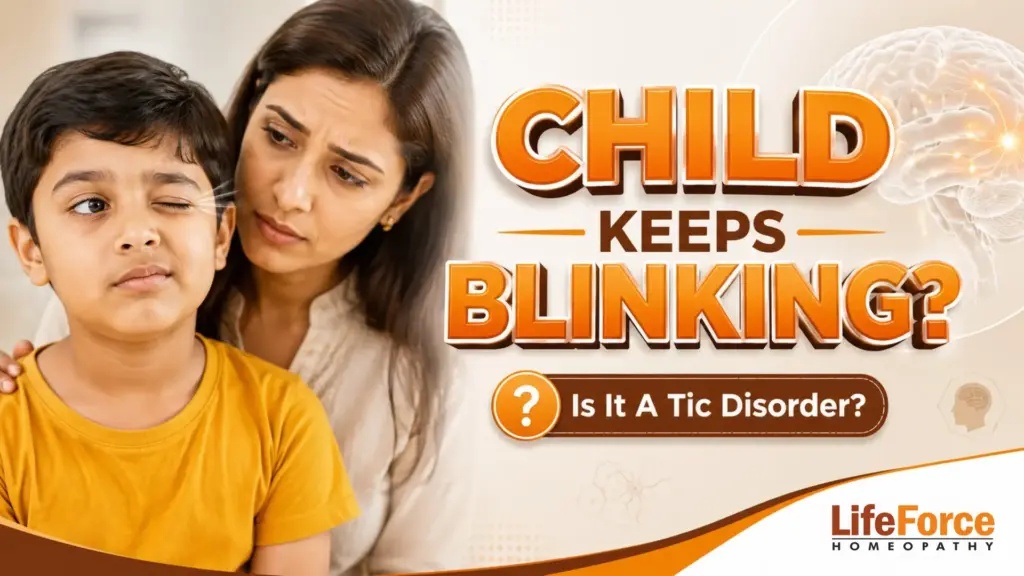
It is natural for parents to worry when a child suddenly starts blinking repeatedly, shrugging their shoulders, making sounds, or showing involuntary movements. These actions may look unusual, but they may be signs of a childhood tic disorder.
Tics can affect a child’s confidence, school life, and social comfort, especially if other children notice or tease them. Parents often wonder whether the tics are temporary, whether the child will outgrow them, and when medical help is needed.
This blog explains childhood tic disorders, common causes, triggers, types, treatment options, and how homeopathy may support selected children with tic-related concerns.
What Is a Childhood Tic Disorder?
A childhood tic disorder is a neurological condition in which a child makes sudden, repetitive, involuntary movements or sounds.
Tics usually begin between the ages of 5 and 12 years. They may increase during stress, excitement, tiredness, or emotional changes.
Some children may feel a strong internal urge before the tic occurs. After the tic, they may feel temporary relief. This is known as a premonitory urge.
Living with a Chronic Condition? Get Expert Guidance.
Talk to Dr. Rajesh Shah — 40+ years of experience in managing chronic skin conditions with a personalized, long-term approach.
Common tics include:
- Head jerking & eye blinking
- Nose twitching
- Facial grimacing
- Shoulder shrugging
- Throat clearing
- Coughing sounds
- Humming or other vocal sounds
Tics are not done deliberately, so children should not be blamed or punished for them.
Types of Tic Disorders
Tic disorders are classified based on the type and duration of symptoms.
Motor Tics
Motor tics involve sudden movements such as blinking, facial movements, shoulder shrugging, head jerking, lip biting, or nose twitching.
Complex Motor Tics
These involve larger or more coordinated movements such as jumping, bending, twisting, touching objects, or repeating certain actions.
Vocal Tics
Vocal tics include sudden sounds such as throat clearing, coughing, humming, sniffing, or making unusual noises.
Provisional Tic Disorder
This is when motor tics, vocal tics, or both are present for less than one year.
Persistent Tic Disorder
This is when either motor tics or vocal tics continue for more than one year.
Tourette Syndrome
Tourette syndrome is a neurological tic disorder that starts in childhood. It involves multiple motor tics and at least one vocal tic for more than one year.
Some children with Tourette syndrome may also have ADHD, OCD, anxiety, or learning difficulties.
Do Children Outgrow Tics?
Many children show significant improvement over time. Mild or temporary tics may reduce within a few months to a year. In many cases, tics become less frequent or less intense during the teenage years.
However, some children may continue to have chronic tics or Tourette syndrome. These children may need longer-term support, behavioral therapy, medical monitoring, and emotional guidance.
The course of tic disorders varies from child to child. Parents should avoid panic and focus on proper evaluation, support, and trigger management.
At What Age Do Tics Usually Start?
Tics commonly begin between 5 and 12 years of age. They are seen more often in boys than girls.
This age is important because children are developing emotionally, socially, and neurologically. School pressure, social adjustment, academic stress, excitement, fear, or emotional changes may influence tic symptoms in some children.
Parents and teachers play an important role by creating a calm and supportive environment.
What Makes Tics Worse?
Tics may increase during certain situations. Common triggers include:
- Anxiety or fear
- Emotional stress
- Anger or excitement
- Lack of sleep
- Fatigue
- Academic pressure
- Scolding or criticism
- Bright lights or strong smells
- Certain sensory triggers
- Illness or tiredness
Not every child has the same trigger. Observing patterns can help parents understand what worsens the tics.
How to Help a Child With Tics
The most important step is to avoid making the child feel guilty or embarrassed.
Parents can help by:
- Maintaining a calm home environment
- Avoiding repeated correction of tics
- Not scolding or punishing the child
- Supporting the child emotionally
- Informing teachers when needed
- Preventing bullying at school
- Encouraging proper sleep
- Reducing unnecessary academic pressure
- Promoting hobbies, play, and relaxation
- Helping the child follow a healthy routine
When children feel safe and supported, stress-related tic worsening may reduce.
Can Tic Disorder Go Away Naturally?
Provisional or temporary tics may go away within a few months to one year.
Chronic tic disorders may take longer and may need professional help. If tics continue for more than one year, become frequent, or affect the child’s daily life, parents should consult a doctor.
Diagnosis and Evaluation
Tic disorders are usually diagnosed clinically. There is no single blood test that confirms tic disorder.
A doctor may evaluate:
- Type of tics
- Duration of symptoms
- Frequency and severity
- Family history
- Emotional triggers
- School or social impact
- Associated ADHD, OCD, anxiety, or learning issues
- Other neurological concerns, if present
In selected cases, investigations such as EEG, MRI, or other tests may be advised to rule out other conditions.
Treatment Options for Tic Disorders
Mild tics may not need aggressive treatment. In many cases, reassurance, observation, trigger management, and emotional support are enough.
For persistent or troubling tics, treatment may include:
- Behavioral therapy
- Comprehensive Behavioral Intervention for Tics, also called CBIT
- Stress management
- Parent and teacher counseling
- Medical treatment in selected cases
- Supportive therapies under professional guidance
CBIT helps children become more aware of tics and learn strategies to manage them better.
Homeopathy for Tic Disorders
Homeopathy follows an individualized approach in tic disorders. The treatment is selected after studying the child’s complete symptom picture.
A homeopathic doctor may evaluate:
- Type of tics
- Frequency and intensity
- Triggers
- Emotional state
- Family history
- Sleep pattern
- Associated ADHD, OCD, anxiety, or fears
- General health and constitution
Homeopathy may support selected children with tic disorders by addressing individual factors such as trigger sensitivity, emotional stress, nervous system sensitivity, and overall well-being. Parents exploring tic disorder relief with homeopathy should seek guidance from a qualified medical professional after a proper diagnosis. Response to treatment may vary from child to child.
Lifestyle and Supportive Care Tips
Lifestyle support can help children manage tic symptoms better.
- Ensure proper sleep.
- Maintain a calm home and school environment.
- Avoid scolding or shaming the child.
- Do not keep pointing out the tics.
- Reduce unnecessary academic pressure.
- Encourage hobbies and physical activity.
- Help the child manage stress.
- Maintain a healthy diet and routine.
- Speak to teachers if tics affect school life.
Support from parents, teachers, and friends can make a big difference.
Life Force Homeopathy Approach
At Life Force Homeopathy, tic disorder cases are evaluated through detailed case-taking. The focus is on understanding the child’s symptoms, triggers, emotional expression, family history, associated concerns, and overall constitution.
The approach includes:
- Detailed case evaluation
- Individualized homeopathic treatment plan
- Experienced team of doctors
- Regular follow-up and monitoring
- Online and in-clinic consultation options
- Supportive care for chronic neurological and behavioral concerns
Parents can visit Life Force Homeopathy or start with an online homeopathic consultation.
To understand the possible scope of homeopathic support, you can take the Assessment Test.
Conclusion
Tic disorders in children can be worrying for parents, but many mild or temporary tics improve with time. Support, patience, proper sleep, reduced stress, and a calm environment can help children cope better.
If tics are frequent, worsening, lasting more than one year, or affecting school and confidence, professional evaluation is important.
At Life Force Homeopathy, tic disorders are approached through individualized case evaluation and supportive homeopathic care under qualified medical supervision.
Worried About Your Child’s Tics?
At Life Force Homeopathy, our doctors study your child’s tic pattern, triggers, emotional state, family history, associated concerns, and overall health before planning individualized homeopathic support.