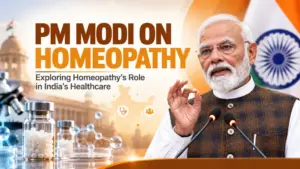



Why Personalized Healthcare Is Growing, and Where Homeopathy Fits Into the Conversation
Two people may have the same diagnosis and still experience illness differently.
One may tolerate a medicine well. Another may struggle with side effects. Symptoms, treatment goals, lifestyle, disease severity, and response can all vary.
This has increased interest in homeopathy research, especially among patients and practitioners looking for a more patient-centred approach to long-term care.
But homeopathy and precision medicine are not the same. Both pay attention to the person behind the diagnosis, but their methods, tools, and evidence standards are very different.
How Personalized Healthcare Adapts Treatment to the Person, Not Just the Diagnosis
Personalized healthcare means adapting care to a person’s health status, preferences, risks, treatment response, and circumstances rather than assuming everyone with the same diagnosis needs the same approach.
This is especially relevant in chronic disease, where people may differ in severity, treatment tolerance, associated conditions, lifestyle, goals, and response.
Living with a Chronic Condition? Get Expert Guidance.
Talk to Dr. Rajesh Shah — 40+ years of experience in managing chronic skin conditions with a personalized, long-term approach.
Precision medicine uses measurable biological information such as genetics, biomarkers, or molecular profiles to guide treatment.
Homeopathic care works differently and relies mainly on detailed symptoms and the broader case pattern. The two approaches should therefore not be presented as scientifically interchangeable.
Why Homeopathic Consultations Look Beyond the Main Complaint
A homeopathic consultation may explore how symptoms behave over time, what worsens or relieves them, recurrence patterns, sleep, appetite, emotional state, associated complaints, previous treatment, and long-term changes.
This is one reason some patients associate homeopathy in modern healthcare with a more detailed style of consultation.
For long-standing conditions, regular follow-up may also help track changes over time rather than focusing only on a single visit.
Why Patient-Centred Care Matters More in Chronic and Long-Term Conditions
Patient-centred care can influence how well someone understands the treatment plan, follows it, reports problems, and takes part in decisions.
This matters especially in chronic care, where treatment may continue for months or years.
Different patients may tolerate treatment differently or value different outcomes. Shared decision-making helps the patient become an active participant rather than a passive receiver of advice.
This approach also connects with the emphasis on detailed case-taking and regular follow-up used at Life Force Homeopathy.
Whole-Person Care Matters, but Improvement Still Needs to Be Measured
Whole-person healthcare means paying attention to how illness affects sleep, mood, mobility, work, appetite, family life, and daily functioning, not only the diagnosis.
Homeopathy may contribute to this broader conversation, but a whole-person approach does not automatically prove treatment effectiveness.
The more useful questions are whether symptoms changed, daily functioning improved, flare-ups became less frequent, and whether those changes were measured consistently.
Ready to Know Your Recovery Chances?
Discover your recovery chances from chronic diseases in percentage with Life Force Homeopathy’s FREE Assessment Test. Get a personalized evaluation from our experienced doctors.
Start Your FREE Assessment Test →What Good Homeopathy Research Should Actually Measure
Useful clinical research in homeopathy should ask clear questions: who is being studied, what condition they have, what outcome is being measured, and how the result compares with placebo, usual care, or another intervention.
Good research also needs validated outcome measures, adequate follow-up, transparent analysis, and reporting of both positive and negative findings.
Mechanism studies can explore how a treatment might work, but they should not be treated as proof that it works clinically.
Can Homeopathic Source Materials Lead to New Drug Research?
Plants, minerals, or biological materials used in homeopathic practice may sometimes generate useful research questions.
If a source material shows biological activity, researchers may investigate it further. But studying the original substance is not the same as proving that a homeopathic dilution is clinically effective.
Any promising compound would still need pharmacological testing, toxicology, preclinical studies, clinical trials, and regulatory review.
Why Homeopathy Research Needs Positive, Negative, and Inconclusive Results
Good research should not publish only the success stories.
Negative and inconclusive findings matter too.
Without them, the evidence can look stronger than it really is.
Researchers also need to separate four things clearly:
- What the patient reported
- What the doctor observed
- What was found in the laboratory
- What was proven in a controlled clinical study
These are not the same.
At Life Force Homeopathy, Dr. Rajesh Shah’s published research, collaborations, and patented work can be discussed as documented research activity, but each finding should still be judged by normal scientific standards.
How Homeopathy Can Be Used Alongside Modern Healthcare Without Compromising Safety
If homeopathy is used alongside conventional care, diagnosis should come first.
Necessary tests should not be skipped. Specialist care should not be delayed. Serious or progressive conditions should receive proper medical treatment.
Homeopathy should never delay:
- Emergency diagnosis
- Hospitalization
- Surgery
- Essential medicines
- Specialist treatment
- Important investigations
Patient choice matters, but safety matters more.
How Life Force Homeopathy Is Building a More Research-Focused Approach
For Life Force Homeopathy, the stronger approach is not to make bigger claims.
It is to document better.
That means maintaining clear case records, tracking outcomes, publishing research, following patients over time, and working with other researchers where relevant.
This is where Life Force Homeopathy research can add value to the wider conversation.
The aim should be to understand what can be supported by evidence and what still needs more study.
What Will Decide the Future of Homeopathy in Modern Healthcare?
The future of homeopathy will not be decided only by whether people believe in it or reject it.
The more useful question is whether it can produce reliable evidence about where it may help, where it may not, and how it can be used safely.
That means better studies, clearer reporting, stronger safety standards, and honest discussion of limitations.
Homeopathy should not be presented as a replacement for modern medicine.
A more realistic role is to explore whether certain parts of its care model can contribute to patient-centred healthcare in a responsible way.
Living with Chronic and Recurring Diseases?
Receive a personalized treatment plan from our experienced homeopathic doctors. Trusted by over 100,000+ patients across 180+ countries for safe, natural and long-term management of chronic diseases.
Conclusion
Healthcare is becoming more personal, but that does not mean every personalized approach is scientifically the same.
Homeopathy may contribute through detailed consultations, long-term follow-up, patient participation, and further study.
Its future role will depend on good homeopathy research, transparent reporting, safety, and stronger research-based homeopathic treatment standards.
For Life Force Homeopathy, the stronger message is simple: homeopathy should be studied carefully, used responsibly, and discussed as part of a wider conversation around patient-centred care rather than as a replacement for conventional medicine.