





Introduction
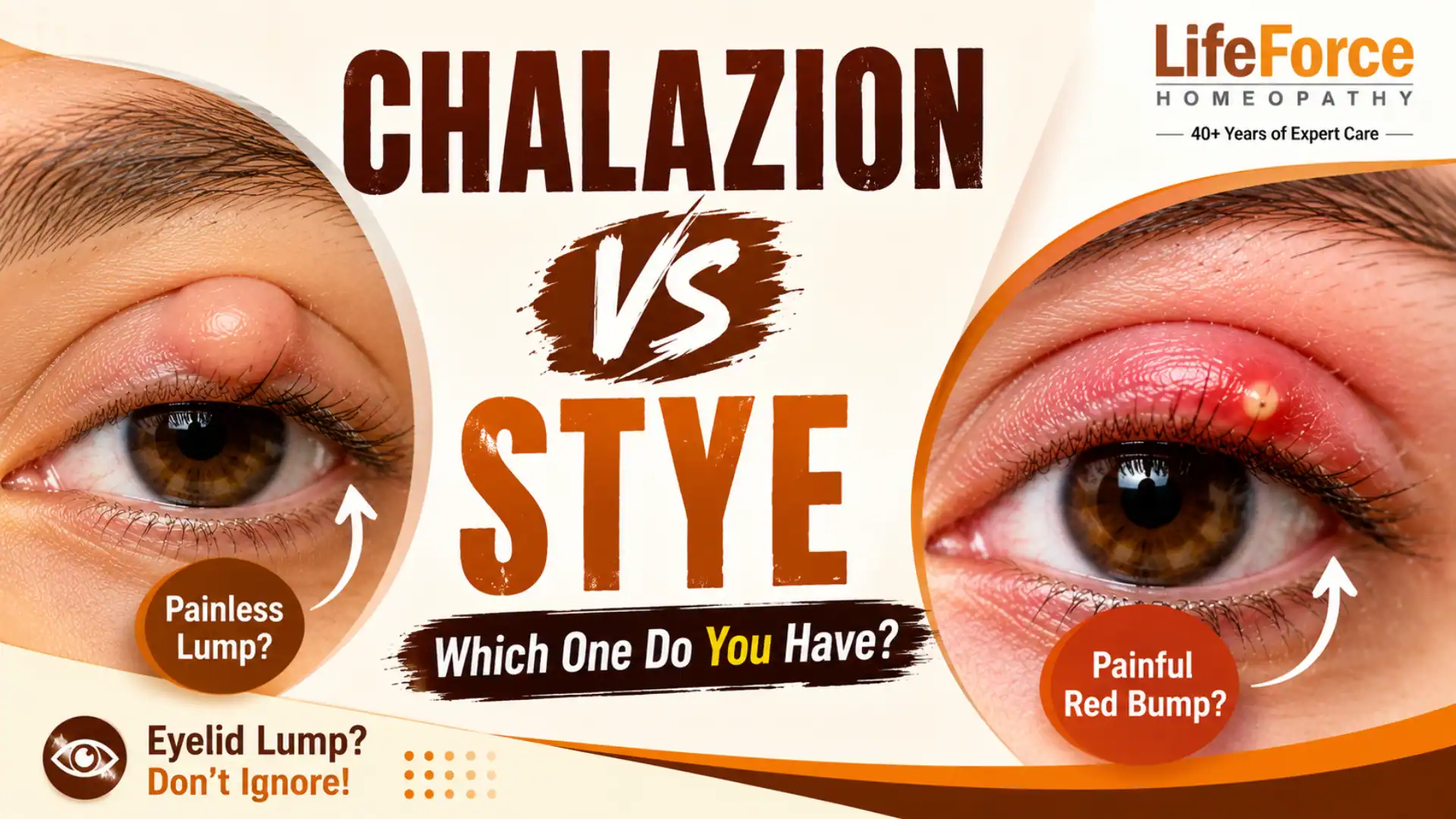
Have you noticed a small lump, swelling, or bump on your eyelid and wondered whether it is a chalazion or a stye?
Although both conditions can appear similar, they are different eyelid problems with different causes and symptoms. A chalazion usually develops due to blockage of an oil gland, while a stye is commonly linked with an infection of an eyelid gland or eyelash follicle. Chalazion homeopathy treatment may be considered as a supportive treatment approach based on the individual’s symptoms.
Understanding the difference between chalazion and stye can help you identify the condition better and know when medical advice may be needed.
What Is a Chalazion?
A chalazion is a small lump that develops on the eyelid due to blockage of the meibomian glands. These glands produce an oily substance that helps keep the eyes lubricated.
When the gland opening becomes blocked, oil gets trapped inside, causing inflammation and swelling.
A chalazion:
- Usually develops gradually over days or weeks
- Is often painless
- Appears as a firm, round eyelid lump
- Can occur on the upper or lower eyelid
- May cause heaviness or blurred vision if it becomes large
Unlike a stye, a chalazion is usually not caused by an active infection.
What Is a Stye?
A stye, also called a hordeolum, is an infection affecting an eyelid gland or eyelash follicle.
It is commonly caused by bacteria, especially Staphylococcus species, which normally live on the skin.
A stye usually:
- Appears suddenly
- Is painful and tender
- Causes redness and swelling
- Develops near the edge of the eyelid
- May form a small pus-filled bump
There are two main types of styes:
External Stye
An external stye develops at the base of an eyelash and affects the eyelash follicle or nearby glands.
Internal Stye
An internal stye develops deeper inside the eyelid when a meibomian gland becomes infected.
Chalazion vs Stye: Key Differences
| Chalazion | Stye |
| Caused by blocked oil gland | Usually caused by bacterial infection |
| Usually painless | Usually painful and tender |
| Develops slowly | Often appears suddenly |
| Less redness initially | Red and swollen |
| Located away from eyelid edge | Usually near eyelid margin |
| May last for weeks | Often improves within days to weeks |
Sometimes the difference is not obvious, especially during early stages. An eye specialist can confirm the diagnosis through examination.
Chalazion Causes
A chalazion develops mainly due to blockage of the meibomian glands.
Factors that may increase the risk include:
- Blocked oil glands
- Chronic eyelid inflammation
- Blepharitis
- Oily skin conditions
- Previous history of chalazion
- Recurrent eyelid gland blockage
People who frequently experience eyelid inflammation may have a higher chance of developing repeated chalazia.
Stye Causes
A stye usually occurs due to infection of an eyelid gland or eyelash follicle.
Common contributing factors include:
- Bacterial infection
- Poor eyelid hygiene
- Touching eyes with unclean hands
- Infected eyelash follicles
- Chronic blepharitis
Maintaining good eyelid hygiene may help reduce the risk of recurrent styes.
Symptoms of a Chalazion
Common symptoms of a chalazion include:
- Small round lump on the eyelid
- Mild eyelid swelling
- Little or no pain
- Feeling of heaviness in the eyelid
- Cosmetic concern due to visible swelling
- Blurred vision if the lump presses on the eye
The lump may remain for several weeks and may slowly reduce over time.
Symptoms of a Stye
A stye usually causes more noticeable inflammation.
Common symptoms include:
- Painful eyelid swelling
- Redness
- Tenderness while touching the eyelid
- Warmth around the affected area
- Watering of eyes
- Discomfort while blinking
- Small pus-filled bump in some cases
Chalazion Treatment and Stye Treatment Options
Treatment depends on whether the condition is a chalazion or a stye.
Common supportive measures include:
Warm Compress
Applying a warm compress over the closed eyelid may help soften blocked oil and support natural drainage.
Eyelid Hygiene
Keeping the eyelids clean may reduce inflammation and support eyelid health.
Avoid Squeezing the Lump
Do not squeeze, prick, or pop the lump, as this may worsen irritation or spread infection.
Medical Treatment
If a stye is infected, an eye specialist may recommend appropriate treatment. Persistent chalazion cases may require further medical procedures in selected situations.
Self-medication should be avoided, especially when the diagnosis is uncertain.
When Should You Visit an Eye Specialist?
Consult an eye specialist if:
- The lump persists for several weeks
- Pain or swelling is increasing
- Vision becomes blurred
- The eyelid cannot open properly
- Redness spreads around the eye
- Fever develops
- Chalazion or stye keeps returning
- You are unsure whether it is a chalazion or another eyelid condition
Diagnosis and Evaluation
Diagnosis usually involves:
- Medical history
- Examination of the eyelid
- Evaluation of size, location, redness, and tenderness
- Assessment of recurrent eyelid problems
People with repeated chalazia may be evaluated for conditions such as chronic blepharitis or meibomian gland dysfunction.
Homeopathic Perspective on Chalazion
Homeopathy follows an individualized approach rather than using the same medicine for every person with chalazion.
During evaluation, a homeopathic physician may consider:
- Recurrence pattern
- Overall health
- Associated skin conditions
- Lifestyle factors
- Medical history
- General constitution
Homeopathy may support selected individuals with recurrent chalazion by focusing on their overall health pattern and individual symptoms.
Responses vary from person to person, and persistent, painful, or vision-related eyelid swelling should always be evaluated by an eye specialist.
How Homeopathy May Support Recurrent Chalazion Cases
Some individuals experience repeated chalazion despite maintaining eyelid hygiene.
In such cases, homeopathic treatment of recurrent chalazion may be considered as supportive care after proper diagnosis. The approach focuses on understanding factors contributing to recurrence and creating an individualized treatment plan.
Treatment may involve:
- Detailed case evaluation
- Understanding recurrence patterns
- Assessing overall health
- Individualized homeopathic prescription
- Regular follow-up
Lifestyle and Eyelid Care Tips
Simple habits can support eyelid health:
- Wash hands before touching eyes
- Maintain eyelid hygiene
- Remove eye makeup before sleeping
- Avoid sharing eye cosmetics
- Replace expired makeup products
- Clean contact lenses properly
- Avoid rubbing eyes frequently
- Seek early care for eyelid infections
Homeopathic Treatment for Chalazion at Life Force Homeopathy
At Life Force Homeopathy, recurrent chalazion and stye cases are approached through detailed case evaluation rather than a one-size-fits-all method.
The doctors evaluate:
- Symptoms and recurrence pattern
- Overall health
- Medical history
- Associated skin conditions
- Individual constitution
The treatment approach includes:
- Detailed case analysis
- Individualized homeopathic medicines
- Regular follow-up monitoring
- Online and in-clinic consultations
- Supportive care along with appropriate eye evaluation when required
Visit Life Force Homeopathy, one of the best homeopathy clinics in India, or start your treatment with an online homeopathic consultation.
Conclusion
A chalazion and a stye may look similar, but they are different eyelid conditions. A chalazion usually develops due to blocked oil glands and is often painless, while a stye is commonly related to infection and tends to be painful.
Understanding the symptoms, causes, and differences between the two can help you seek timely care. Proper eyelid hygiene, warm compresses, and medical guidance when needed can support better eyelid health.
For individuals with recurrent chalazion, an individualized approach under qualified medical supervision may help support overall well-being.
Recurrent Eyelid Lump or Chalazion?
At Life Force Homeopathy, our doctors evaluate your symptoms, recurrence pattern, health history, and individual factors before planning personalized homeopathic support.