

Introduction
Few skin problems feel as frustrating as one that keeps coming back. Many people with lichen planus describe the same cycle: an itchy purple rash settles with a cream, only to return a few weeks or months later, sometimes in a new place. When the mouth is involved, even brushing your teeth or eating a mildly spicy meal can sting.
This guide explains what lichen planus is, what tends to set it off, how doctors confirm it, and the treatment options available. It also explains where homeopathy fits in, what it can reasonably offer, and where its limits lie, so you can make informed decisions with your doctors.
What Is Lichen Planus?
Lichen planus (pronounced LIE-ken PLAY-nus) is an inflammatory condition in which certain immune cells, called T-cells, mistakenly attack the cells of the skin or the moist lining of the body (the mucous membranes). Because the body’s own defences are involved, it is often described as an autoimmune or immune-mediated condition. Why this immune reaction starts is not fully understood.
On the skin, lichen planus often settles on its own within about 9 to 18 months, although it can leave dark marks behind and may return. Lichen planus in the mouth tends to last longer, often for several years, with periods of calm and flare-ups.
Is Lichen Planus Contagious?
No. You cannot catch lichen planus from another person, and you cannot pass it on through touch, sharing utensils or intimate contact.
Lichen Planus Symptoms: What to Look For
Lichen planus symptoms depend on which part of the body is affected. Some people have only one area involved; others notice changes in several places.
Living with a Chronic Condition? Get Expert Guidance.
Talk to Dr. Rajesh Shah — 40+ years of experience in managing chronic skin conditions with a personalized, long-term approach.
Symptoms by Body Area
Lichen Planus on the Skin
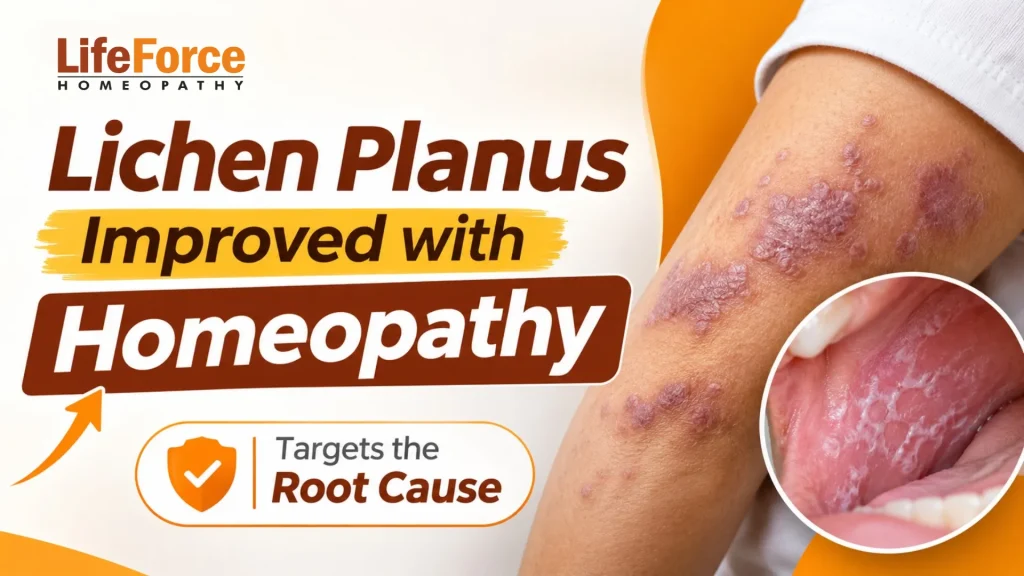
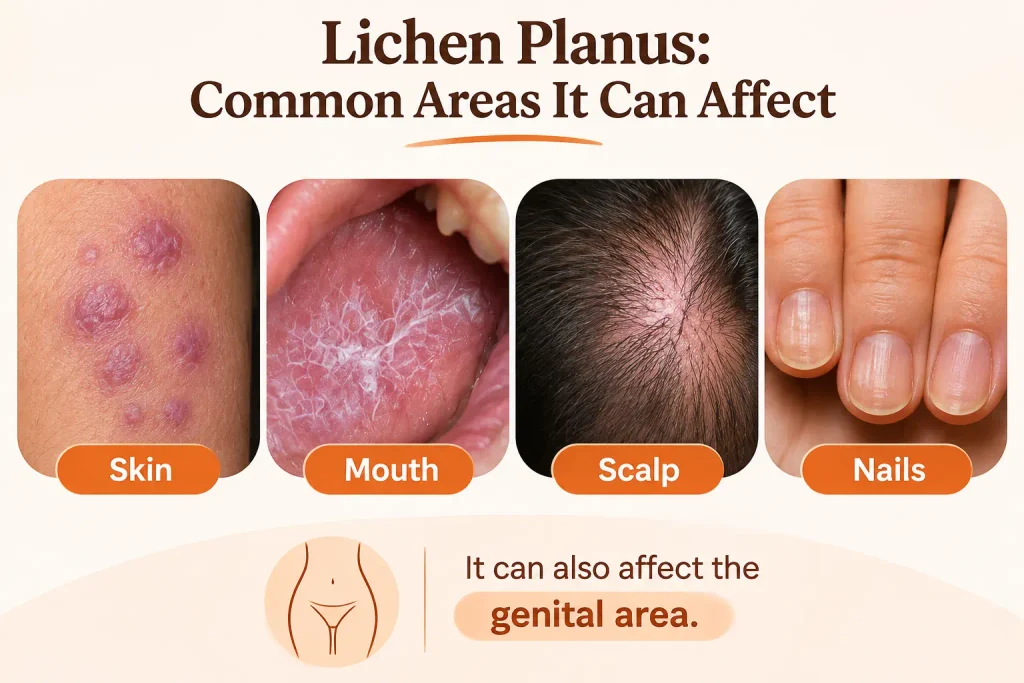
Lichen planus of the skin commonly appears on the inner wrists, forearms, ankles, shins and lower back.
Typical Skin Lesions
- Small, shiny, flat-topped bumps that are purple, violet or reddish. On darker skin, they may look greyish-brown or darker than the surrounding skin.
- Fine white lines across the surface of the bumps, known as Wickham’s striae.
- Itching that ranges from mild to intense, often worse at night.
- New bumps appearing in a line where the skin has been scratched or injured.
- Brown or grey marks (post-inflammatory pigmentation) that can remain for months after the rash settles.
Thicker Patches on the Legs
In some people, especially on the shins, the patches become thick, rough and very itchy. This form, called hypertrophic lichen planus, often takes longer to settle and needs a doctor’s review.
Lichen Planus in the Mouth
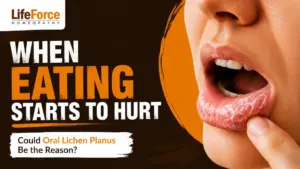
Lichen planus in the mouth (oral lichen planus) usually affects the inside of the cheeks, the gums and the tongue. You can read more in our guide on oral lichen planus treatment and everyday mouth care.
Lace-Like White Lines
The most common pattern is a web of fine white lines on the inner cheeks. It is often painless and may first be noticed by a dentist.
Red, Raw or Ulcerated Areas
In the erosive form, the lining becomes red, raw or ulcerated. This can cause burning, soreness and pain with spicy, sour or hot foods.
A Warning Sign Not to Ignore
Long-standing oral lichen planus is linked with a small increase in the risk of mouth cancer. A mouth sore that does not heal, bleeds, thickens or changes in appearance should be checked promptly by a doctor or dentist.
Scalp, Nails and Genital Area
- Scalp: redness and scaling around hair follicles that can lead to permanent bald patches. This form is called lichen planopilaris and needs early care.
- Nails: thinning, ridging, splitting, and sometimes loss of the nail.
- Genital area: sore, red or white patches on the vulva or ring-shaped patches on the penis, which can cause pain and discomfort.
Common Types of Lichen Planus
Doctors describe several patterns, including classic skin lichen planus, oral lichen planus (including erosive oral lichen planus), linear lichen planus (lesions in a line), hypertrophic lichen planus, genital lichen planus and lichen planopilaris of the scalp. Knowing the type helps guide treatment and follow-up.
Lichen Planus Causes and Triggers
The underlying cause of lichen planus is an irregular immune response. What we do know is that certain factors can start it off or make it worse in people who are prone to it:
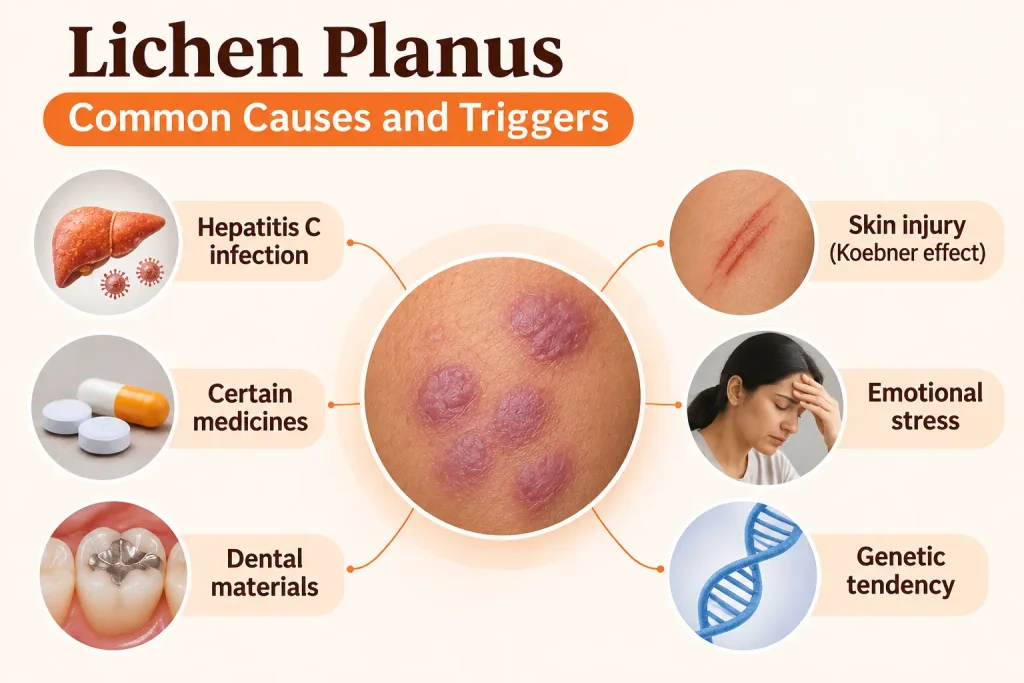
- Hepatitis C infection: some studies have found a link, so doctors may suggest a blood test, particularly when the mouth is involved.
- Certain medicines: some painkillers (NSAIDs), blood pressure medicines, antimalarials and others can cause a similar rash, known as a lichenoid drug reaction.
- Dental materials: in some people with oral lichen planus, a reaction to metal fillings or other dental materials may play a role.
- Skin injury: scratches, cuts, burns or friction can trigger new lesions on the injured skin. This is called the Koebner effect.
- Emotional stress: many patients notice flares during stressful periods, and stress is recognised as a possible contributing factor.
- Genetic tendency: a family tendency towards immune-related conditions may make some people more susceptible.
Because triggers differ from person to person, identifying your own pattern is an important part of long-term management.
How Is Lichen Planus Diagnosed?
A doctor or dermatologist can often recognise lichen planus by its appearance. To confirm the diagnosis, or when the picture is unclear, they may recommend:
- A biopsy, in which a small sample of skin or mouth lining is taken and examined under a microscope.
- Blood tests, including a test for hepatitis C where appropriate.
- A review of your medicines, to rule out a drug reaction that looks like lichen planus.
- Patch testing, if a reaction to dental materials is suspected.
A proper diagnosis matters because lichen planus can look like other conditions, such as psoriasis, eczema, pemphigus vulgaris or white patches in the mouth caused by other diseases. Treatment that suits one of these may not suit another.
Living With Lichen Planus? Get Expert Guidance.
If your rash keeps returning or your mouth feels sore every time you eat, you can book an online consultation with Life Force Homeopathy for an individualised assessment that works alongside your existing medical care.
Lichen Planus Treatment Options
Mild lichen planus of the skin may not need any treatment and can settle with time. When itching, pain or spread is a problem, your doctor or dermatologist may recommend:
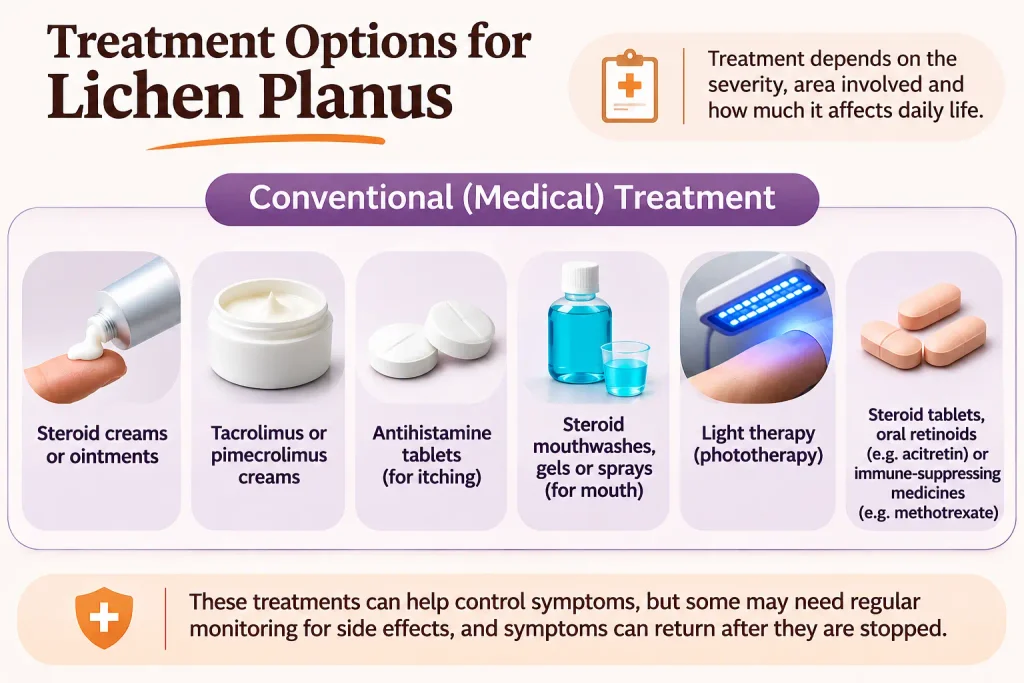
Conventional Medical Treatment
- Steroid creams or ointments: the most commonly used first treatment to reduce inflammation and itch.
- Tacrolimus or pimecrolimus: non-steroid creams that calm the immune reaction in the skin.
- Antihistamine tablets: to ease itching, especially at night.
- Steroid mouthwashes, gels or sprays: for symptoms in the mouth.
- Light therapy (phototherapy), steroid tablets or injections, oral retinoids such as acitretin, or immune-suppressing medicines such as methotrexate: for widespread or stubborn disease.
These treatments can work well for symptom control. Some, especially strong steroids and immune-suppressing medicines, need regular monitoring for side effects when used for long periods, and symptoms can return after treatment stops. These are the reasons many people look for additional, longer-term support.
Comparing Approaches at a Glance
| Aspect | Conventional medical treatment | Homeopathy as complementary care |
|---|---|---|
| Main aim | Calm inflammation, itching and pain, and protect areas such as the mouth and scalp | Individualised care that aims to address immune imbalance and personal triggers, with fewer flare-ups as the goal |
| Common options | Steroid creams, tacrolimus or pimecrolimus, antihistamines and steroid mouthwashes; light therapy or tablets for severe disease | Oral homeopathic medicines chosen after a detailed case study; self-medication is not advised |
| Things to keep in mind | Strongest research evidence; some medicines need monitoring for side effects with long-term use | Generally well tolerated; research is limited and results vary from person to person |
| Long-term outlook | Symptoms can return after treatment is stopped | Response depends on how long the condition has been present, its severity, the areas affected and previous treatment; regular follow-up is needed |
Lichen Planus Treatment in Homeopathy: Role, Evidence and Limitations
Homeopathy is a system of individualised medicine. At Life Force, homeopathic medicine for lichen planus is selected after a detailed case study, not simply according to the rash. It is offered as complementary care, meaning it is used alongside appropriate medical care rather than instead of it.
How Homeopathy Approaches Lichen Planus
Focusing on Immune Imbalance
Because lichen planus is driven by an overactive T-cell response, the homeopathic approach aims to address this underlying immune imbalance rather than only the visible rash.
Treating the Person as a Whole
The doctor considers your symptoms, the parts of the body affected, your medical history, your sleep, diet, temperament and overall constitution before choosing a medicine. This is why two people with lichen planus may receive different medicines.
Paying Attention to Stress
Stress is one of the factors that can keep the condition active. Understanding emotional triggers is part of the case assessment and long-term plan.
What Does the Evidence Say?
The research on homeopathy for lichen planus is limited. A small randomised trial in patients with oral lichen planus and a few published case series have reported improvement, but larger, well-designed studies are needed before firm conclusions can be drawn. Topical steroids and similar medicines remain the treatments with the strongest evidence. We believe it is important to be clear about this so you can make an informed choice.
Using Homeopathy Alongside Your Current Medicines
Please continue any steroid creams, mouthwashes or tablets prescribed by your doctor. Homeopathic medicines can be taken alongside them. If your symptoms improve over time, any decision to reduce or stop a prescribed medicine should be made together with the doctor who prescribed it, gradually and under supervision. Never stop steroids or immune-suppressing medicines on your own.
Homeopathic medicines are generally well tolerated, but they should be prescribed by a qualified practitioner. Tell both your homeopath and your doctor about every medicine you take, and report any new or worsening symptoms promptly.
How Long Does Treatment Take?
There is no fixed timeline. In our clinical experience, the response depends on several factors:
- How long you have had lichen planus
- How severe and widespread it is
- Which areas are affected, such as the skin, mouth, scalp or nails
- Previous treatment, including long-term steroid use
- Ongoing triggers such as stress, medicines or dental factors
Lichen planus is a chronic condition, so regular follow-up and patience are part of any treatment plan.
How to Stop Lichen Planus From Spreading: Everyday Care
There is no guaranteed way to stop lichen planus from spreading, but these habits, recommended by dermatologists, can reduce irritation and the chance of new lesions:
Skin Care Tips
- Avoid scratching and rubbing. Keep nails short and use a cool compress for itch.
- Wash with lukewarm water and a mild, fragrance-free cleanser, then pat the skin dry.
- Moisturise regularly to reduce dryness and itching.
- Protect your skin from cuts, burns and friction from tight clothing.
- Find a stress-management routine that works for you, such as walking, breathing exercises or meditation.
Mouth Care Tips
- Brush gently twice a day with a soft toothbrush and a mild toothpaste free of sodium lauryl sulphate.
- Avoid foods that sting, such as spicy, sour, salty or very hot food and citrus.
- Avoid tobacco and alcohol, which irritate the mouth and raise the risk of mouth cancer.
- Visit your dentist regularly for cleaning and to monitor any changes.
When to See a Doctor
See a doctor or dermatologist if:
- You notice a new rash that you think may be lichen planus, so the diagnosis can be confirmed.
- The itch or pain affects your sleep, eating or daily life.
- A mouth sore does not heal within about three weeks, bleeds, thickens or changes in appearance.
- You have patches on the scalp with hair loss, changes in your nails, or sore genital patches.
- The rash started after you began a new medicine. Do not stop the medicine on your own; ask your doctor first.
Why Choose Life Force Homeopathy?
- Life Force Homeopathy has been managing chronic skin conditions, including lichen planus, since 1985, under the guidance of Dr. Rajesh Shah, who has more than 40 years of experience in chronic diseases.
- Every case is studied in detail, and treatment is planned individually.
- Treatment follows a systematic, documented approach with regular follow-up.
- Online and in-clinic consultations are available.
You can learn more about our approach on our lichen planus homeopathic treatment page.
Conclusion
Lichen planus can be uncomfortable and unpredictable, but understanding your type, your triggers and your treatment options makes it easier to manage. Medical treatment can control symptoms, everyday skin and mouth care can reduce irritation, and individualised homeopathy may be considered as complementary care for people looking for longer-term support. Whatever you choose, keep your doctor involved and have any persistent mouth sores checked.
Related Lichen Planus Case Studies
- Cutaneous lichen planus with itching and pigmentation improved with homeopathy
- Relapsing lichen planus with 12 years of chronicity
- A patient’s lichen planus improvement journey with homeopathy
- Lichen planus treatment case study from Bangalore
Each case study describes one patient’s experience. Results vary, and one person’s outcome does not predict another’s.
Ready to Start Your Treatment?
If lichen planus keeps returning, our doctors can review your history, current treatment and triggers and suggest an individualised plan. Book an online or in-clinic consultation with Life Force Homeopathy.
Disclaimer: This article is for general information and does not replace a consultation with your doctor. Do not stop or change any prescribed medicine without your treating doctor’s advice.