





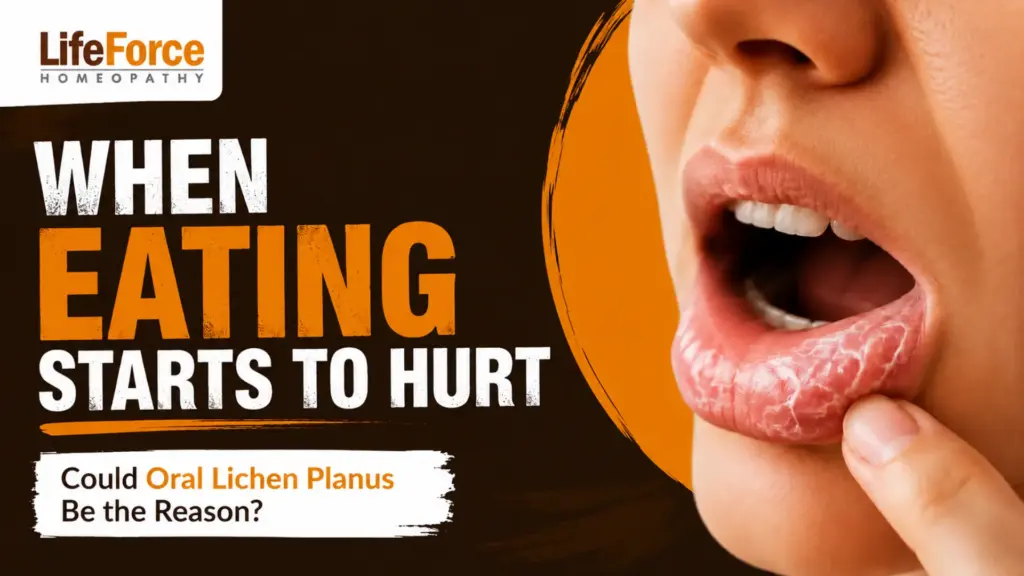
A meal should not feel like something you have to prepare yourself for.
But with oral lichen planus, a little chilli, a sour fruit, or even brushing your teeth can suddenly cause burning. Some people notice white lines inside the cheeks. Others develop red patches, painful ulcers, or soreness on the tongue and gums.
That repeated pattern is often what makes the condition difficult. The mouth may feel better for some time, and then the discomfort returns again.
What Is Happening Inside the Mouth?
Oral lichen planus is a chronic inflammatory condition that affects the lining of the mouth.
It may appear inside the cheeks, on the gums, lips, or as oral lichen planus on tongue. Some patients have mild white patches with almost no pain. Others experience burning, soreness, or ulceration that can interfere with eating and brushing.
Because similar-looking lesions can occur in other oral conditions, proper diagnosis is important before starting any oral lichen planus treatment.
Living with a Chronic Condition? Get Expert Guidance.
Talk to Dr. Rajesh Shah — 40+ years of experience in managing chronic skin conditions with a personalized, long-term approach.
The Signs People Usually Notice First
The most common oral lichen planus symptoms can look very different from one patient to another.
Those Fine White Lines
One of the most typical appearances is a fine white, web-like pattern inside the cheeks. It may look unusual without causing much discomfort.
When the Mouth Feels Raw
Some patients develop red, tender patches that feel sensitive, especially while eating spicy, sour, or very hot food.
When Eating Becomes Painful
Erosive oral lichen planus may cause raw, painful areas inside the mouth. These lesions can make chewing and swallowing uncomfortable.
The Tongue and Gums Can Be Involved Too
When the tongue or gums are involved, brushing and eating may become more difficult. Persistent or changing lesions should always be evaluated by a qualified healthcare professional.
Why Did It Come Back Again?
The exact cause of oral lichen planus is not always clear.
The condition is linked with an immune-related inflammatory response, but there is usually no single reason that explains why one person develops it and another does not.
The oral lichen planus triggers can also vary. Stress, local irritation, spicy or sour food, tobacco, alcohol, some medicines, and certain dental materials may make symptoms worse in some people.
The important part is to notice what repeatedly aggravates your own mouth.
Is Oral Lichen Planus Dangerous?
Most cases do not become serious, but persistent oral lesions should not be ignored.
If an ulcer does not heal, starts bleeding, becomes more painful, develops thickening, or changes in appearance, it should be examined again.
Regular monitoring becomes especially important in long-standing or erosive disease.
Can Oral Lichen Planus Become Cancerous?
The risk of malignant change is considered low, but it is not zero.
This does not mean that every oral lichen planus lesion will become cancerous. It simply means that long-standing, ulcerative, or changing lesions deserve regular dental or medical review.
How Do Doctors Confirm Oral Lichen Planus?
A doctor, dentist, or oral medicine professional usually starts by examining the lesion and asking about symptoms, duration, pain, burning, medicines, and previous episodes.
Sometimes the appearance is typical.
In other cases, a biopsy may be recommended to confirm the diagnosis or rule out another condition that looks similar.
Where Does Homeopathy Fit In?
Oral lichen planus treatment in homeopathy may be considered as supportive care in suitable patients.
The approach is usually individualized because the disease does not behave the same way in everyone.
A practitioner may look at the type of lesion, location, burning, ulcers, duration, recurrence, food sensitivity, stress, associated complaints, previous treatment, and overall health.
Homeopathy should not replace necessary dental, medical, or conventional treatment.
Why Two Patients May Not Receive the Same Medicine
Imagine two patients with oral lichen planus.
One has painless white patches inside the cheeks.
The other cannot eat spicy food because the tongue burns and painful ulcers keep returning.
The diagnosis is the same, but the experience is not.
That is why lichen planus treatment in homeopathy is generally based on the individual disease pattern rather than only the name of the condition.
Is There One Best Homeopathic Medicine for Oral Lichen Planus?
There is no single homeopathic medicine for oral lichen planus that is best for everyone.
Medicine selection may depend on the type and location of lesions, intensity of burning, presence of ulcers, disease duration, frequency of flare-ups, associated health conditions, triggers, and previous treatment history.
For the same reason, lichen planus homeopathic remedies should not be chosen only from an online list or used for self-medication.
What Kind of Improvement Should a Patient Look For?
Patients often focus only on whether the visible patch has disappeared.
But with a chronic recurring condition, other changes can matter too.
Is the burning less intense?
Are ulcers appearing less often?
Is eating becoming easier?
Are flare-ups shorter?
These trends can help doctors judge response over time. Claims about lichen planus homeopathy success should always be understood in the context of individual response.
Ready to Know Your Recovery Chances?
Discover your recovery chances from chronic diseases in percentage with Life Force Homeopathy’s FREE Assessment Test. Get a personalized evaluation from our experienced doctors.
Start Your FREE Assessment Test →How Long Does Oral Lichen Planus Treatment Take?
There is no fixed duration for every patient when it comes to skin disease treatments.
A recent mild case may behave very differently from a condition that has been recurring for years.
Treatment duration can depend on severity, lesion type, triggers, associated conditions, previous treatment, and how the patient responds during follow-up.
Food Becomes Important When the Mouth Is Already Sore
A suitable oral lichen planus diet is less about following a strict chart and more about avoiding foods that repeatedly irritate the mouth.
Foods That May Aggravate Symptoms
Spicy, sour, acidic, very hot, salty, or crunchy foods may increase burning in some patients.
Alcohol and tobacco can also irritate oral tissues.
Foods That May Be Easier to Tolerate
Soft, mild, cool, or lukewarm foods may feel more comfortable when the mouth is sore.
Individual tolerance differs, so patients should observe which foods consistently make symptoms worse.
Small Changes in Oral Care Can Make a Difference
Use a soft-bristled toothbrush and brush gently.
If a toothpaste or mouthwash causes burning, discuss alternatives with your dentist.
Regular dental visits are also useful because they help track whether oral lesions are stable or changing.
Can Homeopathy Be Used With Conventional Treatment?
Yes, homeopathy may be used alongside conventional treatment when appropriate.
Patients should not stop corticosteroids, immunomodulatory medicines, pain-relieving treatment, or other prescribed medicines without speaking to the treating doctor.
Good care works better when every doctor involved knows what the patient is taking.
Living with Oral Lichen Planus?
Receive a personalized treatment plan from our experienced homeopathic doctors. Trusted by over 100,000+ patients across 180+ countries for safe, natural and long-term management of chronic diseases.
When the Mouth Is Telling You Not to Wait
Do not ignore an ulcer that does not heal, unexplained bleeding, a new lump, increasing pain, difficulty swallowing, or a lesion that changes noticeably.
These signs do not automatically mean something serious, but they do need proper evaluation.
Oral Lichen Planus Treatment at Life Force Homeopathy
At Life Force Homeopathy, the condition is not assessed only by looking at the visible patch.
During oral lichen planus homeopathic treatment, doctors may study whether the lesions are white, red, erosive, or ulcerative, where they appear, what causes burning, which foods aggravate symptoms, how often flare-ups return, what treatments were used earlier, and whether other health concerns are present.
Follow-ups help track how the pattern changes over time.
The broader oral lichen planus treatment options may include medical monitoring, oral care, trigger control, diet modification, and supportive homeopathic care where appropriate.
From Life Force Homeopathy:
Oral lichen planus can turn simple things like eating, brushing, or drinking something hot into an uncomfortable experience.
The condition is chronic, and its pattern may rise and fall over time. That is why good management depends on proper diagnosis, regular monitoring, understanding personal triggers, gentle oral care, and an individualized treatment plan.
Homeopathy may be considered as supportive care, while necessary dental and conventional medical treatment continues whenever required.
Conclusion
Oral lichen planus can make everyday activities such as eating, brushing, and enjoying favourite foods uncomfortable. Although its symptoms may fluctuate, persistent white patches, burning, ulcers, or changing oral lesions need proper diagnosis and regular dental or medical follow-up.
Managing the condition usually involves identifying personal triggers, using gentle oral-care habits, making suitable food choices, and following the treatment plan advised by the treating doctor. Supportive homeopathic care may also be considered for suitable patients as part of an individualized, medically monitored approach.