





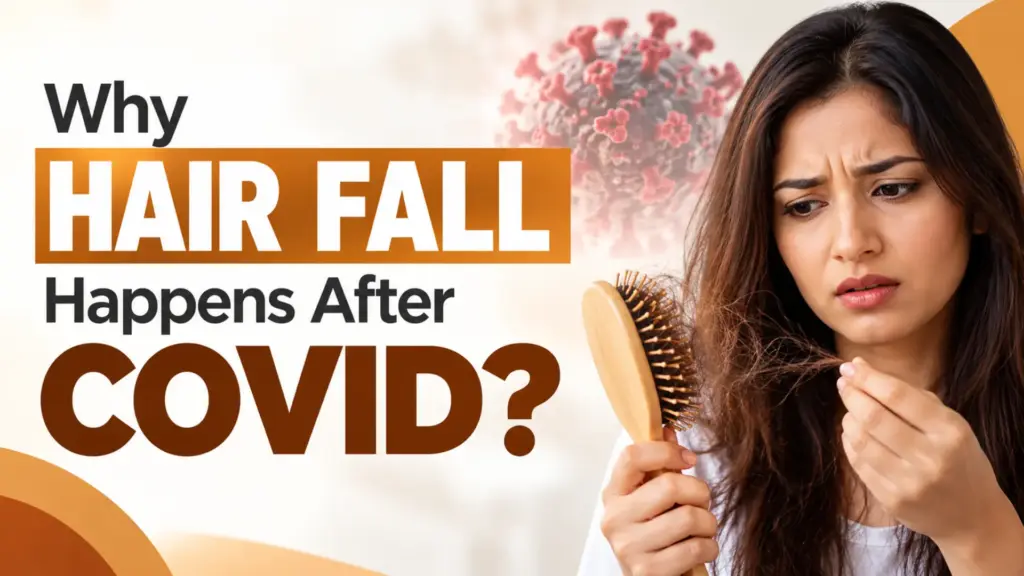
Why Your Hair Starts Falling Just After You Thought You Had Recovered
You finally feel better after COVID. The fever has gone, your strength is returning, and life is slowly getting back to normal.
Then you notice something that makes you pause.
There is more hair on your pillow. Your comb seems to collect much more hair than before. Washing your hair becomes stressful because you can see strands falling through your fingers.
This can make you wonder, “Why is this happening now? I recovered months ago.”
You are not imagining the connection. Hair fall after COVID can appear several weeks or months after an infection, even when you otherwise feel completely recovered.
The body may have gone through much more stress than you realise. High fever, physical exhaustion, emotional stress, anxiety, poor sleep, weight loss, reduced food intake, low protein intake, nutritional deficiencies, certain medications and other health changes can all affect the hair-growth cycle.
Living with a Chronic Condition? Get Expert Guidance.
Talk to Dr. Rajesh Shah — 40+ years of experience in managing chronic skin conditions with a personalized, long-term approach.
These are some of the important hair fall causes to consider, particularly when several factors occur together.
Why Does Hair Fall Appear Months After COVID?
One common explanation is telogen effluvium, a temporary disturbance in the normal hair-growth cycle.
Your hair normally moves through different stages of growth and rest. A major physical stress, such as a significant infection or high fever, can cause more hair follicles than usual to enter the resting stage. Those hairs may shed later.
That is why the timing can feel confusing.
You may have recovered from COVID and then, two or three months later, suddenly notice much more hair falling. The delay does not necessarily mean that the two events are unrelated.
This pattern represents one of the more common types of hair loss seen after significant physical stress, although other forms of hair loss can occur at the same time.
COVID May Not Be the Only Reason Your Hair Is Falling
It is tempting to blame every strand on the infection, but hair fall causes can be much broader.
A high fever can temporarily disturb the hair-growth cycle, while the physical stress of recovering from an infection can take time to settle. Emotional stress matters too. Worry, anxiety, poor sleep and the emotional strain of being unwell can affect the body during recovery.
Some people lose weight or eat much less during COVID. This can reduce their intake of protein and essential nutrients. Low levels of iron, vitamin D or vitamin B12 can also contribute to hair loss.
Certain medicines and pre-existing health conditions may play a role as well.
In reality, several factors may come together. Your shedding may therefore reflect the overall stress your body experienced rather than one single cause.
Could Your Hormones Be Behind the Hair Fall?
Yes. Hormonal hair fall can directly cause hair loss and may occur alongside post-COVID shedding.
Thyroid disorders can lead to increased shedding or overall thinning. In women, PCOS and other hormonal changes can affect hair growth. Men may experience androgen-related hair loss, particularly if male pattern baldness runs in the family.
Women may also notice increased shedding after pregnancy because hormonal changes can temporarily affect the hair-growth cycle.
This means persistent shedding should not automatically be blamed on COVID. If the problem continues, a medical evaluation can help determine whether thyroid problems, PCOS, nutritional deficiencies, hormonal changes or another condition are contributing.
Does Hair Fall Look Different in Men and Women?
Not always. The underlying stress may be similar, but hair fall in men and hair fall in women can appear in different patterns.
| Hair Fall in Men | Hair Fall in Women |
| May occur along with male pattern baldness | May appear as diffuse thinning |
| Hormonal factors may contribute | Hormonal fluctuations may contribute |
| Hairline recession may become noticeable | The hair parting may gradually look wider |
| Stress-related shedding can occur | Stress-related shedding can occur |
| Nutritional deficiencies can worsen hair loss | Nutritional deficiencies can worsen hair loss |
Understanding hair fall in men requires looking at both temporary shedding and possible underlying male pattern hair loss.
Similarly, hair fall in women may involve stress, nutrition, thyroid function, PCOS, pregnancy-related hormonal changes or other factors.
When Does Hair Fall Usually Start After COVID?
For many people, shedding becomes noticeable around 2 to 3 months after COVID infection.
This delayed timing can make the experience even more worrying. You may have completely moved on from the infection when your hair suddenly starts falling more than usual.
As the body recovers from the earlier stress, the hair-growth cycle may gradually move towards its usual pattern. However, recovery depends on your nutrition, general health, stress levels and whether another hair disorder is present.
If the shedding keeps increasing or does not settle, it is worth getting it checked rather than simply waiting.
Will Your Hair Grow Back?
In many cases of post-COVID shedding, the hair-growth cycle gradually returns towards normal and excessive shedding reduces.
However, no fixed recovery period applies to everyone. Your nutritional status, general health, stress and the presence of another underlying condition can influence the process.
This is also why types of hair loss matter. Telogen effluvium behaves differently from conditions such as androgen-related hair loss or alopecia areata, and each requires a different evaluation.
If you notice bald patches, severe thinning or continuing shedding, do not assume COVID is the only explanation.
What Can You Do While Your Hair Recovers?
You cannot control every part of the hair-growth cycle, but you can give your body the support it needs.
Make sure your daily diet provides enough protein, along with vegetables, fruits, whole grains, nuts and seeds. If you have an iron, vitamin D or vitamin B12 deficiency, address it with appropriate medical guidance.
Give your hair a gentler routine as well. Choose a mild shampoo, reduce frequent heat styling, avoid very tight hairstyles and limit unnecessary chemical treatments.
Sleep matters too. Your body needs adequate rest after an illness, and managing stress through exercise, breathing exercises, meditation or other relaxing activities may help.
Avoid starting multiple supplements or medicines on your own simply because you are worried about hair loss.
When Should Hair Fall Be Checked by a Doctor?
Some shedding after illness can be expected, but you should not keep waiting if the problem becomes severe or keeps progressing.
Speak to a qualified healthcare professional if:
- Hair fall becomes severe or increases rapidly.
- Shedding continues for more than six months.
- You develop bald patches.
- Hair loss occurs along with unexplained weight changes or fatigue.
- You notice symptoms that may point towards a thyroid problem.
- Your scalp develops redness, scaling, itching or inflammation.
- Hair loss occurs along with menstrual irregularities.
- You have a strong family history of hair disorders.
These signs can suggest that something other than post-COVID shedding may also be affecting your hair.
How Do Doctors Find Out What Is Causing the Hair Loss?
A good evaluation begins with your story.
Your doctor may ask when you had COVID, whether you experienced fever, whether you lost weight, what your diet was like during recovery, how much stress you have been experiencing, which medicines you take, and whether hair loss runs in your family.
The doctor may examine your scalp and hair and perform a hair-pull test when appropriate.
Depending on your symptoms, investigations may include iron studies, vitamin D, vitamin B12, thyroid function tests and hormonal tests when clinically indicated.
You may not need every test. The choice depends on your symptoms, medical history and the pattern of your hair loss.
Ready to Know Your Recovery Chances?
Discover your recovery chances from chronic diseases in percentage with Life Force Homeopathy’s FREE Assessment Test. Get a personalized evaluation from our experienced doctors.
Start Your FREE Assessment Test →Where Can Homeopathy Fit Into Hair Fall Care?
People searching for homeopathic treatment for hair fall often want to understand the bigger picture rather than simply find a medicine for the symptom.
A homeopathic consultation may look at the pattern of hair loss along with associated complaints, nutritional status, emotional stress, hormonal influences, general health and other relevant aspects of the person’s health.
Homeopathy may be considered as a supportive approach in selected patients after proper evaluation. It should not replace investigation or necessary medical treatment, particularly when a thyroid disorder, nutritional deficiency, hormonal problem or another medical condition may be involved.
There is also no single homeopathic medicine for hair fall that can be considered suitable for everyone. The response can differ from person to person.
Why Does the Approach Differ From Person to Person?
Imagine two people who both developed hair fall after COVID.
One may have experienced a high fever followed by sudden, diffuse shedding. Another may have recovered from COVID but also have a thyroid problem, nutritional deficiency, prolonged stress or hormonal changes.
Their hair loss may look similar at first, but the overall picture is different.
That is why hair fall homeopathy treatment is not based on giving the same medicine to everyone. A practitioner considers the person’s symptoms, associated complaints, medical history and general health before deciding whether supportive homeopathic care may be appropriate.
The same principle applies when people search for hair regrowth treatment in homeopathy. The focus should first remain on understanding the reason behind the hair loss rather than promising a particular result.
What About Homeopathic Medicines for Hair Growth or Hair Loss?
There is no single homeopathic medicine for hair growth that suits every person experiencing hair loss.
Likewise, there is no universal homeopathic medicine for hair loss that can be recommended without understanding why the shedding is occurring.
If nutritional deficiency, thyroid disease, PCOS, scalp disease or another medical condition contributes to the problem, that cause needs appropriate evaluation and management.
A person considering homeopathy for hair fall should therefore discuss their medical history and existing treatment with a qualified practitioner rather than self-medicate.
Can Homeopathy Be Taken Alongside Medical Care?
Homeopathy should not become a reason to stop necessary medical treatment.
If you are taking prescribed medicines or receiving treatment for a thyroid disorder, nutritional deficiency, hormonal problem or another condition, do not stop or change that treatment without speaking to your treating doctor.
If you are considering homeopathy treatment for hair loss alongside conventional care, tell your healthcare professionals about the treatments you are using so that your care remains coordinated.
Similarly, people searching for hair growth treatment in homeopathy should first understand whether their hair loss requires medical investigation.
Small Changes Can Help Your Hair Recover
Hair health is closely connected with your overall health, particularly after an illness.
Try to maintain a protein-rich and balanced diet, exercise regularly, sleep adequately, stay hydrated and manage emotional stress. Avoid smoking and continue with gentle hair-care practices.
If testing confirms a nutritional deficiency, address it appropriately instead of relying on unverified supplements.
And if your hair fall does not settle, follow up with your doctor.
Hair Fall Homeopathy Treatment at Life Force
At Life Force Homeopathy, the consultation begins with a comprehensive case evaluation rather than looking at hair fall as an isolated symptom.
The homeopathic doctor considers the pattern of hair loss, associated complaints, medical history, lifestyle and overall health before discussing a supportive homeopathic approach.
Regular follow-ups help monitor changes over time and assess how the patient is responding to the care plan.
For someone searching for the best homeopathic doctor for hair fall, the important consideration should be whether the practitioner takes the time to understand the complete case, encourages appropriate investigations and maintains realistic expectations rather than making promises about results.
The same approach applies to people considering homeopathic treatment for hair fall after COVID. Supportive care should remain part of a broader approach that includes proper evaluation and necessary medical care.
Living with Hair Fall?
Receive a personalized treatment plan from our experienced homeopathic doctors. Trusted by over 100,000+ patients across 180+ countries for safe, natural and long-term management of chronic diseases.
Your Hair May Need Time, Not Panic
Hair loss can affect more than your appearance. When you see large amounts of hair falling every day, it is natural to worry about whether it will stop, whether your hair will become thinner, or whether something is seriously wrong with your health.
After COVID, that worry can become even stronger because the shedding may appear long after the infection has ended.
The reassuring part is that post-COVID shedding is often temporary. At the same time, it is important not to dismiss persistent hair loss as “just COVID.”
Pay attention to your nutrition, sleep, stress, hormonal health and general recovery. Give your hair gentle care, correct confirmed deficiencies and seek medical advice if the shedding becomes severe or continues.
If you are considering homeopathy for hair fall, discuss it as a supportive and personalized approach after proper evaluation, while necessary medical care continues when required.
For people exploring homeopathy treatment for hair loss, the focus should remain on understanding the underlying situation rather than expecting one medicine to work for every type of hair loss.
Conclusion
Hair fall after COVID can be emotionally difficult, particularly when it starts at a time when you thought your health had already returned to normal.
The shedding can happen because your body has experienced fever, physical stress, emotional stress, nutritional changes, weight loss or other disruptions during the illness and recovery period. Hormonal problems and nutritional deficiencies can also contribute and should not be overlooked.
A balanced diet, adequate protein, good sleep, stress management and gentle hair care can support healthy recovery. If the shedding becomes severe, lasts for more than six months, creates bald patches or occurs with other symptoms, proper medical evaluation is important.
For those considering homeopathy for hair fall, a supportive and personalized approach can be discussed with a qualified practitioner while continuing appropriate medical care when required.
Book a consultation with Life Force Homeopathy today.