

Introduction
Cancer is one of the most serious health concerns worldwide. It is not a single disease, but a group of diseases in which abnormal cells grow and multiply without proper control.
Cancer can affect almost any part of the body, including the lungs, breast, colon, skin, blood, prostate, liver, and brain. Each type behaves differently and needs proper medical diagnosis, staging, and treatment planning.
Understanding cancer causes, cancer symptoms, cancer stages, and cancer treatment options helps patients seek timely care and make informed decisions. Patients exploring homeopathy for cancer should understand that it may be considered only as supportive care alongside standard oncology treatment.
At Life Force Homeopathy, homeopathy is considered only as supportive care in selected cancer patients. It is not advised as a replacement for conventional oncology treatment.
What Is Cancer?
In a healthy body, cells grow, divide, and die in a regulated manner. Cancer develops when this process is disturbed due to genetic changes or other factors. Damaged cells may continue to multiply and form tumors.
Tumours may be benign or malignant. Benign tumours usually remain in one place, while malignant tumours may invade nearby tissues or spread to other parts of the body. This spread is called metastasis.
Living with a Chronic Condition? Get Expert Guidance.
Talk to Dr. Rajesh Shah — 40+ years of experience in managing chronic skin conditions with a personalized, long-term approach.
Common Cancer Causes
Cancer usually develops due to a combination of factors rather than one single cause.
Common cancer causes include:
- Genetic mutations
- Increasing age
- Family history of cancer
- Tobacco use
- Alcohol consumption
- Obesity
- Poor diet and processed foods
- Chronic infections
- Radiation exposure
- Environmental pollutants
- Industrial chemicals
- Long-term inflammation
Having a risk factor does not mean a person will definitely develop cancer. It only means the risk may be higher.
Lifestyle and Environmental Risk Factors
Lifestyle plays an important role in many cancers. Tobacco, alcohol, physical inactivity, obesity, and unhealthy diet are known risk factors for several cancers.
Environmental exposure may also contribute. Air pollution, ultraviolet radiation, secondhand smoke, workplace chemicals, and chronic exposure to carcinogens may increase risk depending on the duration and intensity of exposure.
Stress does not directly cause cancer, but long-term stress may affect sleep, immunity, and lifestyle habits, which can influence overall health.
Cancer Symptoms
Cancer symptoms depend on the type, location, and stage of disease. Some cancers may not show clear symptoms in the early stages.
Common warning signs include:
- Unexplained weight loss
- Persistent fatigue
- Lump or swelling
- Unusual bleeding
- Persistent cough
- Change in bowel or bladder habits
- Non-healing wound
- Persistent pain
- Difficulty swallowing
- Change in a mole
- Loss of appetite
These symptoms do not always mean cancer, but if they persist, medical evaluation is important.
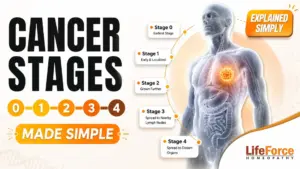
Cancer Stages
Cancer stages help doctors understand how far the disease has progressed.
In general:
- Stage 0 means abnormal cells are present but have not spread.
- Stage 1 usually means early, localised cancer.
- Stage 2 may mean a larger tumour or limited spread.
- Stage 3 usually means spread to nearby tissues or lymph nodes.
- Stage 4 means cancer has spread to distant organs.
Cancer staging should always be done by an oncologist using investigations such as imaging, biopsy, and laboratory tests.
Diagnosis and Early Detection
Early diagnosis can help in better treatment planning. Doctors may use different tests depending on the suspected type of cancer.
Diagnosis may include medical history, physical examination, blood tests, tumour markers, X-ray, ultrasound, CT scan, MRI, PET scan, endoscopy, or biopsy.
A biopsy is often important because it helps confirm the diagnosis and identify the type of cancer.
Cancer Treatment Options
Cancer treatment options depend on the type, stage, spread, patient’s age, and overall health.
Common cancer treatment options include:
- Surgery
- Chemotherapy
- Radiation therapy
- Immunotherapy
- Targeted therapy
- Hormonal therapy
- Palliative and supportive care
The treatment plan should always be decided by an oncologist.
Can Cancer Be Prevented?
Not all cancers can be prevented. However, certain lifestyle measures may reduce risk.
Avoid tobacco; limit alcohol; maintain a healthy weight; follow a balanced diet; stay physically active; protect skin from excessive sun exposure; take recommended vaccines when advised; and attend regular screening programmes.
No preventive measure can guarantee protection, but healthy habits and early screening can support better health.
Homeopathy for Cancer: Supportive Role Only
Many patients search for homeopathy for cancer, homeopathic treatment for cancer, Homeopathic Treatment Cancer, or homeopathic remedies for cancer.
It is important to understand that homeopathy should not replace cancer treatment such as surgery, chemotherapy, radiation, immunotherapy, or targeted therapy.
Homeopathy as support in cancer treatment may be considered in selected cases under qualified medical supervision. The focus is on the patient’s overall well-being, symptom pattern, constitution, and quality of life.
Patients should always keep their oncologist informed before starting any supportive treatment.
Research by Dr. Rajesh Shah in Homeopathy and Cancer
Dr. Rajesh Shah has been involved in scientific research in homeopathy for several decades. His work includes studies on high dilutions, nosodes, biological response, and anticancer potential of potentized preparations.
Some of the research listed on Biosimilia includes studies related to cancer cell models, in-vitro research, in-vivo xenograft models, and preparation of cancer nosodes.
These studies are important from a research perspective. However, laboratory and preclinical findings do not automatically mean proven clinical effectiveness in human cancer treatment. More human clinical research is needed.
Read more here: Dr. Rajesh Shah’s Research Papers on Biosimilia
Homeopathy for Cancer in Mumbai
Patients searching for homeopathic treatment for cancer in Mumbai may consult Life Force Homeopathy for supportive care guidance while continuing their oncology treatment.
Life Force offers in-clinic and online consultations for selected cancer patients. The approach includes detailed case evaluation, review of medical history, understanding of ongoing cancer treatment, and supportive homeopathic care where appropriate.
Life Force Homeopathy Approach
At Life Force, supportive care is planned after a detailed evaluation of the patient’s diagnosis, current oncology treatment, symptoms, constitution, medical history, and overall health.
The focus remains on ethical, supervised, and individualized homeopathic treatment as supportive care. All cancer treatment decisions should remain coordinated with the treating oncologist.
When Should You Consult a Doctor?
Consult a doctor if you notice persistent or unexplained symptoms such as weight loss, fatigue, lump, unusual bleeding, a long-lasting cough, bowel or bladder changes, non-healing wounds, persistent pain, difficulty swallowing, or changes in a mole.
Early medical evaluation is important.
Conclusion
Cancer requires timely diagnosis, proper staging, and conventional oncology care. Homeopathy should not replace cancer treatment. It may be considered only as supportive care in selected cases under qualified medical supervision, with a focus on overall well-being and quality of life.
Looking for Supportive Homeopathy Guidance During Cancer Care?
At Life Force Homeopathy, our doctors study your medical history, current treatment, symptoms, constitution, and overall health before considering supportive homeopathic care.