

Introduction
Hearing the words “You have cancer” can be an overwhelming experience. Along with the diagnosis, patients are often introduced to another important term: the cancer stage.
Many people wonder what Stage 1, Stage 2, Stage 3, or Stage 4 cancer actually means. Cancer staging helps doctors understand how advanced the disease is, whether it has remained in one area, and whether it has spread to other parts of the body.
Understanding cancer stages can help patients and families make informed decisions and better understand the treatment journey.
This article explains cancer stages from Stage 0 to Stage 4, how doctors determine the stage, common cancer symptoms, diagnosis, treatment options, and how homeopathy may support patients alongside conventional cancer care.
What Is Cancer Staging?
Cancer staging is a system used by doctors to describe the extent of cancer in the body.
It helps doctors understand:
Living with a Chronic Condition? Get Expert Guidance.
Talk to Dr. Rajesh Shah — 40+ years of experience in managing chronic skin conditions with a personalized, long-term approach.
- The size of the tumour
- Whether nearby lymph nodes are affected
- Whether cancer has spread to distant organs
This information helps doctors:
- Plan appropriate cancer treatment options
- Understand disease progression
- Monitor response to treatment
- Coordinate care between specialists
It is important to remember that not all cancers are staged in the same way. Most solid tumours follow a staging system, while blood cancers such as leukemia and lymphoma may use different classification methods.
How Do Doctors Determine the Cancer Stage?
There is no single test that determines the stage of cancer. Doctors combine information from different investigations to understand the extent of the disease.
They evaluate:
Tumour
The size of the tumour and whether it has grown into nearby tissues.
Lymph Nodes
Whether cancer cells have reached nearby lymph nodes.
Metastasis
Whether cancer has spread to distant organs such as the lungs, liver, bones, or brain.
Doctors may use:
- Blood tests
- CT scans
- MRI scans
- PET scans
- Ultrasound
- X-rays
- Biopsy
- Pathology reports
A biopsy is usually one of the most important investigations for confirming cancer type and characteristics.
Understanding the TNM Classification
Many cancers are described using the TNM system.
T (Tumour)
Describes the size and extent of the main tumour.
N (Nodes)
Shows whether nearby lymph nodes are involved.
M (Metastasis)
Indicates whether cancer has spread to distant organs.
The combination of these factors helps doctors classify cancer from Stage 0 to Stage 4.
Understanding Cancer Stages
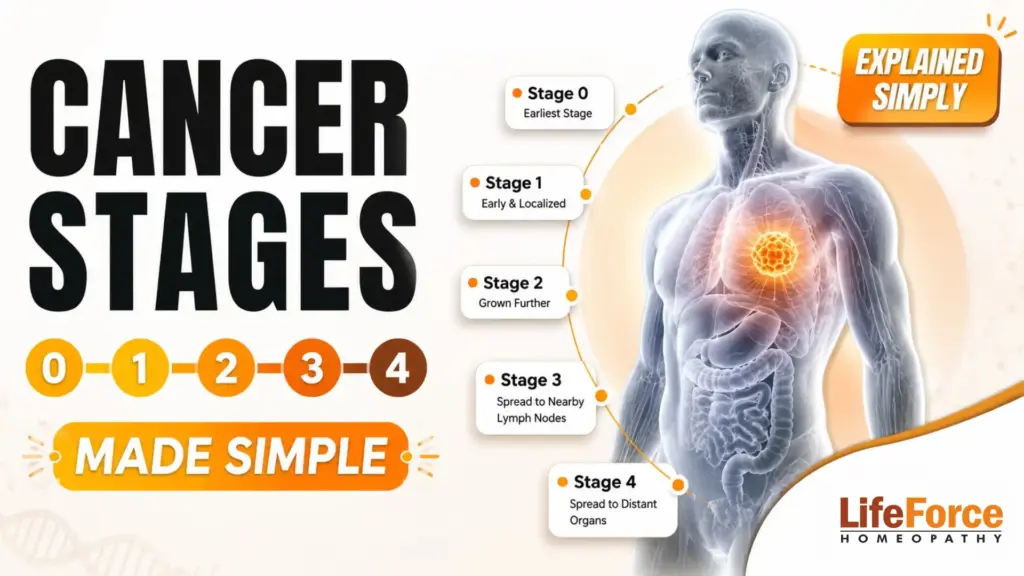
Stage 0: The Earliest Stage
Stage 0 is also called carcinoma in situ.
At this stage, abnormal cells are present only in the area where they first developed and have not spread to surrounding tissues.
Early detection at this stage may provide more treatment options.
Stage 1: Early-Stage Cancer
Stage 1 usually means the cancer is small and remains limited to its original location.
There is generally no distant spread, and nearby lymph nodes may not be involved.
Treatment outcomes depend on the cancer type, location, and individual health factors.
Stage 2: Cancer Has Grown Further
In Stage 2, the tumour is usually larger compared to Stage 1.
It may involve nearby tissues or lymph nodes but has not spread to distant organs.
Treatment depends on the specific cancer type and may include surgery, chemotherapy, radiation therapy, targeted therapy, or other approaches.
Stage 3: More Advanced Local Disease
Stage 3 indicates that cancer has spread further into nearby tissues or lymph nodes.
However, it has usually not reached distant organs.
Treatment may involve a combination of therapies depending on the cancer type and patient condition.
Stage 4: Metastatic Cancer
Stage 4 is the most advanced stage and is also known as metastatic cancer.
At this stage, cancer has spread to distant organs such as the lungs, liver, bones, or brain.
Treatment focuses on controlling the disease, managing symptoms, improving quality of life, and supporting overall health.
Every cancer case is different, and outcomes depend on multiple factors, including cancer type, response to treatment, and overall health.
Cancer Stages at a Glance
| Stage | Meaning |
| Stage 0 | Abnormal cells remain in their original location |
| Stage 1 | Small, localized cancer |
| Stage 2 | Larger tumour with possible nearby involvement |
| Stage 3 | Cancer spread to nearby tissues or lymph nodes |
| Stage 4 | Cancer spread to distant organs |
Why Is Early Diagnosis Important?
Early detection can make a significant difference in cancer care.
Finding cancer at an earlier stage may provide:
- More available treatment options
- Earlier intervention
- Better management opportunities
- Reduced risk of complications
- Improved monitoring
Regular medical check-ups and evaluation of unusual symptoms can help with timely diagnosis.
Common Cancer Symptoms
Cancer symptoms vary depending on the type and location of cancer.
Some possible warning signs include:
- Unexplained weight loss
- Persistent fatigue
- Unusual lumps or swelling
- Persistent cough
- Changes in bowel or bladder habits
- Unusual bleeding
- Persistent pain
- Changes in skin appearance
These symptoms do not always indicate cancer, but persistent or unexplained changes should be evaluated by a healthcare professional.
Cancer Causes and Risk Factors
Cancer develops due to abnormal growth of cells. Several factors may increase the risk of developing cancer, including:
- Genetic factors
- Age
- Tobacco and alcohol use
- Certain infections
- Radiation exposure
- Lifestyle factors
- Environmental exposures
However, the exact cause varies depending on the type of cancer.
Cancer Treatment Options
Cancer treatment depends on factors such as cancer type, stage, location, and overall health.
Common treatment options include:
- Surgery
- Chemotherapy
- Radiation therapy
- Immunotherapy
- Targeted therapy
- Hormonal therapy
- Supportive care
A cancer specialist determines the most suitable treatment plan based on individual requirements.
Homeopathy in Cancer Care
A cancer diagnosis affects not only the body but also emotional and overall well-being.
Some patients explore complementary approaches along with their standard cancer treatment. Homeopathic Treatment for Cancer focuses on individualized care based on the patient’s symptoms, overall health, and constitution.
Homeopathy should not replace established cancer treatments such as surgery, chemotherapy, radiation therapy, immunotherapy, or targeted therapy.
It may be considered supportive care alongside conventional treatment under the guidance of qualified healthcare professionals.
Research on Homeopathy and Cancer
Research in homeopathy and cancer continues to explore possible biological effects and mechanisms of action.
One area of research has investigated the effects of homeopathic preparations in laboratory models, including studies exploring cellular pathways and biological responses.
A published research article studied the potential effects of ultra-diluted preparations in experimental cancer models and explored their biological activity. You can read more about this scientific research on homeopathy and cancer.
While such research provides insights into possible mechanisms, more extensive studies are required to understand the role of homeopathy in cancer care.
Homeopathy as Support in Cancer Treatment
When used as supportive care, homeopathy may help some patients with:
- Overall well-being
- Individual symptom management
- Emotional support during treatment
- Personalized healthcare guidance
Every patient responds differently, and treatment decisions should always be made with the treating oncologist.
Life Force Homeopathy Approach
At Life Force Homeopathy, cancer cases are evaluated through detailed case analysis.
The approach includes:
- Understanding medical history
- Reviewing current symptoms
- Considering previous treatments
- Evaluating overall health
- Creating individualized homeopathic support plans
- Regular follow-up and monitoring
Homeopathy treatment is considered supportive care and should continue alongside appropriate cancer treatment advised by the treating medical team.
Conclusion
Understanding cancer stages can make a complex diagnosis easier to understand. From Stage 0 to Stage 4, staging helps doctors determine how far cancer has progressed and plan appropriate treatment options.
Early diagnosis, timely medical care, and regular follow-up play an important role in cancer management.
For patients seeking additional support alongside conventional cancer treatment, homeopathy may be considered as a complementary approach under the guidance of qualified medical professionals. If you are looking for a trusted homeopathy clinic in Mumbai, India, you can visit Life Force Homeopathy or book an online consultation through our website
Looking for Supportive Care Alongside Cancer Treatment?
At Life Force Homeopathy, our doctors evaluate each case individually by understanding the patient’s health history, symptoms, ongoing treatments, and overall condition before planning supportive homeopathic care.ll