
Cancer Causes, Symptoms, Stages, and Treatment Options: Role of Supportive Homeopathy

Introduction

Cancer is one of the most serious health concerns worldwide. It is not a single disease, but a group of diseases in which abnormal cells grow and multiply without proper control.

Cancer can affect almost any part of the body, including the lungs, breast, colon, skin, blood, prostate, liver, and brain. Each type behaves differently and needs proper medical diagnosis, staging, and treatment planning.

Understanding cancer causes, cancer symptoms, cancer stages, and cancer treatment options helps patients seek timely care and make informed decisions. Patients exploring homeopathy for cancer should understand that it may be considered only as supportive care alongside standard oncology treatment.

At Life Force Homeopathy, homeopathy is considered only as supportive care in selected cancer patients. It is not advised as a replacement for conventional oncology treatment.

What Is Cancer?

In a healthy body, cells grow, divide, and die in a regulated manner. Cancer develops when this process is disturbed due to genetic changes or other factors. Damaged cells may continue to multiply and form tumors.

Tumours may be benign or malignant. Benign tumours usually remain in one place, while malignant tumours may invade nearby tissues or spread to other parts of the body. This spread is called metastasis.

Common Cancer Causes

Cancer usually develops due to a combination of factors rather than one single cause.

Common cancer causes include:

  • Genetic mutations
  • Increasing age
  • Family history of cancer
  • Tobacco use
  • Alcohol consumption
  • Obesity
  • Poor diet and processed foods
  • Chronic infections
  • Radiation exposure
  • Environmental pollutants
  • Industrial chemicals
  • Long-term inflammation

Having a risk factor does not mean a person will definitely develop cancer. It only means the risk may be higher.

Lifestyle and Environmental Risk Factors

Lifestyle plays an important role in many cancers. Tobacco, alcohol, physical inactivity, obesity, and unhealthy diet are known risk factors for several cancers.

Environmental exposure may also contribute. Air pollution, ultraviolet radiation, secondhand smoke, workplace chemicals, and chronic exposure to carcinogens may increase risk depending on the duration and intensity of exposure.

Stress does not directly cause cancer, but long-term stress may affect sleep, immunity, and lifestyle habits, which can influence overall health.

Cancer Symptoms

Cancer symptoms depend on the type, location, and stage of disease. Some cancers may not show clear symptoms in the early stages.

Common warning signs include:

  • Unexplained weight loss
  • Persistent fatigue
  • Lump or swelling
  • Unusual bleeding
  • Persistent cough
  • Change in bowel or bladder habits
  • Non-healing wound
  • Persistent pain
  • Difficulty swallowing
  • Change in a mole
  • Loss of appetite

These symptoms do not always mean cancer, but if they persist, medical evaluation is important.

Cancer Stages

Cancer stages help doctors understand how far the disease has progressed.

In general:

  • Stage 0 means abnormal cells are present but have not spread.
  • Stage 1 usually means early, localised cancer.
  • Stage 2 may mean a larger tumour or limited spread.
  • Stage 3 usually means spread to nearby tissues or lymph nodes.
  • Stage 4 means cancer has spread to distant organs.

Cancer staging should always be done by an oncologist using investigations such as imaging, biopsy, and laboratory tests.

Diagnosis and Early Detection

Early diagnosis can help in better treatment planning. Doctors may use different tests depending on the suspected type of cancer.

Diagnosis may include medical history, physical examination, blood tests, tumour markers, X-ray, ultrasound, CT scan, MRI, PET scan, endoscopy, or biopsy.

A biopsy is often important because it helps confirm the diagnosis and identify the type of cancer.

Cancer Treatment Options

Cancer treatment options depend on the type, stage, spread, patient’s age, and overall health.

Common cancer treatment options include:

  • Surgery
  • Chemotherapy
  • Radiation therapy
  • Immunotherapy
  • Targeted therapy
  • Hormonal therapy
  • Palliative and supportive care

The treatment plan should always be decided by an oncologist.

Can Cancer Be Prevented?

Not all cancers can be prevented. However, certain lifestyle measures may reduce risk.

Avoid tobacco; limit alcohol; maintain a healthy weight; follow a balanced diet; stay physically active; protect skin from excessive sun exposure; take recommended vaccines when advised; and attend regular screening programmes.

No preventive measure can guarantee protection, but healthy habits and early screening can support better health.

Homeopathy for Cancer: Supportive Role Only

Many patients search for homeopathy for cancer, homeopathic treatment for cancer, Homeopathic Treatment Cancer, or homeopathic remedies for cancer.

It is important to understand that homeopathy should not replace cancer treatment such as surgery, chemotherapy, radiation, immunotherapy, or targeted therapy.

Homeopathy as support in cancer treatment may be considered in selected cases under qualified medical supervision. The focus is on the patient’s overall well-being, symptom pattern, constitution, and quality of life.

Patients should always keep their oncologist informed before starting any supportive treatment.

Research by Dr. Rajesh Shah in Homeopathy and Cancer

Dr. Rajesh Shah has been involved in scientific research in homeopathy for several decades. His work includes studies on high dilutions, nosodes, biological response, and anticancer potential of potentized preparations.

Some of the research listed on Biosimilia includes studies related to cancer cell models, in-vitro research, in-vivo xenograft models, and preparation of cancer nosodes.

These studies are important from a research perspective. However, laboratory and preclinical findings do not automatically mean proven clinical effectiveness in human cancer treatment. More human clinical research is needed.

Read more here: Dr. Rajesh Shah’s Research Papers on Biosimilia

Homeopathy for Cancer in Mumbai

Patients searching for homeopathic treatment for cancer in Mumbai may consult Life Force Homeopathy for supportive care guidance while continuing their oncology treatment.

Life Force offers in-clinic and online consultations for selected cancer patients. The approach includes detailed case evaluation, review of medical history, understanding of ongoing cancer treatment, and supportive homeopathic care where appropriate.

Life Force Homeopathy Approach

At Life Force, supportive care is planned after a detailed evaluation of the patient’s diagnosis, current oncology treatment, symptoms, constitution, medical history, and overall health.

The focus remains on ethical, supervised, and individualized homeopathic treatment as supportive care. All cancer treatment decisions should remain coordinated with the treating oncologist.

When Should You Consult a Doctor?

Consult a doctor if you notice persistent or unexplained symptoms such as weight loss, fatigue, lump, unusual bleeding, a long-lasting cough, bowel or bladder changes, non-healing wounds, persistent pain, difficulty swallowing, or changes in a mole.

Early medical evaluation is important.

Conclusion

Cancer requires timely diagnosis, proper staging, and conventional oncology care. Homeopathy should not replace cancer treatment. It may be considered only as supportive care in selected cases under qualified medical supervision, with a focus on overall well-being and quality of life.

Looking for Supportive Homeopathy Guidance During Cancer Care?

At Life Force Homeopathy, our doctors study your medical history, current treatment, symptoms, constitution, and overall health before considering supportive homeopathic care.

Book Consultation

Take Assessment Test

Chronic Urticaria: Symptoms, Causes, Triggers, and Treatment Approach

Introduction

Chronic urticaria can be frustrating because it does not always follow a fixed pattern. A person may suddenly develop itchy red hives on the skin, take an antihistamine, feel better for a while, and then experience the same episode again.

When these episodes continue or recur for more than six weeks, the condition is known as chronic urticaria. Many patients looking for chronic urticaria treatment want to understand why the rash keeps coming back even after avoiding common allergens or changing their food, soap, detergent, or clothing.

In many cases, chronic urticaria is not just a simple external allergy. It may reflect an overactive or hypersensitive immune response, where the body reacts strongly to internal or external signals.

Chronic Urticaria (Hives) Meaning

Chronic urticaria (hives) means long-lasting or recurring hives.

“Chronic” means the condition continues for a longer duration, usually more than six weeks. “Urticaria” refers to hives, which are itchy, raised patches on the skin caused by the release of histamine.

So, in simple terms, chronic urticaria means hives that keep recurring over time.

What Actually Happens in Chronic Urticaria?

Inside the skin, there are immune cells called mast cells and basophils. These cells work like the body’s alarm system. When they sense danger, they release histamine.

Histamine causes small blood vessels in the skin to become leaky. Fluid then collects under the skin, leading to raised, red, swollen patches known as hives.

In chronic urticaria, these immune cells may become unstable or overly sensitive. They may release histamine even when there is no real threat. This is why hives may appear suddenly, disappear, and return again without an obvious reason.

Chronic Urticaria Symptoms

The symptoms may vary from person to person, but most patients notice recurring skin episodes that affect comfort and sleep.

Common chronic urticaria symptoms include:

  • Itchy red hives
  • Raised welts on the skin
  • Burning or stinging sensation
  • Swelling around the eyes, lips, face, hands, or feet
  • Rashes that come and go
  • Itching that becomes worse at night
  • Disturbed sleep due to itching
  • Fear or anxiety about sudden flare-ups

In some patients, the skin may look normal between episodes, which can make the condition even more confusing.

Chronic Urticaria Causes

Chronic urticaria causes are not always easy to identify. Many patients assume they are allergic to a specific food, soap, pet, or detergent. While these may act as triggers in some cases, chronic urticaria is often related to deeper immune hypersensitivity.

The body may begin reacting to internal signals rather than only external allergens. This is why the hives may continue even after the patient avoids suspected triggers.

Possible contributing factors may include stress, autoimmune tendency, infections, poor sleep, family history of immune conditions, thyroid-related issues, and certain environmental triggers.

Chronic Spontaneous Urticaria

Chronic spontaneous urticaria refers to recurring hives that appear without a clear external trigger. The flare-ups may come suddenly and may not be linked to a specific food, medicine, or external exposure.

This type can be especially frustrating because the patient may not know what to avoid. The focus then shifts toward understanding the immune response, symptom pattern, and recurrence tendency.

Chronic Idiopathic Urticaria

Chronic idiopathic urticaria is a term used when hives continue for more than six weeks but no clear cause is found.

“Idiopathic” means the exact cause is unknown. In many cases, patients with chronic idiopathic urticaria may still have internal immune hypersensitivity, stress-related triggers, or autoimmune tendencies that need careful evaluation.

Chronic Autoimmune Urticaria (Hives)

Chronic autoimmune urticaria occurs when the immune system appears to play a more direct role in triggering hives. In such cases, the body may react against its own immune signals, leading to repeated histamine release and flare-ups.

Patients with autoimmune tendencies, thyroid disorders, or a family history of autoimmune conditions may need a more detailed evaluation.

Chronic Urticaria ICD 10

The ICD-10 code for urticaria may vary depending on the type and clinical diagnosis. Commonly used ICD-10 references include:

  • L50.1 for idiopathic urticaria
  • L50.8 for other urticaria
  • L50.9 for urticaria, unspecified

The exact code should be assigned by a qualified medical professional based on clinical evaluation.

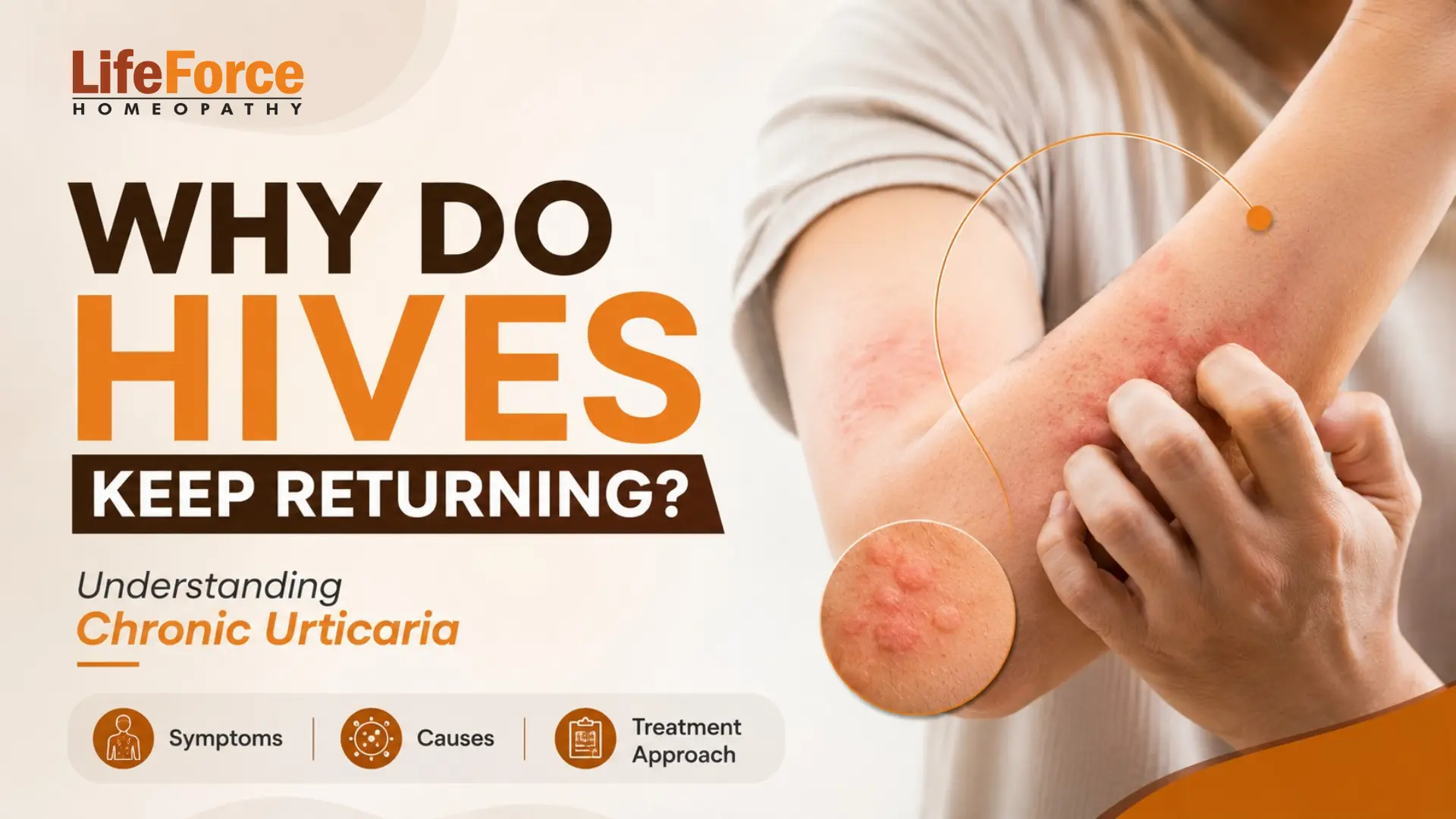
Chronic Urticaria Pictures: What Does It Look Like?

Chronic urticaria pictures usually show raised, red or skin-colored welts on the body. These may appear in different shapes and sizes and may move from one area to another.

The hives may be small and scattered or large and joined together. In some cases, swelling may appear around the lips, eyes, hands, or feet.

Images can help patients understand what hives may look like, but diagnosis should not be made only by comparing pictures. A doctor’s examination is important because several skin conditions can look similar.

Hidden Triggers Patients Often Miss

Not every trigger is obvious. Many patients change food, soaps, or detergents, but the hives still return.

Some commonly missed triggers include:

  • Tight clothing or pressure on the skin
  • Sudden weather changes
  • Heat or cold exposure
  • Stress or emotional strain
  • Lack of sleep
  • Preservatives or artificial food colors
  • Physical pressure from belts, bags, or fitted clothing

These triggers may not be the root cause, but they can worsen symptoms in sensitive individuals.

Can Chronic Urticaria (Hives) Affect Overall Health?

Chronic urticaria may look like a skin condition, but its impact often goes beyond the skin.

Repeated itching can disturb sleep and leave the person tired the next day. The fear of flare-ups may affect clothing choices, travel plans, social confidence, work comfort, and emotional well-being.

For many patients, the unpredictability of the condition becomes as stressful as the rash itself.

Why Chronic Urticaria Is Often Recurrent

Chronic urticaria keeps coming back because the body remains hypersensitive. Even small changes in the internal or external environment may trigger histamine release.

This is why repeated flare-ups may occur despite temporary relief from antihistamines. Long-term management requires understanding the patient’s pattern, triggers, immune sensitivity, and overall health.

Conventional Treatment Approach

The conventional treatment approach usually focuses on symptom control.

Antihistamines are commonly used to reduce itching and hives. In severe flare-ups, doctors may prescribe other medicines for short-term control.

This approach can be useful for active episodes, especially when symptoms are intense. However, in many chronic cases, patients continue to look for long-term support because the hives keep recurring.

Homeopathic Treatment Approach for Chronic Urticaria (Hives)

Homeopathy looks at chronic urticaria through an individualized approach. Instead of giving the same medicine to every patient with hives, a homeopathic doctor studies the person’s full symptom pattern. This makes hives homeopathy treatment more personalized, as the prescription depends on the patient’s triggers, recurrence pattern, sensitivity, and overall health history.
This includes the type of itching, time of aggravation, emotional triggers, stress, sleep, food sensitivity, weather sensitivity, past health history, family tendency, and associated immune conditions.

At Life Force Homeopathy clinic, chronic urticaria cases are evaluated through a detailed homeopathic treatment approach where the focus is on understanding the patient as a whole.

Homeopathy may support selected patients in long-term management, recurrence tendency, and overall well-being when prescribed by a qualified doctor. A real case can help patients understand how chronic urticaria patterns are assessed in clinical practice.

You can read the case study here: chronic urticaria improved without antihistamines

Why Patients Consider Life Force Homeopathy for Urticaria Care

Patients with chronic urticaria (hives) often need more than temporary symptom relief. They need a structured approach that studies recurrence, triggers, lifestyle, immune tendency, and long-term health.

At Life Force, the approach includes:

  • Detailed case evaluation
  • Individualized homeopathic prescription
  • Experienced team of doctors
  • Long-term follow-up
  • Online and in-clinic consultation options
  • Focus on chronic and recurring conditions

Patients who cannot visit the clinic can also start with an online consultation.

If you want to understand whether homeopathy may be suitable for your case, you can take the Life Force Assessment Test.

Lifestyle Tips for Chronic Urticaria

Lifestyle care does not replace medical treatment, but it can help reduce avoidable flare-ups.

Try to identify and avoid your personal triggers. Wear loose, breathable clothing. Maintain regular sleep. Manage stress through relaxation, breathing, or gentle exercise. Avoid excessive heat, pressure, or scratching whenever possible.

Keeping a symptom diary may also help you notice patterns related to food, stress, weather, sleep, or physical pressure.

Conclusion

Chronic urticaria is more than a recurring skin rash. It is often linked with immune system hypersensitivity, where the body releases histamine repeatedly and causes itchy hives, swelling, and discomfort.
Because the condition can affect sleep, confidence, social life, and emotional well-being, long-term management is important.
At Life Force Homeopathy clinic, chronic urticaria is approached through detailed case evaluation, individualized treatment, follow-up, and patient education. The goal is to understand the patient’s pattern deeply and support selected cases through a structured homeopathic approach.
If you are struggling with recurring hives, unexplained itching, or chronic urticaria symptoms, you may consult Life Force Homeopathy or take the Assessment Test to understand the possible scope of care.

Fatty Liver Disease (NAFLD): Symptoms, Causes, Diet, Diagnosis & Treatment Explained

Introduction

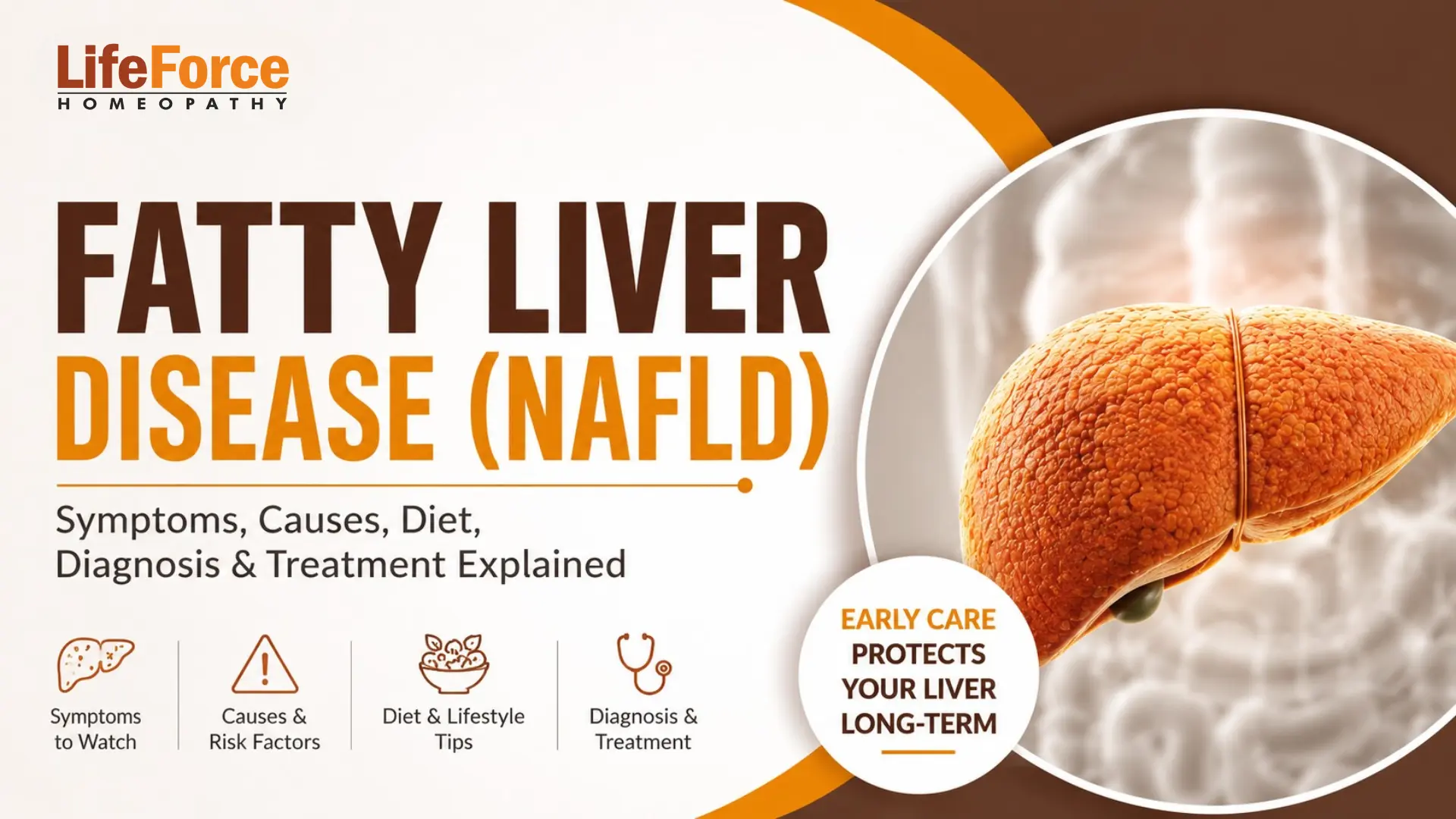
Fatty liver disease is becoming increasingly common in today’s lifestyle-driven world. Earlier, it was mainly associated with alcohol consumption, but now a large number of patients diagnosed with fatty liver are non-drinkers.
The condition is often detected during routine health check-ups or ultrasound scans performed for unrelated reasons. Poor diet, physical inactivity, and metabolic disorders are among its key contributors. Along with lifestyle changes and medical monitoring, homeopathic treatment may be considered as a supportive, individualized approach to managing overall health.

What is Fatty Liver Disease?

The liver is a vital organ responsible for digestion, metabolism, and detoxification. Normally, a small amount of fat exists in the liver. However, when fat accumulation becomes excessive, it is called fatty liver disease.

There are two main types:

1. Non-Alcoholic Fatty Liver Disease (NAFLD)

  • Occurs in people who consume little or no alcohol
  • Linked with obesity, diabetes, insulin resistance, and metabolic syndrome

2. Alcoholic Fatty Liver Disease (AFLD)

  • Caused due to excessive alcohol consumption
  • Affects liver’s ability to process fats properly

Fatty Liver Causes

Fatty liver usually develops due to multiple factors:

  • Obesity and overweight
  • Type 2 diabetes
  • High cholesterol and triglycerides
  • Sedentary lifestyle
  • Excess processed food and sugar intake
  • Alcohol consumption
  • Hormonal/metabolic disorders
  • Genetic predisposition
  • Rapid weight fluctuations

Fatty Liver Symptoms

In the early stages, fatty liver is usually silent. When symptoms appear, they are mild and non-specific.
Recognizing possible fatty liver disease symptoms may encourage patients to seek timely medical evaluation.

Common symptoms include:

  • Persistent fatigue
  • Weakness
  • Bloating or heaviness
  • Mild pain or discomfort in upper right abdomen
  • Reduced energy levels
  • General tiredness

Many patients discover fatty liver only through routine tests or imaging.

Fatty Liver Diagnosis

Doctors may use the following methods:

  • Medical history review
  • Physical examination
  • Liver function tests (LFT)
  • Ultrasound abdomen
  • FibroScan for liver stiffness
  • CT scan or MRI (if required)
  • Liver biopsy in selected cases

Fatty Liver Diet

Diet plays a crucial role in managing fatty liver.

Recommended foods:

  • High fiber foods (vegetables, fruits, whole grains)
  • Lean proteins
  • Healthy fats (nuts, seeds, olive oil)
  • Hydration (adequate water intake)

Foods to avoid:

  • Sugary drinks and processed foods
  • Deep fried and junk foods
  • Excess refined carbohydrates
  • Alcohol

Fatty Liver Treatment

There is no single medication for fatty liver. Fatty liver treatment mainly focuses on correcting the underlying lifestyle and metabolic factors:

  • Weight reduction
  • Regular physical activity
  • Blood sugar control
  • Cholesterol management
  • Healthy diet plan
  • Avoidance of alcohol
  • Regular monitoring

Can Fatty Liver Be Reversed?

In early stages, fatty liver can often improve with consistent lifestyle changes such as:

  • Weight loss (gradual and sustained)
  • Exercise
  • Dietary improvements
  • Metabolic control

However, progression depends on individual health condition and stage of disease.

Homeopathic Perspective on Fatty Liver

Homeopathy follows an individualized approach where treatment is based on the person as a whole rather than only the disease name. It considers symptoms, lifestyle, medical history, and overall constitution before planning care.

As described in clinical approach models, homeopathy may be used as a supportive system along with lifestyle management and regular medical monitoring. A qualified homeopathic doctor may recommend fatty liver homeopathic treatment after evaluating the patient’s overall health and individual symptoms.

The selection of fatty liver homeopathic medicine should be individualized and made under professional supervision. It should not replace prescribed conventional treatment, dietary changes, exercise, or necessary medical investigations.

When to See a Doctor

Consult a doctor if you have:

  • Persistent fatigue
  • Abnormal liver reports
  • Diabetes with metabolic issues
  • Abdominal discomfort
  • Unexplained weight loss
  • Swelling or severe symptoms

Early evaluation helps prevent complications.

Conclusion

Fatty liver disease is now one of the most common lifestyle-related health conditions. It often develops silently and is usually detected during routine investigations.

The good news is that early stages can often be managed effectively with lifestyle modifications such as diet control, exercise, and medical monitoring.

A structured approach that includes diet, lifestyle changes, and regular check-ups remains the foundation of fatty liver management.