





Introduction
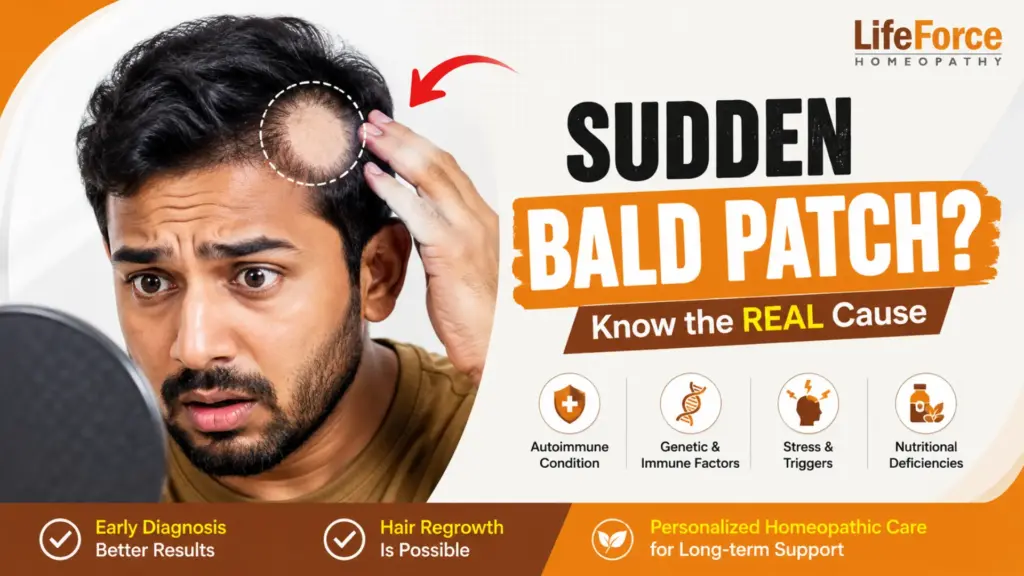
Have you recently noticed a smooth, round bald patch on your scalp or beard? It may not be painful, but it can be worrying, especially when it appears suddenly.
One possible reason is alopecia areata, an autoimmune condition that causes sudden hair loss in patches. The condition may affect the scalp, beard, eyebrows, eyelashes, or other body areas.
At Life Force Homeopathy, alopecia areata cases are evaluated through a detailed and individualized approach, considering the patient’s symptoms, triggers, family history, stress, health background, and overall constitution.
What Is Alopecia Areata?
Alopecia areata is an autoimmune condition in which the body’s immune system mistakenly attacks healthy hair follicles.
This affects the normal hair growth cycle and causes sudden hair loss, usually in the form of round or oval bald patches.
The condition can occur at any age. It most commonly affects the scalp, but it may also affect:
Living with a Chronic Condition? Get Expert Guidance.
Talk to Dr. Rajesh Shah — 40+ years of experience in managing chronic skin conditions with a personalized, long-term approach.
- Beard
- Eyebrows
- Eyelashes
- Arms
- Legs
- Other body areas
Alopecia areata is not contagious. It does not spread from one person to another through touch or contact.
How Does Alopecia Areata Cause Bald Patches?
Hair grows from follicles present under the skin. In alopecia areata, the immune system targets these follicles, causing them to temporarily stop producing hair.
As a result, hair falls out in localized areas, leaving smooth bald patches.
In many cases, the follicles are not permanently destroyed. This means hair regrowth is possible, although the course of the condition may vary from person to person.
Alopecia Areata vs Normal Hair Fall
Alopecia areata is different from ordinary hair fall.
| Alopecia Areata | Normal Hair Fall |
| Sudden bald patches | Diffuse hair shedding |
| Often round or oval patches | General thinning or shedding |
| Autoimmune involvement | May be linked to stress, nutrition, hormones, illness, or aging |
| May affect scalp, beard, eyebrows, or eyelashes | Usually affects scalp hair |
| Can recur in some cases | Often improves after correcting the cause |
If the hair loss is sudden, patchy, or spreading, medical evaluation is recommended.
Types of Alopecia Areata
Alopecia areata may appear in different forms depending on the extent and pattern of hair loss.
Patchy Alopecia Areata:
This is the most common type. It causes one or more round bald patches on the scalp or beard.
Alopecia Totalis
This causes complete loss of scalp hair.
Alopecia Universalis
This causes loss of hair from the entire body.
Diffuse Alopecia Areata
This leads to generalized thinning across the scalp instead of clear bald patches.
Ophiasis Alopecia
This causes hair loss along the sides and back of the scalp.
Alopecia Areata Barbae
This affects the beard area and may cause round bald patches in men.
What Causes Alopecia Areata?
The exact cause of alopecia areata may vary from person to person. It is mainly considered an autoimmune condition, but several factors may contribute.
Autoimmune Dysfunction
The immune system mistakenly attacks healthy hair follicles, disturbing the normal hair growth cycle.
Genetics and Family History
People with a family history of alopecia areata or other autoimmune diseases may have a higher risk.
Emotional Stress
Stress does not directly cause every case, but emotional stress, shock, or prolonged anxiety may trigger or worsen hair loss in some people.
Viral Infections or Illness
Certain infections or illnesses may activate immune responses that influence hair fall in susceptible individuals.
Hormonal and Environmental Factors
Hormonal changes, poor lifestyle, pollution, chemical exposure, and other triggers may contribute in some cases.
Can Stress Cause Alopecia Areata?
Stress alone is not the only cause of alopecia areata. However, it may act as a trigger in some individuals.
Major emotional events, prolonged anxiety, work stress, lack of sleep, or mental strain may affect immune balance and worsen hair loss in people who are already prone to alopecia areata.
Which Vitamin Deficiencies Can Cause Hair Loss?
Hair health depends on adequate nutrition. Certain deficiencies may contribute to hair fall or worsen existing hair concerns.
Common deficiencies linked with hair loss include:
- Iron deficiency
- Vitamin D deficiency
- Vitamin B12 deficiency
- Zinc deficiency
- Protein deficiency
However, alopecia areata is primarily autoimmune, so vitamin deficiency alone may not explain every case. A doctor may advise blood tests when needed.
When Should You See a Doctor?
You should consult a doctor if you notice:
- Sudden bald patches
- Rapidly spreading hair loss
- Multiple bald patches
- Beard, eyebrow, or eyelash involvement
- Nail changes
- Recurrent episodes of hair loss
- Severe emotional distress due to hair loss
Early evaluation helps identify the cause and plan appropriate treatment.
How Is Alopecia Areata Diagnosed?
Diagnosis usually starts with medical history and examination of the scalp or affected area.
A doctor may recommend:
- Detailed medical history
- Physical examination
- Dermoscopic scalp examination
- Hair pull test
- Blood tests for deficiencies
- Evaluation for associated autoimmune conditions, if required
Proper diagnosis is important because not all hair loss is alopecia areata.
Homeopathic Perspective on Alopecia Areata
Homeopathy follows an individualized approach to alopecia areata. Homeopathy treatment for alopecia areata is selected after understanding the patient’s complete symptom picture, not only the bald patch.
A homeopathic doctor may study:
- Pattern and duration of hair loss
- Number and location of patches
- Family history
- Stress or emotional triggers
- Associated skin or scalp complaints
- Past illnesses
- Nutritional health
- Sleep and lifestyle
- Overall constitution
Homeopathy may support selected patients by focusing on hair and scalp health, stress-related factors, recurrence tendency, and overall well-being.
How Homeopathy May Support Patients
Homeopathy may be considered supportive care in selected cases of alopecia areataunder qualified medical supervision.
It may help by supporting hair and scalp health, addressing individual triggers, evaluating stress-related factors, and improving overall well-being. In recurrent cases, the focus is not only on visible bald patches but also on understanding why the patches keep returning.
At Life Force, recurrent hair loss patterns are studied through detailed case-taking and follow-up. For patients who want to understand how different alopecia areata cases have been documented, you can explore these alopecia areata case studies, which show how recurring and patchy hair loss cases may be evaluated through an individualized homeopathic approach.
Results vary from person to person. Treatment should always be based on proper diagnosis and individualized assessment.
Lifestyle Tips for Healthy Hair
Along with medical care, simple daily habits may support hair health.
- Eat a protein-rich balanced diet.
- Maintain healthy iron, vitamin D, B12, and zinc levels.
- Manage stress through sleep, exercise, yoga, or relaxation.
- Avoid harsh chemical treatments.
- Follow gentle hair care practices.
- Avoid tight hairstyles that pull the hair.
- Do not self-medicate with supplements or steroid creams.
- Consult a doctor before starting any treatment.
Life Force Homeopathy Approach
At Life Force Homeopathy, alopecia areata cases are evaluated through detailed case analysis. The doctors study the patient’s symptoms, hair loss pattern, triggers, family history, emotional factors, medical history, lifestyle, and overall constitution.
Treatment is individualized and supported with regular follow-ups and monitoring. Consultations are available both online and in-clinic for chronic hair and scalp conditions.
Patients can visit the Life Force Homeopathy clinic or start with an online homeopathic consultation.
To understand the possible scope of homeopathic support, you can take the Assessment Test.
Conclusion
Alopecia areata is an autoimmune condition that can cause sudden bald patches on the scalp, beard, or other body areas. It may be influenced by genetics, immune factors, stress, illness, nutritional issues, or environmental triggers.
Early diagnosis, nutritional assessment, individualized treatment, and regular follow-up can help support better hair and scalp health.
At Life Force Homeopathy, alopecia areata is approached through detailed case evaluation and individualized homeopathic care under qualified medical supervision.
Noticed Sudden Bald Patches?
At Life Force Homeopathy, our doctors study your hair loss pattern, triggers, family history, stress factors, nutritional health, and overall constitution before planning individualized homeopathic support.