


Introduction
Asthma is a chronic respiratory condition that affects the airways in the lungs. When the airways become inflamed and sensitive, it becomes difficult for air to move freely in and out of the lungs.
This can lead to symptoms such as breathlessness, wheezing, persistent coughing, and tightness in the chest. Some people experience occasional symptoms, while others may have frequent flare-ups that interfere with sleep, work, school, exercise, and daily activities.
Asthma can develop at any age, though it is often first diagnosed during childhood. One of the most important parts of asthma treatment and management is understanding what triggers the symptoms. Once triggers are identified, patients can take practical steps to reduce exposure and prevent frequent flare-ups.
At Life Force Homeopathy, asthma cases are evaluated through a detailed and individualized approach, considering symptoms, triggers, family history, allergies, lifestyle, and overall health before treatment is planned.
What Is Asthma?
Asthma is a condition in which the airways become inflamed, narrowed, and overly sensitive. This makes breathing difficult, especially when the person is exposed to certain triggers.
In asthma, the airways may react strongly to dust, smoke, pollen, weather changes, infections, stress, exercise, or strong odors. This reaction may cause the muscles around the airways to tighten and the lining of the airways to swell.
Living with a Chronic Condition? Get Expert Guidance.
Talk to Dr. Rajesh Shah — 40+ years of experience in managing chronic skin conditions with a personalized, long-term approach.
As a result, the person may experience coughing, wheezing, breathlessness, or chest tightness.
A mild asthma symptom may feel like occasional coughing or slight wheezing. An asthma attack, however, may involve sudden shortness of breath, heavy breathing, difficulty speaking, chest tightness, and in severe cases, bluish lips or fingertips.
Common Asthma Symptoms
Asthma symptoms can vary from person to person. Some people may have symptoms only during specific seasons or after exposure to triggers, while others may have more frequent complaints.
Common asthma symptoms include:
- Wheezing or whistling sound while breathing
- Breathlessness
- Persistent cough
- Chest tightness
- Coughing at night or early morning
- Difficulty breathing during exercise
- Tiredness due to poor sleep
- Recurrent respiratory discomfort
If symptoms become frequent, severe, or begin affecting daily activities, medical evaluation is important.
Common Asthma Triggers
Asthma triggers are factors that irritate the airways and worsen symptoms. The same trigger may not affect every patient, which is why personal trigger identification is important.
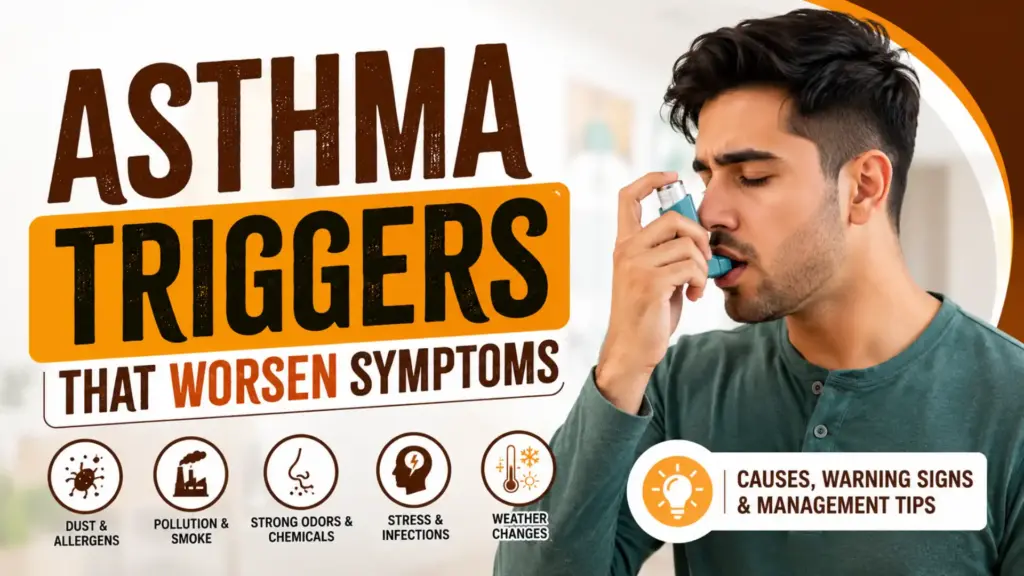
Common asthma triggers include dust mites, pollen, pet dander, mold, cigarette smoke, air pollution, strong smells, chemical fumes, weather changes, emotional stress, respiratory infections, and exercise.
For example, a child may start coughing and wheezing during pollen season, while an adult working around paints, fumes, or dust may notice breathlessness at the workplace. Similarly, someone living in a polluted city may experience worsening symptoms during traffic exposure or poor air quality days.
Environmental Factors That Can Worsen Asthma
Environmental exposure plays a major role in asthma flare-ups. Smoke and fumes from poorly ventilated kitchens may irritate the airways. Vehicle emissions during long commutes may worsen wheezing, cough, or breathlessness.
During festivals, smoke from firecrackers and rising air pollution may increase asthma attacks, especially in children and elderly patients. Cigarette smoke, including passive smoking, can also irritate the airways and make asthma more difficult to control.
Dust from construction sites, road repairs, factories, and indoor renovation work may act as a trigger for people with sensitive airways. Damp homes, water leakage, and mold growth on walls can also contribute to respiratory symptoms.
People working with chemicals, paints, sprays, perfumes, cleaning products, or industrial fumes may notice repeated flare-ups due to regular exposure.
Tips to Reduce Environmental Exposure
Small changes at home, work, and outdoors may help reduce avoidable exposure.
- Keep the home clean and dust-free.
- Avoid smoking and stay away from second-hand smoke.
- Wear a mask in dusty areas or near construction sites.
- Fix water leakage and reduce mold growth.
- Maintain good ventilation at home and work.
- Avoid strong perfumes, room fresheners, incense smoke, and chemical sprays if they trigger symptoms.
- Limit outdoor activity when pollution levels are high.
- Use protective equipment if work involves dust, smoke, chemicals, or fumes.
Lifestyle Triggers That May Affect Asthma
Lifestyle factors may also influence asthma control. Poor sleep, high stress, excess weight, lack of physical activity, and smoking can make breathing symptoms worse.
Stress and anxiety may not directly cause asthma in every person, but they can worsen breathing patterns and make symptoms feel more intense. Similarly, excess body weight may make breathing more difficult and reduce stamina.
A balanced diet, regular sleep, suitable physical activity, stress management, and routine medical check-ups can help support better asthma control.
Asthma Attack Warning Signs
An asthma attack can develop suddenly or gradually. Recognizing warning signs early is important.
Possible asthma attack signs include:
- Sudden difficulty breathing
- Fast or heavy breathing
- Wheezing
- Chest tightness or pressure
- Continuous coughing
- Difficulty speaking due to breathlessness
- Symptoms not improving with prescribed medication
- Bluish lips or fingertips in severe cases
If breathing becomes difficult, symptoms are severe, or prescribed medication is not helping, urgent medical attention is needed.
Diagnosis and Evaluation of Asthma
Asthma diagnosis begins with a detailed medical history. The doctor may ask about symptoms, their timing, triggers, family history of asthma or allergies, and past respiratory illnesses.
A physical examination is done to check breathing sounds, wheezing, and overall respiratory health. In some patients, lung function tests may be advised.
Common tests may include:
- Peak flow measurement
- Spirometry
- Allergy testing, if required
- Chest X-ray or other investigations in selected cases
Diagnosis should always be done by a qualified medical professional, especially if symptoms are frequent, severe, or associated with other respiratory conditions.
Homeopathic Perspective on Asthma
Homeopathy looks at asthma through an individualized approach. Instead of focusing only on wheezing or breathlessness, a homeopathic doctor studies the complete health picture of the patient.
At Life Force, asthma treatment planning may include evaluation of:
- Asthma triggers
- Frequency and intensity of symptoms
- Family history of asthma or allergies
- Associated allergic complaints
- Respiratory infection tendency
- Emotional stress factors
- Sleep, appetite, and general health
- Lifestyle and environmental exposure
Homeopathic treatment for asthma may support selected patients in asthma management by focusing on individual triggers, allergic tendencies, respiratory sensitivity, and overall well-being.
It should not replace emergency medicines, inhalers, or treatment prescribed by a pulmonologist or physician. Patients should continue regular medical monitoring and use prescribed medicines as advised.
You can read more about the Life Force homeopathic treatment approach and how individualized care is planned.
How Homeopathy May Support Asthma Patients
Homeopathy may be considered as supportive care in selected asthma cases, especially when symptoms are recurrent or linked with allergic tendencies.
The focus is to understand the person’s complete pattern rather than treating breathing symptoms alone. Factors such as dust allergy, smoke sensitivity, weather sensitivity, stress, respiratory infections, family history, and general health are assessed during consultation.
Results may vary depending on age, duration of asthma, triggers, severity, associated allergies, and treatment compliance. Treatment should always be taken under qualified medical supervision.
For an example of individualized care, read the case study: Homeopathic treatment for long-term asthma: “35 Years Persistent Asthma Gets Treated Well In Just 6 Months With Homeopathy At Life Force”.
Lifestyle Tips for Better Asthma Control
Healthy daily habits can support asthma management along with medical care.
Avoid smoking and second-hand smoke. Keep your surroundings clean and reduce exposure to dust, mold, pet dander, and strong odors. Eat a balanced diet with fruits, vegetables, and whole grains. Stay physically active with exercises suitable for your age and health condition.
Breathing exercises, yoga, or relaxation techniques may help some patients manage stress and breathing comfort. However, exercise should be done within safe limits and under medical advice if exercise triggers symptoms.
Adequate sleep, hydration, and regular follow-ups are also important.
Life Force Homeopathy Approach
At Life Force Homeopathy, asthma cases are assessed through detailed case-taking. The aim is to understand the patient’s symptoms, triggers, allergy tendency, medical history, lifestyle, and overall health before planning individualized treatment.
The approach includes:
- Detailed symptom evaluation
- Individualized homeopathic prescription
- Review of asthma triggers and allergic tendencies
- Regular follow-up and monitoring
- Online and in-clinic consultation options
- Guidance for long-term respiratory and allergy-related complaints
Patients searching for a Top Homeopathy clinic in India can visit Life Force Homeopathy for more details or start with an online homeopathic consultation if they cannot visit a clinic physically.
If you want to understand the possible scope of homeopathic support for your asthma case, you can take the Assessment Test.
Conclusion
Asthma is a chronic condition, but with proper management, trigger awareness, medical guidance, and regular monitoring, many patients can reduce flare-ups and improve daily comfort.
At Life Force Homeopathy, asthma treatment is planned after understanding each patient’s symptoms, triggers, allergy tendency, lifestyle, and overall health. Homeopathy may be considered as supportive care in selected cases, but asthma patients should continue prescribed medical care and seek urgent help when symptoms are severe.
Struggling With Recurrent Asthma Symptoms or Triggers?
At Life Force Homeopathy, our doctors study your asthma symptoms, triggers, allergy tendency, family history, lifestyle, and overall health before planning individualized homeopathic support.