


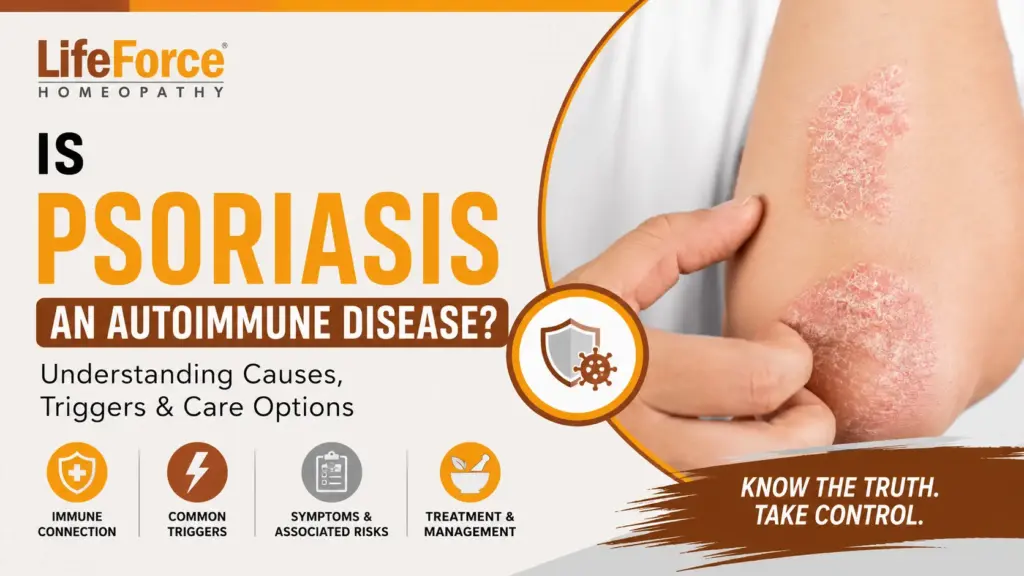
There is a certain kind of helplessness that settles in when you are living with Psoriasis. It becomes frustrating when your body starts behaving erratically as patches turn inflamed and itchy, shedding silver scales that appear to be out of nowhere. You feel perfectly fine one day and suddenly after some stress at office or change in the weather brings back all the symptoms suddenly. This is why many patients start looking for Psoriasis treatment that can help them manage the condition in a structured and long-term way.
It becomes difficult to live with that kind of unpredictability in life. No matter how much you try to manage it but the unpredictability of the next flare-up makes you feel you have lost control. It is just not a skin issue, it is the mental weight of never knowing what tomorrow will look like.
Psoriasis is not just a skin disease. It is the immune system that shows on the skin.
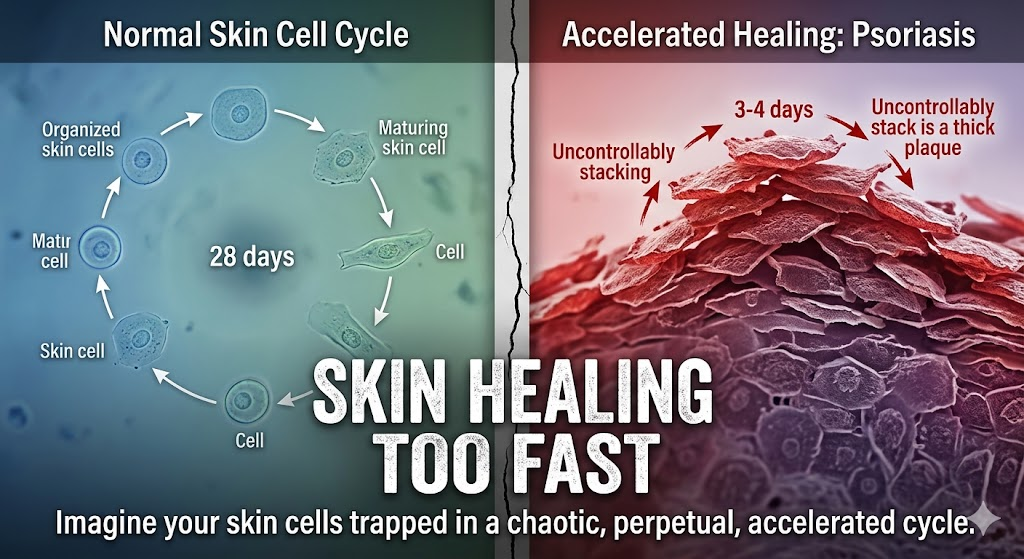
Normally, your skin cells take 28-30 days to reach up to the surface and then shed naturally. But in Psoriasis the process is accelerated and it reaches the surface in 3-5 days. So, the normal cells don’t get time to shed naturally and they get built up on the skin leading to thick, red, dry, silvery patches.
Is Psoriasis truly an Auto immune disease?
Yes, Psoriasis is widely considered as an auto-immune disease, but the reality is a bit more nuanced.
In Psoriasis the immune system mistakenly attacks its own healthy cells resulting in the inflammation and causing red scaly patches. Because the immune system is involved directly in this process it is considered as an auto-immune condition.
Living with a Chronic Condition? Get Expert Guidance.
Talk to Dr. Rajesh Shah — 40+ years of experience in managing chronic skin conditions with a personalized, long-term approach.
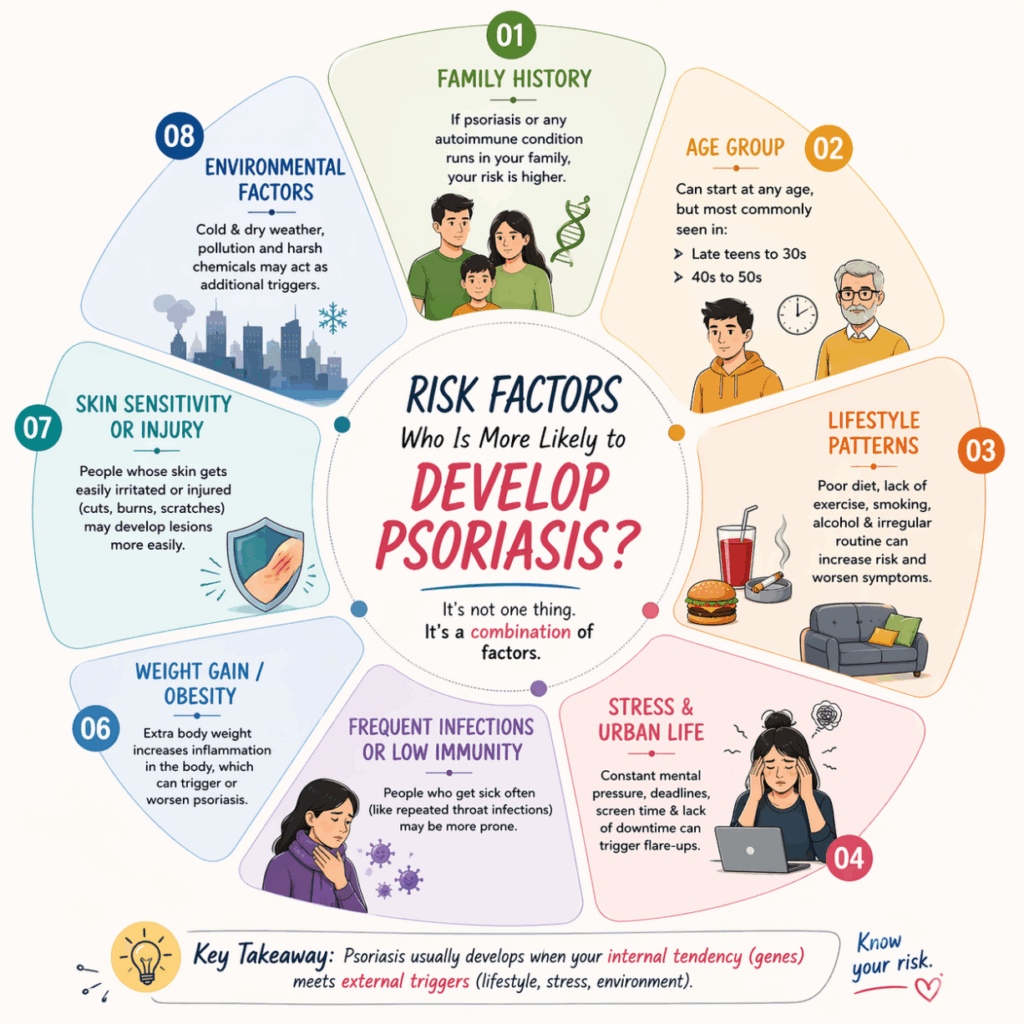
However, there are several other factors that play a role in the onset and flare-ups of Psoriasis like genetic tendencies – people with a family a history of Psoriasis or any other auto-immune condition are prone to get affected by Psoriasis. Environmental factors like winter season is not very favourable for Psoriasis patients. Emotional stress is another important trigger. Many patients worsen during stressful periods, or change in the lifestyle which shows that Psoriasis is not purely immune-driven.
It behaves like an immune-related condition, not a purely autoimmune one in every person. For a more detailed analysis of Psoriasis Causes & Treatment, check out our blog.
How the Immune System Triggers Psoriasis Flare-Ups
Normally your immune system protects you from infections. But in Psoriasis, certain immune cells called T-cells get activated even when there is no threat.
These T-cells release chemicals known as cytokines, which send signals to the skin to produce new cells faster than usual. As a result, the skin starts building up rapidly.
Instead of taking weeks to renew, skin cells come to the surface within just a few days. This leads to the formation of thick, red, scaly patches that are commonly seen in psoriasis.
Hidden Triggers Patients Often Miss
- Emotional stress (acute or chronic)
- Infections (especially throat infections or recent illness)
- Cold and dry weather (winter flare-ups)
- Skin injury or friction (cuts, scratches, tight clothing)
- Certain medications (steroid withdrawal, some BP medicines – beta-blockers.)
- Poor sleep or irregular sleep patterns
- Alcohol and smoking
- Chronic low-grade inflammation from diet (excess junk, sugar, processed food)
- Sudden weather or temperature changes (AC exposure, travel)
- Overuse of harsh soaps, scrubs, or chemical products
- Dry skin / lack of proper moisturization
- Hormonal fluctuations (puberty, pregnancy, menopause)
Risk Factors: Who Is More Likely to Develop Psoriasis?
Can Psoriasis Lead to Other Health Conditions?
Psoriasis can lead to other health conditions when it is moderate or severe or long-standing.
As it causes inflammation in the body it can affect other organs as well. It does not directly cause the diseases but it increases the risk of other conditions.
. Psoriatic arthritis: Joint pain, stiffness, or swelling in some patients.
. Mental health concerns: Stress, Anxiety and low self-confidence.
. Diabetes: Due to chronic inflammation and metabolic changes.
Why Psoriasis Is Often Recurring
Psoriasis stays controlled not permanently gone. One of the frustrating aspects of psoriasis is that it tends to come back even when the skin looks completely clear. This is because it is a chronic condition with an underlying immune tendency.
Certain triggers like stress, weather, hormonal changes, infections or lifestyle changes can reactivate the condition anytime.
Another reason may be stopping the treatment too early or stopping the steroids or immune-suppressants suddenly without consulting your physician.
Recurrence of Psoriasis does not mean that the treatment has not worked, it simply means that long term treatment, trigger control and consistency in care are necessary.
Treatment Approaches: Conventional Treatments vs homeopathy treatment
Conventional treatment: Focuses on applying steroids, oral or injectable immuno-suppressants (like methotrexate, cyclosporin), biologic therapies.
These medicines provide faster relief during active flare-ups. However, symptoms may reappear after stopping the medicines and long-term use of these medicines may increase the potential health risks to the patients due to the side-effects of the medicines.
Homeopathy treatment:
- Focuses on the individual as a whole not just the skin
- Addresses underlying tendencies and triggers
- Considers lifestyle aspects and overall health
The goal is to reduce the frequency of the flare-ups, intensity of the symptoms and dependence on chemical-based medicines.
Realistic Expectations from Psoriasis Treatment
When starting the treatment for Psoriasis it is important to have clear and realistic expectations from the treatment.
Psoriasis is a chronic and recurring condition that can be controlled and managed very well with homeopathic treatment, but may not disappear permanently in every case.
The treatment and time required to treat the patient varies from person to person:
- Recent or early cases of Psoriasis respond faster to homeopathic treatment for psoriasis compared to long-standing and chemical-based medicines dependent patients
- Presence of trigger factors like ongoing stress, hormonal changes, lifestyle factors can slow down the recovery
- Recurrent flare-ups require more time to stabilize the condition
- Regular and timely intake of homeopathy medicines can give better and faster results.
When Should You Consult a Doctor?
Many people initially try to self-manage psoriasis using online information or AI-based advice, but personalized medical guidance is important for effective and safe treatment.
You should consider consulting a doctor :
- If the lesions are rapidly spreading or covering larger areas
- If the patient starts experiencing joint pain or stiffness (in case of Psoriatic Arthritis)
- If the condition is affecting your self -esteem and confidence
- If the condition is recurring despite self-care
- If the home remedies or general treatment is not giving the desired results
Why Patients Consider Life Force Homeopathy for Psoriasis Care
- When dealing with a long-standing condition like psoriasis, many patients naturally look for an approach that goes beyond just temporary relief. Experience also becomes an important factor in that decision.
- Over the years more than 10,000 cases have been treated for Psoriasis at LifeForce homeopathy under the guidance of Dr. Rajesh Shah who has over 40+ years of managing chronic diseases.
- Since psoriasis is a condition that tends to recur, it often requires long-term understanding, regular follow-ups, and careful monitoring. To support this continuity, both online and in-clinic consultations are available. Medicines can also be couriered worldwide, making it easier for patients to continue treatment even if they are not able to visit physically.
- Each case is handled in a structured way, with proper documentation and clinical experience playing an important role in guiding treatment decisions.
- The approach is not just based on experience, but also supported by ongoing research and observations.
Psoriasis may come and go, but with the right approach, you can stay one step ahead of it. When triggers are identified and care is taken regularly, the condition can remain stable for a long time. At Life Force, the focus is on this kind of long-term and personalized care.
Conclusion:-
Psoriasis is a chronic, immune-related skin condition that can affect both physical comfort and emotional confidence. Understanding its autoimmune nature, common triggers, and recurring pattern can help patients manage it more carefully. With timely medical guidance, trigger control, and a structured homeopathy treatment for psoriasis, patients may experience better control over flare-ups, reduced symptom intensity, and improved quality of life.