

Understanding Psoriasis: More Than Just a Skin Condition
There is a certain kind of helplessness that settles in when you are living with psoriasis. It becomes frustrating when your body starts behaving unpredictably – patches turn inflamed and itchy while silvery scales suddenly appear on the skin.
One day, everything may seem stable, and then stress at work, changes in weather, lack of sleep, or an infection may trigger another flare-up. It becomes difficult to live with that kind of unpredictability. For many individuals, psoriasis is not just physically uncomfortable but also emotionally exhausting. This is why many patients look for Psoriasis Homeopathic Treatment as a long-term supportive approach for managing recurring flare-ups. It becomes difficult to live with that kind of unpredictability. For many individuals, psoriasis is not just physically uncomfortable but also emotionally exhausting.
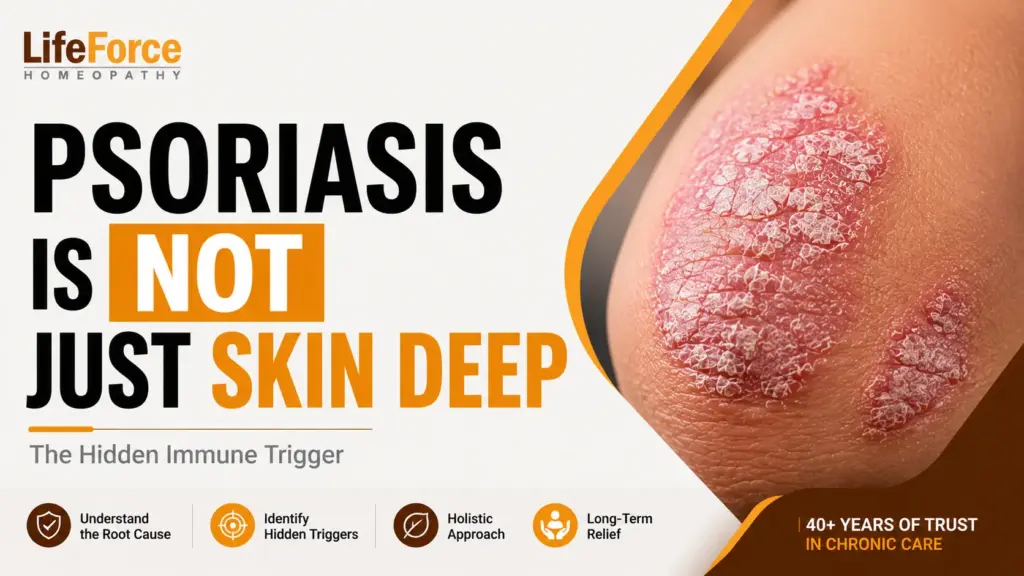
Normally, skin cells take approximately 28–30 days to mature and shed naturally. In psoriasis, this process becomes significantly faster, often occurring within 3–5 days. Since the older skin cells do not get enough time to shed properly, they accumulate on the surface, resulting in thick, dry, red, and scaly patches.
“Psoriasis is not just a skin disease. It is the immune system that shows on the skin.”— Dr. Rajesh Shah, MD (Hom), Life Force Homeopathy
Normally, skin cells take approximately 28-30 days to mature and shed naturally. In psoriasis, this process becomes significantly faster, often occurring within 3-5 days. Since the older skin cells do not get enough time to shed properly, they accumulate on the surface, resulting in thick, dry, red, and scaly patches.
Did You Know?
Living with a Chronic Condition? Get Expert Guidance.
Talk to Dr. Rajesh Shah — 40+ years of experience in managing chronic skin conditions with a personalized, long-term approach.
Psoriasis affects approximately 125 million people worldwide – around 2-3% of the global population. It is one of the most prevalent chronic inflammatory conditions, yet it remains widely misunderstood.
What Is Psoriasis?
Psoriasis is a chronic inflammatory skin condition associated with immune system dysfunction. It commonly presents as:
Silvery-white scales
Red inflamed patches
Dry or cracked skin
Itching or burning
Scalp flaking
Thickened skin areas
Nail pitting
Joint pain (in some cases)
The condition may affect different parts of the body, including the scalp, elbows, knees, lower back, nails, palms and soles, and skin folds. Psoriasis can vary from mild to severe and may occur in cycles of flare-ups and remission
Is Psoriasis an Autoimmune Disease?
Yes, psoriasis is widely considered an immune-mediated or autoimmune-related condition, but the reality is often more nuanced.
In psoriasis, the immune system mistakenly activates inflammatory pathways that accelerate skin cell production. Certain immune cells known as T-cells release inflammatory chemicals called cytokines, which stimulate the skin to produce cells much faster than normal.
However, several additional factors may also influence psoriasis flare-ups and recurrence, making it important to understand the causes of psoriasis properly:
- Family history and genetic predisposition
- Psychological stress and anxiety
- Climate and weather changes
- Hormonal fluctuations
- Lifestyle patterns and dietary habits
- Recurrent infections, particularly throat infections
- Sleep disturbances
This is why psoriasis behaves differently from person to person and is not purely immune-driven in every individual.
How the Immune System Triggers Psoriasis Flare-Ups
Normally, the immune system helps protect the body against infections and harmful organisms. In psoriasis, certain immune cells become overactive even when there is no real threat.
- Immune Activation: Overactive T-cells release inflammatory cytokines, triggering a cascade of skin responses.
- Rapid Cell Production: Skin cells rise to the surface in 3–5 days instead of the normal 28–30 day cycle.
- Accumulation: Old cells do not shed naturally; skin layers start building up on the surface.
- Visible Plaques: Thick, red, dry, and scaly plaques appear the hallmark of active psoriasis.
This inflammatory cycle contributes to the recurring nature of psoriasis flare-ups, which is why long-term management and recurrent psoriasis treatment – rather than surface-level treatment alone – is often more effective.
Is Psoriasis Contagious?
✔ Important Fact
No, psoriasis is not contagious. It does not spread through physical touch, sharing clothes, swimming pools, food sharing, or close contact. Psoriasis develops due to immune-related inflammation and genetic susceptibility – not infection.
Unfortunately, many people still misunderstand this condition. This social stigma can significantly affect the emotional well-being and confidence of patients – adding another layer to the burden of living with psoriasis.
Psoriasis on Scalp: Signs & Challenges
Scalp psoriasis is among the most commonly affected forms and is often particularly distressing due to its visible nature and impact on daily life.
Common Signs
- Thick scalp flakes (often mistaken for severe dandruff)
- Persistent itching and dryness
- Red scalp patches with silvery scale
- Hair fall due to inflammation or scratching
- Burning or stinging sensation on the scalp
Scalp psoriasis can sometimes extend toward the forehead, neck, and behind the ears. Many patients search for homeopathy treatment for scalp psoriasis when flare-ups become recurrent or difficult to manage with standard approaches.
Hidden Psoriasis Triggers Patients Often Miss
Several triggers can worsen psoriasis symptoms or reactivate dormant flare-ups. Identifying and managing these triggers is one of the most important – and often overlooked – aspects of long-term psoriasis care.
😰Emotional Stress
🤒Throat Infections
❄️Cold & Dry Weather
😴Poor Sleep
🚬Smoking
🍺Alcohol
💊Steroid Withdrawal
🩺Beta-Blockers
🍟Junk Food
💧Poor Hydration
🧴Harsh Skin Products
🌡️Weather Changes
❤️Hormonal Shifts
🏠Air Conditioning
Clinical Insight
Sudden withdrawal of steroid-based treatments is one of the most underappreciated psoriasis triggers. Stopping steroids abruptly without medical guidance can cause a rebound flare – often more severe than the original episode.
Risk Factors & Associated Health Conditions
The risk of developing psoriasis may be higher in individuals with a family history of the condition, autoimmune tendencies, chronic stress, obesity, smoking and alcohol habits, recurrent infections, sedentary lifestyle, or metabolic disorders.
Moderate to severe or long-standing psoriasis may sometimes be associated with other health concerns: Psoriatic Arthritis – Joint Involvement+Mental Health & Emotional Impact+Metabolic Disorders & Sleep Disturbances
Conventional Treatments vs Homeopathy Treatment for Psoriasis
Understanding the differences between conventional and homeopathic approaches can help patients make informed decisions about their long-term care.
| Treatment Aspect | Conventional Treatment | Homeopathy (Life Force) |
|---|---|---|
| Primary Focus | Symptom suppression | ✔ Root cause + symptom management |
| Approach | Standardized protocols | ✔ Individualized case assessment |
| Steroid Use | ⚠ Often required | ✔ Steroid-free approach |
| Recurrence Management | ⚠ Flare-ups often return | ✔ Focus on reducing frequency |
| Trigger Management | ✘ Limited attention | ✔ Detailed trigger identification |
| Side Effects Risk | ⚠ Skin thinning, steroid dependency | ✔ Minimal when properly guided |
| Global Availability | ✔ Widely available | ✔ Online + medicine courier worldwide |
This is one reason why many patients explore psoriasis treatment without steroids and look for complementary management approaches that prioritize long-term health over short-term suppression.
Homeopathy Treatment for Psoriasis
The aim of homeopathic treatment for psoriasis extends beyond the visible skin lesions alone. The approach focuses on:
- Individualized assessment – understanding each patient’s unique presentation
- Trigger identification – mapping lifestyle, stress, diet, and environmental factors
- Overall health evaluation – assessing immune health and co-existing conditions
- Stress and lifestyle factors – addressing mental and emotional components
- Long-term management – reducing flare-up frequency and improving stability
Realistic Expectations from Psoriasis Treatment
It is important to have realistic expectations while starting treatment for psoriasis. The response can vary depending on duration of the disease, severity of symptoms, frequency of flare-ups, previous steroid dependency, and lifestyle factors.
Clinical Observation
Early-stage cases may respond faster. Long-standing psoriasis may take more time to stabilize. Trigger management and consistency in treatment are the two most important factors that improve outcomes over time.
Can Lifestyle Changes Help Psoriasis?
Lifestyle management plays an important supportive role in psoriasis care. While lifestyle changes alone may not completely control psoriasis, they may help reduce flare-up frequency.
- Maintaining proper skin moisturization daily
- Stress management – yoga, meditation, counselling
- Regular and consistent sleep schedule
- Balanced, anti-inflammatory diet – reduce processed foods
- Avoiding smoking and excessive alcohol
- Staying well-hydrated throughout the day
- Gentle, fragrance-free skin care practices
- Avoiding harsh chemical-based soaps and products
When Should You Consult a Doctor?
Many people initially try to manage psoriasis using online information or general remedies. However, medical guidance becomes important when:
- Skin lesions spread rapidly or cover large body areas
- Symptoms become painful or cause significant discomfort
- Joint pain or stiffness develops alongside skin symptoms
- Scalp psoriasis worsens significantly with hair loss
- Flare-ups become more frequent or more severe
- Sleep gets consistently disturbed due to itching
- Emotional stress and mental health are affected
- Self-care measures are no longer providing relief
Not Sure How Severe Your Psoriasis Is?
Take our free online Psoriasis Curability Test – designed by Dr. Rajesh Shah – to understand your condition better and assess your treatment options.
Take Curability Test →Book Consultation
Why Patients Consider Life Force Homeopathy for Psoriasis Care
When dealing with a long-standing condition like psoriasis, many patients naturally look for an approach that goes beyond temporary relief. Experience and continuity of care often become important factors in that decision.
Life Force Homeopathy is considered by many patients to provide in-clinic consultation support.
- 10,000+ Psoriasis Cases Managed
- 40+ Years of Dr. Shah’s Experience
- Online & In-Clinic Consultations
- Medicines Couriered Worldwide
- Systematic Documentation
Conclusion
Psoriasis is a chronic and recurring skin condition that needs consistent care, trigger management, and a personalized treatment approach. At Life Force Homeopathy, patients receive research-based and individualized support for long-term psoriasis management. For those looking for the Best Homeopathic clinic in India, Life Force offers experienced doctors, systematic case evaluation, and online as well as in-clinic consultation options.