





What Causes Alopecia Areata?
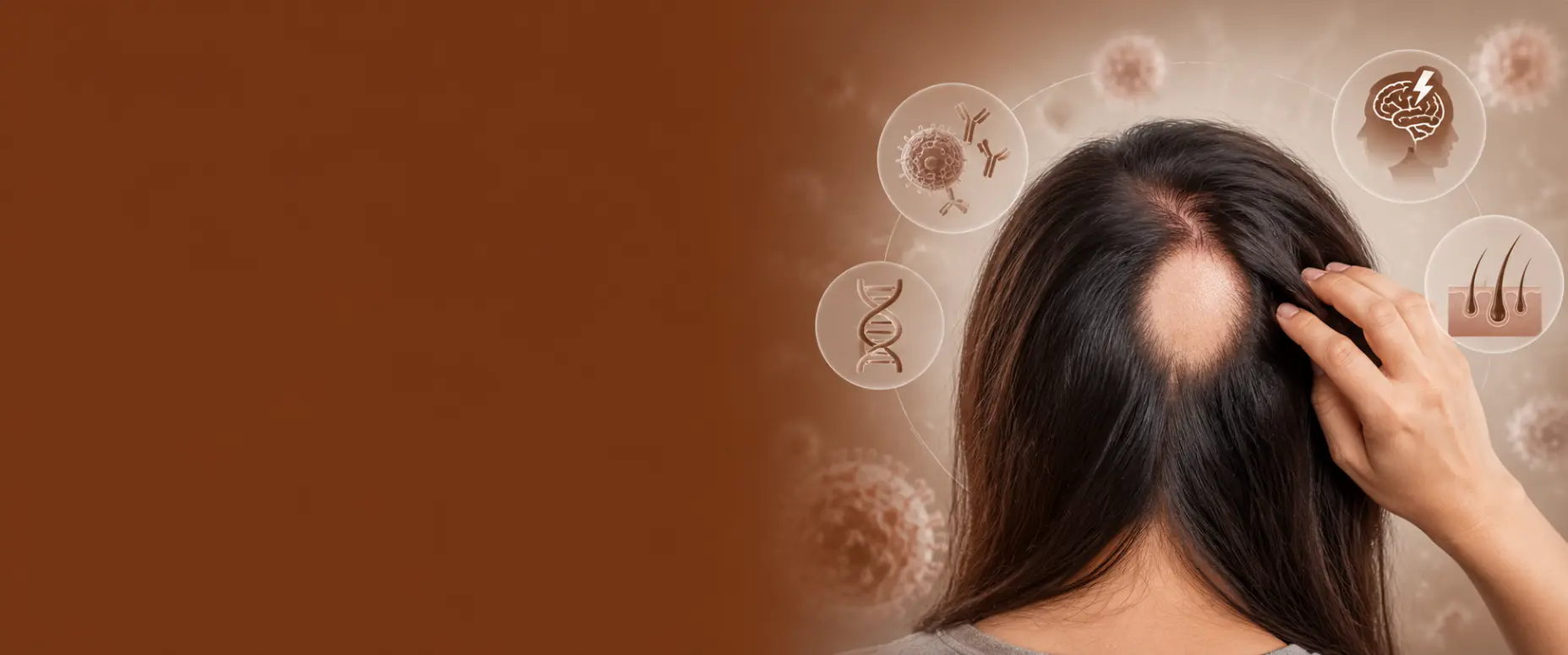
Alopecia areata is an autoimmune hair loss condition where the immune system mistakenly affects the hair follicles, leading to sudden patchy hair loss. To understand the condition in detail, you can read more about alopecia areata and its symptoms on the main disease page.
The exact cause may not be the same for every patient. Genetic tendency, immune imbalance, stress, hormonal changes, nutritional deficiencies, thyroid issues, and environmental factors may all play a role.
At Life Force Homeopathy, the evaluation focuses on the patient’s hair loss pattern, immune tendency, stress history, family tendency, associated conditions, and overall health.
The real question is not only “why did hair fall?” but “why did the immune system start reacting against the hair follicles?”
Symptoms That May Appear with Alopecia Areata
Alopecia areata often starts with one sudden bald patch, but the symptom pattern can differ from patient to patient. Some people may have a small stable patch, while others may notice multiple patches, spreading hair loss, beard involvement, eyebrow loss, or repeated relapse.
The skin over the patch usually looks smooth and non-scarred. In some cases, patients may also notice loose hair around the patch, mild itching or tingling, nail changes, or sudden hair shedding from affected areas.
Symptom Cards
Sudden Round Bald Patches: A smooth round or oval patch may appear suddenly on the scalp, beard, eyebrows, or other hair-bearing areas.
Multiple Hair Loss Patches: Some patients develop more than one patch, either on the scalp or in different hair-bearing areas.
Spreading Patch Size: An existing patch may slowly increase in size, or new patches may appear over time.
Beard or Eyebrow Involvement: Alopecia areata may affect the beard, moustache, eyebrows, eyelashes, or other visible areas.
Smooth Non-Scarring Skin: The skin over the bald patch often looks normal and smooth, without scarring or major scaling.
Nail Changes: Some patients may notice tiny pits, ridges, roughness, brittleness, or dull-looking nails.
Did You Know?
Alopecia areata can affect the scalp, beard, eyebrows, eyelashes, and other body hair.
In many patients, the skin over the bald patch looks normal, smooth, and non-scarred. This means the hair follicle may still be present, and early evaluation can help understand the treatment scope better.
Common Causes and Contributing Factors
Autoimmune Imbalance
Alopecia areata is mainly linked with immune system dysfunction. The immune system mistakenly attacks the hair follicles, which can disturb normal hair growth.
This may lead to sudden round or oval bald patches, recurring patches, or spreading hair loss in some patients.
Genetic Tendency
Some patients may have a family history of alopecia areata or other autoimmune conditions.
A genetic tendency does not mean every family member will develop the condition, but it may increase susceptibility in some people.
Stress and Emotional Triggers
Stress may not be the only cause, but it can act as a trigger or aggravating factor in many patients.
Some patients notice hair loss after emotional stress, exams, work pressure, grief, anxiety, poor sleep, or major life changes.
Thyroid and Hormonal Factors
Thyroid imbalance, hormonal changes, and internal metabolic disturbances may influence hair health and immune activity.
In recurring or spreading alopecia areata, these factors may need evaluation along with the hair loss pattern.
Nutritional Deficiencies
Low Vitamin D, Vitamin B12, iron deficiency, poor diet, or general weakness may affect hair quality and recovery.
Nutritional deficiencies may not be the main cause of alopecia areata, but correcting them may support overall hair health.
Associated Autoimmune Conditions
Some patients with alopecia areata may also have other autoimmune tendencies, such as thyroid disorder, vitiligo, or other immune-related conditions.
This is why a complete health history is important before planning treatment.
Environmental and Lifestyle Factors
Irregular sleep, lifestyle stress, repeated illness, poor nutrition, harsh hair practices, and general health imbalance may contribute to worsening in some patients.
These factors are studied to understand the complete background of the disease.
Why Finding the Cause Is Not Always Simple
Many patients look for one single reason behind alopecia areata, but the condition is often multi-factorial.
A patient may have immune sensitivity, stress, nutritional deficiency, hormonal imbalance, and family tendency acting together. This is why deeper case evaluation is more useful than blaming one fixed cause.
Alopecia areata is often not a simple hair problem. It is usually an immune-pattern problem.
How Life Force Evaluates Alopecia Areata Causes
At Life Force, the evaluation focuses on understanding the full background of the patient’s hair loss.
Dr. Rajesh Shah and the Life Force team study the location of patches, speed of spread, duration, stress history, family tendency, associated illnesses, thyroid or vitamin reports, previous medicines, and overall health.
Evaluation Cards
Patch Pattern: We study whether the hair loss is single, multiple, spreading, beard-related, eyebrow-related, or extensive.
Disease Timeline: We check when the patch started, whether it is stable, growing, recurring, or spreading to new areas.
Trigger History: Stress, illness, hormonal changes, nutritional issues, sleep disturbance, and lifestyle factors are reviewed.
Medical Background: Thyroid history, autoimmune tendency, vitamin deficiencies, past treatments, and family history are considered.
Hair and Scalp Health: Hair texture, regrowth signs, scalp condition, and previous treatment response are evaluated.
Watch: Understanding Alopecia Areata and Patchy Hair Loss
Find Out Your Alopecia Areata Treatment Scope
Every alopecia areata case is different. Some patients have one small patch, some have multiple patches, some have beard involvement, and some may have more extensive hair loss.
The Life Force Assessment Test helps you understand your treatment scope based on your duration, spread, affected areas, recurrence, previous treatment, associated conditions, and overall health.
Know your chances of recovery with just a few simple questions
Ready to know your recovery chances in percentage?
A short, guided assessment built on 40+ years of clinical experience.
Which condition would you like assessed?
Choose your health condition to begin a short, guided assessment.
Real Alopecia Areata Cases, Real Patient Journeys
Alopecia Areata
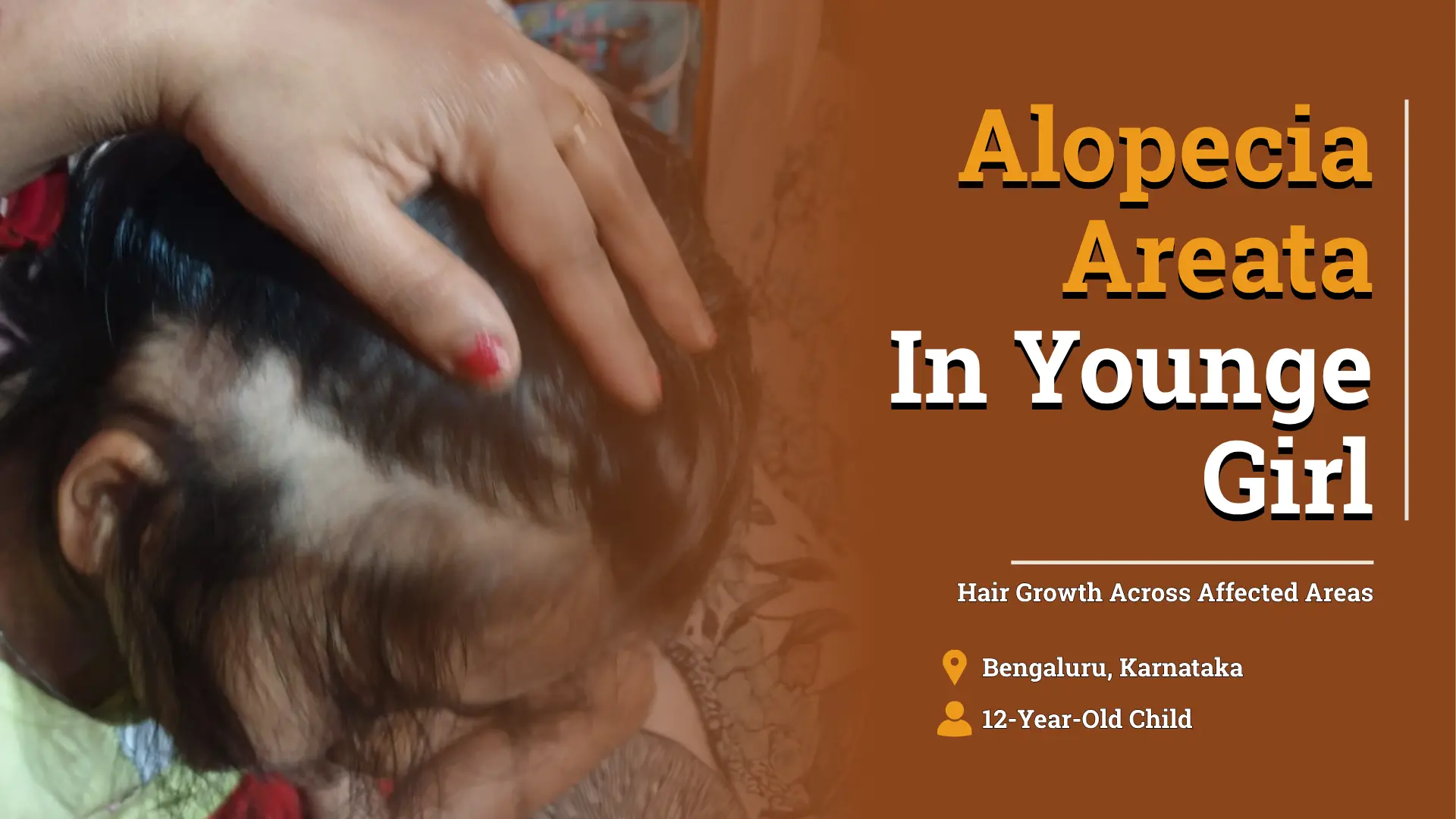
When Hair Loss Started Affecting a Child’s Confidence: A Four-Year Journey With Alopecia Areata
Introduction For parents, noticing sudden bald patches on their child’s scalp can be deeply concerning. What may begin as a…
Alopecia Areata
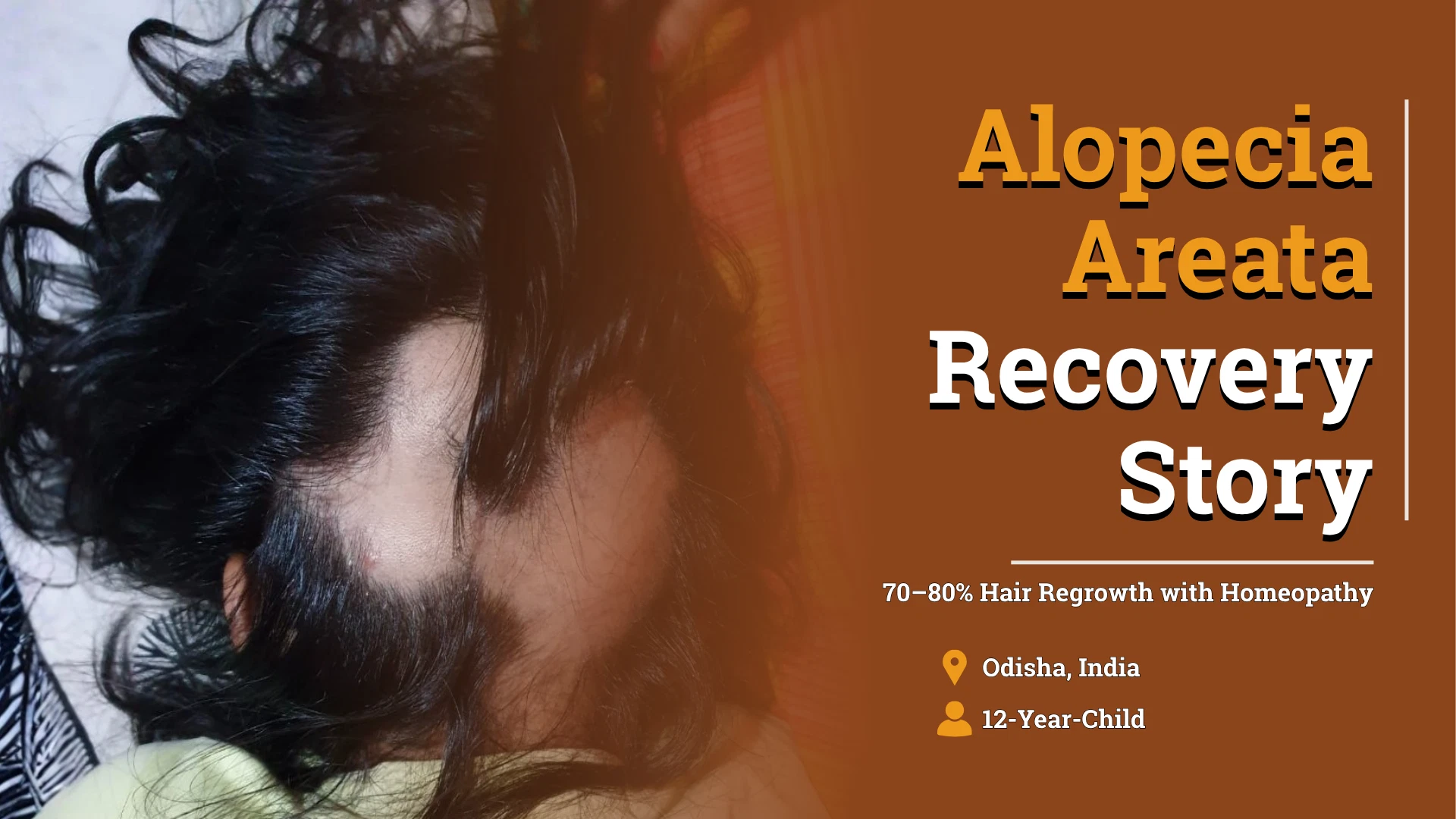
Childhood Alopecia Areata Case Study: Hair Regrowth with Homeopathic Treatment Over 4 Years
Introduction Hair loss in children can be emotionally challenging for both the child and the family. When patches begin to…
Alopecia Areata
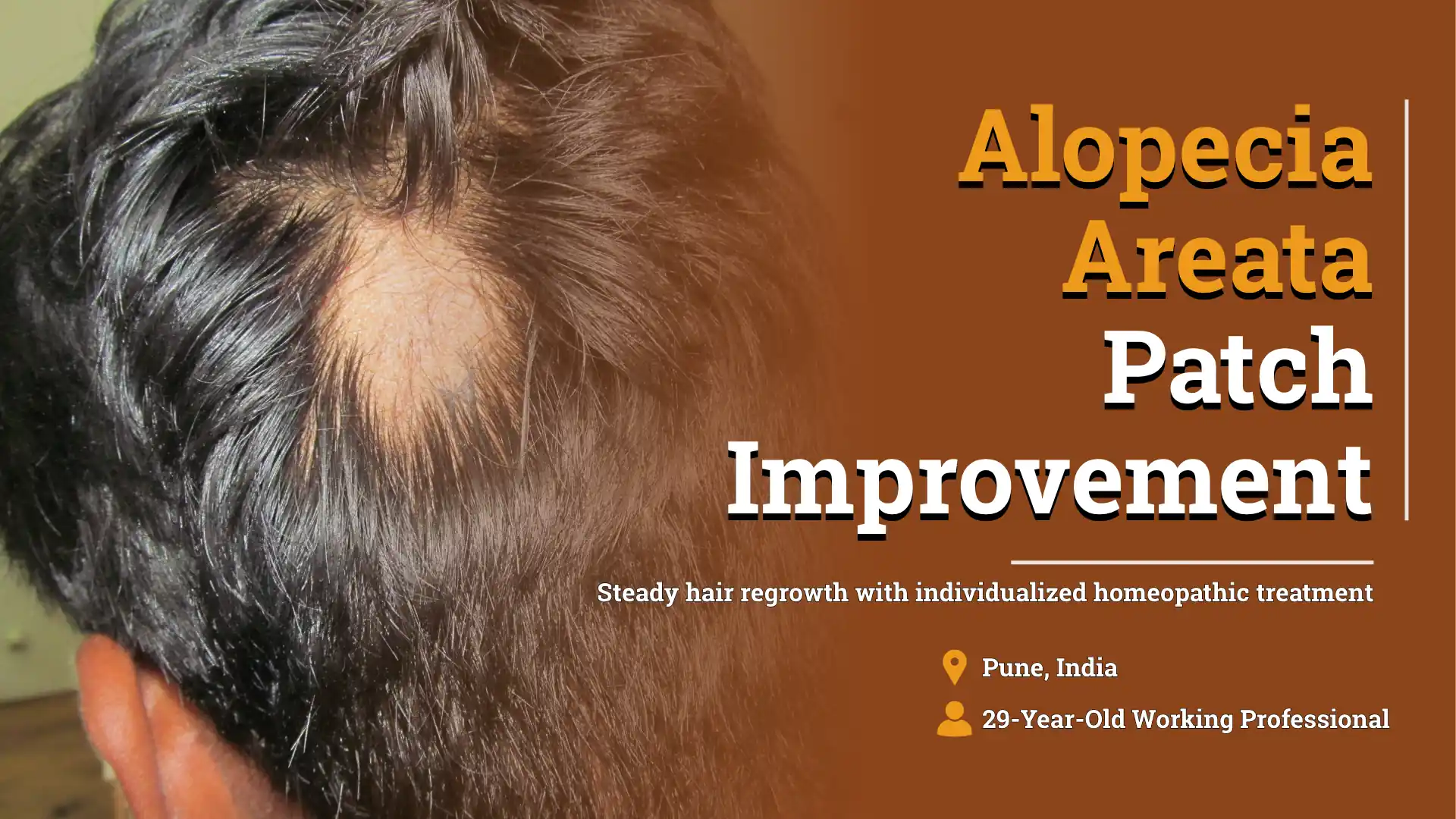
Alopecia Areata Patches Improved With Homeopathic Treatment at Life Force
Mr. P.P. (PIN: 26132), a 29-year-old young man, consulted Life Force Homeopathy on 5 July 2015 for alopecia areata treatment.…
Alopecia Areata
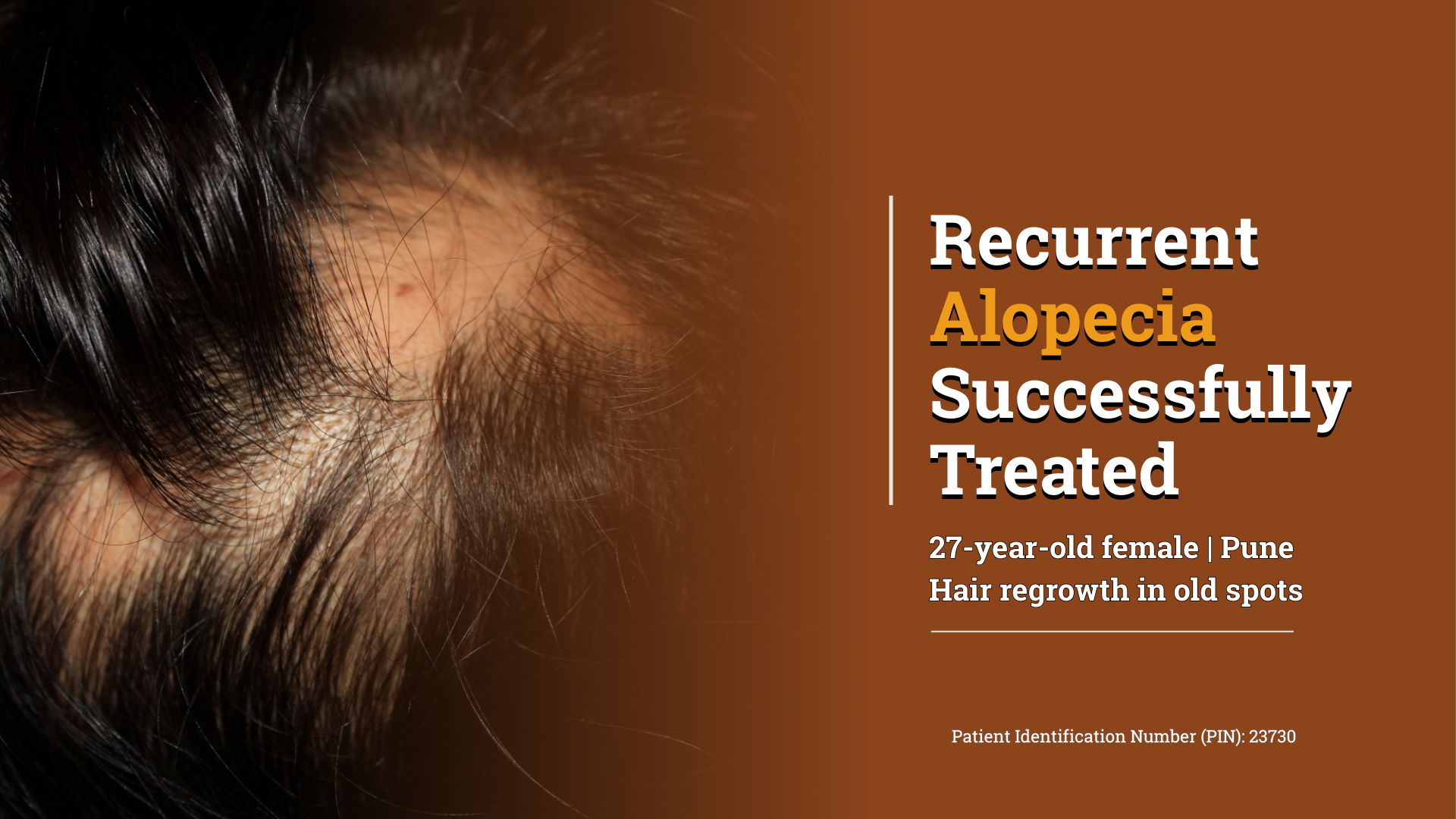
Recurrent Alopecia Areata Improved With Long-Term Homeopathic Treatment
Mrs. D.C. (Patient ID: 23730), a 27-year-old female from Pune, consulted Life Force Homeopathy through online treatment on 29 September…

Alopecia Areata
A Young Student Got The 100% Result in Alopecia Areata with Homeopathy.
Mr. Pradyumna R Ghone, seventeen years old young student, consulted for Alopecia Areata on 23rd July 2015 at Borivali branch of Life…
Alopecia Areata
A 4-Years-Old Girl Was Completely Cured Of Alopecia Areata With Homeopathy
4-years-old patient named Miss A.S (PIN 22907) visited Life Force Homeopathy on 7th June 2014 with the complaint of alopecia areata.The…
Alopecia Areata
Dr. Shah’s Homeopathy Cured Alopecia Areata Of A Teen Girl & Helped Her Regain Confidence
A 15-years-old young girl, Ms. S.A.B. (PIN 10892) visited Life Force, accompanied by her parents, on 8th July 2008 for…
Alopecia Areata
Rapidly Spreading Alopecia Areata Got Fully Cured With Homeopathy At Life Force
A 33-years-old male, Mr. B.C.I. (PIN 22796) visited Life Force on 17th May 2014 for the treatment of alopecia areata.He…
Alopecia Areata
Case-25: Full recovery in patches of Alopecia Areata with Homeopathy
Twenty-year-old young male, Mr. D.B. (Patient Identification No: 21900) visited Life Force on 11th November 2013 for the treatment of…
Alopecia Areata
Complete Recovery From Alopecia Areata Is Achieved With Homeopathy At Life Force
A 29-years-old creative designer from Mumbai, Mr. N.C. (PIN 23082) visited Life Force on 5th July 2014 for his complaint…
Learn More About Alopecia Areata

Homeopathy
India’s Growing Trust in Homeopathy: PM Modi Highlights Its Role in Health and Wellness
Introduction Homeopathy has been part of India’s healthcare journey for generations and continues to form part of the country’s pluralistic…

Homeopathy
Can Homeopathy Have a Role in the Future of Personalized Healthcare?
Why Personalized Healthcare Is Growing, and Where Homeopathy Fits Into the Conversation Two people may have the same diagnosis and…

Homeopathy
Confused Between Homeopathy and Conventional Treatment? Here’s What Patients Should Know
When Choosing a Treatment Starts Feeling Like Choosing a Side When people feel unwell, the confusion often goes beyond the…

General
Why does Google list Dr Rajesh Shah, MD. as among the best homeopathic doctors in India
Meet Dr. Rajesh Shah: A World-renowned Homeopathic Doctor in India Finding the right doctor for chronic and recurring health concerns…

Homeopathy
Life Force Homeopathy: Four Decades of Experience in Managing Chronic Diseases
Introduction Living with a chronic condition can mean recurring symptoms, repeated treatment, and uncertainty about future flare-ups. Life Force Homeopathy…

General
Why More Patients Are Choosing Homeopathy for Chronic and Recurring Health Conditions
Why Chronic Conditions Need a Long-Term Approach Many people look for quick solutions when dealing with health concerns. While acute…

General
Support Your Immunity Naturally This Monsoon with Homeopathy
The monsoon brings relief from the summer heat, but it also creates conditions in which viral, bacterial and fungal infections…

General
Assessment Tests: Making Informed Healthcare Decisions
Introduction Healthcare decisions can be stressful. Patients often struggle to choose the best treatment, decide when to seek second opinions,…
Alopecia Areata
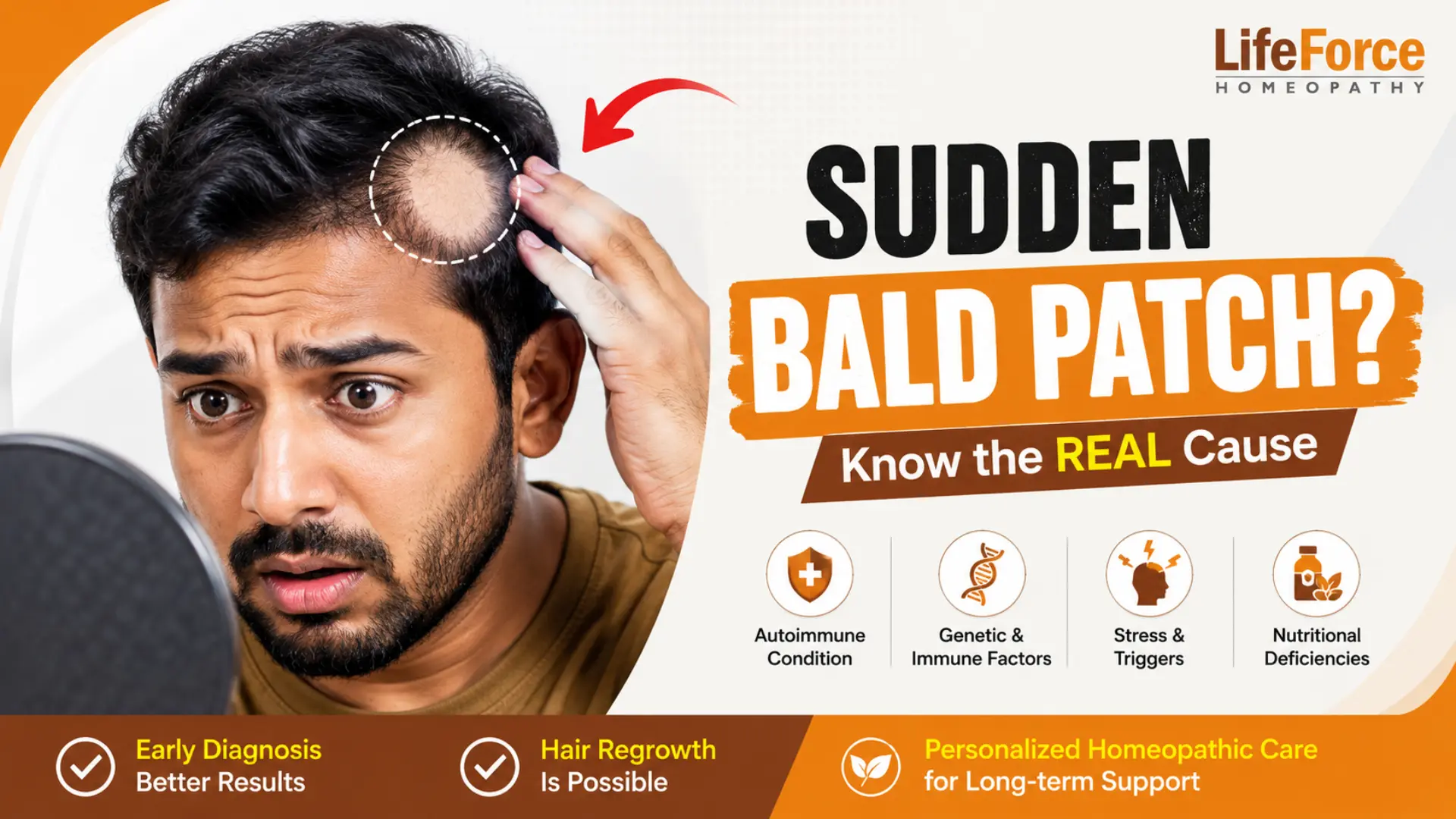
Sudden Bald Patches? Understanding Alopecia Areata Causes and Treatment Support
Introduction Have you recently noticed a smooth, round bald patch on your scalp or beard? It may not be painful,…

Homeopathy
How Life Force Homeopathy Is Shaping the Future of Modern Homeopathy in Global Healthcare
Evolution of Homeopathy in Modern Medicine Homeopathy was founded over 200 years ago by its founder, Dr. Samuel Hahnemann, and…
Worried About Sudden Hair Loss Patches?
Share your symptoms with our team. We will review your hair loss pattern, duration, spread, affected areas, previous treatment, and overall health before guiding you further.
Contact Us
FAQ
Alopecia areata is mainly an autoimmune condition where the immune system mistakenly attacks the hair follicles, leading to sudden patchy hair loss.
Common symptoms include sudden round bald patches, smooth non-scarring skin, multiple patches, spreading patches, beard or eyebrow involvement, and sometimes nail changes.
Stress may not be the only cause, but it can act as a trigger or aggravating factor in some patients with alopecia areata.
Some patients may have a genetic tendency or family history, but not every case is inherited directly.
Vitamin deficiencies may not be the main cause, but low Vitamin D, Vitamin B12, iron deficiency, or poor nutrition may affect hair health and recovery.
Yes. In some patients, one patch may remain stable, while in others, new patches may appear or the condition may progress.
You should consult a doctor if you notice sudden bald patches, spreading hair loss, eyebrow or beard involvement, repeated episodes, or emotional distress due to hair loss.