

Table of Contents
Introduction
Hair loss in children can be emotionally challenging for both the child and the family. When patches begin to appear and gradually spread across the scalp, eyebrows, eyelashes, and body, it can significantly impact confidence and daily life.
This case study highlights how homeopathic treatment of alopecia areata supported a 12-year-old girl in achieving gradual and sustained hair regrowth through a personalized and long-term treatment approach at Life Force Homeopathy.
Patient Case Details
| Parameter | Details |
| Patient ID | 47298 |
| Age | 12 Years |
| Gender | Female |
| Mode of Treatment | Online |
| First Consultation | 23 March 2022 |
| Condition | Alopecia Areata (Scalp, Eyebrows, Eyelashes, Face, Limbs) |
| Duration at Onset | 2 Months |
| Family History | Father had Alopecia Areata |
About Alopecia Areata
Alopecia areata is an autoimmune condition in which the body’s immune system attacks hair follicles, leading to patchy hair loss. These alopecia areata patches may appear on the scalp, eyebrows, eyelashes, face, or body.
The condition is often unpredictable - patches may:
- Appear suddenly
- Spread to new areas
- Improve temporarily
- Recur over time
In children, alopecia areata can also affect emotional well-being, self-esteem, and social interactions.
Many families explore homeopathy treatment for alopecia areata as a supportive approach, especially in cases with recurrence or genetic predisposition.
Presenting Complaints
At the first consultation, the patient presented with:
Living with a Chronic Condition? Get Expert Guidance.
Talk to Dr. Rajesh Shah — 40+ years of experience in managing chronic conditions with a personalized, long-term approach.
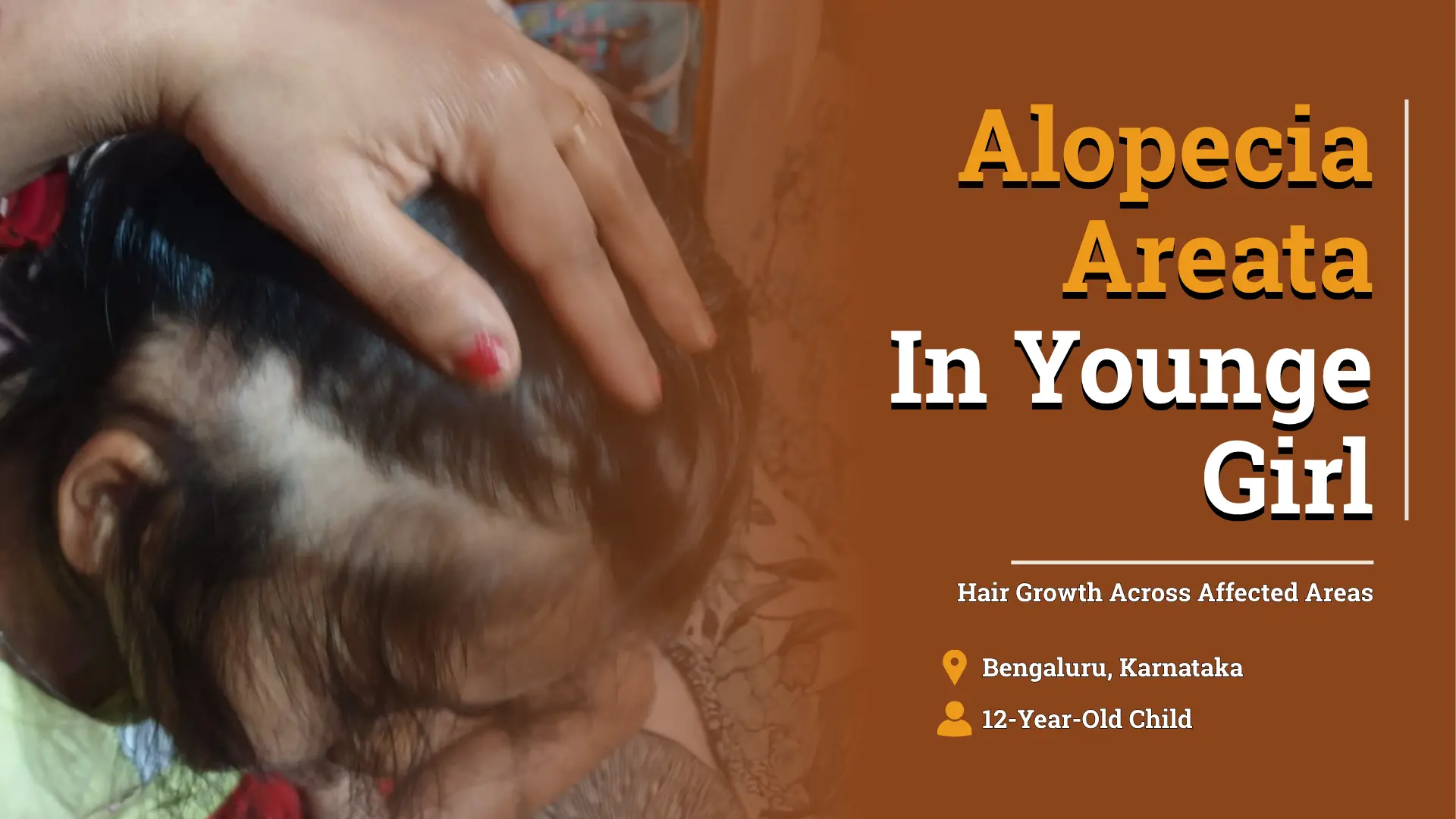
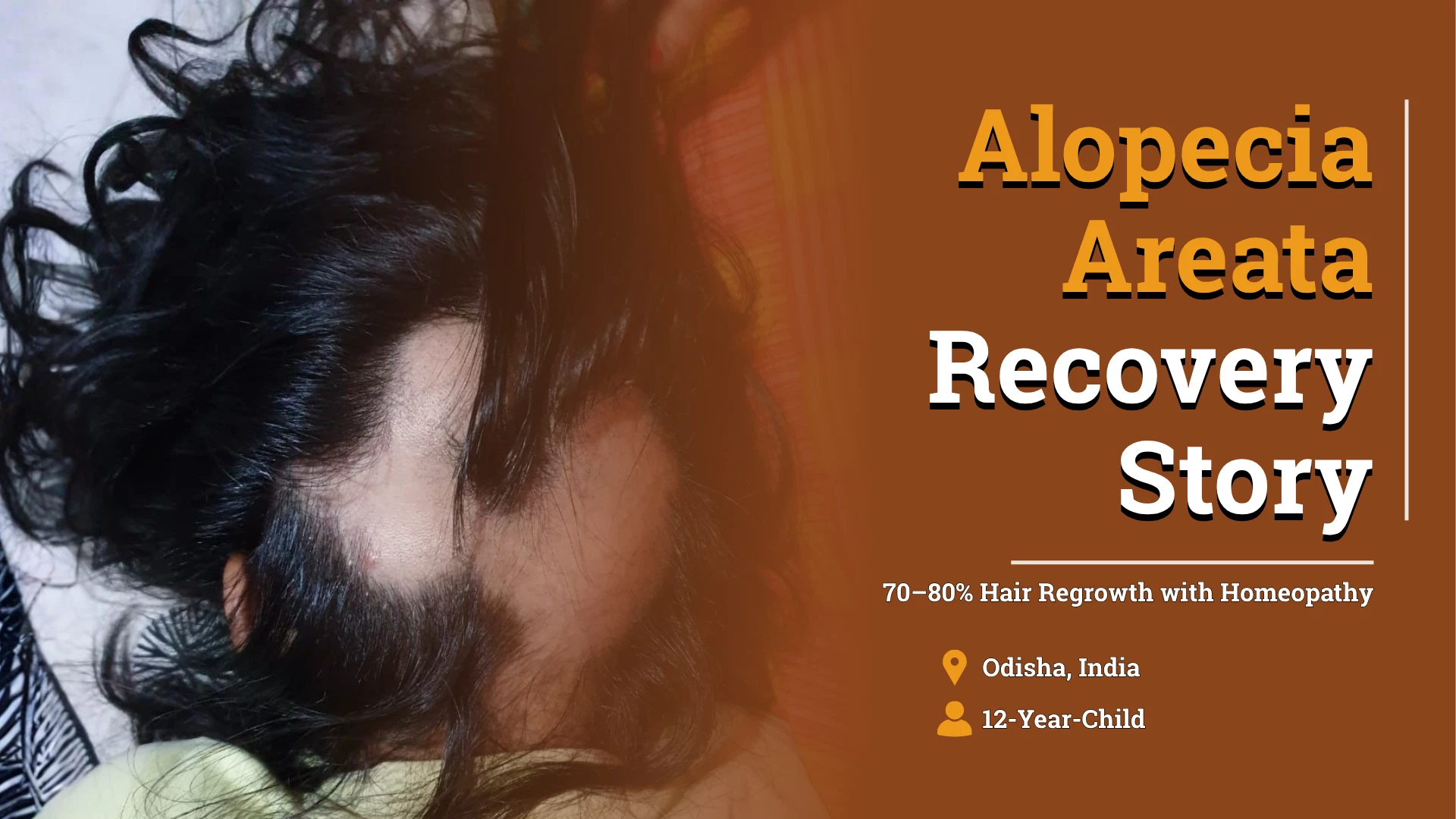
- 3 moderate-sized alopecia areata patches on the scalp
- 1 large bald patch
- Significant hair fall
- Reduced hair density
- Early stage progression (2 months duration)
- Strong genetic link (father affected)
Individual Case Assessment
At Life Force Homeopathy, a detailed evaluation was conducted beyond visible symptoms.
1) Physical Assessment:
- Pattern and size of alopecia areata patches
- Rate of hair fall and density loss
- Spread to eyebrows, eyelashes, face, and limbs over time
- General health indicators like appetite, sleep, and thermal response
2) Genetic & Trigger Factors:
- Strong hereditary predisposition
- Possible trigger: climate change and travel (noted during follow-ups)
3) Emotional Assessment:
- Anxiety related to visible hair loss
- Sensitivity to appearance and peer reactions
- Emotional impact of a chronic condition
These factors are crucial in selecting individualized homeopathic treatment for alopecia areata, focusing on the patient as a whole.
Case Analysis & Treatment Approach
The treatment approach focused on individualized care rather than treating only the diagnosis of alopecia areata.
Key Principles Followed:
- Totality of symptoms considered (physical + emotional)
- Genetic predisposition included in remedy selection
- Continuous assessment and adjustment of treatment
This reflects how Homeopathic treatment aims to support long-term balance rather than short-term symptom suppression.
Treatment Plan
- Individualized constitutional homeopathic medicines
- Regular follow-ups every 6–10 weeks
- Continuous monitoring of patch progression and regrowth
- No concurrent conventional medication used
Follow-Ups & Progress Timeline
| Duration | Progress |
| 2 Months | Slight spread in patches; hair fall improved |
| 4 Months | No new patches; early regrowth observed |
| 6 Months | Improvement in scalp patches; new minor patches in eyebrows/body |
| 9 Months | 70% scalp improvement; spread to facial areas |
| 12–18 Months | Fluctuating pattern with phases of stability and spread |
| 20–24 Months | Disease stabilizing; mild regrowth |
| 27–32 Months | Mixed progress; some new patches, some regrowth |
| 34–41 Months | Visible regrowth in multiple areas |
| 43–48 Months | No new patches; consistent regrowth |
| Final Outcome | 70–80% overall improvement |
Outcome
Over approximately 4 years of treatment, the patient experienced:
- 70–80% overall improvement in alopecia areata
- Hair regrowth across multiple affected patches
- No new patches at final follow-up
- Improvement in eyebrows, scalp, and body hair
- Stabilization of disease progression
- Improved emotional confidence
This case highlights how homeopathic treatment for alopecia areata may support gradual regrowth and stabilization over time.
Key Learnings
- Alopecia areata in children may require long-term management
- Genetic factors play an important role
- Disease progression may not be linear
- Emotional health is critical in pediatric cases
- Regular follow-ups improve treatment outcomes
- Individualized care is essential
Conclusion
This case highlights how a structured and personalized approach to homeopathy may support gradual hair regrowth and long-term stability in alopecia areata. Over time, the patient showed meaningful improvement across multiple patches, along with better confidence and overall quality of life.
While this case reflects a positive outcome, results can vary depending on individual factors such as the duration of the condition, severity, and overall health profile.