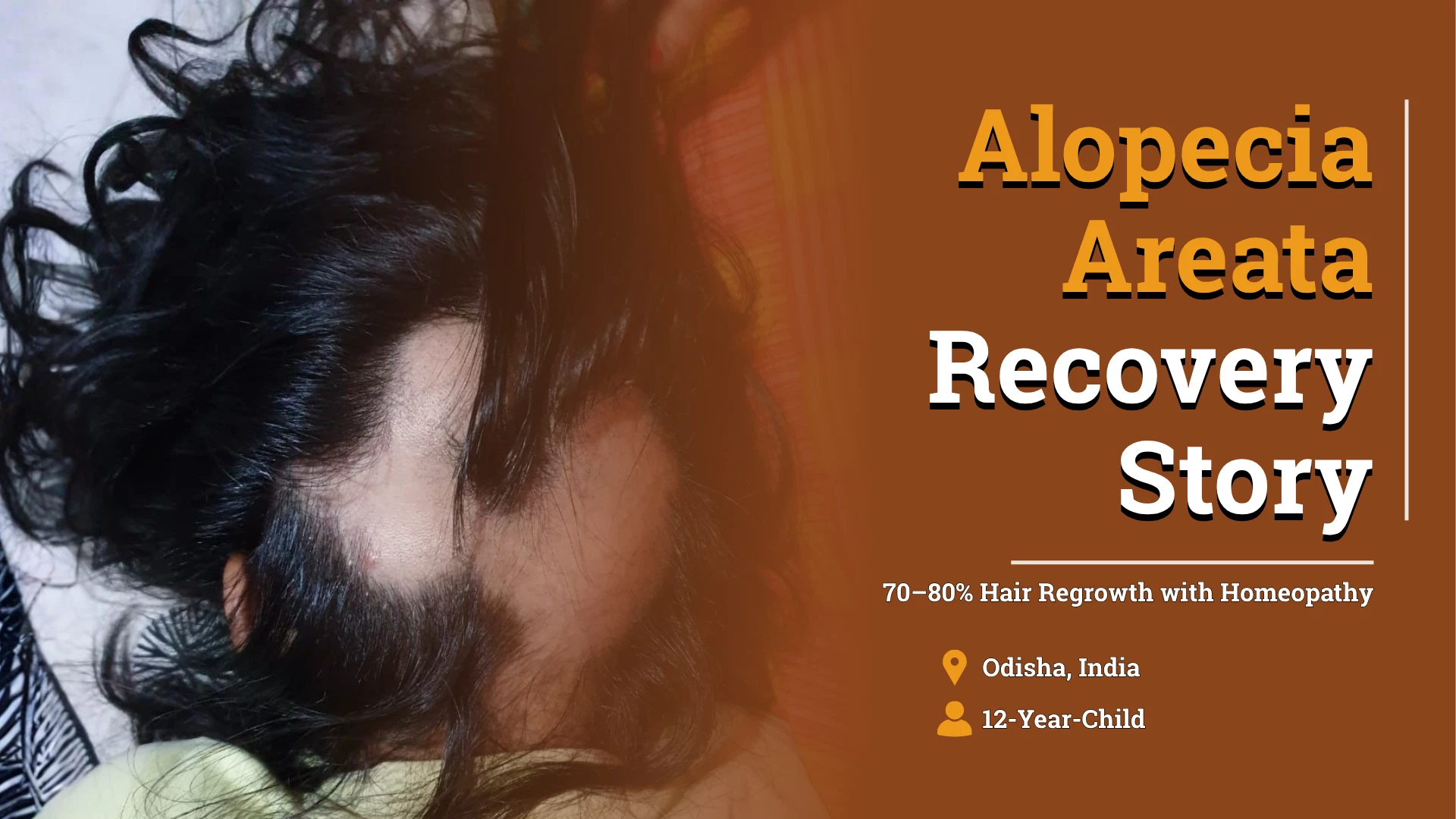


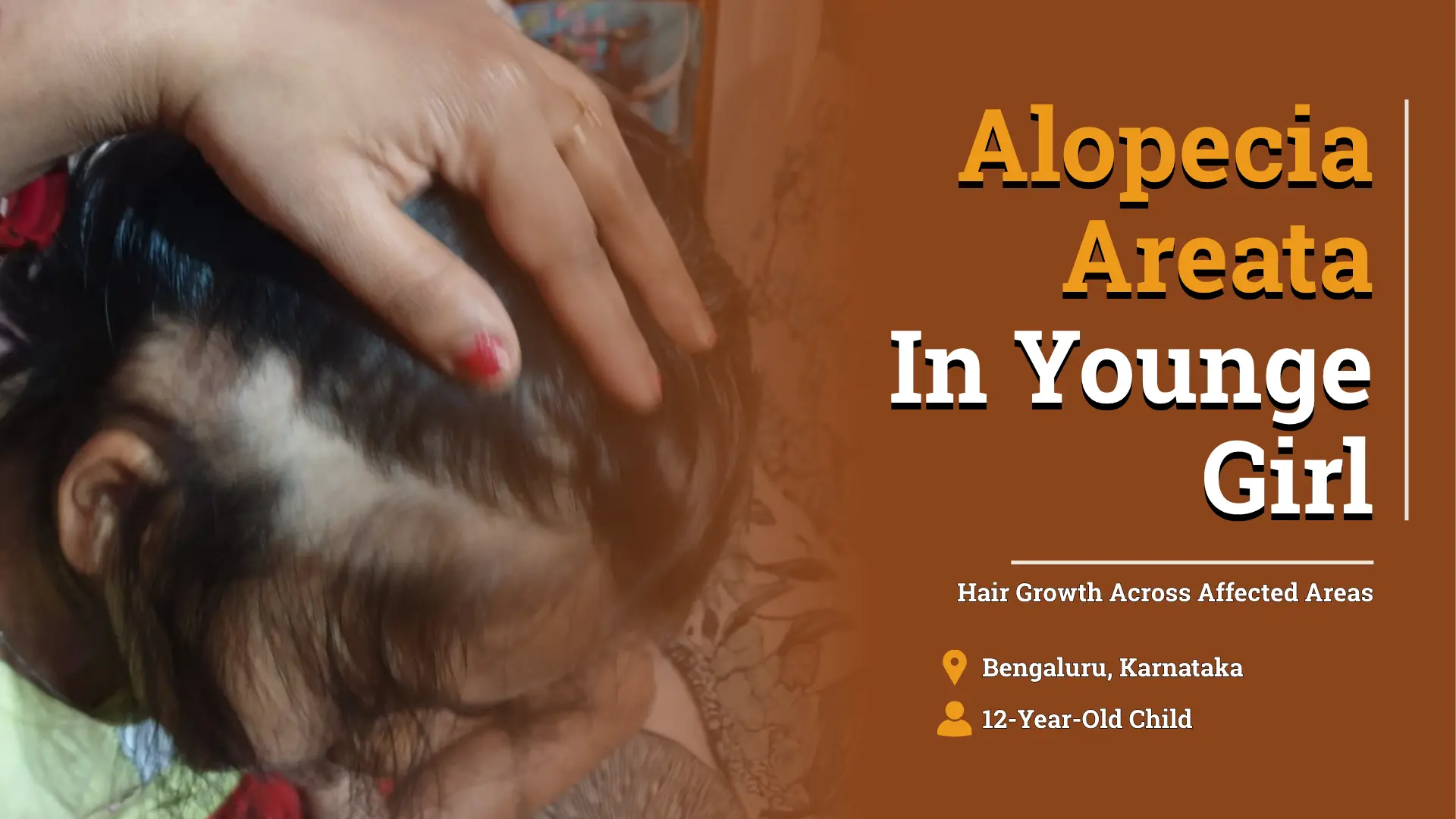
A 12-year-old girl with Alopecia Areata experienced patchy hair loss affecting her scalp, eyebrows, eyelashes, face, and limbs. After consulting Life Force Homeopathy in March 2022, she underwent individualized treatment and regular follow-ups. Over approximately four years, gradual hair regrowth was observed across affected areas, with around 70–80% overall improvement documented at the final follow-up.
Table of Contents
- 01. Introduction
- 02. Patient Case Details
- 03. Understanding Alopecia Areata and Hair Loss Patterns
- 04. The First Signs of Hair Loss
- 05. How the Condition Progressed Over Time
- 06. Understanding Her Overall Health Picture
- 07. Ready to Know Your Recovery Chances?
- 08. Planning the Treatment Approach
- 09. Follow-Up Journey
- 10. Changes Observed During the Treatment Journey
- 11. Key Learnings From This Case
- 12. Conclusion
Introduction
For parents, noticing sudden bald patches on their child’s scalp can be deeply concerning. What may begin as a small patch of missing hair can sometimes progress and involve other areas, creating emotional distress for both the child and family
Miss S.N., a 12-year-old girl, experienced a similar challenge when she developed a condition that caused patchy hair loss on her scalp and later affected her eyebrows, eyelashes, face, and limbs. She required Alopecia Areata treatment during a very early stage of her life.
Many families describe this condition as “बालों के गोल-गोल चकत्ते गिरना” in Hindi, where clearly visible patches appear due to sudden hair loss. Unlike regular hair fall, where strands gradually shed, Alopecia Areata causes defined areas where hair stops growing temporarily.
Her family approached Life Force homeopathy online consultation in March 2022 after noticing progressive hair loss. Over nearly four years of follow-up, the patient experienced gradual improvement, with hair growth observed across previously affected areas.
Patient Case Details
| Parameter | Details |
| Patient ID | 47298 |
| Age | 12 Years |
| Gender | Female |
| Consultation Mode | Online Consultation |
| First Consultation | 23 March 2022 |
| Condition | Alopecia Areata |
| Areas Affected | Scalp, eyebrows, eyelashes, face, and limbs |
| Duration Before Consultation | 2 Months |
| Family History | Father had Alopecia Areata |
Understanding Alopecia Areata and Hair Loss Patterns
Alopecia Areata is a condition where the immune system affects the hair follicles, leading to patchy hair loss. It may involve the scalp, eyebrows, eyelashes, facial hair, or other body areas.
There are different types of hair loss, ranging from temporary shedding to conditions that cause visible bald patches. Alopecia Areata belongs to the category where hair loss appears in clearly defined areas and may follow an unpredictable pattern.
The exact hair fall causes can vary between individuals. Factors such as genetic tendency, immune-related responses, stress, and other triggers may influence the development or recurrence of symptoms.
In children, visible hair loss can affect confidence, self-image, and social interactions, making emotional support and regular monitoring an important part of overall management.
The First Signs of Hair Loss
When the patient first consulted in March 2022, she had already developed noticeable changes in her hair pattern.
The concerns reported were:
- Three moderate-sized bald patches on the scalp
- One large bald patch on the scalp
- Significant hair fall
- Reduced overall hair density
- Condition active for around two months
- Family history of Alopecia Areata, as her father had experienced the same condition
Since the patient was young, the impact was not limited to physical appearance. The possibility of further spread and changes in visible areas like the scalp and face became a concern for the family.
How the Condition Progressed Over Time
During the follow-up period, the condition showed changes typical of chronic hair loss disorders. Initially, some patches showed improvement, while at certain stages new areas became involved.
Over time, Alopecia Areata affected:
- Scalp hair
- Eyebrows
- Eyelashes
- Facial hair
- Limb hair
The patient experienced periods where hair loss remained stable, followed by phases of new patch formation. For example, around September 2023, mild flare-up activity was observed after possible triggers such as climate change and travel.
This required continuous observation and adjustment of the treatment approach according to the changing pattern.
Understanding Her Overall Health Picture
The case evaluation included more than the visible hair patches. Factors such as physical characteristics, general health, family history, and emotional state were also considered.
Important observations included:
- Pattern and location of hair loss patches
- Severity of hair shedding
- Involvement of eyebrows and eyelashes
- Family history of Alopecia Areata
- General health characteristics
- Emotional response towards the condition
As a 12-year-old dealing with a visible condition, her confidence, sensitivity towards appearance, and emotional response were also considered while understanding her overall case.
Her father’s history of Alopecia Areata was an important factor, suggesting a possible hereditary tendency.
Ready to Know Your Recovery Chances?
Discover your recovery chances from chronic diseases in percentage with Life Force Homeopathy's FREE Assessment Test. Get a personalized evaluation from our experienced doctors.
Start Your FREE Assessment Test →Planning the Treatment Approach
After reviewing the complete case details, including the pattern of hair loss, family history, age, and overall health profile, Dr. Rajesh Shah planned a customized Hair Loss treatment approach.
The treatment plan focused on:
- Monitoring changes in affected areas
- Tracking new patch formation
- Observing signs of hair regrowth
- Reviewing progress during follow-up consultations
- Modifying medicines whenever required
The patient continued the treatment journey without concurrent conventional medication.
Follow-Up Journey
| Duration | Clinical Progress |
| 2 Months | Existing patches showed slight spread, with one new patch near the temple area. Hair fall showed some improvement. |
| 4 Months | No further spread was observed. Hair fall reduced, and early hair regrowth was noticed in existing patches. |
| 6 Months | Scalp patches showed improvement. Small new patches appeared on eyebrows and body hair areas. |
| 9 Months | Around 70% scalp improvement was observed. No new scalp spots developed, while facial and leg hair involvement continued to be monitored. |
| 11 Months | Condition remained stable. Eyelash and facial hair involvement was observed. |
| 15 Months | Only one scalp patch remained. Facial patches showed improvement. |
| 18 Months | Mild flare-up occurred with new scalp patches after possible triggers such as climate change or travel. |
| 22–30 Months | Disease spread gradually stabilized. Existing patches started showing signs of regrowth. |
| 34–40 Months | Significant improvement was observed, with hair growth appearing in previously affected areas. |
| 48 Months | Around 70–80% overall improvement was documented. Hair growth was observed across affected patches, with no new spots reported. |
Changes Observed During the Treatment Journey
After approximately four years of monitoring, the patient showed gradual improvement in her Alopecia Areata journey.
The documented changes included:
- Around 70–80% overall improvement
- Hair growth in previously affected patches
- Improvement in eyebrow thinning
- No new patches at the final follow-up
- Stable progress without conventional medication
The improvement occurred gradually and was not completely linear. Temporary phases of spread and flare-ups were observed, which can occur in chronic autoimmune hair conditions.
Key Learnings From This Case
- Hair loss in children can have emotional as well as physical effects.
- Understanding family history can provide valuable insights during case evaluation.
- Alopecia Areata may involve different body areas and requires continuous monitoring.
- Hair regrowth patterns can vary between individuals.
- Long-term follow-up is important while managing chronic hair conditions.
Conclusion
Miss S.N.’s case represents the long-term journey of a child experiencing Alopecia Areata with involvement of multiple areas, including the scalp, eyebrows, eyelashes, face, and limbs.
Through regular consultations, monitoring, and a structured treatment approach, gradual improvement was observed over approximately four years, with hair growth seen across previously affected patches.
While outcomes may vary from person to person, this case highlights the importance of understanding individual factors, maintaining consistent follow-up, and taking a comprehensive approach while managing chronic hair loss conditions.
Living with a Alopecia Areata?
Receive a personalized treatment plan from our experienced homeopathic doctors. Trusted by over 100,000+ patients across 180+ countries for safe, natural and long term management of chronic diseases.