
Cancer Causes, Symptoms, Stages, and Treatment Options: Role of Supportive Homeopathy

Introduction

Cancer is one of the most serious health concerns worldwide. It is not a single disease, but a group of diseases in which abnormal cells grow and multiply without proper control.

Cancer can affect almost any part of the body, including the lungs, breast, colon, skin, blood, prostate, liver, and brain. Each type behaves differently and needs proper medical diagnosis, staging, and treatment planning.

Understanding cancer causes, cancer symptoms, cancer stages, and cancer treatment options helps patients seek timely care and make informed decisions. Patients exploring homeopathy for cancer should understand that it may be considered only as supportive care alongside standard oncology treatment.

At Life Force Homeopathy, homeopathy is considered only as supportive care in selected cancer patients. It is not advised as a replacement for conventional oncology treatment.

What Is Cancer?

In a healthy body, cells grow, divide, and die in a regulated manner. Cancer develops when this process is disturbed due to genetic changes or other factors. Damaged cells may continue to multiply and form tumors.

Tumours may be benign or malignant. Benign tumours usually remain in one place, while malignant tumours may invade nearby tissues or spread to other parts of the body. This spread is called metastasis.

Common Cancer Causes

Cancer usually develops due to a combination of factors rather than one single cause.

Common cancer causes include:

  • Genetic mutations
  • Increasing age
  • Family history of cancer
  • Tobacco use
  • Alcohol consumption
  • Obesity
  • Poor diet and processed foods
  • Chronic infections
  • Radiation exposure
  • Environmental pollutants
  • Industrial chemicals
  • Long-term inflammation

Having a risk factor does not mean a person will definitely develop cancer. It only means the risk may be higher.

Lifestyle and Environmental Risk Factors

Lifestyle plays an important role in many cancers. Tobacco, alcohol, physical inactivity, obesity, and unhealthy diet are known risk factors for several cancers.

Environmental exposure may also contribute. Air pollution, ultraviolet radiation, secondhand smoke, workplace chemicals, and chronic exposure to carcinogens may increase risk depending on the duration and intensity of exposure.

Stress does not directly cause cancer, but long-term stress may affect sleep, immunity, and lifestyle habits, which can influence overall health.

Cancer Symptoms

Cancer symptoms depend on the type, location, and stage of disease. Some cancers may not show clear symptoms in the early stages.

Common warning signs include:

  • Unexplained weight loss
  • Persistent fatigue
  • Lump or swelling
  • Unusual bleeding
  • Persistent cough
  • Change in bowel or bladder habits
  • Non-healing wound
  • Persistent pain
  • Difficulty swallowing
  • Change in a mole
  • Loss of appetite

These symptoms do not always mean cancer, but if they persist, medical evaluation is important.

Cancer Stages

Cancer stages help doctors understand how far the disease has progressed.

In general:

  • Stage 0 means abnormal cells are present but have not spread.
  • Stage 1 usually means early, localised cancer.
  • Stage 2 may mean a larger tumour or limited spread.
  • Stage 3 usually means spread to nearby tissues or lymph nodes.
  • Stage 4 means cancer has spread to distant organs.

Cancer staging should always be done by an oncologist using investigations such as imaging, biopsy, and laboratory tests.

Diagnosis and Early Detection

Early diagnosis can help in better treatment planning. Doctors may use different tests depending on the suspected type of cancer.

Diagnosis may include medical history, physical examination, blood tests, tumour markers, X-ray, ultrasound, CT scan, MRI, PET scan, endoscopy, or biopsy.

A biopsy is often important because it helps confirm the diagnosis and identify the type of cancer.

Cancer Treatment Options

Cancer treatment options depend on the type, stage, spread, patient’s age, and overall health.

Common cancer treatment options include:

  • Surgery
  • Chemotherapy
  • Radiation therapy
  • Immunotherapy
  • Targeted therapy
  • Hormonal therapy
  • Palliative and supportive care

The treatment plan should always be decided by an oncologist.

Can Cancer Be Prevented?

Not all cancers can be prevented. However, certain lifestyle measures may reduce risk.

Avoid tobacco; limit alcohol; maintain a healthy weight; follow a balanced diet; stay physically active; protect skin from excessive sun exposure; take recommended vaccines when advised; and attend regular screening programmes.

No preventive measure can guarantee protection, but healthy habits and early screening can support better health.

Homeopathy for Cancer: Supportive Role Only

Many patients search for homeopathy for cancer, homeopathic treatment for cancer, Homeopathic Treatment Cancer, or homeopathic remedies for cancer.

It is important to understand that homeopathy should not replace cancer treatment such as surgery, chemotherapy, radiation, immunotherapy, or targeted therapy.

Homeopathy as support in cancer treatment may be considered in selected cases under qualified medical supervision. The focus is on the patient’s overall well-being, symptom pattern, constitution, and quality of life.

Patients should always keep their oncologist informed before starting any supportive treatment.

Research by Dr. Rajesh Shah in Homeopathy and Cancer

Dr. Rajesh Shah has been involved in scientific research in homeopathy for several decades. His work includes studies on high dilutions, nosodes, biological response, and anticancer potential of potentized preparations.

Some of the research listed on Biosimilia includes studies related to cancer cell models, in-vitro research, in-vivo xenograft models, and preparation of cancer nosodes.

These studies are important from a research perspective. However, laboratory and preclinical findings do not automatically mean proven clinical effectiveness in human cancer treatment. More human clinical research is needed.

Read more here: Dr. Rajesh Shah’s Research Papers on Biosimilia

Homeopathy for Cancer in Mumbai

Patients searching for homeopathic treatment for cancer in Mumbai may consult Life Force Homeopathy for supportive care guidance while continuing their oncology treatment.

Life Force offers in-clinic and online consultations for selected cancer patients. The approach includes detailed case evaluation, review of medical history, understanding of ongoing cancer treatment, and supportive homeopathic care where appropriate.

Life Force Homeopathy Approach

At Life Force, supportive care is planned after a detailed evaluation of the patient’s diagnosis, current oncology treatment, symptoms, constitution, medical history, and overall health.

The focus remains on ethical, supervised, and individualized homeopathic treatment as supportive care. All cancer treatment decisions should remain coordinated with the treating oncologist.

When Should You Consult a Doctor?

Consult a doctor if you notice persistent or unexplained symptoms such as weight loss, fatigue, lump, unusual bleeding, a long-lasting cough, bowel or bladder changes, non-healing wounds, persistent pain, difficulty swallowing, or changes in a mole.

Early medical evaluation is important.

Conclusion

Cancer requires timely diagnosis, proper staging, and conventional oncology care. Homeopathy should not replace cancer treatment. It may be considered only as supportive care in selected cases under qualified medical supervision, with a focus on overall well-being and quality of life.

Looking for Supportive Homeopathy Guidance During Cancer Care?

At Life Force Homeopathy, our doctors study your medical history, current treatment, symptoms, constitution, and overall health before considering supportive homeopathic care.
Book Consultation

Take Assessment Test

Chronic Urticaria: Symptoms, Causes, Triggers, and Treatment Approach

Introduction

Chronic urticaria can be frustrating because it does not always follow a fixed pattern. A person may suddenly develop itchy red hives on the skin, take an antihistamine, feel better for a while, and then experience the same episode again.

When these episodes continue or recur for more than six weeks, the condition is known as chronic urticaria. Many patients looking for chronic urticaria treatment want to understand why the rash keeps coming back even after avoiding common allergens or changing their food, soap, detergent, or clothing.

In many cases, chronic urticaria is not just a simple external allergy. It may reflect an overactive or hypersensitive immune response, where the body reacts strongly to internal or external signals.

Chronic Urticaria (Hives) Meaning

Chronic urticaria (hives) means long-lasting or recurring hives.

“Chronic” means the condition continues for a longer duration, usually more than six weeks. “Urticaria” refers to hives, which are itchy, raised patches on the skin caused by the release of histamine.

So, in simple terms, chronic urticaria means hives that keep recurring over time.

What Actually Happens in Chronic Urticaria?

Inside the skin, there are immune cells called mast cells and basophils. These cells work like the body’s alarm system. When they sense danger, they release histamine.

Histamine causes small blood vessels in the skin to become leaky. Fluid then collects under the skin, leading to raised, red, swollen patches known as hives.

In chronic urticaria, these immune cells may become unstable or overly sensitive. They may release histamine even when there is no real threat. This is why hives may appear suddenly, disappear, and return again without an obvious reason.

Chronic Urticaria Symptoms

The symptoms may vary from person to person, but most patients notice recurring skin episodes that affect comfort and sleep.

Common chronic urticaria symptoms include:

  • Itchy red hives
  • Raised welts on the skin
  • Burning or stinging sensation
  • Swelling around the eyes, lips, face, hands, or feet
  • Rashes that come and go
  • Itching that becomes worse at night
  • Disturbed sleep due to itching
  • Fear or anxiety about sudden flare-ups

In some patients, the skin may look normal between episodes, which can make the condition even more confusing.

Chronic Urticaria Causes

Chronic urticaria causes are not always easy to identify. Many patients assume they are allergic to a specific food, soap, pet, or detergent. While these may act as triggers in some cases, chronic urticaria is often related to deeper immune hypersensitivity.

The body may begin reacting to internal signals rather than only external allergens. This is why the hives may continue even after the patient avoids suspected triggers.

Possible contributing factors may include stress, autoimmune tendency, infections, poor sleep, family history of immune conditions, thyroid-related issues, and certain environmental triggers.

Chronic Spontaneous Urticaria

Chronic spontaneous urticaria refers to recurring hives that appear without a clear external trigger. The flare-ups may come suddenly and may not be linked to a specific food, medicine, or external exposure.

This type can be especially frustrating because the patient may not know what to avoid. The focus then shifts toward understanding the immune response, symptom pattern, and recurrence tendency.

Chronic Idiopathic Urticaria

Chronic idiopathic urticaria is a term used when hives continue for more than six weeks but no clear cause is found.

“Idiopathic” means the exact cause is unknown. In many cases, patients with chronic idiopathic urticaria may still have internal immune hypersensitivity, stress-related triggers, or autoimmune tendencies that need careful evaluation.

Chronic Autoimmune Urticaria (Hives)

Chronic autoimmune urticaria occurs when the immune system appears to play a more direct role in triggering hives. In such cases, the body may react against its own immune signals, leading to repeated histamine release and flare-ups.

Patients with autoimmune tendencies, thyroid disorders, or a family history of autoimmune conditions may need a more detailed evaluation.

Chronic Urticaria ICD 10

The ICD-10 code for urticaria may vary depending on the type and clinical diagnosis. Commonly used ICD-10 references include:

  • L50.1 for idiopathic urticaria
  • L50.8 for other urticaria
  • L50.9 for urticaria, unspecified

The exact code should be assigned by a qualified medical professional based on clinical evaluation.

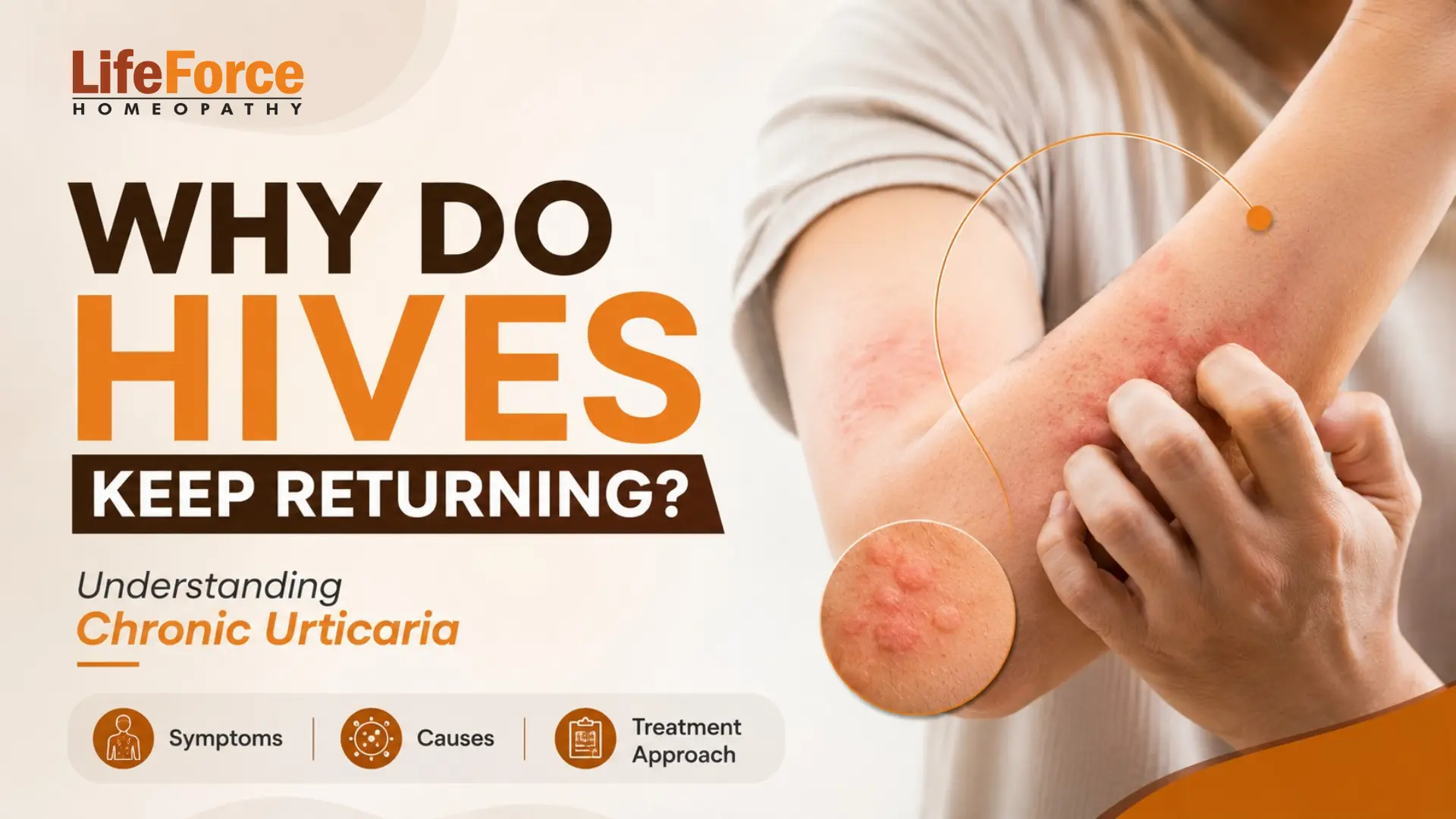
Chronic Urticaria Pictures: What Does It Look Like?

Chronic urticaria pictures usually show raised, red or skin-colored welts on the body. These may appear in different shapes and sizes and may move from one area to another.

The hives may be small and scattered or large and joined together. In some cases, swelling may appear around the lips, eyes, hands, or feet.

Images can help patients understand what hives may look like, but diagnosis should not be made only by comparing pictures. A doctor’s examination is important because several skin conditions can look similar.

Hidden Triggers Patients Often Miss

Not every trigger is obvious. Many patients change food, soaps, or detergents, but the hives still return.

Some commonly missed triggers include:

  • Tight clothing or pressure on the skin
  • Sudden weather changes
  • Heat or cold exposure
  • Stress or emotional strain
  • Lack of sleep
  • Preservatives or artificial food colors
  • Physical pressure from belts, bags, or fitted clothing

These triggers may not be the root cause, but they can worsen symptoms in sensitive individuals.

Can Chronic Urticaria (Hives) Affect Overall Health?

Chronic urticaria may look like a skin condition, but its impact often goes beyond the skin.

Repeated itching can disturb sleep and leave the person tired the next day. The fear of flare-ups may affect clothing choices, travel plans, social confidence, work comfort, and emotional well-being.

For many patients, the unpredictability of the condition becomes as stressful as the rash itself.

Why Chronic Urticaria Is Often Recurrent

Chronic urticaria keeps coming back because the body remains hypersensitive. Even small changes in the internal or external environment may trigger histamine release.

This is why repeated flare-ups may occur despite temporary relief from antihistamines. Long-term management requires understanding the patient’s pattern, triggers, immune sensitivity, and overall health.

Conventional Treatment Approach

The conventional treatment approach usually focuses on symptom control.

Antihistamines are commonly used to reduce itching and hives. In severe flare-ups, doctors may prescribe other medicines for short-term control.

This approach can be useful for active episodes, especially when symptoms are intense. However, in many chronic cases, patients continue to look for long-term support because the hives keep recurring.

Homeopathic Treatment Approach for Chronic Urticaria (Hives)

Homeopathy looks at chronic urticaria through an individualized approach. Instead of giving the same medicine to every patient with hives, a homeopathic doctor studies the person’s full symptom pattern. This makes hives homeopathy treatment more personalized, as the prescription depends on the patient’s triggers, recurrence pattern, sensitivity, and overall health history.
This includes the type of itching, time of aggravation, emotional triggers, stress, sleep, food sensitivity, weather sensitivity, past health history, family tendency, and associated immune conditions.

At Life Force Homeopathy clinic, chronic urticaria cases are evaluated through a detailed homeopathic treatment approach where the focus is on understanding the patient as a whole.

Homeopathy may support selected patients in long-term management, recurrence tendency, and overall well-being when prescribed by a qualified doctor. A real case can help patients understand how chronic urticaria patterns are assessed in clinical practice.

You can read the case study here: chronic urticaria improved without antihistamines

Why Patients Consider Life Force Homeopathy for Urticaria Care

Patients with chronic urticaria (hives) often need more than temporary symptom relief. They need a structured approach that studies recurrence, triggers, lifestyle, immune tendency, and long-term health.

At Life Force, the approach includes:

  • Detailed case evaluation
  • Individualized homeopathic prescription
  • Experienced team of doctors
  • Long-term follow-up
  • Online and in-clinic consultation options
  • Focus on chronic and recurring conditions

Patients who cannot visit the clinic can also start with an online consultation.

If you want to understand whether homeopathy may be suitable for your case, you can take the Life Force Assessment Test.

Lifestyle Tips for Chronic Urticaria

Lifestyle care does not replace medical treatment, but it can help reduce avoidable flare-ups.

Try to identify and avoid your personal triggers. Wear loose, breathable clothing. Maintain regular sleep. Manage stress through relaxation, breathing, or gentle exercise. Avoid excessive heat, pressure, or scratching whenever possible.

Keeping a symptom diary may also help you notice patterns related to food, stress, weather, sleep, or physical pressure.

Conclusion

Chronic urticaria is more than a recurring skin rash. It is often linked with immune system hypersensitivity, where the body releases histamine repeatedly and causes itchy hives, swelling, and discomfort.
Because the condition can affect sleep, confidence, social life, and emotional well-being, long-term management is important.
At Life Force Homeopathy clinic, chronic urticaria is approached through detailed case evaluation, individualized treatment, follow-up, and patient education. The goal is to understand the patient’s pattern deeply and support selected cases through a structured homeopathic approach.
If you are struggling with recurring hives, unexplained itching, or chronic urticaria symptoms, you may consult Life Force Homeopathy or take the Assessment Test to understand the possible scope of care.

Fatty Liver Disease (NAFLD): Symptoms, Causes, Diet, Diagnosis & Treatment Explained

Introduction

Fatty liver disease is becoming increasingly common in today’s lifestyle-driven world. Earlier, it was mainly associated with alcohol consumption, but now a large number of patients diagnosed with fatty liver are non-drinkers.
The condition is often detected during routine health check-ups or ultrasound scans performed for unrelated reasons. Poor diet, physical inactivity, and metabolic disorders are among its key contributors. Along with lifestyle changes and medical monitoring, homeopathic treatment may be considered as a supportive, individualized approach to managing overall health.

What is Fatty Liver Disease?

The liver is a vital organ responsible for digestion, metabolism, and detoxification. Normally, a small amount of fat exists in the liver. However, when fat accumulation becomes excessive, it is called fatty liver disease.

There are two main types:

1. Non-Alcoholic Fatty Liver Disease (NAFLD)

  • Occurs in people who consume little or no alcohol
  • Linked with obesity, diabetes, insulin resistance, and metabolic syndrome

2. Alcoholic Fatty Liver Disease (AFLD)

  • Caused due to excessive alcohol consumption
  • Affects liver’s ability to process fats properly

Fatty Liver Causes

Fatty liver usually develops due to multiple factors:

  • Obesity and overweight
  • Type 2 diabetes
  • High cholesterol and triglycerides
  • Sedentary lifestyle
  • Excess processed food and sugar intake
  • Alcohol consumption
  • Hormonal/metabolic disorders
  • Genetic predisposition
  • Rapid weight fluctuations

Fatty Liver Symptoms

In the early stages, fatty liver is usually silent. When symptoms appear, they are mild and non-specific.
Recognizing possible fatty liver disease symptoms may encourage patients to seek timely medical evaluation.

Common symptoms include:

  • Persistent fatigue
  • Weakness
  • Bloating or heaviness
  • Mild pain or discomfort in upper right abdomen
  • Reduced energy levels
  • General tiredness

Many patients discover fatty liver only through routine tests or imaging.

Fatty Liver Diagnosis

Doctors may use the following methods:

  • Medical history review
  • Physical examination
  • Liver function tests (LFT)
  • Ultrasound abdomen
  • FibroScan for liver stiffness
  • CT scan or MRI (if required)
  • Liver biopsy in selected cases

Fatty Liver Diet

Diet plays a crucial role in managing fatty liver.

Recommended foods:

  • High fiber foods (vegetables, fruits, whole grains)
  • Lean proteins
  • Healthy fats (nuts, seeds, olive oil)
  • Hydration (adequate water intake)

Foods to avoid:

  • Sugary drinks and processed foods
  • Deep fried and junk foods
  • Excess refined carbohydrates
  • Alcohol

Fatty Liver Treatment

There is no single medication for fatty liver. Fatty liver treatment mainly focuses on correcting the underlying lifestyle and metabolic factors:

  • Weight reduction
  • Regular physical activity
  • Blood sugar control
  • Cholesterol management
  • Healthy diet plan
  • Avoidance of alcohol
  • Regular monitoring

Can Fatty Liver Be Reversed?

In early stages, fatty liver can often improve with consistent lifestyle changes such as:

  • Weight loss (gradual and sustained)
  • Exercise
  • Dietary improvements
  • Metabolic control

However, progression depends on individual health condition and stage of disease.

Homeopathic Perspective on Fatty Liver

Homeopathy follows an individualized approach where treatment is based on the person as a whole rather than only the disease name. It considers symptoms, lifestyle, medical history, and overall constitution before planning care.

As described in clinical approach models, homeopathy may be used as a supportive system along with lifestyle management and regular medical monitoring. A qualified homeopathic doctor may recommend fatty liver homeopathic treatment after evaluating the patient’s overall health and individual symptoms.

The selection of fatty liver homeopathic medicine should be individualized and made under professional supervision. It should not replace prescribed conventional treatment, dietary changes, exercise, or necessary medical investigations.

When to See a Doctor

Consult a doctor if you have:

  • Persistent fatigue
  • Abnormal liver reports
  • Diabetes with metabolic issues
  • Abdominal discomfort
  • Unexplained weight loss
  • Swelling or severe symptoms

Early evaluation helps prevent complications.

Conclusion

Fatty liver disease is now one of the most common lifestyle-related health conditions. It often develops silently and is usually detected during routine investigations.

The good news is that early stages can often be managed effectively with lifestyle modifications such as diet control, exercise, and medical monitoring.

A structured approach that includes diet, lifestyle changes, and regular check-ups remains the foundation of fatty liver management.

Homeopathic Doctor Talking to Conventional Doctors

“My greetings to all conventional doctors on this Doctor’s Day.”

Is it not unusual that homeopathic doctors and conventional doctors (previously known as allopathic doctors) have not been on friendly talking terms with each other for so long? Let us use this Doctor’s Day as an opportunity to bridge that gap.
Let me introduce myself. My name is Dr. Rajesh Shah. I am a medically trained homeopathic doctor in practice since 1985. I have also served as a teacher at a medical college for many years. I have had the opportunity to teach not only homeopathic doctors and students but also many conventional doctors in countries such as the United States, the United Kingdom, Ireland, Holland, Sweden, Norway, Croatia, Greece, Japan, and others.
In addition, I have been engaged in medical research in homeopathy for the last thirty years. I have been studying the fundamental principles of homeopathy and evaluating the efficacy of homeopathic medicines using conventional pharmacological standards. In this process, I have collaborated with professionals from multiple disciplines, including immunologists, nanotechnologists, biomedical engineers, molecular scientists, policymakers, drug regulators, and government officials from bodies such as the FDA, CDSCO, the Ministry of Health, and the Ministry of Ayush.

1. Medicine is complex and our knowledge is limited

No medical expert has complete knowledge of any organ system or disease. A neurologist does not know everything about every neurological condition, and an immunologist does not have complete knowledge of immunity.
Medicine must therefore be practiced with an understanding of its inherent limitations. At the same time, medical opinions regarding diagnosis and treatment should remain open and non-rigid.

2. Doctors are shaped by what they are taught

A doctor’s knowledge is primarily derived from medical university education and textbooks. It is important to recognize that medical textbooks evolve approximately every 20 to 50 years.
In addition to formal education, clinical experience and individual perspectives also shape medical understanding. As a result, the practice of medicine often extends beyond what is formally taught in medical institutions.
Over time, many doctors gradually move beyond the initial biases formed during their early training.

3. Bias is not limited to any group

Bias is not restricted to individuals with limited education. Many senior professors, policymakers, scientists, and journal editors also hold strong biases.
History has shown that several scientific studies have been rejected due to editorial or institutional bias.

4. Conventional medicine and homeopathy represent different schools of thought

These two systems are based on fundamentally different principles of treatment.
Conventional medicine follows the principle of contraries. For example, in cases of inflammation, anti-inflammatory drugs are used to suppress or counteract the condition.
Homeopathy follows the principle of similars. In this approach, a substance capable of producing similar symptoms is used in a highly diluted form to stimulate a therapeutic response.
This concept is often better understood through examples such as vaccines and hormesis. Vaccines work by exposing the body to microbial components, which then trigger an immune response that provides protection against infection.
Both principles are observed in nature, and both have biological relevance.
The gap between the two systems largely exists because they are not taught together in medical education. This often results in differing interpretations and perspectives.

5. Limited research has contributed to confusion about homeopathy

With industrialization and scientific advancement, conventional medicine evolved rapidly through developments in microbiology, pharmacology, diagnostics, and surgical techniques.
Homeopathy did not undergo the same level of structured scientific modernization during the 19th and 20th centuries.
As a result, while conventional medicine advanced significantly, homeopathy saw comparatively limited large-scale research during the same period.
Despite this, homeopathy continued to be practiced based on its foundational principles.
The use of highly potentized medicines, often described as ultra-diluted, was frequently criticized and labeled as a placebo. This perception persisted until emerging developments in nanotechnology in the 21st century introduced new perspectives.

6. From ultra-dilute substances to nanomedicine

Homeopathic medicines are diluted beyond Avogadro’s number (10⁻²³), which led to the long-standing belief that no material substance remains.
However, research conducted by scientists at IIT Bombay and other international institutions has indicated the possible presence of nanoparticles of the original substance in such preparations.
This finding has generated renewed scientific interest in homeopathy.
What was previously dismissed for nearly two centuries is now being re-examined within the broader context of nanomedicine. However, acceptance is still gradual due to longstanding scientific biases.

7. Does this nanomedicine have biological effects

This is an important and valid question.
Research conducted by several scientists, including my own work over the past three decades, suggests that these nanoscale medicinal preparations may produce biological effects.
These effects have been observed at epigenetic and immunological levels in both pre-clinical and clinical studies.

8. Existing gaps require systematic scientific evaluation

With the emergence of new scientific perspectives, it is necessary to re-evaluate the extensive therapeutic knowledge accumulated over the past 200 years.
This includes systematic validation, redevelopment, and rigorous scientific assessment, similar to the process followed in other evolving medical systems.
At the same time, new research in drug development and biomedical exploration is equally important.

9. We are at the beginning of a scientific journey

In the last two decades, research in homeopathy has primarily focused on foundational studies.
While early findings are encouraging, meaningful, and scientifically relevant, much larger and more comprehensive research is required in the future.
A significant collaborative effort from the scientific community will be needed to fully understand its potential.

10. Homeopathy should be understood in terms of its strengths

No single system of medicine, including conventional medicine, is capable of addressing all diseases effectively.
A balanced and thoughtful integration of different medical systems may better serve patient care.
Homeopathy is particularly relevant in the management of chronic and recurring conditions.
It is important for every medical professional to be aware of its potential strengths.
Ignoring or not exploring its scope may, in certain cases, limit clinical understanding.

A closing thought

This isn’t a message to convince anyone.
It’s just a reminder that we’re all doctors first.
And whatever system we come from, the patient is always bigger than the system.
Maybe the future is not about choosing sides.
Maybe it’s just about understanding each other a little better and working together more often.
Because in the end, medicine is not about labels.
It’s about people.
And we’re all still learning.

Homeopathic Remedies for Anxiety: Holistic Healing for Anxiety Neurosis, Anger, Fear, and Sleeplessness

When Your Mind Won’t Let You Rest, Holistic Healing May Help You Understand Why

Do you wake up tired even after a full night’s sleep? Does your mind start racing with worries the moment you open your eyes? Do you feel anxious, fearful, irritated, easily angered, emotionally exhausted, or unable to sleep peacefully?

For many people, anxiety is not just “overthinking.” It may show up as constant worry, fear, anger, sleeplessness, palpitations, chest tightness, sweating, headaches, digestive discomfort, or a feeling of being emotionally overwhelmed.

These experiences are real and deserve compassionate care. At Life Force Homeopathy, we understand that emotional wellness is not only about managing symptoms. It is also about understanding the person behind those symptoms.

If you are looking for homeopathic treatment for anxiety, stress, anger, fear, or sleeplessness, it is important to consult a qualified homeopathic doctor rather than choosing medicines on your own.

What Is Anxiety Neurosis?

Anxiety neurosis is a term commonly used for persistent worry, nervousness, fear, inner restlessness, and emotional uneasiness that starts affecting daily life. A person with anxiety neurosis may feel anxious even when there is no clear reason or immediate danger.

It may affect:

  • Sleep
  • Mood
  • Confidence
  • Work performance
  • Relationships
  • Digestion
  • Concentration
  • Social comfort
  • Emotional control

Some people experience anxiety as fear. Some experience it as anger. Some feel it as sleeplessness, panic, restlessness, or constant negative thinking.

This is why homeopathic remedies for anxiety and homeopathic remedies for anxiety and anger are selected after studying the individual’s complete symptom pattern, not just the diagnosis name.

Common Symptoms of Anxiety Neurosis

Anxiety neurosis may present differently in different people. Common symptoms may include:

  • Persistent worry
  • Fear without a clear reason
  • Restlessness
  • Irritability
  • Anger or emotional outbursts
  • Racing thoughts
  • Sleeplessness
  • Waking up tired
  • Palpitations
  • Sweating
  • Trembling
  • Chest tightness
  • Headache
  • Digestive discomfort
  • Poor concentration
  • Avoidance of social situations
  • Panic-like episodes
  • Emotional exhaustion

When these symptoms start affecting daily life, work, sleep, family, or confidence, professional evaluation is important.

Anxiety Neurosis Causes

There is usually no single cause behind anxiety neurosis. It may develop due to a combination of emotional, physical, lifestyle, and environmental factors.

Common anxiety neurosis causes may include:

1. Long-Term Stress

Continuous work pressure, financial stress, family responsibilities, or uncertainty may keep the nervous system in a state of alertness.

2. Emotional Trauma or Grief

Past emotional pain, loss, abuse, or unresolved experiences may contribute to fear, anxiety, or emotional sensitivity.

3. Relationship Stress

Conflicts, loneliness, lack of emotional support, or feeling unheard may increase anxiety and anger.

4. Sleep Deprivation

Poor sleep can worsen anxiety, irritability, anger, and emotional instability.

5. Hormonal Imbalance

Thyroid issues, cortisol changes, reproductive hormone changes, and other internal factors may influence mood and anxiety.

6. Chronic Illness

Living with a long-term illness may affect emotional strength, confidence, and daily functioning.

7. Lifestyle Imbalance

Poor diet, lack of exercise, excessive screen time, irregular sleep, and low rest periods may contribute to stress and anxiety.

8. Emotional Burnout

Years of overworking, caring for others, or suppressing emotions may gradually lead to anxiety, anger, and exhaustion.

Understanding the cause and trigger pattern is important in anxiety neurosis treatment in homeopathy because treatment is planned around the person, not only the condition.

Anxiety, Anger, Fear, and Sleep: How Are They Connected?

Anxiety may affect both the mind and body. It may disturb sleep, digestion, mood, confidence, energy, and relationships.

Anxiety and Anger

Many people do not appear fearful when anxious. Instead, they become short-tempered, reactive, impatient, or easily irritated. Homeopathy for anger may be considered when anger is linked with anxiety, stress, sleeplessness, emotional sensitivity, or burnout.

Anxiety and Fear

Some people experience fear of illness, failure, public situations, uncertainty, loneliness, or future events. Homeopathy for anxiety and fear focuses on the person’s specific fear pattern, emotional sensitivity, and stress response.

Anxiety and Sleeplessness

An anxious mind may remain active at night. A person may struggle to fall asleep, wake repeatedly, or wake early with worry. In such cases, a doctor may consider homeopathic medicine for anxiety and sleep or homeopathic medicine for anxiety and sleeplessness after detailed case evaluation.

Homeopathic Remedies for Anxiety: Why Individualization Matters

People often search for homeopathic medicine for anxiety, homeopathic treatment anxiety, or homeopathy anxiety treatment, but homeopathy does not follow a one-medicine-for-all approach.

In homeopathy, two people with anxiety may receive different medicines because their anxiety patterns may be different.

For example:

  • One person may have anxiety with fear and palpitations.
  • Another may have anxiety with anger and irritability.
  • Another may have anxiety with sleeplessness and racing thoughts.
  • Another may have anxiety with digestive discomfort.
  • Another may have anxiety due to grief, stress, or emotional trauma.

A qualified homeopathic doctor may evaluate:

  • When anxiety started
  • What triggers anxiety
  • Fear pattern
  • Anger response
  • Sleep quality
  • Stress history
  • Physical symptoms
  • Appetite and digestion
  • Energy levels
  • Emotional sensitivity
  • Past illness history
  • Family history
  • Overall constitution

This detailed evaluation forms the basis of homeopathic anxiety treatment.

You can also read more about how homeopathy works and how individualized treatment is planned at Life Force.

Anxiety Neurosis Treatment in Homeopathy

Anxiety neurosis treatment in homeopathy focuses on individualized care. The aim is to study the person’s emotional and physical pattern before selecting the remedy.

A homeopathic doctor may consider:

  • Type of anxiety
  • Fear tendency
  • Anger tendency
  • Sleep disturbance
  • Stress triggers
  • Emotional trauma
  • Panic-like episodes
  • Physical complaints such as sweating, palpitations, headache, or digestive issues
  • Overall personality and constitution

Anxiety Neurosis Homeopathy Treatment may support selected patients by addressing their individual symptom pattern, emotional triggers, stress response, and overall well-being.

It is important to avoid self-medication, especially when anxiety is severe, persistent, associated with depression, or affecting daily functioning.

Homeopathic Treatment for Anxiety Neurosis

Homeopathic treatment for anxiety neurosis is planned after understanding the root pattern of emotional distress. The focus is not only on anxiety symptoms but also on supporting the patient’s overall emotional balance.

At Life Force Homeopathy, doctors study:

  • Mental and emotional symptoms
  • Sleep pattern
  • Stress and lifestyle factors
  • Fear and anger response
  • Physical symptoms
  • Health history
  • Recurrence tendency
  • Patient’s goals for wellness

This holistic homeopathic approach helps the doctor plan treatment that is personalized to the patient.

If you are unsure whether homeopathy may be suitable for your case, you can take the Life Force assessment test to understand the possible scope of treatment.

Homeopathy Treatment for Stress and Anxiety

Stress and anxiety often occur together. Long-term stress may gradually lead to anxiety, irritability, sleep disturbance, fatigue, and emotional burnout.

Homeopathy treatment for stress and anxiety considers the mind-body connection. The doctor evaluates how stress affects the person physically and emotionally.

A person may experience:

  • Headache
  • Neck or shoulder tension
  • Digestive issues
  • Sleeplessness
  • Fatigue
  • Irritability
  • Restlessness
  • Reduced concentration
  • Low confidence
  • Emotional exhaustion

Homeopathy may support selected patients by focusing on the individual stress response and overall constitution.

Homeopathic Medicine for Anxiety and Sleep

Sleep disturbance is one of the most common concerns in anxiety. Some people cannot fall asleep because of racing thoughts. Some wake up in the middle of the night. Others wake early with fear or worry.

Homeopathic medicine for anxiety and sleep is selected after understanding:

  • Sleep timing
  • Difficulty falling asleep or staying asleep
  • Dreams or nightmares
  • Morning anxiety
  • Night-time restlessness
  • Thought pattern before sleep
  • Stress triggers
  • Associated fatigue
  • Mood changes

For anxiety-related sleep concerns, professional evaluation is important. Self-medication may delay proper care.

Homeopathic Medicine for Anxiety and Sleeplessness

When anxiety and sleeplessness occur together, the person may feel mentally tired but unable to rest. This can affect mood, productivity, immunity, and emotional stability.

A doctor may consider homeopathic medicine for anxiety and sleeplessness based on:

  • Nature of thoughts at night
  • Fear or worry pattern
  • Restlessness
  • Emotional sensitivity
  • Physical symptoms
  • Daily routine
  • Stress level
  • Overall constitution

The treatment approach is individualized, and the medicine is selected according to the patient’s complete case.

Holistic Healing and Homeopathy for Anxiety

Holistic healing means looking at the whole person, not just one symptom. Homeopathy is considered a holistic system because it studies the connection between the mind, body, emotions, lifestyle, and overall health.

In anxiety, holistic homeopathic care may include evaluation of:

  • Emotional triggers
  • Fear pattern
  • Anger response
  • Sleep
  • Stress history
  • Physical symptoms
  • Lifestyle
  • Diet
  • Energy levels
  • Past illness
  • Family tendencies
  • Overall constitution

This makes holistic homeopathy for anxiety different from a symptom-only approach.

At Life Force, the focus is to understand what the patient is experiencing, when it started, what makes it worse, what improves it, and how it affects daily life.

You may explore more about Life Force’s homeopathic treatment approach to understand how cases are evaluated and managed.

Homeopathic Treatment for Anxiety in India

If you are looking for Homeopathic Treatment for Anxiety in India, Life Force Homeopathy offers both online and in-clinic consultations.

Life Force has been offering homeopathic care since 1985 under the guidance of Dr. Rajesh Shah. Patients from India and across the world consult Life Force for chronic and recurring health concerns.

Clinics are available in:

  • Mumbai
  • Pune
  • Bengaluru

Online consultation is also available for patients who cannot visit the clinic physically.

You can start your journey through Life Force.

Why Choose Life Force for Homeopathic Anxiety Treatment?

Life Force Homeopathy offers personalized care for patients with anxiety, stress, anger, fear, sleeplessness, and related emotional health concerns.

Patients choose Life Force for:

  • Individualized homeopathic treatment
  • Detailed emotional and physical case evaluation
  • Experienced team of doctors
  • Guidance under Dr. Rajesh Shah
  • Experience since 1985
  • Online consultations available
  • Patients consulted from 180+ countries
  • Clinics in Mumbai, Pune, and Bengaluru
  • Professional and ethical approach

At Life Force, treatment is planned after understanding the patient’s symptoms, story, stress, sleep, fears, anger pattern, and overall health.

Lifestyle Tips to Support Anxiety and Stress Management

Along with professional care, small lifestyle steps may help support emotional balance.

1. Maintain a Sleep Routine

Try to sleep and wake up at consistent times. Avoid screens before bedtime.

2. Practice Breathing Exercises

Simple breathing practices may help calm the nervous system during anxious moments.

3. Move Your Body

Walking, yoga, stretching, or light exercise may support mood and stress management.

4. Eat Regularly

Balanced meals and hydration may help maintain energy and mood stability.

5. Reduce Screen Overload

Too much screen time, especially at night, may worsen sleep and restlessness.

6. Stay Connected

Speak to a trusted friend, family member, or professional when you feel emotionally overwhelmed.

7. Take One Step at a Time

Focus on one small task instead of trying to solve everything at once.

8. Seek Professional Help

If anxiety, stress, anger, fear, or sleeplessness affects daily life, consult a healthcare professional.

When Should You Consult a Doctor?

You should consult a doctor if:

  • Anxiety affects your daily routine
  • Worry feels difficult to control
  • Fear is persistent
  • Anger affects relationships
  • Sleep is disturbed for many days
  • You experience panic-like symptoms
  • You avoid normal activities due to anxiety
  • You feel emotionally exhausted
  • Anxiety is associated with depression
  • You have thoughts of self-harm

If there are thoughts of self-harm or harm to others, urgent medical or emergency mental health support is necessary.

Conclusion

Anxiety, anxiety neurosis, anger, fear, stress, and sleeplessness can affect both the mind and body. These concerns should not be ignored or dismissed as weakness.

Homeopathy follows a holistic healing approach, where the patient is understood as a whole rather than only by the diagnosis. At Life Force Homeopathy, doctors evaluate the person’s emotional triggers, stress history, fear pattern, anger response, sleep, physical symptoms, lifestyle, and overall constitution before planning personalized care.

If you are looking for homeopathic remedies for anxiety, homeopathic medicine for anxiety, anxiety neurosis treatment in homeopathy, homeopathic treatment for anxiety neurosis, homeopathy treatment for stress and anxiety, or holistic homeopathy for anxiety, you may consult Life Force Homeopathy to understand the possible scope of individualized care.

Looking for Personalized Homeopathic Care for Anxiety, Stress, Anger, or Sleeplessness?

At Life Force Homeopathy, our doctors study your symptoms, emotional triggers, sleep pattern, stress history, fear, anger response, and overall health before planning individualized homeopathic treatment.

Book Consultation

Take test and know your chances

Anal Fissure vs Piles: Understanding the Difference, Symptoms, Causes, and Homeopathic Care

Introduction

Anal fissure and piles are two common anorectal conditions that often confuse patients because both may cause pain, bleeding, itching, and discomfort during bowel movements. However, they are not the same condition.

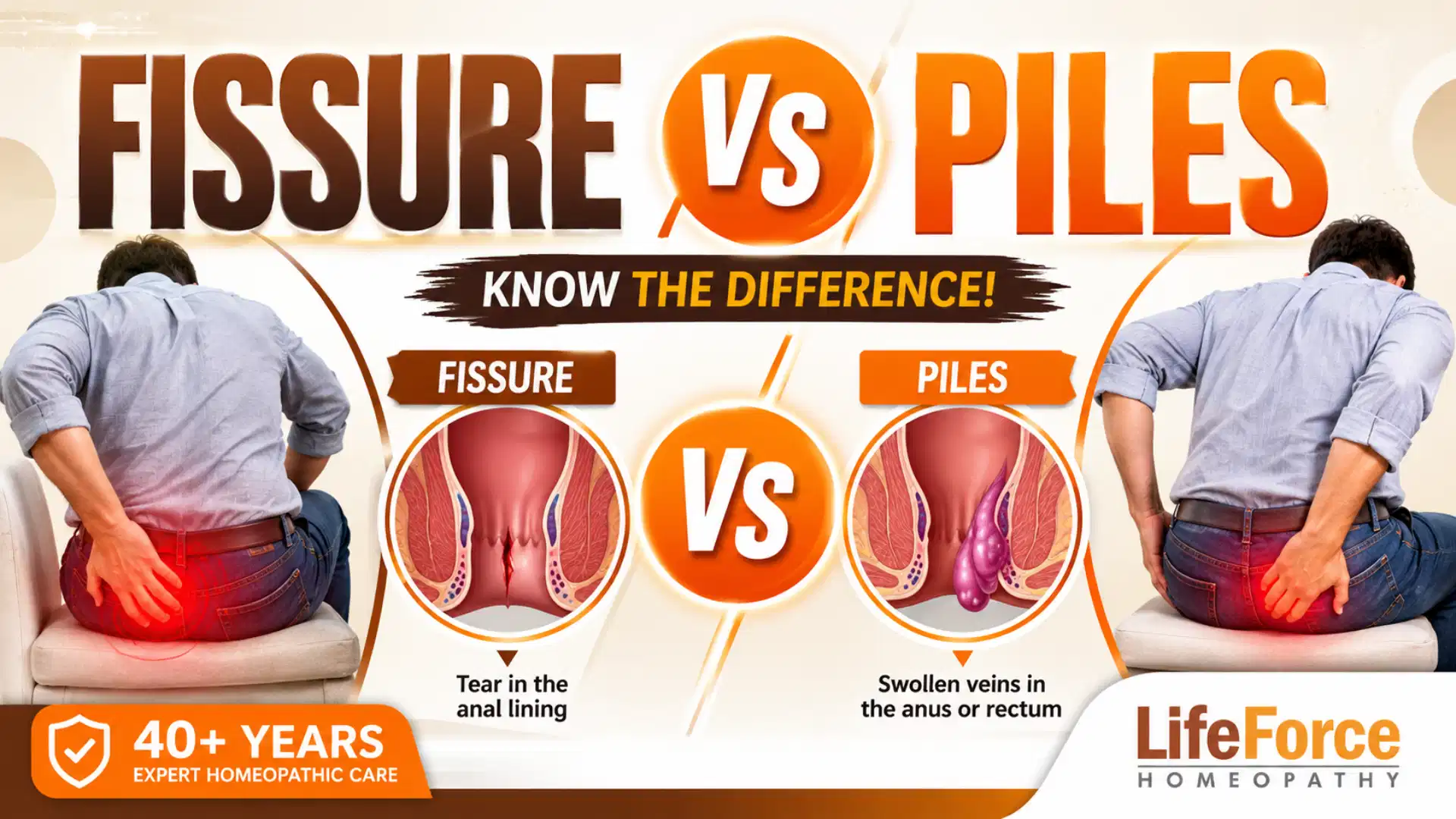
A fissure in ano is a small tear in the skin lining the anal canal, while piles, also called hemorrhoids, are swollen veins in the lower rectum or anus. Understanding the difference between fissure in ano vs piles is important because the causes, symptoms, stages, and treatment approach may differ.

At Life Force Homeopathy, patients with recurrent or chronic anorectal complaints are assessed individually, considering bowel habits, pain patterns, bleeding, constipation tendency, lifestyle, and overall health before planning a personalized homeopathy treatment.

What Is Fissure in Ano?

A fissure in ano, commonly called an anal fissure, is a small tear or crack in the delicate lining of the anal canal. It is usually caused when a hard stool passes through the anus and stretches or injures the sensitive tissue.
Anal fissures can be painful because the anal canal has many nerve endings. The pain may be sharp, cutting, or burning and is often felt during and after passing stool.

Common Anal Fissure Symptoms

The most common anal fissure symptoms include:

  • Sharp cutting pain during stool passage
  • Burning pain after passing stool
  • Pain lasting from minutes to a few hours
  • Bright red blood on stool or toilet paper
  • Itching or irritation around the anus
  • Visible crack or tear near the anal opening
  • Fear of passing stool due to pain
  • Constipation due to stool holding
  • Small skin tag near the fissure in chronic cases

In many patients, pain is the most prominent symptom. Bleeding is usually small in quantity and appears as streaks of bright red blood.

Fissure in Ano Causes

The common fissure in ano causes include:

1. Chronic Constipation

Hard and dry stool may stretch the anal canal and cause a tear.

2. Straining During Bowel Movements

Repeated straining increases pressure and may injure the anal lining.

3. Chronic Diarrhea

Frequent loose stools may irritate the anal mucosa and contribute to fissure formation.

4. Low-Fiber Diet

A diet low in fiber may lead to hard stool and irregular bowel movements.

5. Childbirth

Vaginal delivery may stretch or injure the anal region in some women.

6. Anal Trauma

Injury, forceful wiping, or local trauma may contribute to fissures.

7. Associated Medical Conditions

In some cases, fissures may be linked with inflammatory bowel disease or other gastrointestinal conditions. Persistent symptoms should be medically evaluated.


Fissure in Ano Stages

Patients often search for fissure in ano stages to understand whether their complaint is recent or long-standing. Clinically, fissures are commonly classified based on duration and tissue changes.

Acute Fissure in Ano: An acute fissure is a fresh tear, usually present for less than 6 weeks. It may cause sharp pain and small bleeding but often responds well to early care, dietary correction, stool softening, and medical guidance.

Chronic Fissure in Ano: A chronic fissure in ano usually persists for more than 6 weeks. It may be associated with repeated pain, spasm, a visible skin tag called a sentinel tag, thickened edges, and scar tissue. Chronic fissures need proper medical evaluation and a structured treatment plan.

What Are Piles?

Piles, also known as hemorrhoids, are swollen and inflamed veins in the lower rectum or around the anus. They may develop due to increased pressure in the anal and rectal veins.

Piles may be internal or external.

Internal Piles: Internal piles are located inside the rectum. They are often painless and may mainly cause bright red bleeding during or after stool.

External Piles: External piles are located around the anus. They may cause pain, swelling, itching, irritation, or a lump-like feeling.

Piles are also graded from Grade 1 to Grade 4 depending on the severity and extent of prolapse.


Common Symptoms of Piles

Piles may cause:

  • Bright red bleeding during or after stool
  • Itching around the anus
  • Swelling or lump near the anus
  • Mucus discharge
  • Feeling of incomplete evacuation
  • Discomfort while sitting
  • Pain if piles are external, prolapsed, or thrombosed

Unlike fissures, internal piles are often painless unless complications occur.


Fissure in Ano vs Piles: Key Difference

FeatureFissure in AnoPiles
Basic problemTear in the anal liningSwollen veins in the anus or rectum
Main symptomSharp pain during and after stoolBleeding, swelling, lump, or discomfort
BleedingUsually small streaks of bright red bloodBright red bleeding, sometimes more noticeable
PainOften severe, cutting, or burningOften painless in internal piles, painful in external piles
Physical signCrack, tear, or sentinel tagSoft lump or swelling
Common causeHard stool, constipation, strainingConstipation, prolonged sitting, pregnancy, obesity
DurationAcute or chronic fissure in anoGrade 1 to Grade 4 piles

Understanding fissure in ano vs piles helps patients avoid self-diagnosis and seek the right medical guidance.


Can Fissure and Piles Occur Together?

Yes, fissure and piles can occur together. Chronic constipation, hard stool, and straining are common risk factors for both conditions. A patient may have pain due to fissure and bleeding or swelling due to piles at the same time.

This is why proper examination is important before starting any treatment.


Diagnosis of Anal Fissure and Piles

A doctor may diagnose fissure or piles based on:

  • Medical history
  • Bowel habit evaluation
  • Pain and bleeding pattern
  • Physical examination of the anal region
  • Anoscopy, if required
  • Sigmoidoscopy or colonoscopy in selected cases

Patients above 40 years of age, or those with persistent bleeding, unexplained weight loss, bowel habit changes, or family history of bowel disease, should not ignore rectal bleeding.


When Should You Consult a Doctor?

You should consult a doctor if you experience:

  • Recurrent rectal bleeding
  • Severe anal pain
  • Pain lasting after stool
  • Symptoms for more than a few weeks
  • Lump near the anus
  • Fever or discharge
  • Constipation with bleeding
  • First-time rectal bleeding after age 40
  • Symptoms affecting daily routine

Self-diagnosis may delay proper care, especially because fissures, piles, and other bowel conditions may have overlapping symptoms.


Homeopathy Treatment for Anal Fissure

Many patients search for Homeopathy Treatment For Anal Fissure when the complaint becomes recurrent or painful. Homeopathy follows an individualized approach, where medicine selection is based on the person’s symptoms, bowel habits, pain type, bleeding pattern, constipation tendency, emotional stress, and overall constitution.

Homeopathy for fissure in ano may be considered in selected cases as supportive care for:

  • Pain and burning associated with fissures
  • Recurrent constipation tendency
  • Discomfort during stool
  • Chronic fissure in ano tendency
  • Overall bowel health support
  • Recurrent anorectal complaints

The aim is not just to look at the tear, but to understand why the fissure keeps recurring.


Homeopathic Treatment for Fissures: Why Individualization Matters

In homeopathic treatment for fissures, two patients with the same diagnosis may not receive the same medicine. One patient may have sharp cutting pain with hard stool, another may have burning pain after stool, while another may have fissure with constipation, fear of stool, bleeding, or associated piles.

A qualified homeopathic doctor may consider:

  • Type of pain
  • Duration of pain after stool
  • Bleeding pattern
  • Constipation or diarrhea tendency
  • Stool consistency
  • Frequency of recurrence
  • Presence of sentinel tag
  • Associated piles
  • Diet and lifestyle
  • Stress and sleep pattern
  • Overall physical constitution

This is why choosing homeopathic medicine for a fissure without medical consultation is not recommended.


Fissure-in-Ano Homeopathic Treatment at Life Force

At Life Force Homeopathy, homeopathic treatment for fissure-in-ano is planned after a detailed case evaluation. The doctor assesses the patient’s symptoms, bowel habits, pain pattern, medical history, lifestyle, and tendency for recurrence.

The treatment plan may be supported by dietary advice, bowel habit correction, and regular follow-up monitoring.

Life Force has experience in treating chronic and recurring conditions and provides both online and in-clinic consultations. Patients can also read this documented case study on fissure-in-ano treatment with homeopathy to understand the patient’s treatment journey and follow-up progress.

Anal Fissure Homeopathy Doctor in Mumbai

Patients looking for an anal fissure Homeopathy doctor in Mumbai can consult Life Force Homeopathy at its Mumbai clinics. Life Force offers homeopathic care for patients with fissure in ano, piles, and other chronic anorectal complaints through a structured and personalized approach.

Life Force clinics are available in Mumbai at locations including Chembur, Borivali, Vashi, Santacruz, Thane, and Mulund.


Fissure in Ano Homeopathy Clinic in Mumbai

If you are looking for a fissure in ano homeopathy clinic in Mumbai, Life Force Homeopathy provides consultation for chronic and recurring anal fissure complaints. Patients are evaluated for constipation, hard stool, pain, bleeding, bowel routine, dietary habits, and recurrence pattern before treatment is planned.

Online consultation is also available for patients who cannot visit the clinic physically.


Homeopathy Fissure Treatment in Mumbai

Life Force offers homeopathic treatment for fissures in Mumbai, with a focus on individualized care. Treatment is planned after understanding whether the fissure is acute, chronic, recurrent, associated with piles, or linked with long-standing constipation.

The goal is to support long-term management, reduce recurrence tendency, and improve day-to-day comfort, while advising medical evaluation whenever needed.


Homoeopathy for Piles and Fissures

Homoeopathy for Piles and Fissures may be considered when symptoms are recurrent, chronic, or linked with constipation, lifestyle imbalance, or individual tendency. Since piles and fissures may occur together, proper diagnosis is important.

Homeopathic care may support selected patients with:

  • Burning and pain
  • Bleeding tendency
  • Constipation tendency
  • Itching or irritation
  • Recurrent episodes
  • Associated lifestyle triggers

However, severe bleeding, thrombosed piles, infection, or advanced prolapse requires timely medical evaluation.

Patients may also read this documented case study, Homeopathic Care Supports Relief in Fissure With Piles and Helps Avoid the Need for Surgery,” to understand a patient’s experience with non-surgical treatment for anal fissure with homeopathy.


Prevention and Lifestyle Tips for Fissure and Piles

Good bowel habits are important in preventing both fissure and piles.

1. Eat a High-Fiber Diet

Include fruits, vegetables, whole grains, legumes, and salads to improve stool bulk.

2. Drink Enough Water

Adequate hydration helps keep stool soft and easier to pass.

3. Avoid Straining

Do not force bowel movements. Straining increases pressure on the anal region.

4. Do Not Delay Stool

Ignoring the urge to pass stool may make stool harder and worsen constipation.

5. Limit Toilet Sitting Time

Avoid sitting on the toilet for long periods, especially while using a phone.

6. Exercise Regularly

Walking, yoga, and light exercise may support bowel regularity.

7. Maintain Gentle Hygiene

Clean the anal area gently with water. Avoid harsh soaps or aggressive wiping.

8. Seek Early Treatment

Early care may help prevent acute fissures from becoming chronic fissure in ano


Conclusion

Fissure-in-ano and piles are distinct conditions that require proper diagnosis. Life Force Homeopathy offers individualized care based on the patient’s symptoms, medical history, lifestyle, and tendency toward recurrence, along with appropriate guidance and follow-up support.


Looking for Personalized Care for Anal Fissure or Piles?

At Life Force Homeopathy, our doctors study your symptoms, pain pattern, bowel habits, constipation tendency, bleeding, recurrence, and overall health before planning individualized homeopathic treatment.

Book Consultation
Take Assessment Test

Homeopathic Remedies for Anxiety, Anger, Fear, and Sleeplessness

When Your Mind Does Not Let You Rest

Do you wake up tired even after a full night’s sleep? Does your mind race with worries the moment you open your eyes? Do you feel easily angered at loved ones, emotionally drained, fearful without a clear reason, or unable to sleep peacefully?

For many people, anxiety is not just “overthinking.” It may show up as constant worry, fear, irritability, anger, sleeplessness, chest tightness, sweating, headaches, digestive discomfort, or a feeling of being emotionally overwhelmed.

These experiences are real and deserve compassionate care. At Life Force Homeopathy Clinic, we understand that emotional health is not only about reducing symptoms. It is also about understanding the person, their triggers, sleep pattern, fears, stress history, anger response, and overall health before planning individualized homeopathic treatment.

What Is Anxiety Neurosis?

Anxiety neurosis is a term commonly used to describe a persistent state of worry, fear, nervousness, and emotional restlessness that may interfere with daily life. A person may feel anxious even when there is no immediate danger or obvious reason.

Anxiety may affect:

  • Sleep
  • Concentration
  • Work performance
  • Relationships
  • Confidence
  • Digestion
  • Energy levels
  • Emotional control
  • Social comfort

Some people experience anxiety as fear. Some experience it as anger. Others feel it as inner restlessness, panic, sleeplessness, or a constant sense that something bad may happen.

The way anxiety appears can vary greatly from person to person. In some cases, understanding the full emotional and physical pattern helps select an individualized approach. You can read how a patient experienced gradual improvement with an individualized approach in this case study on Homeopathy for anxiety treatment.

Common Symptoms of Anxiety

Anxiety may appear differently in different people. Some common symptoms include:

  • Constant worry or fear
  • Restlessness or nervousness
  • Irritability or sudden anger
  • Racing thoughts
  • Difficulty sleeping
  • Waking up unrefreshed
  • Palpitations or fast heartbeat
  • Chest tightness
  • Sweating or trembling
  • Headaches
  • Stomach discomfort
  • Poor concentration
  • Avoiding people, places, or situations
  • Panic-like episodes
  • Feeling emotionally exhausted

When anxiety begins to affect daily routine, sleep, relationships, or confidence, it is important to seek professional support.

Anxiety, Anger, Fear, and Sleep: How Are They Connected?

Anxiety often affects more than the mind. It can disturb the nervous system, sleep cycle, appetite, digestion, and emotional response.

Many people with anxiety may experience:
Anxiety and Anger: A person may become short-tempered, impatient, or reactive. Small issues may feel overwhelming. This is where homeopathy for anger may be considered as part of a broader emotional wellness approach.

Anxiety and Fear: Some people feel fear without a clear reason. They may fear illness, failure, public situations, uncertainty, or being alone. Homeopathy for anxiety and fear focuses on the person’s specific fear pattern and emotional sensitivity.

Anxiety and Sleeplessness: An anxious mind may remain active at night. The person may struggle to fall asleep, wake frequently, or wake up tired. In such cases, a doctor may consider homeopathic medicine for anxiety and sleep or homeopathic medicine for anxiety and sleeplessness, depending on the individual case.

What Can Trigger Anxiety, Anger, and Emotional Distress?

Mental and emotional health concerns rarely have only one cause. They may develop due to a combination of internal and external factors.

Common triggers include:

  • Work pressure
  • Financial stress
  • Relationship conflicts
  • Emotional trauma or grief
  • Family responsibilities
  • Chronic illness
  • Hormonal changes
  • Poor sleep
  • Excessive screen time
  • Social pressure
  • Burnout
  • Past emotional experiences
  • Long-term stress

At Life Force, doctors take a detailed history to understand what may have contributed to the anxiety, how it affects the person, and what makes it better or worse.

How Homeopathy May Help in Anxiety

Homeopathy is based on an individualized approach. This means that two people with anxiety may not receive the same medicine.

For example, one person may have anxiety with anger and irritability. Another may have anxiety with fear and sleeplessness. A third person may have anxiety with digestive symptoms, headaches, or emotional withdrawal.

A homeopathic anxiety treatment plan may consider:

  • Type of anxiety
  • Fear pattern
  • Anger response
  • Sleep quality
  • Emotional sensitivity
  • Stress history
  • Physical symptoms
  • Personality traits
  • Family history
  • Lifestyle and routine
  • Associated health conditions

The aim is to support the person as a whole, not just address one symptom in isolation.

Homeopathic Remedies for Anxiety: Why Individualization Matters

People often search for homeopathic remedies for anxiety or homeopathic medicine for anxiety, but it is important to understand that homeopathy is not based only on the disease name.

A remedy is selected after studying the person’s complete symptom pattern.

For example, the doctor may ask:

  • When did anxiety begin?
  • What triggers it?
  • Is it worse in the morning, evening, or night?
  • Is there anger, fear, panic, sadness, or restlessness?
  • Is sleep disturbed?
  • Are there palpitations, sweating, headaches, or digestive symptoms?
  • Is the person sensitive, reserved, reactive, fearful, or easily overwhelmed?
  • Are there any major life events, grief, trauma, or chronic stress factors?

This detailed evaluation helps the doctor plan a personalized treatment approach.

Homeopathy for Anger and Irritability

Anger is sometimes a visible expression of anxiety. A person may not always appear fearful or worried. Instead, they may become impatient, easily offended, restless, or emotionally reactive.

Homeopathy for anger may be considered when anger is associated with:

  • Anxiety
  • Stress
  • Sleeplessness
  • Emotional sensitivity
  • Overwork
  • Burnout
  • Hormonal changes
  • Relationship stress
  • Suppressed emotions

At Life Force, doctors study whether anger is sudden, silent, explosive, regretful, triggered by criticism, linked with fear, or associated with physical complaints.

Homeopathic Medicine for Anxiety and Sleep Problems

Sleep disturbance is one of the most common concerns in anxiety. Some people cannot fall asleep because of racing thoughts. Some wake up in the middle of the night. Others wake early with worry or fear.

A personalized homeopathic medicine for anxiety and sleep may be considered after understanding:

  • Sleep timing
  • Difficulty falling asleep or staying asleep
  • Dreams or nightmares
  • Morning anxiety
  • Restlessness at night
  • Dependence on screens before sleep
  • Stress triggers
  • Associated fatigue or mood changes

For anxiety-related sleeplessness, it is important to consult a qualified doctor instead of self-medicating.

Why Choose Life Force Homeopathy for Anxiety Treatment?

Life Force Homeopathy has been offering homeopathic care since 1985 under the guidance of Dr. Rajesh Shah, with experience in treating chronic and recurring health conditions.

Patients choose Life Force for:

  • Personalized homeopathic treatment
  • Detailed case evaluation
  • Experienced team of doctors
  • Care for chronic and recurring complaints
  • Online consultations available
  • Patients consulted from 180+ countries
  • Clinics in Mumbai, Pune, and Bengaluru
  • Professional, ethical, and compassionate care

At Life Force, the focus is on understanding your symptoms, your story, your stress, your sleep, your fears, and your goals for better emotional well-being.

Lifestyle Tips to Support Anxiety Management

Along with professional care, small lifestyle steps may help support emotional balance.

1. Maintain a Sleep Routine

Sleep and wake up at consistent times. Avoid screens before bedtime.

2. Practice Breathing Exercises

Simple breathing techniques may help calm the nervous system during anxious moments.

3. Move Your Body

A short walk, stretching, or light exercise may support mood and stress management.

4. Reduce Screen Overload

Too much screen time, especially at night, may worsen sleep and mental restlessness.

5. Eat Regularly

Skipping meals may affect mood, energy, and irritability.

6. Stay Connected

Speak with someone you trust. Emotional support can make a meaningful difference.

7. Seek Help Early

If anxiety, anger, fear, or sleeplessness is affecting daily life, consult a healthcare professional.

When Should You Consult a Doctor?

You should consult a doctor if:

  • Anxiety affects your daily routine
  • Fear or worry feels difficult to control
  • Anger is affecting relationships
  • Sleep is disturbed for many days
  • You experience panic-like symptoms
  • You avoid normal activities due to anxiety
  • You feel emotionally exhausted
  • You have thoughts of self-harm

If there are thoughts of self-harm or harm to others, urgent medical or emergency mental health support is necessary.

Conclusion

Anxiety, anger, fear, and sleeplessness can affect every part of life, including relationships, work, sleep, digestion, and confidence. These symptoms should not be ignored or dismissed as weakness.

At Life Force Homeopathy, treatment is planned after understanding the complete person, including emotional triggers, sleep pattern, fears, anger response, physical symptoms, and overall health.

If you are looking for homeopathic remedies for anxiety, homeopathic medicine for anxiety, homeopathy for anxiety and fear, or homeopathic remedies for anxiety and anger, you can consult Life Force Homeopathy to understand the possible scope of individualized care.

Need Support for Anxiety, Anger, Fear, or Sleeplessness?

At Life Force Homeopathy, our doctors study your symptoms, triggers, emotional pattern, sleep, and health history before planning personalized homeopathic care.
Book Consultation Now
Take the Assessment test:

World Vitiligo Day 2026: Understanding Vitiligo Beyond Skin Colour

Awareness, Acceptance, and Personalized Homeopathic Care

Every year on June 25, people across the world observe World Vitiligo Day to raise awareness about vitiligo. But this day is not only about understanding a skin condition. It is also about acceptance, empathy, and looking at the person beyond the visible white patches. 

For many people, Vitiligo is much more than a change in skin colour. The patches may be visible to others, but the emotional struggle often stays hidden. Questions from strangers, social hesitation, unwanted attention, and fear of judgment can affect confidence and comfort in everyday life. For those looking to understand the condition better or explore vitiligo treatment, Life Force offers detailed information and personalized Vitiligo treatment

As we observe World Vitiligo Day 2026, it is important to look beyond skin colour and understand the person behind the patches.

What Exactly Is Vitiligo?

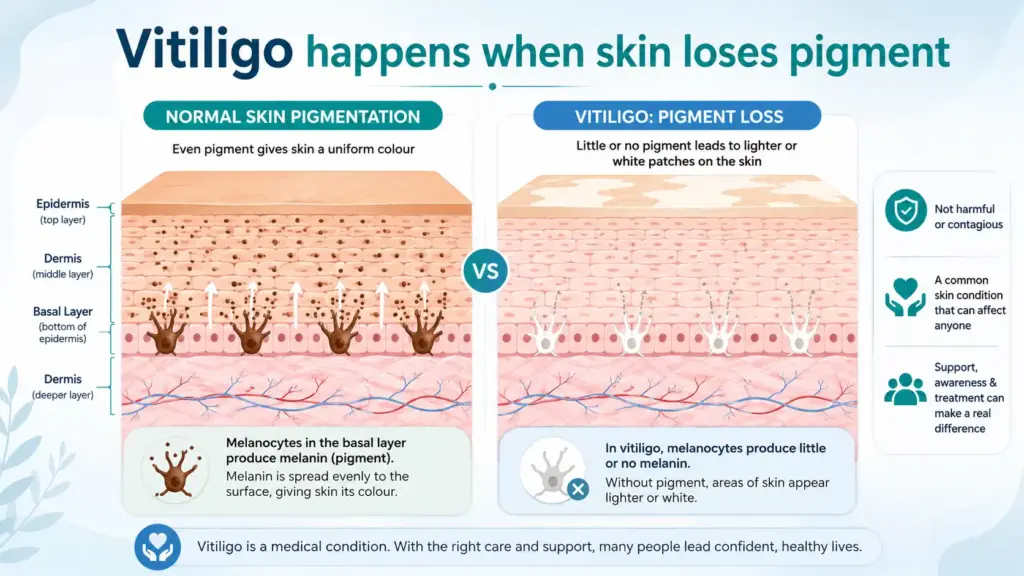
Vitiligo is a skin condition in which the skin gradually loses its natural pigment, leading to white patches. This happens when melanocytes, the cells responsible for producing melanin, stop functioning properly or are damaged.

Vitiligo can affect anyone, regardless of age, gender, or ethnicity. In some people, it may begin as a small patch and remain stable for many years. In others, it may gradually spread to different parts of the body.

Modern medical understanding suggests that autoimmune mechanisms may play an important role in vitiligo causes. However, the reason why vitiligo develops in a particular person is often complex. Factors such as family history, immunity, emotional stress, skin injury, and other health tendencies may influence its course.

Most importantly, vitiligo is not contagious. It does not spread through touch, food, sharing clothes, physical contact, or being close to someone with vitiligo.

At Life Force Homeopathy, Vitiligo care is planned with a personalized approach, where the doctors study the patient’s symptoms, spread pattern, triggers, medical history, and emotional impact before suggesting treatment. 

Symptoms of Vitiligo

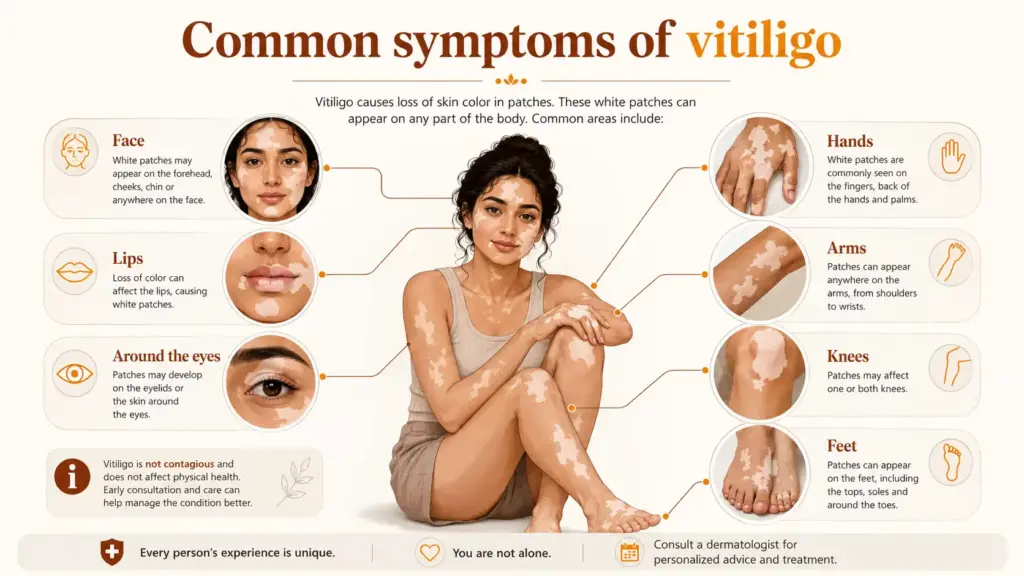
The most common symptoms of Vitiligo include white or light-coloured patches on the skin. These patches may appear slowly and may be more noticeable in areas exposed to sunlight or areas where the skin experiences friction.

Common Vitiligo symptoms may include:

  • White patches on the face, hands, arms, feet, lips, or around the eyes
  • Loss of skin colour in small or large areas
  • Premature whitening of hair on the scalp, eyebrows, beard, or eyelashes
  • White patches around the mouth, nose, fingers, elbows, knees, or genitals
  • Gradual spreading of patches in some cases
  • Patches that become more visible after sun exposure

Vitiligo on face can be emotionally difficult because it is more visible in daily interactions. Similarly, Vitiligo on lips may affect confidence while speaking, smiling, or meeting people socially. These areas need careful evaluation because facial and lip involvement may have different treatment responses depending on the duration, activity, and extent of the condition.

Causes of Vitiligo

Many people search for causes Vitiligo or Vitiligo causes because they want to understand why the patches appeared. In reality, Vitiligo usually does not have one single cause.

Some important factors that may contribute to Vitiligo include:

  • Autoimmune activity, where the body’s defense system affects pigment-producing cells
  • Family history or genetic tendency
  • Emotional stress or major life events
  • Skin injury, burns, cuts, or repeated friction
  • Hormonal changes
  • Associated autoimmune conditions
  • Oxidative stress and immune imbalance

In many cases, the cause may be a combination of internal and external factors. This is why a detailed case study is important before deciding on a treatment approach.

Vitiligo in India: Why Awareness Matters

Vitiligo in India is often surrounded by myths, fear, and social stigma. In many families, people still worry about marriage, social acceptance, and how others may react to the condition.

Unfortunately, some individuals with Vitiligo face unnecessary judgment because of a lack of awareness. This can be especially difficult for children, teenagers, and young adults.

World Vitiligo Day gives us an opportunity to correct these misconceptions. Vitiligo is not contagious. It is not caused by food combinations. It is not a result of poor hygiene. And most importantly, a person with Vitiligo deserves the same respect, confidence, and acceptance as anyone else.

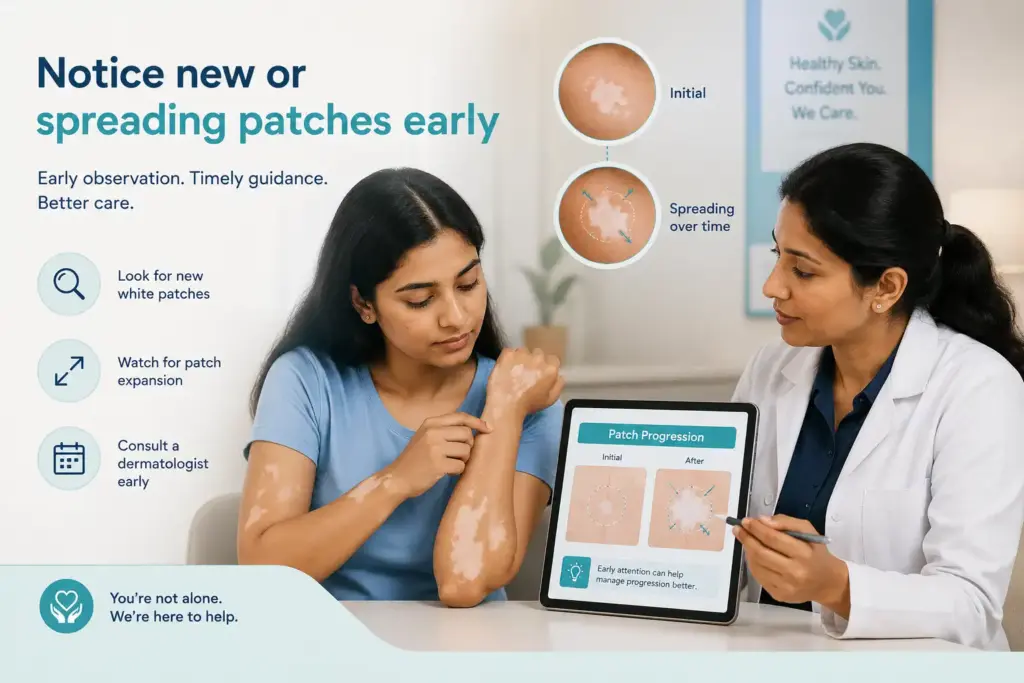
Vitiligo Spreading Signs: When Should You Pay Attention?

One common concern among patients is whether Vitiligo will spread. While not every case spreads, it is important to observe certain Vitiligo spreading signs.

Possible signs of active or spreading Vitiligo may include:

  • New white patches appearing on different body parts
  • Existing patches increasing in size
  • Patches appearing after injury, scratching, or friction
  • Rapid change in colour or border of the patch
  • Symmetrical patches appearing on both sides of the body
  • New patches appearing during or after emotional stress

If these changes are noticed, it is better to seek early medical advice. Early assessment can help doctors understand the activity of the disease and plan a suitable treatment strategy.

The Challenge Is Often More Emotional Than Physical

Many people living with Vitiligo say that the most difficult part is not always the condition itself, but how people react to it.

Children may face teasing at school. Teenagers and young adults may become conscious about their appearance. Some people avoid certain clothes because they do not want their patches to show. Others may feel uncomfortable in social gatherings, photographs, interviews, or personal relationships.

Over time, this can affect self-esteem, emotional comfort, and confidence.

During consultations, doctors often meet patients who have spent years trying to hide their patches instead of openly speaking about their concerns. This is why awareness and acceptance are such important parts of the conversation around Vitiligo.

No individual should feel defined by the colour of their skin.

Why Early Attention Matters in Vitiligo

One common mistake many people make is ignoring the early signs of Vitiligo and waiting until the patches begin to spread.

Early assessment can help doctors understand the nature of the condition, whether it is active or stable, and what treatment approach may be suitable. Every Vitiligo case is different. The treatment plan may depend on several factors, such as:

  • Age of the patient
  • Duration of Vitiligo
  • Pattern and speed of spread
  • Family history
  • Associated autoimmune tendencies
  • Emotional stress
  • General health and immunity
  • Previous treatment history

Because of this, Vitiligo treatment should not be approached with a standard formula. A personalized treatment plan is often important for better long-term management.

Child Vitiligo Case Study: Early Homeopathic Care for Rapidly Spreading Patches

A Life Force case study of an eighteen-month-old boy shows how early attention can make a meaningful difference in child Vitiligo treatment. The child had rapidly spreading Vitiligo patches on the chin and both ears, along with a family history of autoimmune tendencies. After a detailed case evaluation, Dr. Rajesh Shah planned individualized homeopathic treatment based on the child’s symptoms, genetic background, and disease pattern. Over regular follow-ups, the patches showed steady repigmentation, and the improvement was maintained without new visible patches. This case highlights the importance of timely evaluation, personalized care, and consistent follow-up in children, especially when Vitiligo appears to be spreading quickly.

See the full case study here.

Check Your Scope of Improvement with the Curability Test

Many patients with Vitiligo want to know an important question before starting treatment: “What are my chances of improvement?”

To help patients understand this better, Life Force offers an online Curability Test for Vitiligo. This expert-designed test helps assess the possible scope of homeopathic treatment based on your condition history, duration, spread pattern, symptoms, and previous treatment response.

The Curability Test is simple and can be completed online in a few minutes. It gives an indicative understanding of your treatment scope and helps you take the next step with more clarity.

The result should be seen as a guidance tool, not as a final medical opinion. A detailed consultation with an experienced doctor is still important for proper evaluation and treatment planning.

Take the Curability Test now!

A Personalized Homeopathic Approach to Vitiligo

Homeopathy focuses on treating the individual rather than only the visible patches. Two people may have similar-looking Vitiligo patches, but their overall health, triggers, emotional background, family history, and disease progression may be completely different.

This is why homeopathic treatment for Vitiligo is planned after a detailed case evaluation.

At Life Force Homeopathy, Vitiligo has been one of the major areas of clinical focus for more than four decades. Under the guidance of Dr. Rajesh Shah, MD (Hom.), extensive clinical work and research have been carried out in the field of Vitiligo management.

With over 40 years of experience, Dr. Shah and the Life Force team have treated a wide range of Vitiligo cases, including newly diagnosed cases, spreading Vitiligo, stable Vitiligo, childhood Vitiligo, segmental Vitiligo, and long-standing cases.

Over the years, patients from more than 180 countries have sought treatment at Life Force. The focus has always been on individualized care, regular follow-up, careful case analysis, and understanding the patient as a whole, not just the skin patches.

Looking at the Person, Not Just the Disease

One important lesson learned from treating thousands of Vitiligo patients is that every patient has a story.

Some patients worry about marriage prospects. Some worry about professional life or social confidence. Parents may worry about their child’s future. Teenagers may struggle silently with self-image. Adults may carry years of emotional discomfort because of the visible nature of the condition.

A meaningful treatment journey is not only about observing changes on the skin. It is also about helping patients feel heard, supported, and more comfortable in their own skin.

This broader understanding is what personalized care truly means.

Homeopathy and Long-Term Health Management

Vitiligo is often a chronic condition that may require patience, consistency, and regular follow-up. Similarly, many people turn to homeopathy for other long-standing health concerns that affect their daily life.

Patients visiting a Homeopathy clinic in Vashi often seek treatment not only for skin conditions but also for chronic health concerns such as respiratory allergies, recurring infections, digestive complaints, autoimmune tendencies, and other long-term illnesses.

Many patients also explore homeopathy treatment for digestive disorders in Vashi and homeopathy for skin complaints in Vashi, especially when they are looking for an approach that considers their overall symptom pattern and health history.

In homeopathy, treatment is planned according to the individual’s symptoms, tendencies, medical history, and the overall nature of the disease.

Expert Homeopathic Care in Vashi

For those searching for homeopathic treatment in Vashi, Life Force offers detailed case evaluation and personalized treatment plans for Vitiligo and various chronic diseases.

Patients looking for a homeopathy clinic for chronic disease in Vashi often prefer an approach that looks deeper into the patient’s health pattern instead of focusing only on temporary symptom relief.

With decades of experience, advanced case analysis, and a dedicated team of doctors, Life Force has become a trusted destination for patients seeking specialized homeopathic care.

Many patients also consider Life Force while searching for the best homeopathy doctor in Vashi for the management of chronic and difficult-to-treat conditions.

World Vitiligo Day 2026: A Message of Acceptance

The conversation around Vitiligo needs to move beyond appearance. Awareness is important, but acceptance is equally necessary.

People living with Vitiligo do not need sympathy. They need understanding, respect, support, and freedom from misconceptions.

As we observe World Vitiligo Day 2026, let us remember that skin colour does not define a person’s ability, character, confidence, or worth. By spreading awareness and encouraging acceptance, we can help create a society where individuals with Vitiligo feel more confident, respected, and included.

Vitiligo may be visible on the skin, but it is only one part of a person’s story. It is not the whole story.

Looking for Personalized Vitiligo Care?

Every Vitiligo case is different. At Life Force, our doctors study your symptoms, triggers, spread pattern, family history, and overall health before planning individualized homeopathic treatment.

Book Consultation

Summer Acne Breakouts: How Hot Weather Affects Your Skin and Effective Acne Treatment Options

If you are dealing with chronic or recurrent acne, there are chances that you have already tried a shelf full of skincare products, from cleansers and toners to spot treatments. You may be following your routine every day, but when the weather becomes hot, your skin starts acting up again, leading to acne breakouts, pimples, oily skin, and clogged pores.
You may notice pimples along your jawline, a few near your hairline, and your face may feel greasy just minutes after washing it. The frustrating part is not only the breakouts, but the fact that they keep recurring every summer. You may clear them temporarily, but when summer arrives, it feels like starting all over again.
If this sounds familiar, you are not alone. Summer acne breakouts are common, and there are real reasons why they happen. Understanding these reasons can help you choose the right Acne treatment approach, follow better skincare habits, and take timely medical guidance when needed.

What Happens to Your Skin in Hot Weather?

When it is hot outside, your skin works hard to keep you cool by sweating. At the same time, heat can make your oil glands more active. As a result, your skin produces more sweat and more oil, which can become difficult for acne-prone skin to manage.
On a regular day with normal weather, the oil stays on your skin until you wash it off. On a sticky summer day, sweat may not dry properly. Instead, it mixes with oil, dead skin cells, dirt, and bacteria on your face. This combination can clog pores, leading to redness, swelling, pimples, and acne breakouts.

If your skin is already oily, this process can happen faster. Your skin already produces excess oil, and summer heat can make it worse. That is why approaches such as homeopathy for oily skin acne focus on how your skin behaves as an individual, instead of giving the same advice to everyone.

In simple terms, this is what happens:

  • Heat increases sweating.
  • Oil glands produce more sebum.
  •  Sweat mixes with oil, dead skin cells, and bacteria.
  • Pores get blocked.
  • Skin inflammation begins.
  • A pimple or acne breakout appears.

Stop Blaming Yourself: Summer Acne Is Not Just About Dirt

In summer, many people wash their face four to six times a day because they feel oily or dirty. However, over-washing can actually worsen acne.When you wash away too much oil, your skin may think it needs to produce more. So, you wash your face, the oil returns faster, and you wash again. This becomes a cycle. For most people with acne-prone skin, washing the face twice a day is usually sufficient, unless a doctor advises otherwise.
Summer acne is not only about cleanliness. It is more about how your body, skin type, hormones, sweat glands, and oil glands respond to heat and humidity.
Hot weather increases oil production, humidity keeps sweat on the skin for longer, and things like masks, helmets, or tight straps can irritate the skin. Summer stress may also increase cortisol, a hormone that can signal your skin to produce more oil. So, acne in summer is often caused by a combination of excess oil, sweat, blocked pores, bacteria, irritation, and stress. A suitable Acne treatment plan should consider these factors instead of focusing only on surface-level pimples.

Overlooked Acne Triggers During Summer

Summer can be tough on your skin, and it is not only the heat and sweat causing problems. Here are some unexpected factors that can worsen acne breakouts during this season:

  • Synthetic clothing can trap heat and sweat, leading to breakouts on your back and chest.
  • Wearing helmets, caps, or face masks can create a moist environment where bacteria may grow.
  • Heavy sunscreens that clog pores can worsen acne. It is better to choose non-comedogenic sunscreen.
  • Staying in gym clothes after a workout can keep your skin sticky and prone to pimples.
  • Not drinking enough water may affect skin balance and contribute to excess oiliness.
  • Sugary snacks and drinks may trigger acne in some people, especially during summer.
  • Lack of sleep can disturb your skin’s repair process and increase stress, which may worsen acne.

Understanding these hidden triggers is important, especially if your acne breakouts keep recurring every summer.

Who Suffers the Most from Summer Acne?

People with oily or combination skin types usually struggle more during summer. Their skin naturally produces more oil, and heat can further increase oil production, making the skin more prone to clogged pores and acne breakouts. Teenagers and young adults may face additional challenges because of hormonal changes. These hormonal fluctuations can make the skin oilier and more reactive. However, acne is not limited to teenagers. Adults in their thirties and beyond can also develop pimples during summer because of stress, poor sleep, hormonal changes, sweating, or lifestyle factors.
This does not always mean there is a serious health issue. In many cases, it reflects how the skin is reacting to internal and external triggers. Instead of simply using a stronger face wash, it is important to identify why the skin is flaring up repeatedly.

The Emotional Side of Acne

The emotional impact of acne is often overlooked. Imagine avoiding parties, bright lights, close-up photos, or social gatherings because of pimples or acne scars. These actions may seem small to others, but over time, they can affect confidence and self-esteem. Some people start worrying about summer even before it arrives because they expect acne flare-ups to return. Despite trying many skincare products, the problem may not improve for long. This concern is valid because stress itself can worsen acne. The stress hormone cortisol may encourage the skin to produce more oil, which can contribute to acne breakouts. This shows that stress and acne are more closely connected than many people realize. A good Acne treatment plan should not ignore the emotional side of recurring acne.

Why Acne Returns Every Summer

For many people, the main question is not just why they get pimples, but why the same blemishes return every summer despite trying different treatments. The simple explanation is that if the underlying tendency is not addressed, the same pattern may continue. Your skin may simply be responding naturally to heat, humidity, sweat, stress, hormones, and oil production. Imagine two friends spending the summer together, eating similar foods and doing similar activities. One has clear skin, while the other gets acne breakouts. It is not always about effort. It is often about skin nature, body response, and individual sensitivity. To manage recurring pimples effectively, it is important to focus on reducing their frequency and severity. That is why people exploring homeopathy for recurrent acne are often not looking only for a temporary solution to dry up pimples. They are looking for a long-term approach that may help reduce the cycle of repeated acne breakouts.

Understanding How Homeopathy Can Help with Acne

In constitutional homeopathy, you cannot simply search online and purchase a quick solution for acne. A qualified homeopathic doctor studies your complete case before selecting a medicine.

The doctor may ask about:

  • Where your acne appears
  •  When your acne gets worse
  •  Whether your skin is oily, dry, or combination
  • How your skin behaves when acne is not active
  • Your sleep pattern
  • Your stress levels
  • Your diet
  • Your reaction to heat and cold
  • Your emotional health
  • Your hormonal tendency
  • Your past medical history
  • Your previous acne treatments

These details help the doctor understand the complete acne pattern. This is why two people with acne may receive completely different homeopathic medicines. The focus of homeopathic treatment for acne is to understand why your skin behaves in a certain way and to work on that tendency over time. It is not just about suppressing the current breakout. 

Conventional Acne Treatment vs Homeopathic Approach

Conventional Acne Treatment

  • Conventional acne treatment may include cleansers, topical antibiotics, retinoids, benzoyl peroxide, oral medicines, or clinical procedures, depending on the severity of acne.
  • These treatments usually target skin inflammation, bacteria, clogged pores, and active acne lesions. They may be helpful, especially in active breakouts or severe acne.
  • For acne scars, dermatologists may suggest retinoids, chemical peels, laser procedures, microneedling, or other clinical treatments.
  • However, in some patients, acne may return after stopping treatment, especially when the tendency for oily skin, hormonal imbalance, stress-related flare-ups, or recurrent acne remains active.

Homeopathic Approach

  • In homeopathy, a detailed case evaluation is done before prescribing treatment. Remedies are selected based on triggers, constitution, skin type, emotional pattern, medical history, and recurrence tendency.
  • Homeopathic Treatment may be considered as part of a broader long-term skincare plan, especially when acne is recurrent and scar formation is a concern. The aim is not only to manage active acne but also to reduce repeated flare-ups that may lead to further scarring.
  • Progress with homeopathy may be gradual. It focuses on reducing recurrence and improving the skin’s response over time. This approach requires consistency, regular follow-up, and patience. It may not be suitable for someone expecting overnight results.

Both conventional and homeopathic approaches have their place. Some patients use them at different times, and some may use them under proper medical guidance. The important thing is to make choices based on qualified clinical advice rather than relying on random product reviews or online comments.

10 Effective Summer Tips to Manage Acne Breakouts

  1. Wash your face twice daily with a gentle cleanser. Over-washing can increase oil production.
  2. Use a non-comedogenic sunscreen. Always check the label before purchasing.
  3. Change out of sweaty clothes quickly, especially after exercise.
  4. Shower after workouts instead of staying in sweat for hours.
  5. Drink enough water to support skin balance and overall health.
  6. Get proper sleep because the skin repairs itself at night.
  7. Manage stress through walking, breathing exercises, yoga, meditation, or any healthy activity that works for you.
  8. Avoid touching your face frequently, especially when sweating.
  9. Clean helmets, caps, pillow covers, and phone screens regularly.
  10. Do not pick or squeeze pimples, as this may increase inflammation and acne scarring.

These habits may support your overall Acne treatment plan and help reduce summer-related flare-ups.

When to Stop Managing Acne on Your Own

Mild seasonal acne can often be managed with a proper skincare routine. However, there are times when self-management is not enough.

You should consider professional help if:

  • You have painful or cystic acne.
  •  Your acne does not respond to standard skincare.
  •  You are developing visible acne scars.
  •  Your acne breakouts have continued for years.
  •  Your oily skin acne is worsening despite care.
  • Your acne keeps recurring every summer.
  • Acne is affecting your confidence or emotional well-being.

Visible scarring is an important sign. Skin treatment for acne scars usually works better when started early and guided by a qualified doctor.

It is also important to consider the emotional impact of acne. If acne is taking a toll on your confidence or daily life, that is a valid reason to seek professional help.

How We Approach Acne Treatment 

Many patients who visit Life Force Homeopathy have already tried creams, antibiotics, skincare products, or dermatologist consultations for acne. These methods may have provided relief, but in some cases, the acne returns repeatedly.

At Life Force Homeopathy, acne consultations are comprehensive. The doctor studies sleep, stress levels, diet, emotional patterns, heat sensitivity, skin type, acne location, recurrence pattern, and previous medical history.

These are not extra details. They are important parts of understanding acne.

We offer personalized treatment plans for oily skin acne, hormonal acne, recurrent acne, and acne scars. Follow-up is an essential part of the process. Based on progress, the treatment may be adjusted by the doctor.

In one documented case, an 18-year-old patient with facial acne, whiteheads, redness, and post-acne pigmentation showed gradual improvement with individualized homeopathic care. You can read the full case study here: Effective Acne Treatment with Homeopathy

Patients can consult at Life Force clinics or through online consultation for acne, depending on their location and convenience.

Final Thoughts

Summer acne can be triggered by heat, humidity, sweat, excess oil, clogged pores, stress, and other hidden factors. Understanding these triggers can help you manage acne more effectively instead of trying random skincare products. For recurring summer acne, constitutional homeopathy may help by assessing your skin pattern, triggers, lifestyle, and overall health.
For personalized homeopathy treatment for acne, consult Life Force Homeopathy for an individualized evaluation.

Vitiligo and White Patches: Causes, Triggers & Homeopathic Care

Vitiligo can be emotionally difficult, especially when white patches appear on visible areas such as the face, hands, lips, neck, or feet. Many patients worry about the spread of patches, appearance, social confidence, and long-term control of the condition.
At Life Force Homeopathy, Chembur, we offer doctor-guided, individualized homeopathic care for vitiligo. Our approach focuses on understanding vitiligo as an autoimmune skin condition, not merely as a cosmetic concern.
For detailed information about causes, symptoms, treatment scope, and patient care, you can also read our main page on Vitiligo homeopathic treatment.

What Is Vitiligo?

Vitiligo is an autoimmune skin disorder in which the skin loses its natural color due to damage or reduced function of melanocytes. Melanocytes are the cells responsible for producing melanin, the pigment that gives color to the skin.

Vitiligo may affect different parts of the body, including:

  • Face
  • Hands
  • Legs
  • Lips
  • Neck
  • Trunk
  • Scalp
  • Areas around the eyes or mouth

Vitiligo is usually not painful, but it can affect a person’s confidence, emotional well-being, and social comfort.

Why Patients in Chembur Choose Life Force for Vitiligo Care

Life Force Homeopathy has been treating chronic and recurring diseases since 1985. Our Chembur clinic offers structured care for patients looking for homeopathic treatment for vitiligo.

Patients choose Life Force because of:

  • Experience in managing chronic skin conditions
  • Team of qualified homeopathic doctors
  • Individualized treatment plans
  • In-clinic and online consultation options
  • Structured follow-up system
  • Research-based and customized homeopathic medicines
  • Patient support for long-term treatment monitoring
  • Experience with patients from India and abroad

Every vitiligo case is different. The location, spread, duration, triggers, family history, and overall health of the patient are carefully considered before starting treatment.

How Homeopathy May Help in Vitiligo

Homeopathy looks at vitiligo as more than just a visible skin condition. Since vitiligo is commonly associated with immune imbalance, the treatment approach focuses on the patient’s internal health, disease activity, and individual triggers.

At Life Force Homeopathy, the aim of treatment is to:

  • Help control the spread of white patches
  • Support repigmentation where possible
  • Understand and manage possible triggers
  • Reduce the tendency of recurrence or progression
  • Support the patient emotionally during long-term care

The response to treatment varies from person to person. Factors such as the duration of vitiligo, location of patches, age of the patient, immune activity, stress, family history, and previous treatment may influence the outcome.
No medical system can guarantee identical results in every case. Early evaluation is usually helpful because fresh and actively spreading patches may have a better scope of management than very old or stable patches.

Common Symptoms of Vitiligo

Vitiligo may present with one or more of the following signs:

  • White or light-colored patches on the skin
  • Gradual spread of existing patches
  • Premature greying of hair on the scalp, eyebrows, eyelashes, or beard
  • Patches around the mouth, eyes, fingers, elbows, knees, or feet
  • Loss of skin color after injury or friction in some cases

Some patients may notice slow progression, while others may experience sudden or rapid spread.

Causes and Triggers of Vitiligo

The exact cause of vitiligo is not fully understood. However, several factors may contribute to the development or spread of white patches.

1. Autoimmune Tendency

Vitiligo is commonly considered an autoimmune condition. In such cases, the immune system may affect melanocytes, leading to loss of skin pigment.

2. Family History

Vitiligo may run in families. A family history of vitiligo or other autoimmune conditions may increase the possibility of developing the disease.

3. Stress

Long-term emotional stress or a sudden emotional setback may act as a trigger in some patients. Many patients report noticing the first white patch after a stressful life event.
In some sensitive individuals, emotional stress may act as a trigger for vitiligo. At Life Force Homeopathy Chembur, one documented pediatric case showed how emotional stress was considered an important factor in the development of segmental vitiligo. You can read this vitiligo case study after emotional trauma to understand how individualized homeopathic care was planned in that case.

4. Skin Injury

In some people, vitiligo may appear at the site of injury, friction, cuts, burns, or wounds. This is known as the Koebner phenomenon.

5. Chemical or Cosmetic Exposure

Excessive exposure to certain chemicals, harsh cosmetics, adhesives, dyes, or industrial substances may trigger or worsen depigmentation in sensitive individuals.

6. Sunburn

Severe sunburn may sometimes trigger new patches or worsen existing vitiligo in certain patients.

7. Associated Health Conditions

Some patients with vitiligo may also have other immune-related conditions. A detailed medical history helps the doctor understand the patient’s overall health better.

Vitiligo Treatment at Life Force Homeopathy, Chembur

At Life Force Homeopathy Chembur, every vitiligo patient is evaluated in detail before treatment is prescribed. The doctor studies the disease pattern as well as the patient’s overall health.

The consultation may include discussion about:

  • Duration of vitiligo
  • Location and spread of patches
  • Speed of progression
  • Family history of vitiligo or autoimmune diseases
  • Past medical history
  • Stress or emotional triggers
  • Skin injury or chemical exposure
  • Previous treatments taken
  • General health, lifestyle, and associated complaints

Based on this detailed understanding, customized homeopathic medicines are prescribed.

The treatment plan is usually focused on two important goals:

  1. Controlling further spread of vitiligo
  2. Supporting repigmentation wherever possible

The treatment duration may vary depending on the case. Regular follow-ups are important to assess progress, adjust medicines if needed, and monitor the disease activity.

Why Early Consultation Matters in Vitiligo

Early consultation can make a meaningful difference in vitiligo management. When the disease is evaluated early, the doctor can understand the pace of spread and possible triggers more clearly.

Early treatment may help in:

  • Better control over active spread
  • Improved scope of treatment in selected cases
  • Earlier lifestyle and trigger guidance
  • Better emotional support for the patient
  • More structured long-term monitoring

Patients should not wait for patches to spread widely before consulting a doctor. Even small patches should be evaluated if they are new, spreading, or emotionally distressing.

Vitiligo Treatment Available Near You in Chembur

Life Force Homeopathy clinic in Chembur is accessible for patients from nearby areas such as:

  • Chembur East
  • Chembur West
  • Tilak Nagar
  • Deonar
  • Ghatkopar
  • Kurla
  • Govandi
  • Wadala
  • Nearby areas of Navi Mumbai

Patients who cannot visit the clinic can also choose online consultation.

Meet Our Medical Team

Life Force Homeopathy is led by Dr. Rajesh Shah, MD (Hom), and supported by an experienced team of homeopathic doctors.
The team has extensive experience in managing chronic skin conditions, including vitiligo, with a patient-focused and ethical approach. Treatment is planned after detailed case evaluation and regular follow-up.

Consultation Options

In-Clinic Consultation

Patients can visit Life Force Homeopathy, Chembur, for a detailed assessment of vitiligo and personalized treatment planning.

Online Consultation

Patients from other parts of India or abroad can consult through Life Force’s online consultation system.
Book your consultation here:
For patient support, you may also contact Life Force Homeopathy on WhatsApp:

Final Word

Vitiligo is not just a cosmetic skin concern. It is often linked with immune imbalance and may require long-term, individualized care. At Life Force Homeopathy, Chembur, the treatment approach is based on detailed case understanding, customized medicines, and structured follow-up.
If you are noticing new white patches or existing patches are spreading, early consultation can help you understand the scope of treatment and the right next steps.
This information is for educational purposes only and should not replace medical advice from a qualified healthcare professional.