






What Does Cancer Treatment Mean?
Cancer treatment depends on the type of cancer, stage, spread, biopsy findings, imaging reports, tumor markers, and the patient’s overall health. Conventional cancer care may include surgery, chemotherapy, radiation, immunotherapy, targeted therapy, or palliative care. Homeopathy should not replace these treatments, but may be considered as supportive care in selected cases. To understand Life Force’s approach, read more about homeopathic treatment for cancer. At Life Force Homeopathy, support is planned around the patient’s diagnosis, reports, ongoing treatment, symptoms, and general condition.
The goal is not to replace oncology care, but to support comfort, well-being, and quality of life.
Did You Know?
Cancer is not one disease. It is a group of many diseases, and every cancer type may need a different treatment plan.
This is why cancer treatment should always be guided by oncologists, based on diagnosis, stage, reports, and treatment goals.
When Can Supportive Care Be Considered?
Supportive care may be considered when a patient is undergoing conventional cancer treatment, recovering after treatment, or managing symptoms under medical supervision.
- Pain and Discomfort: Support may be planned for selected patients with pain, body ache, or general discomfort.
- Weakness and Fatigue: Many patients experience tiredness, low stamina, or weakness during or after treatment.
- Appetite and Digestion: Nausea, poor appetite, acidity, constipation, or digestive weakness may affect daily comfort.
- Sleep and Anxiety: Fear, uncertainty, disturbed sleep, and emotional stress are common during a cancer journey.
- Treatment Tolerance: Some patients seek support while undergoing chemotherapy, radiation, or other oncology care.
- Quality of Life: Supportive care may focus on comfort, energy, sleep, appetite, mood, and overall well-being.
Common Treatment Options for Cancer
- Oncology Evaluation: Cancer care starts with proper diagnosis, staging, biopsy, imaging, tumor markers, and specialist consultation.
- Surgery: Surgery may be advised when a tumor can be removed or reduced depending on cancer type and stage.
- Chemotherapy: Chemotherapy uses medicines to target cancer cells and may be used before, during, or after other treatments.
- Radiation Therapy: Radiation therapy may be used to destroy or control cancer cells in a specific area.
- Immunotherapy or Targeted Therapy: Some cancers may respond to newer therapies that target specific cancer pathways or immune responses.
- Supportive Homeopathy: Homeopathy may be considered as complementary support for selected patients, without replacing conventional care.
Life Force Treatment Approach
Supportive Cancer Care at Life Force
At Life Force, cancer-related support begins with understanding the patient’s diagnosis, stage, current treatment, medical reports, symptoms, and overall condition. Dr. Rajesh Shah and the Life Force team do not claim to replace cancer specialists. Homeopathy may be considered as supportive care in selected cases, especially for general well-being, symptom comfort, and treatment tolerance.
- Diagnosis Review: Cancer type, stage, biopsy, imaging, tumor markers, and oncology reports are reviewed.
- Current Treatment Status: Surgery, chemotherapy, radiation, immunotherapy, targeted therapy, or palliative care status is understood.
- Symptom Assessment: Pain, fatigue, appetite, sleep, weakness, digestion, nausea, anxiety, and general comfort are reviewed.
- Safety Screening: Urgent symptoms, bleeding, infection, severe pain, or rapid worsening are referred for medical care.
- Supportive Prescription: Homeopathic support is planned around the patient’s ongoing oncology care and general condition.
- Follow-Up Monitoring: Symptoms, comfort, energy, appetite, sleep, treatment tolerance, and overall well-being are monitored.
Homeopathic Support for Cancer
Homeopathic treatment for cancer may be considered only as supportive care in selected cases. It may help support general comfort, appetite, sleep, energy, pain-related distress, anxiety, and overall well-being. At Life Force, homeopathy is not presented as a cure for cancer and is not advised as a replacement for surgery, chemotherapy, radiation, immunotherapy, targeted therapy, or oncology care.
Cancer patients should continue oncology treatment and follow their cancer specialist’s advice. Any new symptom, bleeding, fever, severe pain, breathing difficulty, rapid weakness, or worsening condition needs urgent medical attention.
Research and Dr. Rajesh Shah’s Work
Dr. Rajesh Shah has conducted research in homeopathy and cancer support, including laboratory, chick-embryo, and animal model studies. Some studies have explored possible anticancer potential of selected homeopathic preparations. These findings are research-oriented and do not mean that homeopathy is a proven standalone cancer cure. Human cancer treatment decisions must remain under oncology guidance.
Research is encouraging, but patient care must remain ethical, evidence-aware, and oncology-guided.
Watch: Understanding Supportive Homeopathy in Cancer Care
Check Your Supportive Care Scope
Every cancer case is different. The scope of supportive care depends on cancer type, stage, symptoms, reports, current oncology treatment, general health, and treatment goals. The Life Force Assessment Test helps you share your diagnosis, reports, symptoms, ongoing treatment, and health details so the team can guide you about whether supportive homeopathic care may be suitable.
Know your chances of recovery with just a few simple questions
Ready to know your recovery chances in percentage?
A short, guided assessment built on 40+ years of clinical experience.
Which condition would you like assessed?
Choose your health condition to begin a short, guided assessment.
Learn More About Cancer Support
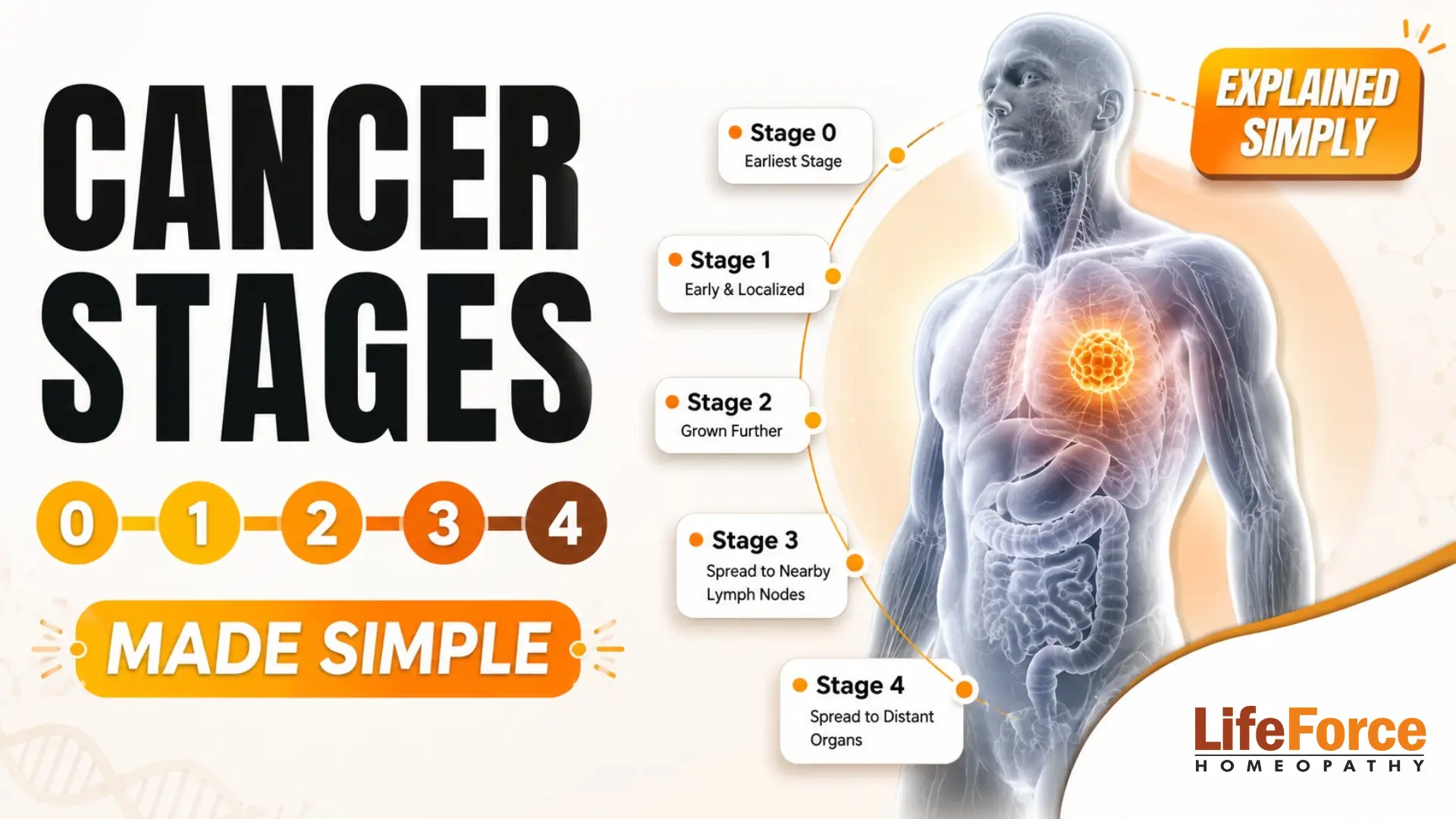
Cancer
From Stage 0 to Stage 4: Understanding Cancer Stages, Made Simple
Introduction Hearing the words “You have cancer” can be an overwhelming experience. Along with the diagnosis, patients are often introduced…
Cancer
Cancer Causes, Symptoms, Stages, and Treatment Options: Role of Supportive Homeopathy
Introduction Cancer is one of the most serious health concerns worldwide. It is not a single disease, but a group…
Need Support During Cancer Treatment?
Share your diagnosis, reports, symptoms, current treatment, and main concerns with our team. We will review your case and guide you about supportive care options.
Contact Us
FAQ
FAQ
No. Homeopathy should not be presented as a cure for cancer and should not replace oncology treatment.
Homeopathy may be considered as complementary supportive care in selected patients while they continue conventional cancer treatment under oncology guidance.
Supportive care may help selected patients focus on comfort, appetite, sleep, energy, emotional well-being, symptom burden, and quality of life.
No. Chemotherapy, radiation, immunotherapy, targeted therapy, or any oncology treatment should not be stopped without the advice of your cancer specialist.
Cancer diagnosis, biopsy, imaging scans, tumor markers, current treatment details, prescriptions, and recent medical reports may help the doctor understand the case better.
Seek urgent care for severe pain, bleeding, fever, breathing difficulty, rapid weakness, confusion, severe vomiting, dehydration, or sudden worsening of symptoms.