






What Causes Cancer?
Cancer develops when some cells in the body begin to grow abnormally and do not respond to the normal controls that regulate cell growth. These abnormal cells may form a tumor or spread to other parts of the body, depending on the cancer type.
There is rarely one fixed cause for every cancer. Risk may be influenced by age, tobacco, alcohol, family history, infections, radiation exposure, obesity, poor lifestyle, environmental factors, long-term inflammation, or genetic changes.
To understand the condition in detail, you can read more about homeopathic treatment for cancer on the main disease page.
At Life Force Homeopathy, cancer-related support is considered only as complementary care. Patients must continue oncology treatment and follow the advice of their cancer specialist.
The goal is not to guess the cause, but to understand risk factors, warning signs, and the need for timely diagnosis.
Get Personalised Guidance for Your Health Concerns
Share your basic details and our team will help you understand the next steps.
Symptoms That May Appear with Cancer
Cancer symptoms can vary depending on the organ involved, cancer type, stage, and overall health of the patient. Some cancers may cause noticeable symptoms early, while others may remain silent for a long time.
Any persistent or unexplained symptom should be medically evaluated, especially if it does not improve, keeps worsening, or appears along with weight loss, bleeding, severe fatigue, or a new lump.
- Unexplained Weight Loss: Sudden weight loss without diet changes, exercise, or clear reason should not be ignored.
- Persistent Fatigue: Extreme tiredness that does not improve with rest may need medical evaluation.
- Unusual Lump or Swelling: A new lump, swelling, thickening, or hard area in the breast, neck, abdomen, testicle, or elsewhere should be checked.
- Unexplained Bleeding: Blood in stool, urine, cough, vomit, or abnormal vaginal bleeding needs medical attention.
- Persistent Pain: Pain that continues, worsens, or appears without injury should be evaluated.
- Changes in Bowel or Bladder Habits: Long-term constipation, diarrhea, blood in stool, frequent urination, or urinary difficulty may need investigation.
- Non-Healing Wound: A wound, ulcer, mouth sore, or skin lesion that does not heal should be examined.
- Persistent Cough or Voice Change: A cough, hoarseness, breathlessness, or voice change lasting for weeks should not be ignored.
Did You Know?
Cancer is not one single disease. It is a group of many diseases, and each type may have different causes, symptoms, tests, treatment options, and outcomes.
This is why early diagnosis, cancer type, stage, medical reports, and oncology guidance are more important than relying on general symptoms alone.
Common Causes and Risk Factors of Cancer
- Tobacco Use: Smoking, chewing tobacco, and exposure to tobacco smoke are major risk factors for several cancers. Tobacco is strongly linked with cancers of the lungs, mouth, throat, voice box, food pipe, bladder, and other organs.
- Alcohol Use: Regular or heavy alcohol consumption may increase the risk of certain cancers, especially when combined with tobacco. Patients with alcohol exposure should discuss risk and screening needs with their doctor.
- Family History and Genetic Risk: Some cancers may run in families due to inherited genetic changes. A family history does not mean cancer is certain, but it may increase risk and may require earlier screening or genetic counselling.
- Age and Cell Changes: Cancer risk generally increases with age because genetic changes can accumulate in cells over time. However, cancer can occur at any age, so persistent symptoms should not be ignored in younger patients either.
- Infections: Certain infections may increase cancer risk, such as HPV, hepatitis B, hepatitis C, H. pylori, and some other long-term infections. Vaccination, safe practices, testing, and timely treatment may help reduce infection-related risk.
- Obesity and Poor Lifestyle: Excess weight, lack of exercise, unhealthy diet, poor sleep, and long-term inflammation may contribute to cancer risk in some cases. Lifestyle changes cannot prevent all cancers, but they may help reduce risk and improve overall health.
- Radiation and Environmental Exposure: Excessive ultraviolet exposure, radiation, certain chemicals, pollution, asbestos, and occupational exposure may increase cancer risk. Risk depends on the type, dose, duration, and sensitivity of exposure.
- Long-Term Inflammation: Chronic irritation, inflammation, or repeated tissue damage may increase cancer risk in selected conditions. This is why long-standing symptoms, ulcers, infections, or inflammatory conditions should be medically monitored.
Why Finding the Cause Is Not Always Simple?
Many patients ask, “Why did this happen to me?” In cancer, the answer is often complex. It may involve genetic changes, age, lifestyle factors, environmental exposure, infections, family history, immunity, and chance-related cell changes.
In many cases, one exact cause may not be identified. That does not reduce the importance of diagnosis, staging, treatment planning, and follow-up with an oncologist.
Cancer is rarely a one-cause problem. It usually needs diagnosis, staging, and specialist-guided care.
How Life Force Evaluates Cancer Support Cases?
At Life Force, cancer-related support begins only after understanding the patient’s diagnosis, cancer type, stage, current oncology treatment, symptoms, reports, and overall health.
Dr. Rajesh Shah and the Life Force team do not claim to replace cancer specialists. Homeopathy may be considered as supportive care in selected cases to help the patient’s general well-being, symptoms, and treatment tolerance.
- Diagnosis Review: Cancer type, stage, biopsy, imaging, tumor markers, and oncology reports are reviewed where available.
- Current Treatment Status: Surgery, chemotherapy, radiation, immunotherapy, targeted therapy, or palliative care status is understood.
- Symptom Burden: Pain, fatigue, appetite, sleep, weakness, digestion, nausea, anxiety, and general comfort are reviewed.
- Medical Safety: Any urgent symptoms, red flags, bleeding, infection, severe pain, or rapid worsening are referred for appropriate medical care.
- Supportive Care Planning: Homeopathic support, if suitable, is planned around the patient’s ongoing oncology care and overall condition.
Watch: Understanding Cancer Support Beyond Diagnosis
Check Your Supportive Care Scope
Every cancer case is different. The treatment scope depends on cancer type, stage, symptoms, reports, current oncology treatment, general health, and treatment goals. The Life Force Assessment Test helps you share your diagnosis, reports, symptoms, ongoing treatment, and health details so the team can guide you about whether supportive homeopathic care may be suitable.
Know your chances of recovery with just a few simple questions
Ready to know your recovery chances in percentage?
A short, guided assessment built on 40+ years of clinical experience.
Which condition would you like assessed?
Choose your health condition to begin a short, guided assessment.
Learn More About Cancer Support
Cancer
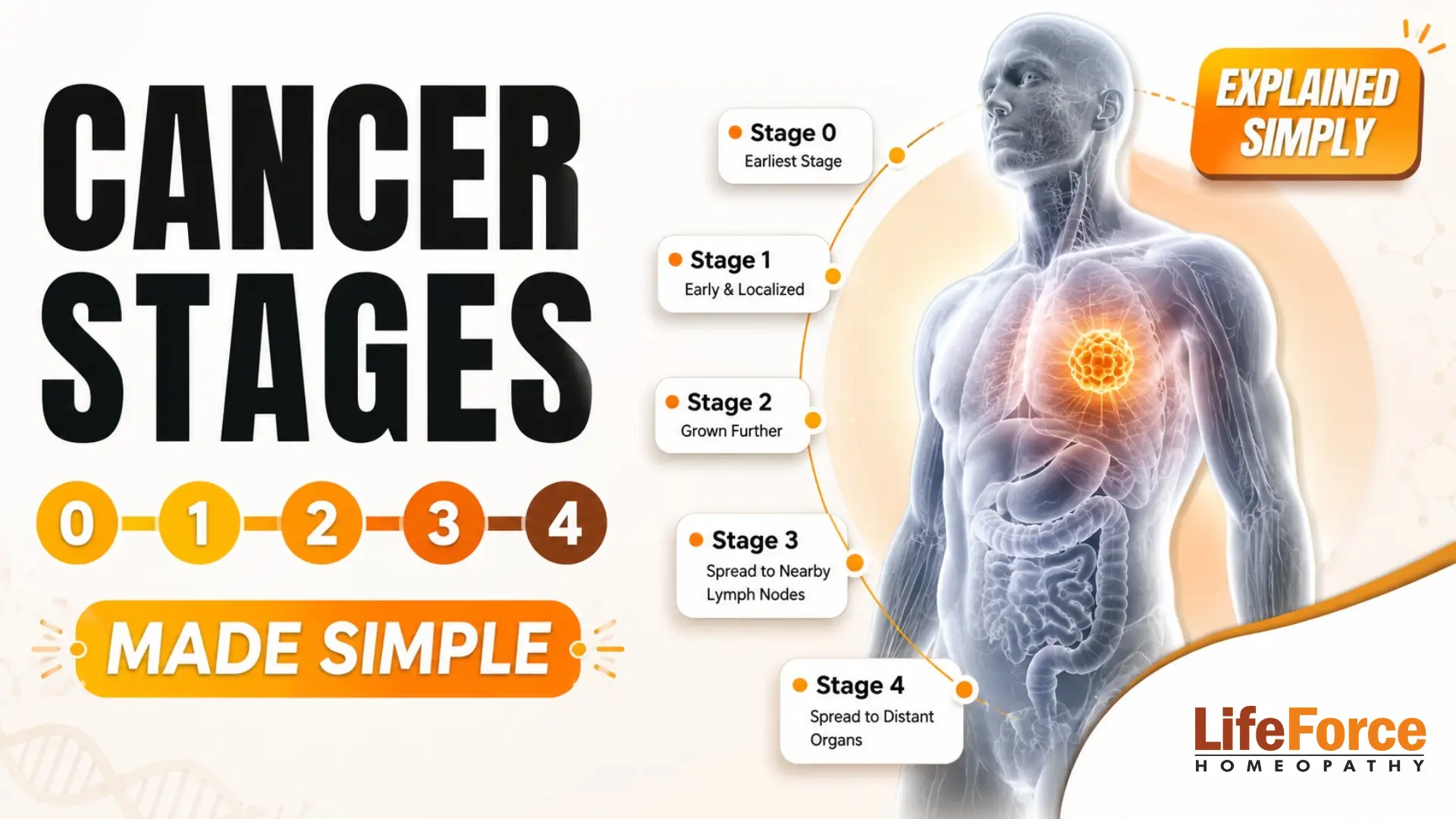
From Stage 0 to Stage 4: Understanding Cancer Stages, Made Simple
Introduction Hearing the words “You have cancer” can be an overwhelming experience. Along with the diagnosis, patients are often introduced…

Cancer
Cancer Causes, Symptoms, Stages, and Treatment Options: Role of Supportive Homeopathy
Introduction Cancer is one of the most serious health concerns worldwide. It is not a single disease, but a group…
Need Support During Cancer Treatment?
Share your diagnosis, reports, symptoms, current treatment, and main concerns with our team. We will review your case and guide you about supportive care options.
Contact Us
FAQ
FAQ on Cancers
Cancer may be linked with tobacco, alcohol, age, family history, infections, obesity, radiation, environmental exposure, genetic changes, and long-term inflammation.
Common warning signs may include unexplained weight loss, unusual lump, persistent fatigue, unexplained bleeding, non-healing wound, persistent pain, bowel or bladder changes, cough, or voice change.
Yes. Some cancers may remain silent in early stages. Screening and medical evaluation are important, especially in high-risk patients.
No. Homeopathy should not replace surgery, chemotherapy, radiation, immunotherapy, targeted therapy, or oncology care.
Homeopathy may be considered as complementary supportive care in selected cases to support general well-being and symptom comfort while continuing oncology treatment.
You should consult a doctor for any persistent lump, unexplained bleeding, sudden weight loss, non-healing wound, persistent pain, severe fatigue, bowel or bladder changes, or worsening symptoms.