

Software Engineer Achieves Complete Beard Hair Regrowth with Homeopathy Treatment
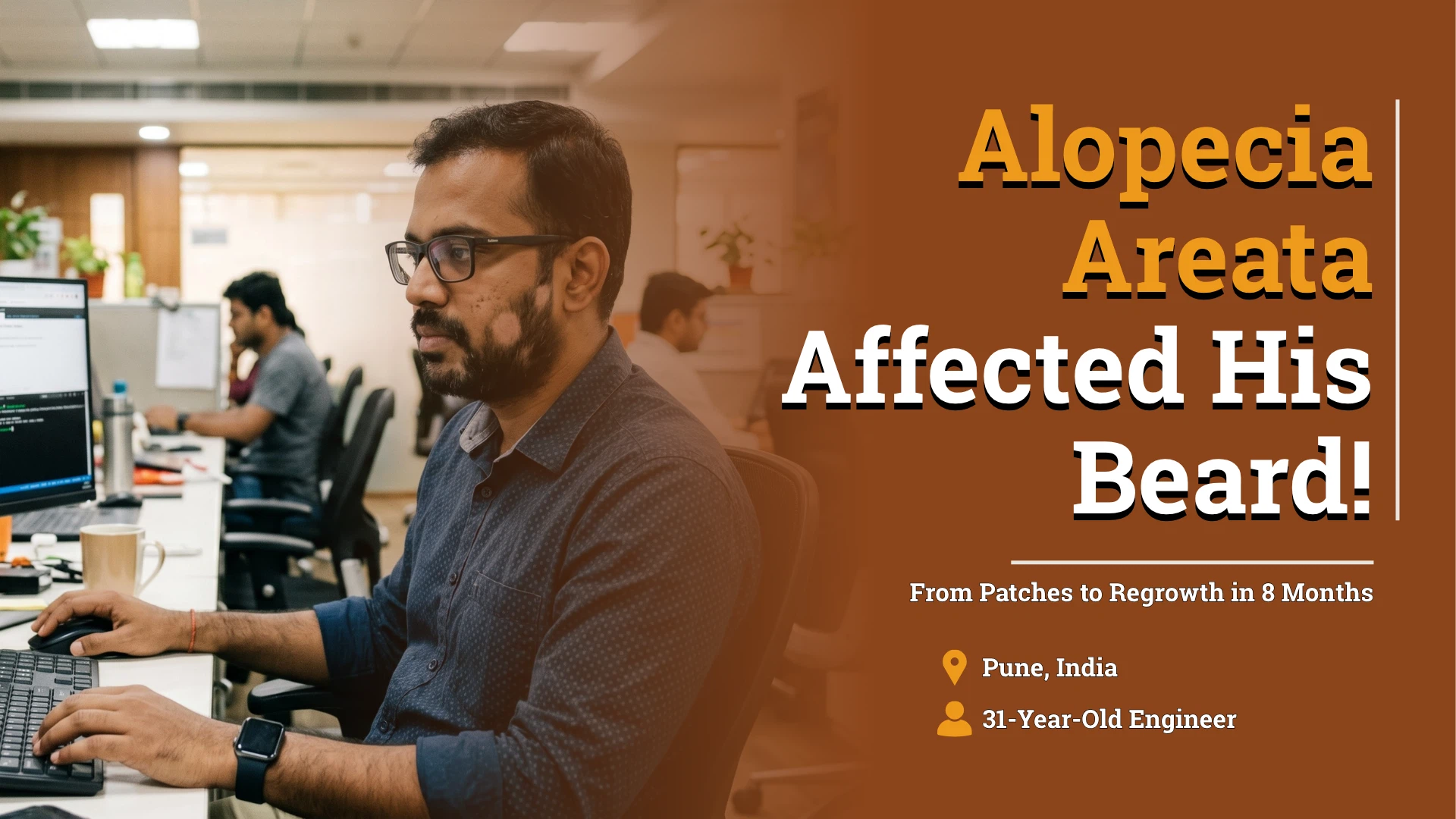
A 31-year-old software engineer with alopecia areata experienced patchy beard hair loss unresponsive to steroids. After individualized homeopathic treatment with Lycopodium and other remedies, gradual improvement was observed over eight months. The patient achieved complete regrowth of all patches, highlighting homeopathy’s ability to treat stubborn autoimmune hair loss safely while addressing physical and emotional factors for long-term recovery.
Patchy hair loss in the beard due to alopecia areata can be distressing, especially when it progresses despite treatment. Many individuals experience uncertainty when conventional approaches do not provide the expected improvement.
This case highlights the journey of a 31-year-old software engineer who experienced increasing beard patches over a short period. With a structured and individualized homeopathic treatment of alopecia areata, he observed gradual stabilization and regrowth over time.
Patient Case Details
| Parameter | Details |
| Patient ID | R.G. (ID: 56640) |
| Age | 31 Years |
| Gender | Male |
| Profession | Software Engineer |
| First Consultation | 11th January 2025 |
| Condition | Alopecia Areata (Beard Area) |
| Duration | 3 Months |
About the Condition
Alopecia areata is an autoimmune condition where the immune system targets healthy hair follicles, leading to sudden patchy hair loss.
It may affect the scalp, beard, or other areas, and its progression can vary from person to person.
Presenting Complaints
- Patchy hair loss in the beard area
- Gradual increase in size of patches
- Three visible bald patches
- No significant improvement with prior steroid treatment
Individual Case Assessment
During detailed case-taking, the following traits were observed:
Living with a Chronic Condition? Get Expert Guidance.
Talk to Dr. Rajesh Shah — 40+ years of experience in managing chronic conditions with a personalized, long-term approach.
- Short-tempered and easily irritable
- Highly work-oriented personality
- Strong emotional attachment to family
- Mild anxiety about future uncertainty
- Craving for sweets
- Aversion to vegetables
These individual characteristics help guide the selection of alopecia areata homeopathic remedies, as treatment is tailored to the person as a whole.
Case Analysis & Treatment Approach
A comprehensive evaluation was conducted by Dr. Rajesh Shah (MD), considering both physical symptoms and mental-emotional factors.
Treatment Plan Included:
- Individualized homeopathic medicines
- Constitutional remedy: Lycopodium 30
- Regular follow-ups and medicine adjustments
Follow-Ups & Progress Timeline
| Date | Duration | Clinical Progress & Observations |
| 10th March 2025 | After 2 Months | No visible improvement. Slight (~10%) increase in size of two patches observed. Treatment continued with adjustments. |
| 4th May 2025 | 4 Months | Hair loss progression stopped. Initial signs of new hair growth were noticed over affected areas. |
| 8th July 2025 | After 6 Months | Significant improvement observed. Around 80% hair regrowth noted across all patches. No new patches developed. |
| 7th September 2025 | 8 Months | Complete hair regrowth observed. No active hair loss or new patch formation reported. |
Outcome
Over a treatment period of approximately 8 months, the patient experienced:
- Stabilization of hair loss progression
- Gradual and visible hair regrowth
- No recurrence of new patches
- Improved overall confidence and well-being
It is important to note that improvement was gradual, with an initial phase showing little visible change before progress became noticeable.
Key Learnings
- Alopecia areata may require consistent, long-term management
- Initial lack of improvement does not always indicate treatment failure
- Addressing emotional and physical factors together is important
- Individualized treatment plays a significant role in outcomes
Conclusion
This case demonstrates that homeopathic treatment for alopecia areata may support gradual hair regrowth and stabilization when applied through a structured and individualized approach.
While responses can vary among individuals, this case highlights the importance of consistency, follow-up, and a holistic understanding of the patient’s condition.