

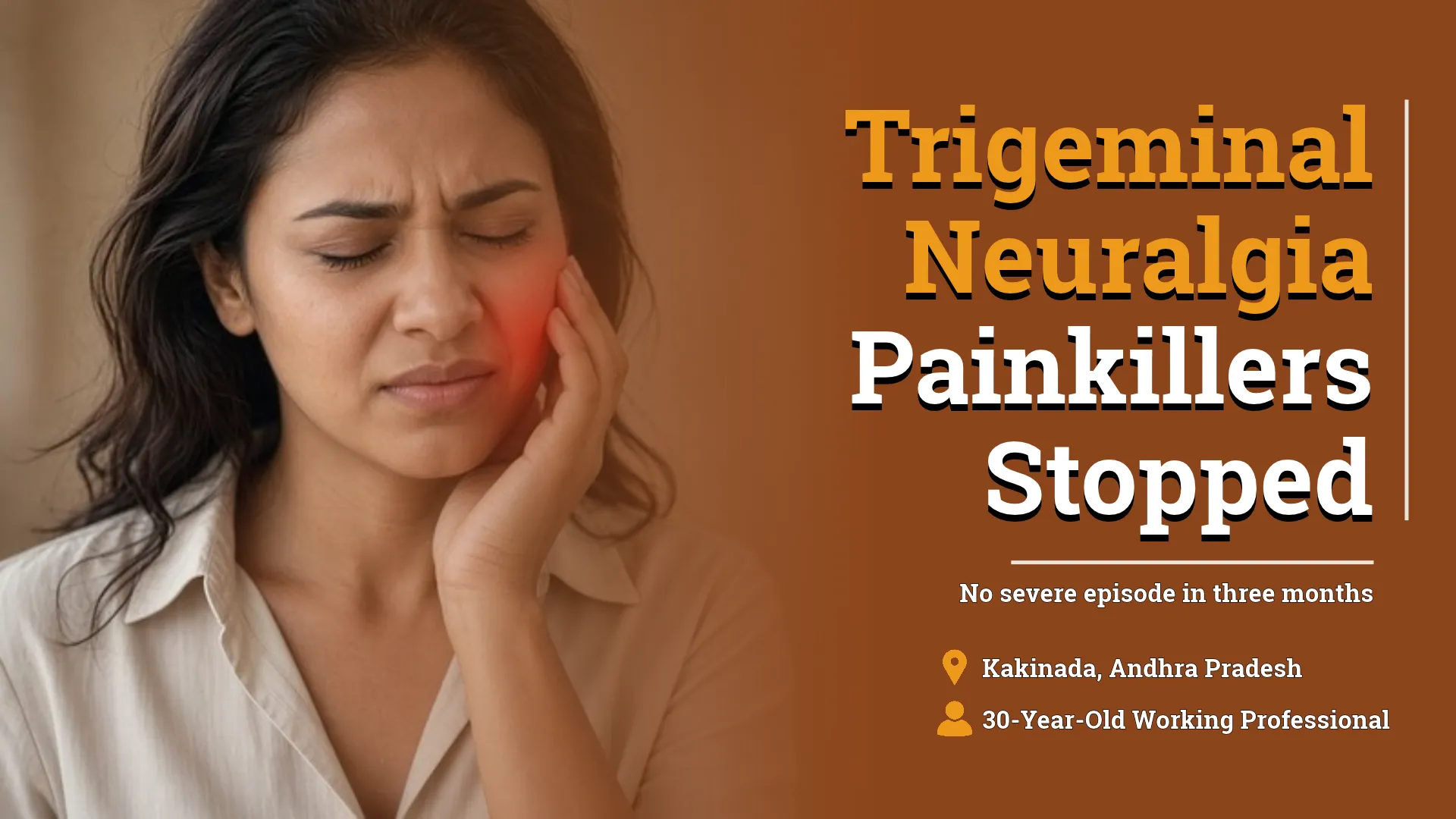
A 30-year-old woman from Andhra Pradesh experienced severe trigeminal neuralgia symptoms, including electric shock-like pain on the right side of her face and persistent burning sensations. Despite previous use of Carbamazepine, Pregabalin and Gabapentin, her symptoms persisted. She began individualized homeopathic treatment for trigeminal neuralgia at Life Force Homeopathy in Bangalore in March 2023. Following intermittent flare-ups and a treatment break, she resumed care in October 2025 and reported gradual improvement. By September 2026, she reported no severe facial pain episodes for three consecutive months and no current use of conventional pain medicines. This represents an individual clinical outcome and does not establish treatment efficacy.
Table of Contents
- 01. Introduction
- 02. A Quick Look at the Patient’s Clinical History
- 03. What Is Trigeminal Neuralgia?
- 04. What Are the Common Symptoms of Trigeminal Neuralgia?
- 05. Common Triggers of Trigeminal Neuralgia Pain
- 06. Key Takeaways
- 07. Patient’s Condition at the Time of Consultation
- 08. Major Symptoms Experienced by the Patient
- 09. Factors That Aggravated and Relieved Her Symptoms
- 10. What Was the Patient’s Previous Medical and Treatment History?
- 11. Understanding the Patient Beyond Her Physical Symptoms
- 12. How Was the Patient’s Homeopathic Treatment Planned?
- 13. Key Areas Monitored During Treatment
- 14. Tracking the Patient’s Progress Over Three and a Half Years
- 15. What Changed by the September 2026 Follow-Up?
- 16. Clinical Outcome: Before and After Treatment Follow-Up
- 17. Doctor’s Clinical Insights on Trigeminal Neuralgia
- 18. Alternative Therapies for Trigeminal Neuralgia Relief
- 19. When Can Trigeminal Neuralgia Become a Serious Concern?
- 20. Consult Life Force Homeopathy for an Individualized Clinical Assessment
- 21. Conclusion
Introduction
Some pains give a warning. Trigeminal neuralgia can strike without one. A gentle breeze on the cheek, brushing the teeth or eating a spoonful of food can trigger sudden, intense facial pain like an electric shock.
For a 30-year-old woman from Andhra Pradesh, these ordinary activities became increasingly uncomfortable as her symptoms progressed.
This case study documents her clinical journey at Life Force Homeopathy in Bangalore, from her initial consultation in March 2023 to her September 2026 review.
Her experience highlights the challenges of managing recurring facial pain, persistent burning sensations, disturbed sleep and fluctuating symptoms during long-term clinical follow-up.
A Quick Look at the Patient’s Clinical History
| Parameter | Details |
| Patient | Mrs. KGL |
| Patient ID | 50891 |
| Age | 30 years at initial consultation |
| Gender | Female |
| Location | Andhra Pradesh, India |
| Primary condition | Trigeminal neuralgia, predominantly affecting the right side of the face |
| Onset of symptoms | 2021, progressively worsening since September 2022 |
| First consultation | March 2023 |
| Treatment period | March 2023 to December 2024; resumed in October 2025 and ongoing |
| Previous conventional medicines | Carbamazepine, Pregabalin and Gabapentin |
| Clinic visited | Life Force Homeopathy, Bangalore |
| Last documented follow-up | September 2026 |
| Latest clinical outcome | No severe facial pain episodes reported for three months |
What Is Trigeminal Neuralgia?
Trigeminal neuralgia is a chronic neurological pain condition affecting the trigeminal nerve, which carries sensations from the face to the brain.
It typically causes sudden, severe, stabbing or electric shock-like facial pain, usually affecting one side of the face. Pain may occur around the jaw, cheek, teeth, nose or forehead.
Even gentle facial movements or everyday activities such as brushing teeth, eating, talking or washing the face can trigger painful episodes.
Some individuals also experience persistent burning or aching sensations between episodes.
What Are the Common Symptoms of Trigeminal Neuralgia?
The common trigeminal neuralgia symptoms include:
- Sudden, severe electric shock-like facial pain.
- Sharp or stabbing pain affecting one side of the face.
- Pain around the jaw, cheek, teeth or forehead.
- Pain triggered by brushing, chewing, talking or touching the face.
- Repeated pain episodes lasting seconds to a few minutes.
- Persistent burning or aching sensations in some individuals.
- Difficulty eating, speaking or performing routine facial activities.
Frequent pain episodes may also interfere with sleep, emotional well-being and overall quality of life.
Common Triggers of Trigeminal Neuralgia Pain
| Trigger | Everyday Activity |
| Facial touch | Washing the face or applying skincare products |
| Dental hygiene | Brushing teeth |
| Facial movement | Talking or smiling |
| Chewing | Eating food |
| Cold air | Exposure to cold wind or air conditioning |
| Drinking | Contact with hot or cold beverages |
Triggers can initiate painful episodes but are not necessarily the underlying cause of trigeminal neuralgia.
A neurological evaluation and, when appropriate, imaging investigations such as MRI can help identify underlying causes and guide treatment decisions.
Key Takeaways
- The patient had experienced trigeminal neuralgia symptoms since 2021, with progressive aggravation from September 2022.
- She initially experienced two to three moderate to severe facial pain episodes every half hour.
- Brushing, touching the face, eating and talking were important pain triggers.
- She had previously used Carbamazepine, Pregabalin and Gabapentin for symptom management.
- Electric shock-like pain reduced earlier, while persistent burning sensations remained a significant concern.
- By the end of 2024, she reported approximately 30–40% overall improvement.
- Following a treatment break and recurrence of burning pain, she resumed homeopathic care in October 2025.
- At her September 2026 review, she reported no severe facial pain episodes for three months.
Patient’s Condition at the Time of Consultation
The patient visited Life Force Homeopathy in Bangalore in March 2023 with severe facial pain, predominantly affecting the right side.
Her symptoms had started in 2021 and progressively worsened from September 2022.
She described sudden, intense, electric shock-like pain lasting approximately 10 seconds to three minutes. The episodes occurred frequently, with two to three moderate to severe attacks every half hour.
Routine activities such as brushing teeth, eating, talking and touching her face triggered discomfort.
She also experienced disturbed sleep. During subsequent follow-ups, persistent burning pain extending from the jaw towards the temples became a major concern.
Major Symptoms Experienced by the Patient
- Severe electric shock-like pain on the right side of the face.
- Frequent moderate to severe pain episodes.
- Pain lasts approximately 10 seconds to three minutes.
- Increased discomfort while brushing teeth or touching the face.
- Pain triggered by eating and talking.
- Disturbed sleep.
- Burning sensations extending from the jaw towards the temples during later follow-ups.
The frequency and intensity of her symptoms affected her everyday comfort and prompted her to explore trigeminal neuralgia homeopathic treatment.
Factors That Aggravated and Relieved Her Symptoms
| Aggravating Factors | Relieving Factors |
| Brushing teeth | Sitting provided comparatively greater facial comfort |
| Touching the face | - |
| Eating and chewing | - |
| Talking | - |
| Night-time, particularly between 3 and 4 AM | - |
| Lying down aggravated associated neck pain | - |
Understanding these individual symptom patterns formed an important part of the clinical assessment.
What Was the Patient’s Previous Medical and Treatment History?
Before visiting Life Force Homeopathy, the patient had used conventional medicines to manage trigeminal neuralgia.
Her medication history included:
| Medicine | Reported Usage |
| Carbamazepine | Previously used for facial pain management; dosage and frequency not specified |
| Pregabalin | Two to three times a week |
| Gabapentin | Every night since September 2022 |
Despite previous medication use, the patient continued to experience recurring facial pain and sleep disturbances.
Carbamazepine is an established first-line treatment for trigeminal neuralgia. Other medicines, including Gabapentin and Pregabalin, may be considered depending on the patient's clinical condition and response to treatment.
Patients should not reduce or discontinue prescribed neurological medicines without consulting their treating medical professional.
Understanding the Patient Beyond Her Physical Symptoms
As part of the individualized homeopathic assessment, the clinical team documented the patient's pain characteristics, symptom triggers, sleep disturbances and changes in her daily circumstances.
| Assessment Parameter | Patient’s Clinical Details |
| Pain characteristics | Initially sharp and electric shock-like; persistent burning became more prominent during follow-up |
| Affected side | Predominantly right side of the face |
| Pain triggers | Brushing, touching the face, eating and talking |
| Time of aggravation | Night-time, particularly between 3 and 4 AM |
| Positional aggravation | Associated neck pain worsened while lying down |
| Relieving position | Facial discomfort was comparatively better while sitting |
| Sleep pattern | Disturbed due to facial pain and burning sensations |
| Medication history | Previous use of conventional neurological medicines |
| Relevant life circumstances | Nursing a three-month-old infant during the October 2024 follow-up |
These observations formed part of the individualized clinical assessment and subsequent treatment planning.
How Was the Patient’s Homeopathic Treatment Planned?
At Life Force Homeopathy, the clinical team evaluated the patient's medical history, pain characteristics, symptom frequency, aggravating factors and previous medication use.
Two important patterns emerged during the follow-up period:
- The electric shock-like facial pain reduced earlier.
- Persistent burning sensations, particularly at night, remained a significant concern.
The individualized homeopathic treatment approach involved monitoring changes in pain intensity, frequency, sleep quality and everyday functioning.
The clinical record also documented intermediate prescriptions during sudden flare-ups.
Key Areas Monitored During Treatment
- Frequency of electric shock-like facial pain.
- Duration and intensity of painful episodes.
- Persistent burning sensations.
- Sensitivity to brushing and facial touch.
- Pain triggered by eating and talking.
- Night-time aggravation and sleep disturbances.
- Changes in conventional medication use.
- Recurrence of symptoms following treatment interruptions.
Changes in conventional medication use were documented during follow-up. The original case record does not specify whether every medication reduction was supervised by a neurologist.
Tracking the Patient’s Progress Over Three and a Half Years
The patient's clinical journey extended from March 2023 to September 2026, including an interruption in homeopathic care after December 2024.
Her progress was not linear. Periods of improvement were followed by persistent burning sensations and temporary flare-ups.
| Follow-Up Period | Clinical Observations and Progress |
| May 2023 | Facial pain eased for approximately 20 days. Episodes shortened to 10 seconds to two minutes. Sleeplessness and burning pain extending from the jaw towards the temples appeared. |
| June 2023 | Facial pain improved, but night-time burning sensations in the mouth continued to disturb sleep. |
| July 2023 | Persistent burning sensations and daily painful episodes continued, with limited reported relief from conventional medicines. |
| September 2023 | Approximately 20% reduction in pain and burning. Burning affected the right upper jaw and was worse between 3 and 4 AM. Mild electric shock-like pain persisted. Gabapentin use was limited to night-time. |
| December 2023 | Approximately 20% improvement was maintained. Pain frequency reduced to three to four episodes daily. Electric shock-like pain reduced, and Gabapentin was used only when needed. |
| February 2024 | Overall improvement was reported, although night-time burning in the right upper jaw persisted. No conventional pain medicine use was reported. |
| March 2024 | The condition remained relatively stable before a week-long episode of severe burning pain. An intermediate prescription was given for the flare-up. |
| April 2024 | Severe right-sided burning pain had persisted for approximately two months, sometimes lasting up to 24 hours. Occasional mild electric shock-like pain continued. No conventional pain medicine use was reported. |
| June 2024 | Slight improvement was reported. No major painful episodes occurred, but burning sensations continued throughout the day and worsened at night. |
| August 2024 | Severe daytime burning persisted, although no major electric shock-like pain was reported. No conventional pain medicine use was reported. |
| October 2024 | Right-sided facial burning continued, particularly at night and during eating or talking. No electric shock-like episodes were reported. The patient was nursing a three-month-old infant. |
| October 2025 | Homeopathic care resumed following a treatment break. Persistent burning over the right jaw, nose and eye had disturbed sleep for approximately six months. She reported no conventional pain medicine use for approximately one year. |
| December 2025 | Pain severity improved by approximately 30%. Constant burning remained, particularly during brushing and eating, with aggravation around 4 AM. |
| February 2026 | Pain severity remained relatively unchanged. Brushing or facial touch triggered symptoms approximately five to six times daily. |
| April 2026 | Slight reduction in pain was reported. Gabapentin was used approximately once every three days. |
| June 2026 | Moderate facial pain persisted, with brushing as the main trigger. Gabapentin was used approximately once every two days. |
| September 2026 | Overall improvement was reported. The patient had experienced no severe pain episodes for three months and reported no current use of conventional pain medicines or painkillers. |
The follow-up records highlight the fluctuating nature of her symptoms. Although electric shock-like pain reduced earlier, burning sensations remained persistent during several stages of her clinical journey.
What Changed by the September 2026 Follow-Up?
By the end of 2024, the patient reported approximately 30–40% overall improvement in her trigeminal neuralgia complaints.
Following a break in homeopathic care, persistent burning sensations recurred and disturbed her sleep for approximately six months. She resumed treatment in October 2025.
During 2026, her facial pain fluctuated, and conventional medication use also varied. Gabapentin use increased from once every three days in April to once every two days in June before she reported no current use in September.
At her September 2026 review, the patient reported:
- No severe facial pain episodes for the preceding three months.
- Overall improvement in her trigeminal neuralgia complaints.
- No current use of conventional pain medicines or painkillers.
The patient remains under clinical follow-up to monitor any recurrence or changes in her symptoms.
The final clinical record does not establish complete resolution of all burning sensations or permanent remission.
Clinical Outcome: Before and After Treatment Follow-Up
| Clinical Parameter | Before Treatment | Clinical Follow-Up Outcome |
| Facial pain intensity | Moderate to severe | No severe episodes reported for three months by September 2026 |
| Pain frequency | Two to three episodes every half hour | Reduced during successive follow-ups; exact final frequency not documented |
| Electric shock-like pain | Severe and frequent | Reduced during earlier follow-ups |
| Burning sensations | Became prominent during early follow-ups | Fluctuated over time; complete resolution not documented |
| Episode duration | 10 seconds to 3 minutes | Reduced to 10 seconds to 2 minutes during May 2023 |
| Facial sensitivity | Pain triggered by brushing and touch | Continued to be monitored during follow-up |
| Sleep quality | Disturbed by facial pain and burning | Final sleep status not specifically documented |
| Conventional medicine use | Carbamazepine, Pregabalin and Gabapentin | Varied during follow-up; no current use reported in September 2026 |
| Overall improvement | Persistent and recurring facial pain | Approximately 30–40% improvement reported by the end of 2024 |
| Latest clinical status | Frequent painful episodes | No severe episodes for three months at the September 2026 review |
These observations represent an individual patient's reported clinical experience. They do not establish that homeopathy caused the improvement or that other patients will experience similar outcomes.
Doctor’s Clinical Insights on Trigeminal Neuralgia
The patient presented with longstanding trigeminal neuralgia characterized by severe electric shock-like pain, frequent episodes and sensitivity to everyday facial activities.
During successive clinical follow-ups, the sharp, electric shock-like pain reduced earlier, whereas persistent burning sensations remained a significant concern.
Night-time aggravation, particularly between 3 and 4 AM, was repeatedly documented. Brushing, facial touch, eating and talking remained important triggers during different stages of follow-up.
The patient's clinical journey included periods of improvement, temporary flare-ups, a treatment interruption and subsequent resumption of care.
This case highlights the importance of documenting pain characteristics, symptom frequency, medication use and changes in everyday functioning during long-term trigeminal neuralgia management.
Alternative Therapies for Trigeminal Neuralgia Relief
Patients experiencing recurring facial pain may explore alternative therapies for trigeminal neuralgia relief alongside conventional neurological care.
Supportive measures may include:
- Identifying and recording individual pain triggers.
- Maintaining a symptom and medication diary.
- Using gentle oral hygiene techniques while maintaining dental health.
- Avoiding direct exposure to cold air if it triggers facial pain.
- Choosing nutritious foods that are comfortable to chew during painful episodes.
- Seeking psychological support when persistent pain affects emotional well-being.
- Discussing complementary approaches with the treating medical professional.
Some patients explore homeopathy for trigeminal neuralgia as a complementary approach. However, reliable clinical evidence establishing its effectiveness for this neurological condition remains limited.
Conventional management may include medicines such as Carbamazepine or Oxcarbazepine. Specialist-directed procedures or surgery may be considered when medicines do not provide adequate relief or cause intolerable side effects.
Complementary approaches should not replace neurological evaluation or necessary evidence-based treatment.
These supportive measures represent general medical information and are not documented interventions in this patient's treatment history.
When Can Trigeminal Neuralgia Become a Serious Concern?
Recurring or severe facial pain should be medically evaluated, particularly when symptoms interfere with eating, drinking, sleeping or everyday activities.
Consult a qualified medical professional if you experience:
- Sudden or recurring electric shock-like facial pain.
- Persistent facial burning or aching.
- Increasing frequency or severity of painful episodes.
- Facial pain that does not respond adequately to prescribed medicines.
- Difficulty eating or drinking due to severe pain.
- New or persistent facial numbness.
- Facial pain affecting both sides of the face.
Seek emergency medical attention if sudden facial pain occurs alongside facial drooping, arm weakness, difficulty speaking or other sudden neurological symptoms.
An appropriate neurological evaluation can help distinguish trigeminal neuralgia from dental problems and other neurological or facial pain conditions.
Living with Trigeminal Neuralgia ?
Receive a personalized treatment plan from our experienced homeopathic doctors. Trusted by over 100,000+ patients across 180+ countries for safe, natural and long term management of chronic diseases.
Consult Life Force Homeopathy for an Individualized Clinical Assessment
Individuals experiencing persistent facial pain, burning sensations or recurring trigeminal neuralgia symptoms can discuss their medical history and existing treatment with a qualified medical professional.
Life Force Homeopathy offers individualized consultations and clinical follow-ups that consider the patient's symptom patterns, medical history and general health.
Patients searching for a homeopathy clinic in Bangalore for trigeminal neuralgia can consult the clinical team to discuss the scope and limitations of complementary homeopathic care.
A neurological assessment remains important for identifying the underlying cause and determining appropriate treatment.
Conclusion
his case study documents a 30-year-old woman’s journey with trigeminal neuralgia, characterized by severe electric shock-like facial pain and persistent burning sensations. Over three and a half years of individualized homeopathic care and clinical follow-ups, including a treatment break and recurring flare-ups, she reported gradual improvement.
By September 2026, she reported no severe facial pain episodes for three months and no current use of conventional pain medicines. This case highlights the importance of individualized assessment and regular clinical monitoring. Individual outcomes may vary, and this case alone does not establish treatment efficacy.
Medical Disclaimer: This case study describes an individual patient's reported clinical experience. Treatment responses may vary from person to person. The findings do not establish treatment efficacy or replace professional medical advice, neurological evaluation, diagnosis or conventional treatment.