

10-Year-Old Child Achieves Near-Complete Recovery from Autoimmune Alopecia Areata
Master A.C., a 10-year-old boy with a genetic predisposition to autoimmune disorders, experienced sudden bald patches due to alopecia areata. Through individualized homeopathic treatment at Life Force, his hair regrew steadily over a year. The therapy addressed underlying immune factors safely, reduced dependence on conventional medications, and resulted in almost full recovery with no relapse, demonstrating effective long-term management.
Table of Contents
Sudden hair loss in children can be deeply concerning for parents, especially when it appears without warning and has an autoimmune background. Many families struggle with uncertainty when conventional treatments offer limited or temporary results.
This case study highlights the journey of a 10-year-old boy with a hereditary autoimmune background who experienced significant hair regrowth in alopecia areata with a structured, individualized homeopathic treatment approach.
Patient Case Details
| Parameter | Details |
| Patient ID | A.C. (ID: 55651) |
| Age | 10 Years |
| Gender | Male |
| Location | India |
| First Consultation | September 2024 |
| Condition | Alopecia Areata (Localized, Non-scarring) |
| Duration | Since July 2024 |
About the Condition
Alopecia Areata is an autoimmune condition where the body’s immune system mistakenly attacks hair follicles, leading to patchy hair loss. It commonly presents as round bald patches on the scalp and can affect both children and adults.
Common characteristics include:
- Sudden appearance of round bald patches
- Non-itchy, smooth scalp surface
- No redness or scarring in early stages
- Possible recurrence or progression
Common triggers or associations:
- Genetic predisposition (family history of autoimmune disorders)
- Stress or immune imbalance
- Associated conditions like asthma or thyroid disorders
Presenting Complaints
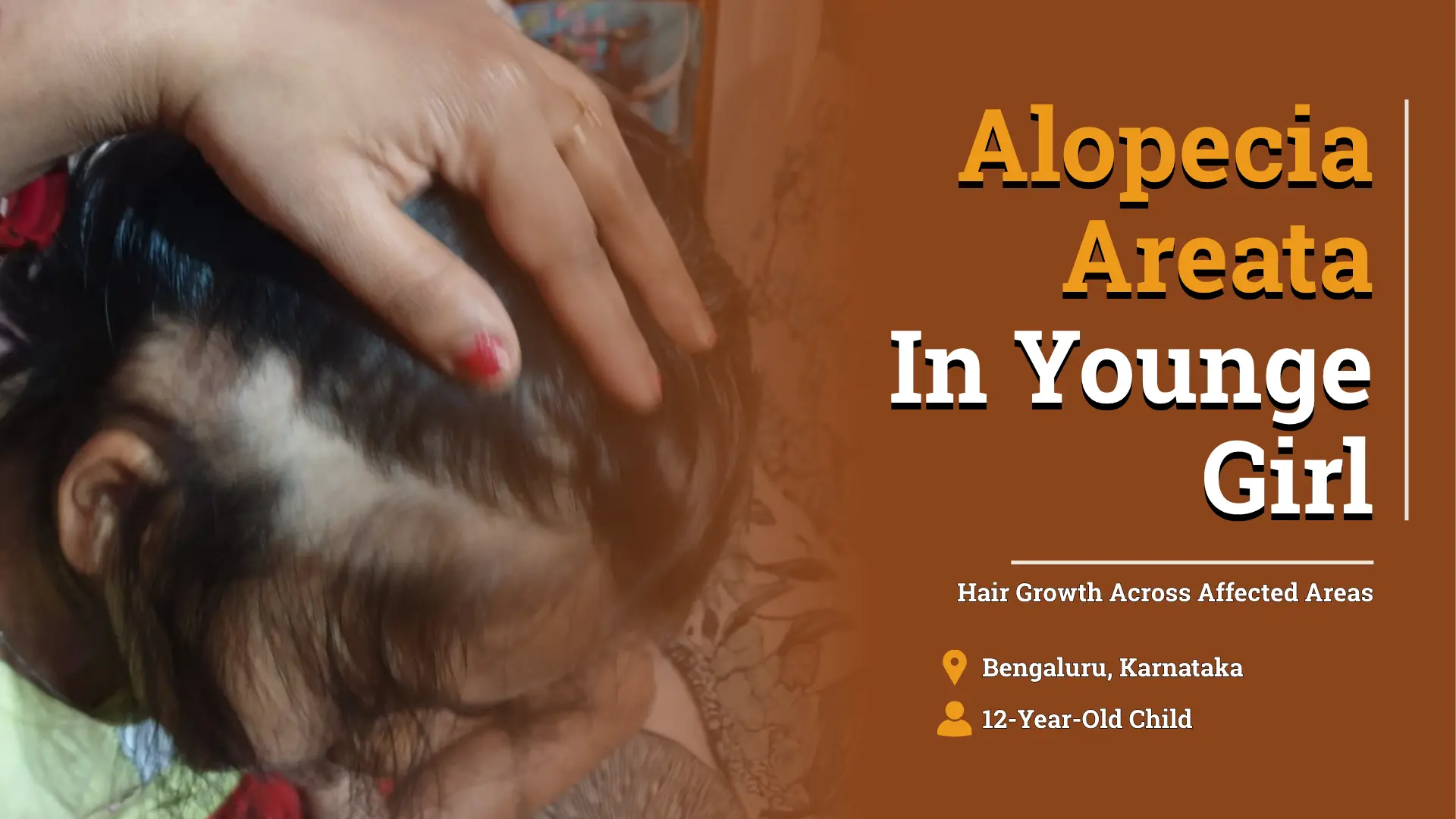
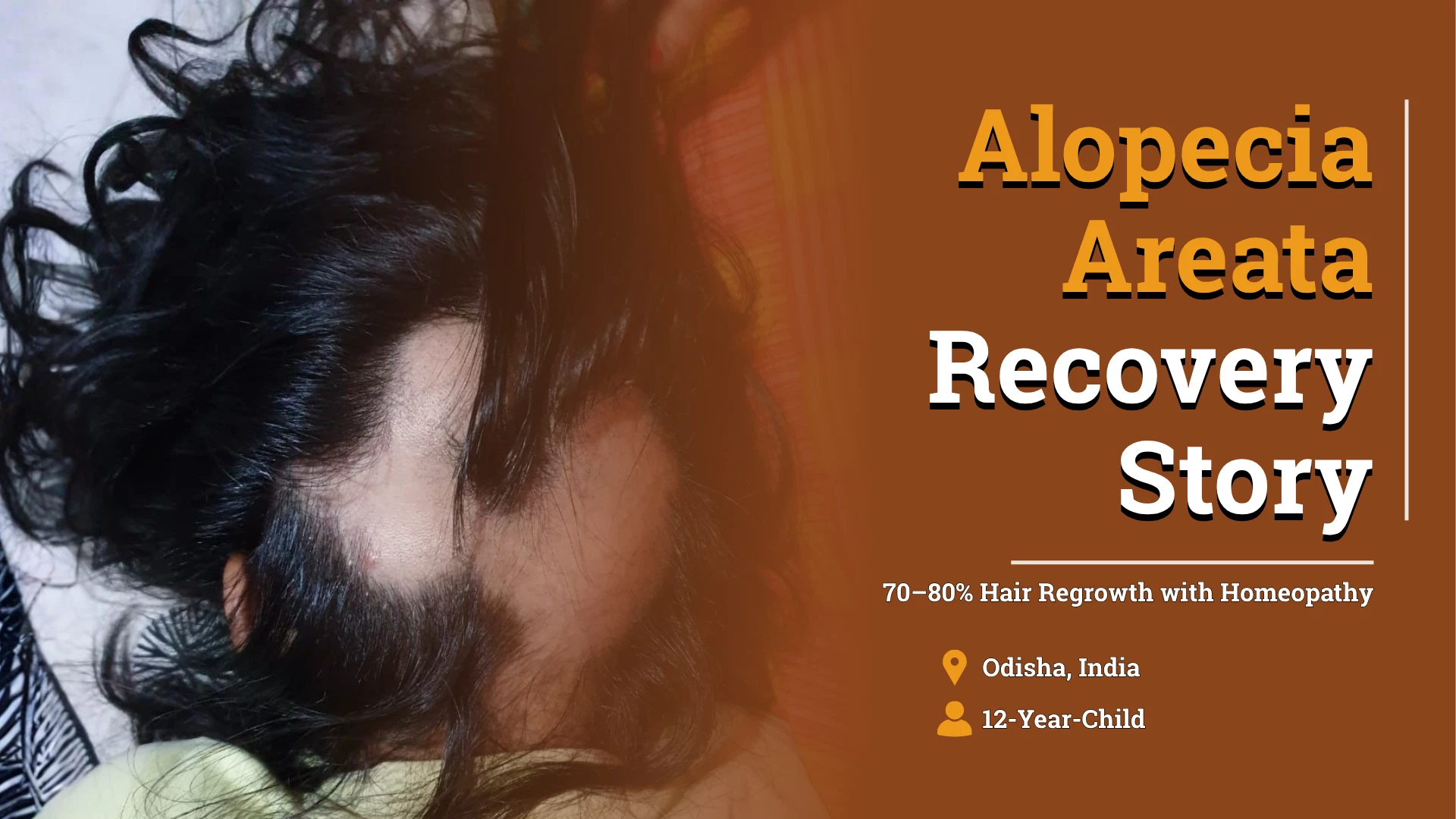
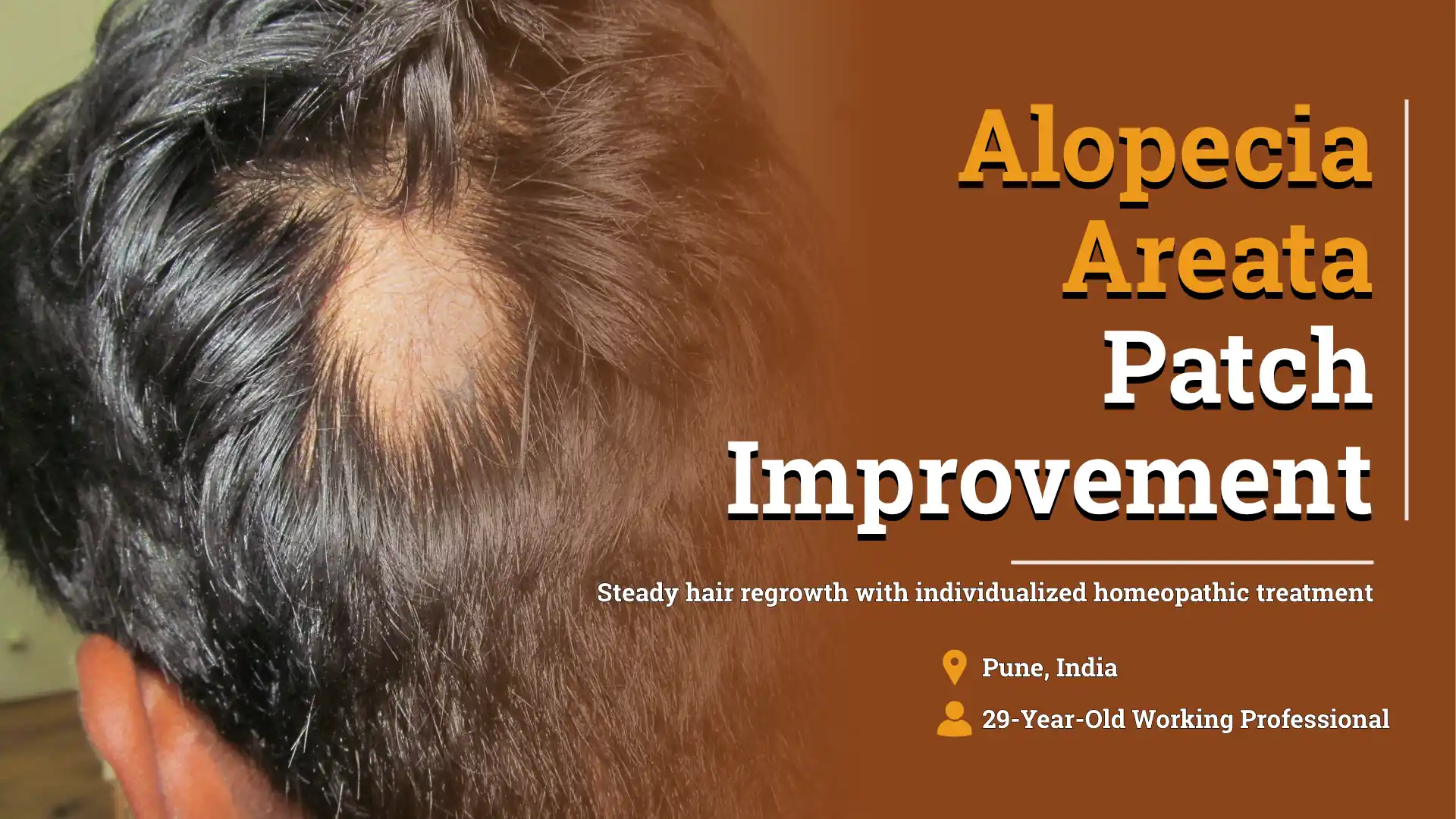
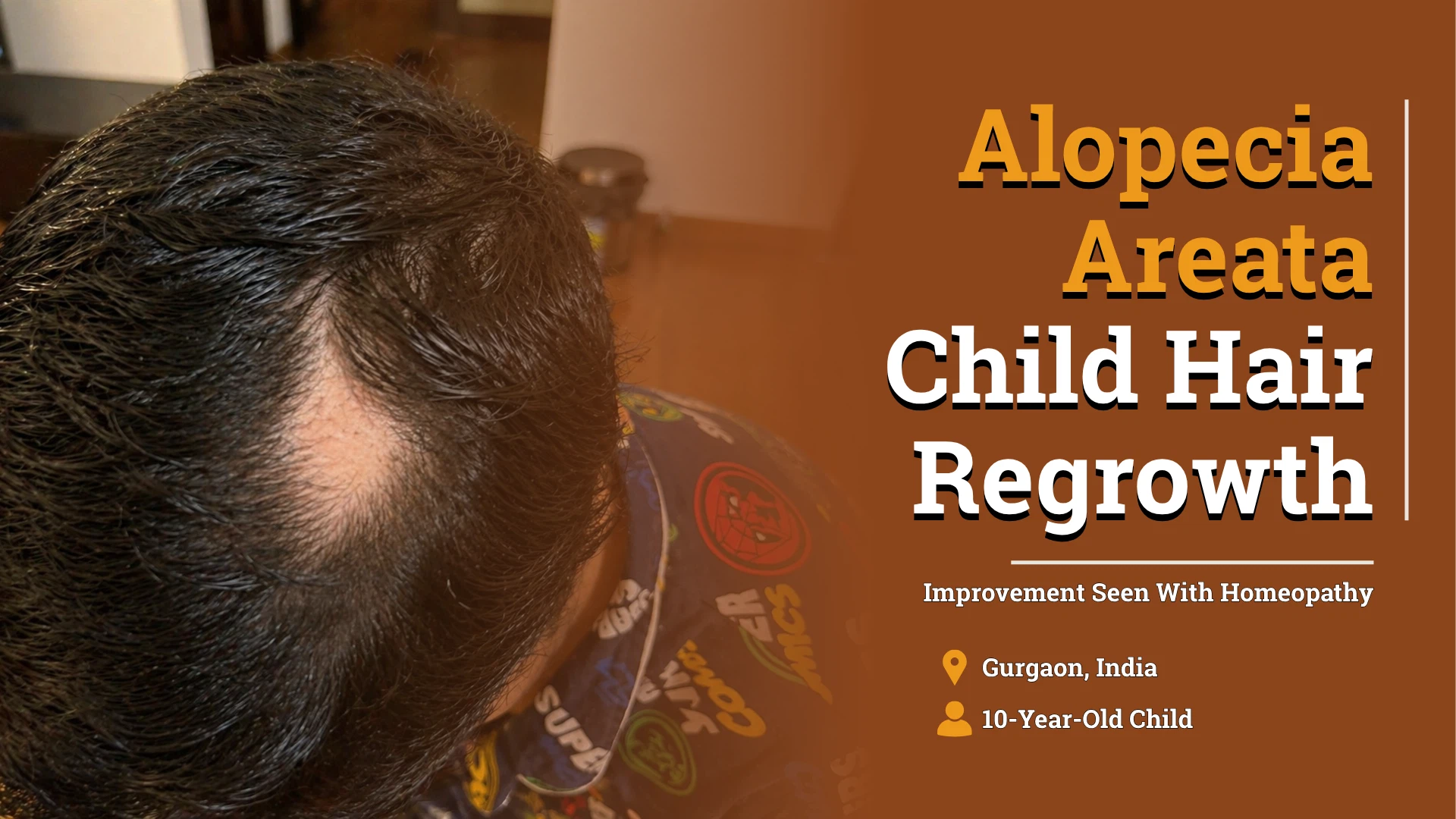
- Single round bald patch (2–3 cm) on the left frontal scalp
- No itching, pain, or redness
- No dandruff or scaling
- Stable condition since onset
- No history of trauma or hair pulling
Medical & Personal Background
- Family history of Vitiligo (mother) indicating autoimmune predisposition
- Past history of asthma, dengue, and typhoid
- Thyroid profile normal (no autoimmune thyroid involvement)
- Previously on conventional treatment (steroids, immunomodulators, minoxidil)
Child’s general profile:
Living with a Chronic Condition? Get Expert Guidance.
Talk to Dr. Rajesh Shah — 40+ years of experience in managing chronic conditions with a personalized, long-term approach.
- Emotionally secure, intelligent, and affectionate
- Good memory and cognitive abilities
- Cravings: salty, spicy, sweet
- Aversion to milk
- Tendency toward obesity
- Low tolerance to heat
Case Analysis & Treatment Approach
The case was evaluated in detail by Dr. Rajesh Shah (MD), considering:
- Nature and extent of alopecia areata
- Strong autoimmune family history
- Child’s physical constitution and tendencies
- Response to previous conventional treatments
Treatment Plan Included:
- Individualized homeopathic prescription based on constitutional analysis
- Remedy prescribed: Lycopodium 30 (based on symptom similarity)
- Focus on immune balance and natural hair regrowth
- Gradual withdrawal of conventional medications
- Regular monitoring and follow-ups
Follow-Up & Progress Timeline
Follow-Up – 17 November 2024
Initial improvement observed. Early hair regrowth started in the bald patch. No new patches appeared.
Follow-Up – 15 January 2025
Continued progress with increased hair density. No itching or dandruff. All topical medications were discontinued.
Follow-Up – 10 April 2025
Around 60% improvement noted. Patch size reduced significantly with healthy new hair growth. Child continued only homeopathic treatment.
Follow-Up – 26 June 2025
Condition remained stable. No new patches or progression. The child was off all medications during this period.
Follow-Up – 4 September 2025
Approximately 80–90% hair regrowth achieved. Patch almost completely covered. No recurrence or new symptoms. Child remained stable and symptom-free.
Outcome
Over the course of treatment, the child experienced:
- Significant hair regrowth (80–90%)
- No development of new patches
- Complete discontinuation of conventional medications
- Stable condition without relapse
- Improved confidence and comfort
Key Learnings
- Alopecia areata in children may be linked to autoimmune background
- Early intervention can support better outcomes
- Individualized treatment plays a key role in managing autoimmune conditions
- Gradual improvement is commonly observed with consistent follow-ups
- Monitoring and timely adjustments are important for long-term stability
Conclusion
This case demonstrates that homeopathy for alopecia areata may support hair regrowth and stability when applied through an individualized and structured approach.
While outcomes can vary from patient to patient, this case highlights the importance of:
- Detailed case evaluation
- Personalized treatment strategies
- Continuous follow-up and monitoring
For parents exploring treatment options for alopecia areata in children, consulting an experienced homeopathic doctor can help in understanding suitable care approaches.