

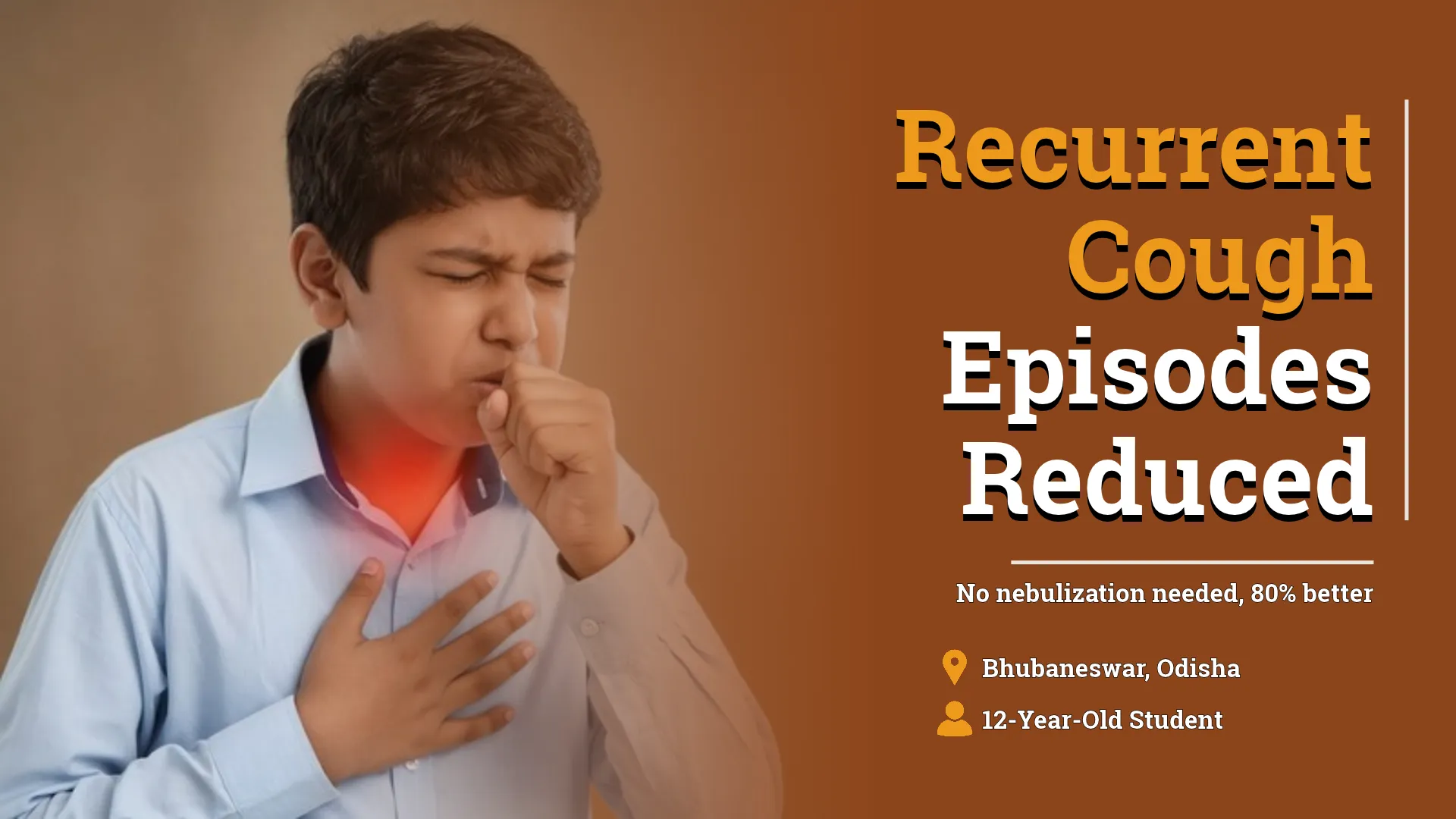
A 12-year-old boy from Odisha had repeated cough, cold, nasal blockage and chest congestion for 3 to 4 years, and in December 2024 he needed nebulization for the first time. His father arranged an online consultation with Life Force in January 2025. By March 2025 he was much better and off nebulization and antibiotics. His nasal symptoms kept reducing, and by July 2026 he was about 80% better with no major episodes.
Table of Contents
- 01. Introduction
- 02. A Closer Look at the Child’s Medical History
- 03. What Is Recurrent Cold and Cough?
- 04. How Did the Child Respond During Homeopathic Treatment?
- 05. Key Takeaways
- 06. Common Symptoms of Cough and Colds in Children
- 07. What Are the Common Causes of Frequent Colds in Children?
- 08. When Recurrent Cold and Cough Became More Severe
- 09. Understanding the Child’s Individual Symptom Pattern
- 10. How Was Homeopathic Treatment Planned?
- 11. Tracking the Child’s Progress Over 20 Months
- 12. What Changed During the Course of Treatment?
- 13. Clinical Status Before and After Follow-up
- 14. Doctor’s Clinical Insight on Recurrent Cold and Cough
- 15. Supportive Care for Stuffy Nose and Nasal Congestion in Children
- 16. What Can Parents Learn From This Case?
- 17. Consult Life Force Homeopathy Clinic for Recurrent Cold and Cough
- 18. Conclusion
Introduction
For nearly four years, recurrent episodes of cold, cough, nasal blockage and chest congestion had been a concern for a 12-year-old boy from Odisha, India. His respiratory complaints became increasingly severe, occasionally causing breathing difficulty, particularly at night while lying down.
In December 2024, a severe episode of chest congestion and breathing difficulty required nebulization for the first time. Concerned about the increasing severity of his son's symptoms, his father explored homeopathy treatment for recurrent cold and cough through an online consultation at Life Force Homeopathy on 24 January 2025.
This case study documents the child's clinical progress during approximately 20 months of individualized homeopathic care and regular follow-ups, with fewer major respiratory episodes and a gradual reduction in nasal complaints.
A Closer Look at the Child’s Medical History
| Clinical Parameter | Patient Details |
| Patient | Master S.S. |
| Patient ID (PIN) | 56745 |
| Age | 12 years |
| Gender | Male |
| Location | Odisha (Orissa), India |
| Primary Complaints | Recurrent cold and cough |
| Duration of Complaints | Approximately 3–4 years |
| Associated Symptoms | Nasal blockage, chest congestion and occasional breathing difficulty |
| Previous Treatment | Nebulization and antibiotics |
| First Consultation | 24 January 2025 |
| Consultation Mode | Online consultation |
| Treatment Centre | Life Force Homeopathy |
| Clinical Follow-up Period | Approximately 20 months |
| Reported Improvement | Approximately 80% in July 2026 |
| Latest Clinical Status | Reported asymptomatic in September 2026 |
What Is Recurrent Cold and Cough?
Recurrent cold and cough refers to repeated episodes of respiratory symptoms, such as coughing, sneezing, runny nose, nasal blockage and chest congestion, that return over time.
Although occasional colds are common in children, frequent, prolonged or increasingly severe respiratory complaints may be associated with repeated viral infections, allergies, asthma or other underlying respiratory conditions.
Understanding the causes of frequent colds, individual symptom patterns, and associated respiratory complaints is important when determining appropriate medical management.
In this case, the child experienced recurrent respiratory complaints for approximately 3–4 years, accompanied by nasal blockage, chest congestion, and occasional breathing difficulty.
How Did the Child Respond During Homeopathic Treatment?
During individualized homeopathic care and regular clinical follow-ups, the child experienced a gradual reduction in the frequency and intensity of respiratory complaints, including recurrent cough, chest congestion and nasal blockage.
Approximately 80% overall improvement was reported in July 2026. At the latest follow-up in September 2026, the child was reported to be asymptomatic following one weather-related episode.
These observations represent an individual clinical outcome and do not establish treatment efficacy.
Key Takeaways
- The child had a history of recurrent cold and cough for approximately 3–4 years.
- Respiratory complaints became increasingly severe during the two months preceding consultation.
- A severe episode of chest congestion and breathing difficulty required nebulization in December 2024.
- Individualized homeopathic care began in January 2025.
- The frequency and intensity of respiratory and nasal complaints gradually reduced during follow-up.
- Approximately 80% overall improvement was reported in July 2026.
- No further major episodes requiring nebulization were documented during the later follow-up period.
- The child was reported to be asymptomatic at the September 2026 review.
Common Symptoms of Cough and Colds in Children
The symptoms of cough and colds may vary depending on the underlying condition and severity of the episode.
Common symptoms include:
- Frequent sneezing and runny nose
- Persistent or recurrent nasal blockage
- Repeated episodes of cough
- Chest congestion
- Difficulty clearing accumulated mucus
- Throat irritation
- Disturbed sleep due to respiratory discomfort
- Fever during certain respiratory infections
Children experiencing breathing difficulty, wheezing, or severe chest congestion require prompt medical evaluation.
What Are the Common Causes of Frequent Colds in Children?
Several factors may contribute to recurrent cold-like symptoms and cough in children, including:
- Repeated exposure to respiratory viruses
- Allergic rhinitis
- Exposure to dust, smoke and environmental irritants
- Seasonal and weather-related triggers
- Asthma or other underlying respiratory conditions
- Frequent exposure to infections in schools and crowded environments
Identifying the underlying cause becomes particularly important when respiratory symptoms increase in frequency, duration or severity.
When Recurrent Cold and Cough Became More Severe
Before consulting Life Force Homeopathy, the child had experienced recurrent respiratory complaints for approximately 3–4 years.
His episodes were predominantly characterized by nasal blockage, usually without significant nasal discharge. During coughing episodes, he experienced extensive chest congestion and difficulty clearing accumulated mucus.
His major presenting complaints included:
- Recurrent episodes of cold and cough
- Frequent nasal blockage
- Significant chest congestion
- Difficulty expectorating mucus
- Occasional breathing difficulty during severe episodes
- Increased respiratory discomfort at night
- Aggravation of breathing discomfort while lying down
Although the child had experienced similar episodes in previous years, his respiratory complaints became noticeably more severe during the two months preceding consultation.
On 29 December 2024, he experienced a particularly severe episode of chest congestion and breathing difficulty, for which nebulization was prescribed.
According to his clinical history, this was the first time he had required nebulization.
The increasing severity of his respiratory complaints prompted his father to seek further medical management and explore cough and cold homeopathy treatment at Life Force Homeopathy.
Understanding the Child’s Individual Symptom Pattern
Dr. Rajesh Shah conducted a detailed assessment of the child's medical history, respiratory complaints, general health and family history before prescribing individualized homeopathy treatment.
The clinical assessment focused on understanding the child's overall symptom pattern, including the frequency, duration and severity of respiratory episodes.
| Assessment Parameter | Clinical Observations |
| Respiratory History | Recurrent cold and cough for approximately 3–4 years |
| Nasal Complaints | Frequent nasal blockage, usually without significant nasal discharge |
| Chest Complaints | Chest congestion with difficulty clearing mucus |
| Breathing Difficulty | Occasional, particularly during severe episodes |
| Aggravating Factors | Nighttime and lying down |
| Dietary Preference | Mixed diet |
| Appetite | Average |
| Thirst | Average |
| Bowel Movements | Satisfactory |
| Sleep | Generally sound |
| Thermal Preference | Chilly |
| Family History | Mother experienced recurrent cold and cough |
| Previous Respiratory Treatment | Nebulization and antibiotics |
The child's family history was also considered during the assessment. His mother experienced similar recurrent respiratory complaints, although this observation alone does not establish a hereditary cause.
How Was Homeopathic Treatment Planned?
After reviewing the child's medical history and individual symptom pattern, Dr. Rajesh Shah prescribed individualized homeopathic medicines along with additional formulations described by the treating doctor as research-based molecules.
The homeopathic treatment for frequent cold and recurrent cough was planned around the child's presenting symptoms, general characteristics and previous respiratory history.
The clinical approach included:
- Individualized selection of homeopathic medicines.
- Assessment of recurrent nasal and respiratory symptoms.
- Monitoring the frequency and duration of cold and cough episodes.
- Regular evaluation of chest congestion and breathing discomfort.
- Monitoring changes in nasal blockage and discharge.
- Periodic assessment of the child's general health and clinical progress.
The follow-ups focused not only on immediate respiratory complaints but also on documenting changes in the overall pattern of recurring episodes.
Specific medicine names and dosages were not disclosed in the original case study.
Evidence supporting homeopathy for frequent colds and recurrent respiratory complaints remains limited. Homeopathic care should not replace medically necessary respiratory treatment or prescribed medicines.
Tracking the Child’s Progress Over 20 Months
Regular clinical follow-ups helped document changes in the child's respiratory complaints, nasal symptoms and general well-being.
| Follow-up Date | Clinical Progress |
| 22 March 2025 | The child was doing well, with no major episodes of cold or cough. Nebulization and antibiotics were reported to have been stopped. A mild morning runny nose lasted two days and improved as the day progressed. |
| 17 May 2025 | The condition remained stable, with no significant complaints of runny nose, fever or breathlessness. |
| 26 August 2025 | Approximately two episodes occurred over 12 weeks, each lasting around 10–15 days, at intervals of approximately 1.5 months. Symptoms mainly included runny nose and nasal blockage. No fever, cough or asthma-like complaints were reported. His general health remained good. |
| 22 October 2025 | Daily morning runny nose was reported, with symptoms continuing throughout the day for approximately 12 days. No major respiratory episode was documented. |
| 17 December 2025 | Nasal symptoms had further reduced. A runny nose was reported mainly during the morning. |
| 11 February 2026 | The child experienced daily watery nasal discharge, mainly after waking, for approximately 20 days. No nasal blockage, fever, cough or breathing difficulty was reported. |
| 10 April 2026 | The condition remained stable without major respiratory episodes. Mild morning runny nose and nasal blockage lasted approximately 30 minutes to one hour daily. |
| 4 June 2026 | The child remained stable. The frequency of morning nasal blockage and runny nose had reduced compared with the previous follow-up. |
| 31 July 2026 | Approximately 80% overall improvement was reported. No major respiratory episodes occurred, and the frequency and intensity of nasal symptoms had further reduced. |
| September 2026 | The child was reported to be asymptomatic following one weather-related episode. |
What Changed During the Course of Treatment?
Over approximately 20 months of clinical follow-up, the child experienced a gradual reduction in the frequency and intensity of his respiratory and nasal complaints.
Although intermittent nasal symptoms continued during several follow-ups, major episodes of cough, chest congestion and breathing difficulty were not documented during the later reviews.
Clinical Status Before and After Follow-up
| Clinical Parameter | Before Treatment | Outcome During Follow-up |
| Recurrent cold | Frequent episodes for 3–4 years | Reduced frequency of episodes |
| Recurrent cough | Frequent cough accompanied by chest congestion | No major cough episodes documented during later reviews |
| Nasal blockage | Frequent and troublesome | Reduced frequency and intensity |
| Runny nose | Usually minimal nasal discharge during earlier episodes | Intermittent morning nasal discharge that gradually reduced |
| Chest congestion | Significant during severe episodes | No further major episodes documented during later follow-ups |
| Difficulty clearing mucus | Present during respiratory episodes | Not reported during later reviews |
| Breathing difficulty | Occasional during severe episodes | No further major episodes documented during later reviews |
| Nebulization | Required in December 2024 | No further requirement documented during follow-up |
| Overall clinical status | Recurrent and increasingly severe complaints | Approximately 80% improvement reported in July 2026 |
| Latest clinical status | Symptomatic | Reported asymptomatic in September 2026 |
By July 2026, approximately 80% overall improvement was reported. At the September 2026 review, the child was reported to be asymptomatic following one weather-related episode.
These findings describe the child's individual clinical progress. They do not establish that homeopathy caused the improvement or prevented future respiratory episodes.
Doctor’s Clinical Insight on Recurrent Cold and Cough
The child's medical history indicated a longstanding pattern of recurrent upper and lower respiratory symptoms, with increasing severity during the months preceding the first consultation.
Of particular clinical significance were:
- Persistent nasal blockage and recurrent respiratory complaints.
- Chest congestion with difficulty expectorating mucus.
- Occasional breathing difficulty during severe episodes.
- Increased respiratory discomfort at night and while lying down.
- The first documented requirement for nebulization in December 2024.
The recent need for nebulization indicated an increase in symptom severity compared with the child's previous episodes.
The subsequent clinical follow-ups therefore focused on monitoring the frequency, duration and intensity of recurrent respiratory complaints, along with changes in the child's general health.
This case highlights the importance of assessing the overall pattern of recurrent respiratory symptoms rather than focusing only on individual episodes.
Supportive Care for Stuffy Nose and Nasal Congestion in Children
Parents searching for homeopathic remedies for a stuffy nose (nasal congestion) should first understand the underlying cause of their child's recurring nasal complaints.
General supportive measures may include:
- Maintaining adequate hydration.
- Using age-appropriate saline nasal sprays or drops.
- Reducing exposure to dust, smoke and environmental irritants.
- Encouraging adequate rest and sleep.
- Maintaining good hand hygiene.
- Monitoring persistent or worsening respiratory symptoms.
- Seeking medical evaluation when nasal congestion repeatedly returns.
These are general supportive recommendations and were not specifically documented as part of this patient's treatment plan.
Children experiencing breathing difficulty, rapid breathing, bluish lips or severe respiratory distress require urgent medical attention.
Living with Asthmatic Bronchitis ?
Receive a personalized treatment plan from our experienced homeopathic doctors. Trusted by over 100,000+ patients across 180+ countries for safe, natural and long term management of chronic diseases.
What Can Parents Learn From This Case?
- Recurrent cold and cough should not be ignored when episodes become increasingly severe.
- Persistent nasal symptoms may require assessment for allergies or other underlying conditions.
- Breathing difficulty and severe chest congestion require timely medical attention.
- Monitoring the frequency, duration and intensity of respiratory episodes helps assess clinical progress.
- Nasal symptoms may persist even after more severe respiratory complaints subside.
- Regular clinical follow-ups provide useful information about changes in symptom patterns.
- Individual treatment outcomes may vary from one child to another.
Consult Life Force Homeopathy Clinic for Recurrent Cold and Cough
Recurrent cold, cough and nasal congestion can affect a child's daily activities and overall well-being. Understanding the underlying cause and individual symptom pattern is important when exploring available treatment options.
Parents exploring homeopathy for frequent colds, recurrent cough or persistent nasal congestion can consult the medical team at Life Force Homeopathy for an individualized assessment.
Established in 1985, Life Force Homeopathy has over four decades of experience in providing individualized homeopathic care for chronic and recurring conditions, with in-clinic and online consultation options.
Conclusion
This case study documents the clinical journey of a 12-year-old boy from Odisha who had experienced recurrent cold and cough, nasal blockage and chest congestion for approximately 3–4 years.
During individualized homeopathy treatment for recurrent cold and cough and approximately 20 months of clinical follow-up, the child experienced fewer major respiratory episodes and a gradual reduction in nasal symptoms.
Approximately 80% overall improvement was reported in July 2026, with no further major episodes requiring nebulization documented during the later follow-up period. At the September 2026 review, the child was reported to be asymptomatic.
The case highlights the importance of individualized clinical assessment, regular follow-ups, appropriate medical care and realistic treatment expectations when managing recurrent respiratory complaints in children.
Medical Disclaimer: This case study describes the clinical observations of an individual patient. Individual responses may vary, and the reported outcome does not establish treatment efficacy. Homeopathy should not replace prescribed respiratory medicines, nebulization, or necessary pediatric medical care. Children experiencing breathing difficulty should receive prompt medical attention