


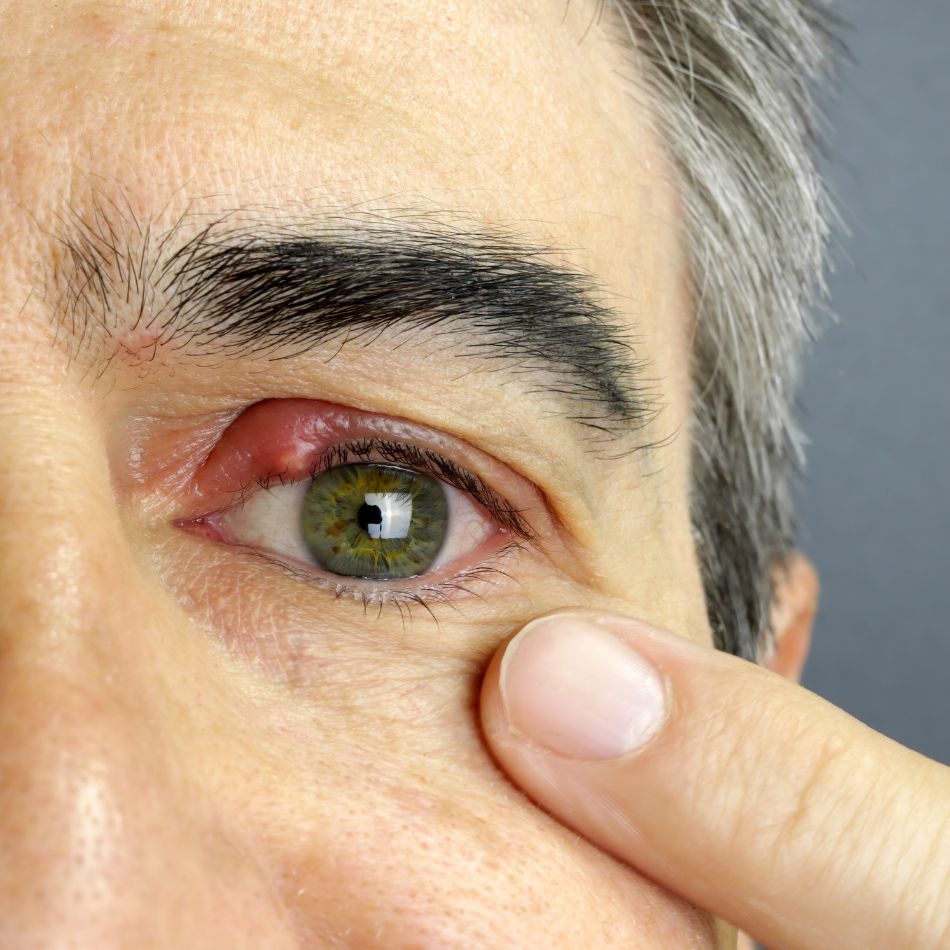
Dr. Shah's Insights on Chalazion
Dr. Rajesh Shah has over four decades of clinical experience managing chalazion, including recurrent styes and chronic eyelid gland blockage. His approach emphasizes reducing gland obstruction, controlling inflammation, and addressing the tendency toward recurrent chalazions rather than treating only the visible swelling.
Based on long-term follow-up of patients worldwide, homeopathy may help shrink chalazia naturally and reduce recurrence, offering a safe, non-invasive option when surgery is not urgently required

180+
Countries

550+
Chalazion Patients Treated

30+
Team of Expert Doctors

40+
Years of Experience

100% Satisfaction
If you are not satisfied after 6 weeks of treatment, you can return the unused medicines for a refund of the services under our policy. Our team is available to guide you through the refund process. No cure is assured within six weeks. For full terms, you can visit our Detailed Refund Policy page.
What is Chalazion?
A chalazion is a slowly developing, usually painless swelling caused by blockage of a Meibomian (oil) gland in the eyelid. These glands help lubricate the eye surface. When the duct becomes blocked, oil accumulates and forms a small nodule on the eyelid, commonly on the upper or lower eyelids.
A chalazion may occur after a stye and can appear as:
● a chalazion inside the eyelid
● chalazion bumps on the upper eyelid
● or, in some cases, a chalazion in both eyes
While some chalazia resolve on their own, others persist for months or return repeatedly, leading to chronic chalazion.
Understanding Chalazion
Types of Chalazion

Internal Chalazion
Develops due to the blockage of a Meibomian gland inside the eyelid.
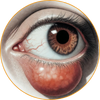
External Chalazion
Develops on the outer eyelid surface when a minor oil gland gets blocked.
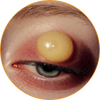
Single Chalazion
A solitary, firm, painless nodule on either the upper or lower eyelid.

Recurrent Chalazion
A chalazion that keeps coming back due to an underlying tendency or repeated styes. They may reappear even after a surgery.

Our Expertise
• With over 40 years of clinical experience, Dr Rajesh Shah and the Life Force medical team have managed a wide range of patients with chalazion from India and more than 180 countries. This includes single and multiple chalazia, large and small nodules, recurrent chalazion, chronic chalazion, long-standing swellings, and chalazia linked to repeated styes. Patients of all ages are treated, including those with fresh eyelid swellings and long-standing nodules.
• Early-stage chalazia, smaller nodules, and cases associated with recent styes generally respond more quickly to chalazion treatment without surgery. In contrast, long-standing, hardened, multiple, or frequently recurring chalazia may show slower yet steady improvement. Cases influenced by low immunity, chronic eyelid inflammation, or repeated oil gland blockages may require extended, carefully monitored care.
• Every chalazion case presents a unique pattern of gland blockage, recurrence tendency, and healing capacity, leading to varied outcomes. A detailed evaluation of swelling size and duration, history of styes, eyelid hygiene, lifestyle habits, and immune strength helps guide the most personalized and effective homeopathic treatment for chalazion and a long-term management plan.
Homeopathy for Chalazion
Homeopathy for chalazion aims to reduce eyelid swelling naturally, improve gland drainage, and prevent recurrence. For patients seeking the best treatment for chalazion without surgery, this individualized approach offers safe, long-term support for eyelid health under medical supervision.
Case Studies
Chalazion
An IT Professional’s Experience with Homeopathic Treatment of Recurrent Chalazion
A 32-year-old female patient (Patient ID: 28098) was consulted at the Life Force Homeopathy on 28/2/2016 with complaints of chalazion. She had been suffering from…
Chalazion
A patient from Gujarat recovers completely from multiple Chalazion without surgery
A chalazion is generally a painless, slowly growing nodule on the eyelid formed by inflammation of the meibomian glands. It…
Chalazion
Teen with Frequent Chalazion Shows Remarkable Homeopathic Recovery
Ms. P. A, a 13yearold girl, bearing (Patient identification number)- 55962 visited our Borivali branch clinic on 23rd October 2024 with complaints of recurrent chalazion over her right eyelids since July 2024. She had two small, hard, painless lumps one on the upper eyelid and one on the lower eyelid each about 2–3 mm in size. Along with the lumps, there was puffiness and occasional watery discharge from the right eye. Despite the visible swelling, she did not experience any pain or redness. Along with this she also had a history of Frequent colds and Acne. Ms. P.A. is a student studying in the 7th standard at Cambridge School, Mira Road. She belongs to an educated and financially stable familyher father is a financial consultant, and her mother is a chartered accountant. Constitutionally, she is tall and lean, and could not tolerate heat much. She gets around 7 hours of sound sleep and occasionally talks in her sleep, often about her daily routine. She has a marked aversion to vegetables and a strong craving for chocolates. Emotionally, she tends to get easily irritable, especially when things don’t go her way. She dislikes being commanded. Frustration and abruptness are often noticed in her responses. Despite her outward confidence, she is quite sensitive. She easily cries if someone raises their voice, showing a deep emotional vulnerability. She also has a fear of heights, which reflects an inner anxiety. Her behavior includes absentmindedness, especially during routine tasks, and sleeptalking related to daily events. She often speaks about her routine or school matters during sleep. Overall, her personality is a mix of boldness and emotional sensitivity and confidence. After thorough study of the case Dr Rajesh Shah prescribed Her which showed wonderful results in a short span of time. Follow Up At the first follow up on 18th December 2024, she reported that the swelling of the right lower eyelid had reduced and the size of the lump was slightly smaller, with no styes or watery discharge. By the second followup on 14th February 2025 There was further improvementthe size of the lower eyelid lump had reduced further. A small, painless stye had appeared on the upper eyelid 810 days prior, but puffiness and watering had subsided. In the third followup on 16th April 2025 Her condition remained stable with no new improvement in the chalazion. By the latest follow-up on 12th June 2025 Her condition had significantly improvedapproximately 90% recovery was noted. There were no new styes and the chalazion had reduced to a pin-point size, showing excellent progress. Conclusion The case showed significant and sustained improvement in her recurrent chalazion with the help of individualized homeopathic treatment. Over a span of a few months, the size of the lump reduced drastically, puffiness and watering subsided, and no new styes were observed. The case highlights the efficacy of homeopathy in managing chronic, recurring eyelid conditions gently and effectively, without the need for invasive procedures.
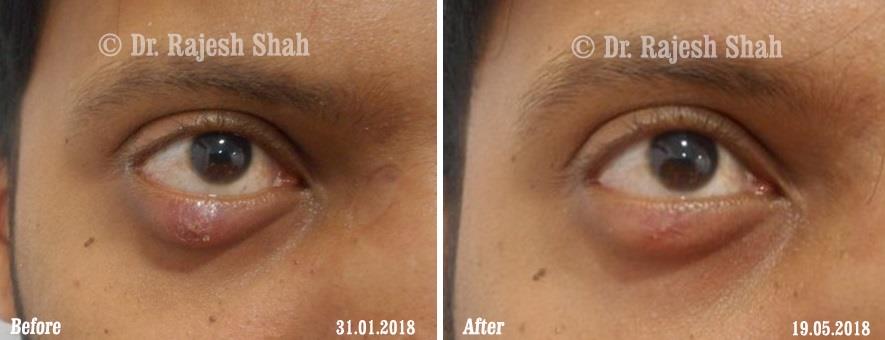
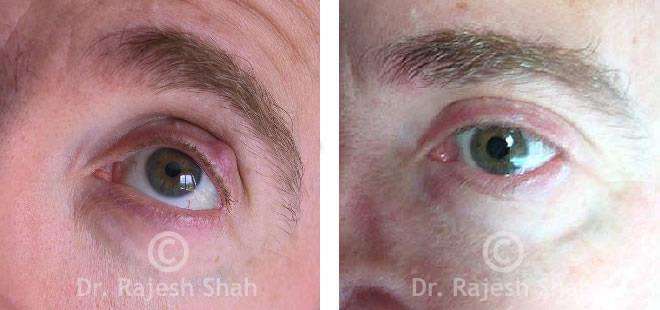
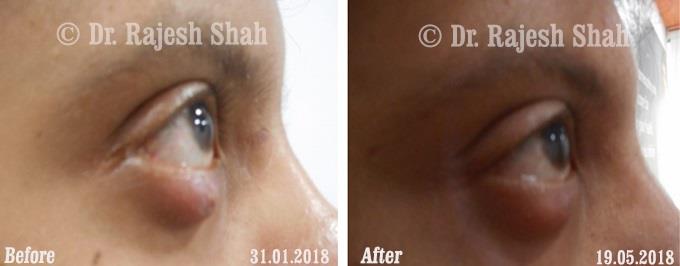
Real Case Outcomes
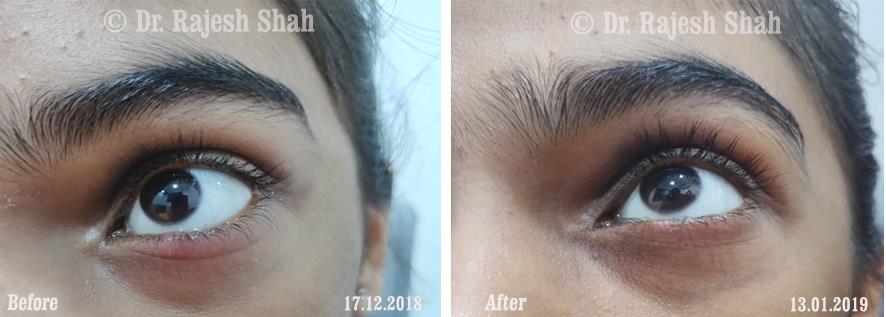
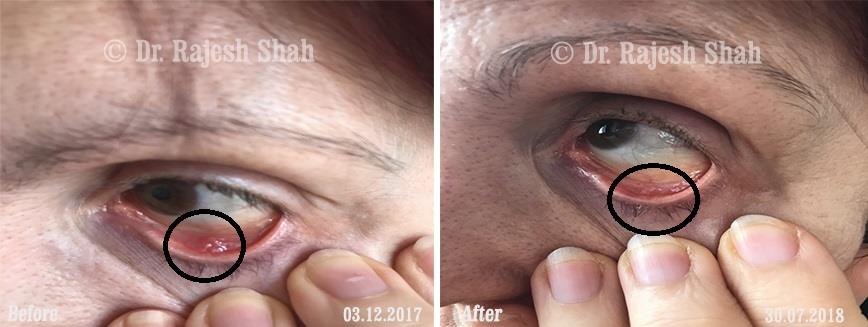
-
Alopecia Areata
-
Ankylosing Spondylitis
-
Asthma
-
Child Asthma
-
Eczema
-
Frequent Colds
-
Hair Fall
-
Hepatitis C
-
Irritable Bowel Syndrome (IBS)
-
Lichen Planus
-
Psoriasis
-
Trigeminal Neuralgia
-
Ulcerative Colitis
-
Underactive Thyroid
-
Urticaria
-
Vitiligo
Your Curability Test Guide
Learn about the curability test and begin by selecting your condition from the left

STEP 01
Select your condition

STEP 02
Submit the Form

STEP 03
Get report Instantly
FAQ on Chalazion
Expert Answers to Common Questions
A chalazion is a slow-growing, usually painless, cyst-like swelling on the eyelid caused by blockage of a meibomian (oil) gland. In many cases, it may develop following a stye.
A stye (hordeolum) is an acute, painful infection that usually resolves within a few days. A chalazion is a chronic, noninfectious swelling that develops due to a blocked gland and may persist for weeks or months.
Recurrent chalazion may be related to factors such as chronic eyelid inflammation, oily skin, blepharitis, hormonal influences, or individual susceptibility to gland blockage.
Yes, in many cases, a chalazion can be managed without surgery. Conservative measures and medical treatment are often effective, especially in early or moderate cases.
Homeopathic treatment is individualized and may help reduce inflammation, discomfort, and the tendency for cyst formation. Some patients report a gradual reduction in size and recurrence with appropriate homeopathic care.
The exact biological mechanism of homeopathic medicines is not fully understood. However, clinical experience suggests that some individuals may experience resolution of single or multiple chalazia with homeopathic treatment.
Clinical observations indicate that homeopathic treatment may help reduce the frequency of recurrence in some individuals, though results vary from person to person.
Treatment duration depends on the size, number, and duration of chalazia. A single chalazion that is present for a short duration may improve within 6–10 weeks, whereas multiple or recurrent chalazia may require several months of treatment.
A chalazion usually presents as a painless or mildly tender swelling of the eyelid. In some cases, there may be eyelid heaviness, redness, mild discomfort, or associated conjunctival irritation. Secondary infection is uncommon.
Yes, chalazia can occur on either the upper or lower eyelid and may affect one or both eyes.
No. While chalazion is a common cause of a painless eyelid lump, other possibilities include a stye, blepharitis-related nodule, milia, sebaceous cyst, or xanthelasma. Medical evaluation is important for accurate diagnosis.
Yes, chalazia can occur in both eyes at the same time, especially in individuals prone to eyelid gland blockage.
Surgery may be considered if a chalazion is large, persistent, affects vision, or does not respond to conservative or medical treatment.
Yes, recurrence is possible even after surgical removal, particularly in individuals with underlying risk factors.
Maintaining good eyelid hygiene, managing underlying eyelid inflammation, avoiding eye rubbing, and addressing individual susceptibility may help reduce recurrence. Some patients choose homeopathic treatment as supportive care.
When prescribed by a qualified practitioner, homeopathic medicines are generally considered safe for children and are used in highly diluted doses. Medical supervision is recommended, especially in young children and during pregnancy.
Related Diseases
Ask Dr. Shah
Dr. Rajesh Shah, MD (Homeopathy), is a renowned Mumbai-based homeopath, recognized for treating patients from 180 countries, including celebrities and underprivileged individuals.
Contact Our Nearest Clinic