

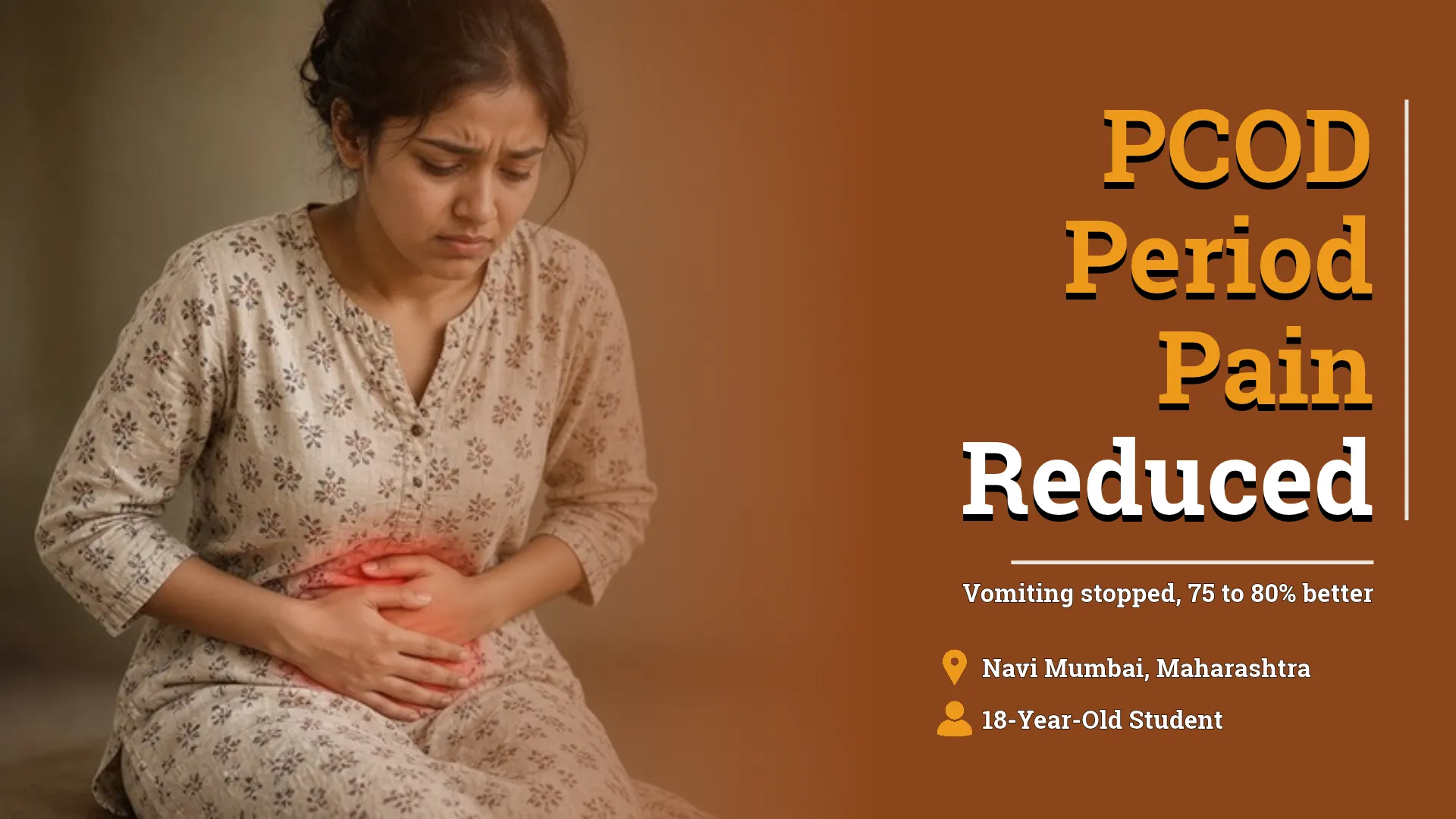
An 18-year-old student from Navi Mumbai had PCOD with irregular and very painful periods, along with nausea and vomiting every month. She started individualized homeopathic treatment at Life Force in August 2025. Her period pain slowly reduced, the vomiting stopped and her cycles became more regular. By March 2026 she was about 75 to 80% better, her acne and hair fall also improved, and she no longer needed conventional medicines every month.
Table of Contents
Introduction
For many young women, periods are not just a monthly inconvenience. When cycles are irregular and the pain is severe, they can disturb studies, routines and confidence. This case study is about an 18-year-old student from Navi Mumbai (Patient ID 58243) who had irregular and very painful periods linked to PCOD (Polycystic Ovarian Disease).
She visited Life Force in August 2025 and started individualized homeopathic treatment under Dr. Rajesh Shah. She had searched for the best homeopathic treatment for irregular periods in Vashi, hoping for a safe and long-term solution. With regular treatment and follow-ups, she slowly began to notice improvement in her symptoms.
Patient Case Details
| Parameter | Details |
|---|---|
| Patient ID | 58243 |
| Age | 18 Years |
| Gender | Female |
| Location | Navi Mumbai |
| Profession | Student |
| Condition | PCOD (Polycystic Ovarian Disease) |
| Duration | 2 years |
| First Consultation | 12 August 2025 |
Understanding PCOD, PMOS and PCOS
Polycystic Ovarian Disease (PCOD) is a common hormonal condition that affects many young girls and women. It happens when the body's hormones become imbalanced, which can affect how the ovaries work. As a result, periods may become irregular, late or sometimes missed.
In PCOD, the ovaries may develop several small fluid-filled sacs called cysts. Many women with PCOD also have painful periods, acne, weight gain or extra hair growth. With proper treatment and healthy lifestyle changes, the symptoms can often be managed well.
PMOS is a common hormonal and metabolic condition that affects people with ovaries, mainly women of reproductive age. It involves a hormone imbalance, especially higher levels of androgens (male hormones), and problems with how the body handles insulin. It can cause symptoms such as:
- Irregular periods: cycles may be late, missed or come at uneven gaps
- Painful periods: some women have severe abdominal cramps during periods
- Acne or oily skin: hormone changes can cause frequent pimples and oily skin
- Weight gain: some women gain weight or find it hard to lose weight
- Extra facial or body hair: more hair growth on the face, chest or other parts of the body
Symptoms and Complaints
The patient came with:
- Painful periods with abdominal cramps
- Severe nausea and frequent vomiting
- Menstrual flow that changed from month to month, sometimes scanty and sometimes moderate
- Acne on the face, especially near the eyebrows
- Sticky white discharge for 2 to 3 days after periods
- Itching linked to the discharge
Every month, the first two days of her period were very hard. The cramps were so severe that she found it difficult to do her daily activities. The nausea and vomiting sometimes happened even after drinking a small amount of water.
Case-Taking and Individualized Approach
Apart from her menstrual complaints, she had also had constipation since childhood. She often felt that her bowels were not fully cleared after passing stools, and then she felt heaviness and bloating in her abdomen. She was not taking any regular medicine for constipation.
She followed a mixed diet and had a normal appetite. She liked sweets and sour foods but did not like chicken. She drank around 2 to 3 litres of water every day. She was also chilly by nature and preferred a warm environment.
Individualized Treatment Approach
The treatment was planned around her own symptoms and overall health. Dr. Rajesh Shah prescribed personalized homeopathic medicines. Regular follow-ups were held to check her progress, and the treatment was adjusted when needed based on how her symptoms and her response to the medicines changed.
PCOD Treatment Progress Timeline
1st Follow-Up: 23 September 2025
She had about 15 to 20% improvement in her menstrual complaints. Her last period was on 15 September 2025, with normal flow lasting 4 to 5 days.
2nd Follow-Up: 24 November 2025
About 35 to 40% improvement was seen. Her last period was on 6 November 2025, with a very scanty, blackish flow for one day. Period pain was still there but better than before.
3rd Follow-Up: 16 December 2025
By the third follow-up, she had about 50 to 65% improvement in her menstrual complaints. She had significant relief from period pain, and she had no episodes of vomiting during her cycle.
4th Follow-Up: 10 March 2026
She had about 75 to 80% improvement, with less period pain during her cycle.
Outcome and Improvements
- Less period pain
- Complete relief from the repeated vomiting linked to periods
- More regular menstrual cycles
- Better control of her periods than before
She also noticed improvement in her acne and hair fall, and her overall health and well-being got better.
Living with PCOD ?
Receive a personalized treatment plan from our experienced homeopathic doctors. Trusted by over 100,000+ patients across 180+ countries for safe, natural and long term management of chronic diseases.
Conclusion
With regular homeopathic treatment and timely follow-ups, the patient slowly started feeling better. Over the course of treatment at Life Force Homeopathy, her menstrual cycle became more regular, and the pain during her periods reduced a lot. The nausea and vomiting also improved, which made her periods much more comfortable than before.
As her symptoms reduced, she no longer had to depend on conventional medicines every month. The gradual improvement in her menstrual health helped her carry out her daily activities with more comfort and confidence. Results can be different for each person, and they depend on the person's overall health and how regularly treatment and follow-ups are kept.