


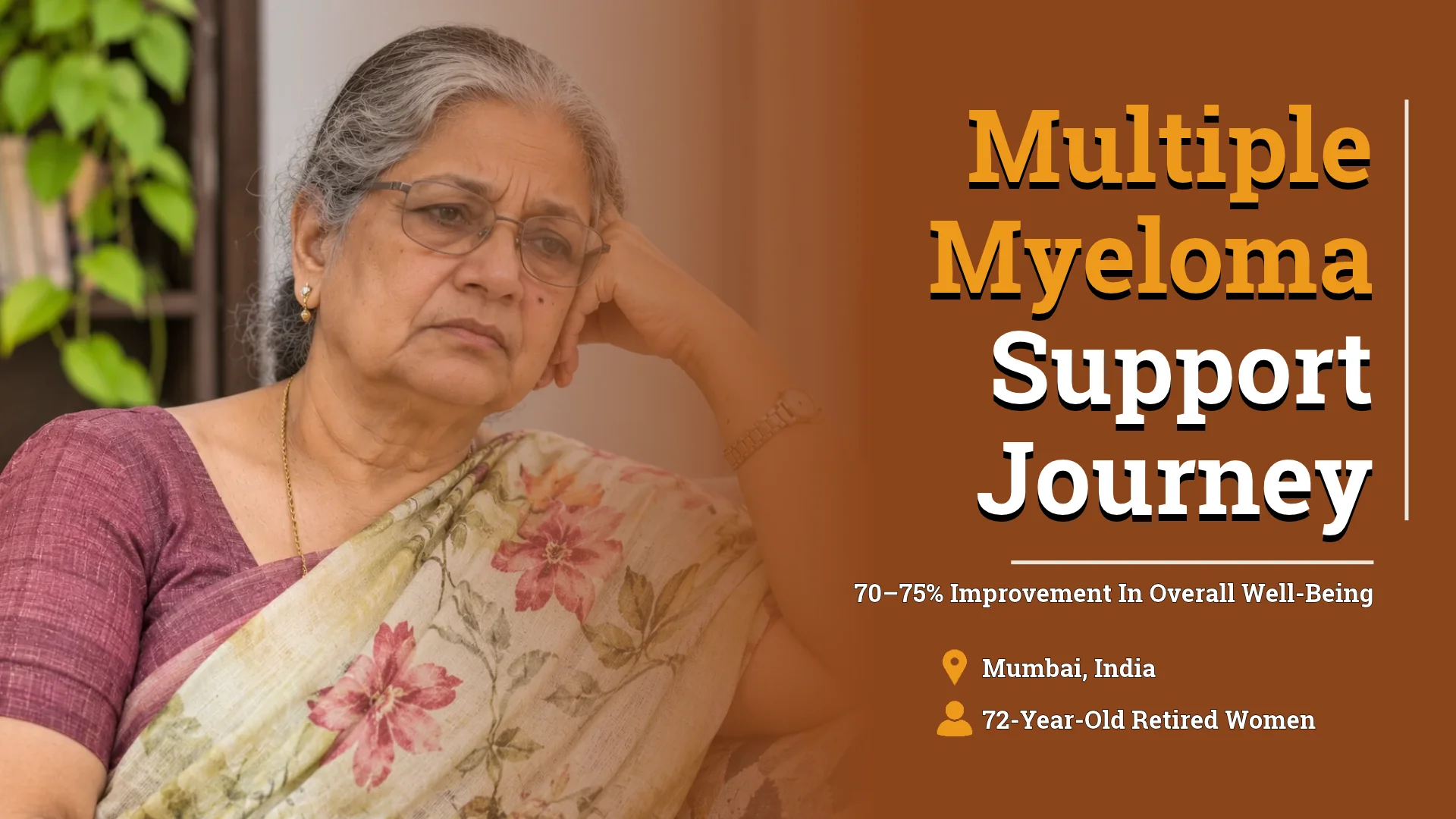
A 71-year-old retired nurse was being treated for multiple myeloma with chemotherapy. It left her with poor appetite, loss of taste, weakness, dry mouth, constipation, hair fall and broken sleep. She started homeopathic care at Life Force in August 2024, alongside her cancer treatment. Over about 10 months her appetite and taste returned, her energy and sleep improved, and hair fall, dry mouth and constipation eased. She felt about 70 to 75% better overall.
Table of Contents
- 01. Introduction
- 02. Patient Case Details
- 03. Understanding Chemotherapy Side Effects in Multiple Myeloma
- 04. Chemotherapy Side Effects Experienced by the Patient
- 05. Associated Medical Conditions
- 06. Medical & Personal Background
- 07. Occupational & Family Background
- 08. Psychological Profile
- 09. Individual Case Assessment
- 10. Case Analysis & Treatment Approach
- 11. Follow-Up & Progress Timeline
- 12. Result Summary
- 13. Doctor's Insight
- 14. Conclusion
Introduction
A 71-year-old woman undergoing chemotherapy for Multiple Myeloma sought homeopathic treatment to help manage the side effects of chemotherapy. During her cancer treatment, she experienced several chemotherapy-related side effects, including loss of appetite, loss of taste, weakness, dry mouth, constipation, hair fall, and disturbed sleep, which significantly affected her daily quality of life.
She consulted Life Force Homeopathy, Borivali Branch, on 18 August 2024 under the supervision of Dr. Rajesh Shah, MD (Hom.). Along with her ongoing conventional cancer treatment, she received individualized homeopathic care and regular follow-ups. Over the course of treatment, she experienced gradual improvement in several cancer treatment side effects, along with better overall well-being and quality of life.
Patient Case Details
| Parameter | Details |
|---|---|
| Patient ID | 55340 |
| Age | 71 years |
| Gender | Female |
| First Consultation | 18 August 2024 |
| Branch | Life Force Homeopathy, Borivali |
| Diagnosis | Multiple Myeloma |
| Diagnosis Date | June 2024 |
| Ongoing Treatment | Chemotherapy |
| Main Complaints | Loss of appetite, loss of taste, weakness, dry mouth, constipation, and hair fall following chemotherapy |
Understanding Chemotherapy Side Effects in Multiple Myeloma
Multiple Myeloma is a cancer of plasma cells that commonly requires treatment with chemotherapy, targeted therapy, immunotherapy, or stem cell transplantation.
While chemotherapy plays an important role in treating Multiple Myeloma, many patients experience cancer treatment side effects that can affect their nutrition, physical strength, and quality of life. Common side effects of chemotherapy include:
- Loss of appetite
- Altered or loss of taste
- Dry mouth
- Constipation
- Fatigue and weakness
- Hair loss
- Weight loss
- Sleep disturbances
Proper management of chemotherapy side effects focuses on relieving these symptoms, improving comfort, and supporting patients throughout their cancer treatment.
Chemotherapy Side Effects Experienced by the Patient
At the time of consultation, the patient presented with multiple chemotherapy-related side effects, including:
- Loss of appetite
- Loss of taste
- Generalized weakness
- Dry mouth
- Constipation
- Hair fall
These symptoms developed after starting chemotherapy for Multiple Myeloma and were significantly affecting her nutrition, daily activities, and overall quality of life.
Associated Medical Conditions
The patient was a known case of hypertension since 2014 and had a strong family history of hypertension on both the maternal and paternal sides.
Medical & Personal Background
Her appetite was reduced, although she craved chaat and dahi vada. Thirst was markedly reduced, and she had no natural urge to pass stools, resulting in constipation. Perspiration was increased mainly over the neck.
Her sleep was disturbed. She usually went to bed around 11 PM but woke up between 3 and 4 AM and was unable to fall asleep again. This sleep pattern had continued since her working years in the hospital. Her dreams reflected routine day-to-day events and were non-repetitive.
She attained menopause naturally at the age of 54 years, without any significant complaints.
Occupational & Family Background
The patient worked as a Staff Nurse at Nair Hospital and retired in 2014. She lives with her husband, son, and daughter-in-law and shares cordial relationships with all family members.
She spent her early childhood in Rajapur before moving to Mumbai during primary school. Although the family experienced financial difficulties, she described her childhood as generally happy.
Psychological Profile
The patient was reserved by nature and preferred helping others within her capacity. Earlier, she had been short-tempered, but with time she had become calmer.
She occasionally became irritated by her husband's habit of buying unnecessary things. Whenever emotionally disturbed, she preferred remaining quiet and spending time alone rather than discussing her problems with others.
Her hobbies included reading books and watching educational and travel-related YouTube channels. Although reserved, she appreciated having people around her and often thought about the well-being of others.
This emotional and constitutional profile, along with her physical symptoms and chemotherapy-related complaints, was considered during the individualized homeopathic case assessment.
Individual Case Assessment
The patient's case was evaluated holistically by considering:
- Multiple Myeloma diagnosis and ongoing chemotherapy
- Chemotherapy-related side effects
- Loss of appetite and altered taste
- Dry mouth and constipation
- Hair fall and generalized weakness
- Disturbed sleep
- Hypertension and family history
- Physical generals
- Emotional disposition and personality characteristics
Case Analysis & Treatment Approach
Dr. Rajesh Shah evaluated the patient's complete clinical picture, including her diagnosis, chemotherapy-induced side effects, physical symptoms, constitutional characteristics, family history, and emotional profile.
Based on the totality of symptoms, an individualized research-based homeopathic prescription was initiated to support the management of chemotherapy side effects alongside her ongoing conventional cancer treatment.
The treatment approach focused on:
- Supporting the management of chemotherapy side effects
- Improving appetite and taste sensation
- Reducing weakness and fatigue
- Managing constipation and dry mouth
- Supporting recovery from chemotherapy-related hair fall
- Improving sleep quality
- Enhancing overall quality of life through individualized homeopathic treatment and regular follow-ups
Follow-Up & Progress Timeline
1st Follow-Up: 28 September 2024
Sleep, hair fall, and scalp itching improved. However, weakness increased, appetite further reduced, constipation persisted, and she developed vertigo on rising, increased back pain, and weakness while walking. Back pain, weakness, and disturbed sleep were her major concerns.
2nd Follow-Up: 8 November 2024
Appetite, weakness, hair fall, sleep, and back pain showed improvement. Constipation persisted, along with early satiety, a constant bitter taste, and pigmentation around the mouth.
3rd Follow-Up: 20 December 2024
Appetite and taste improved further. Hair fall and bloating reduced. Back pain, constipation, dry mouth, and pigmentation around the mouth remained unchanged.
4th Follow-Up: 5 February 2025
Overall condition improved considerably. The last chemotherapy cycle was completed in January 2025. Appetite improved, taste gradually returned, hair fall reduced, though thinning persisted, back pain improved, and only mild mouth dryness remained.
5th and 6th Follow-Up: 21 March 2025 & 8 May 2025
Continued overall improvement. Appetite normalized with gradual weight gain. Mouth dryness and constipation became mild. Pigmentation around the mouth also reduced.
Latest Follow-Up: 20 June 2025
Approximately 70 to 75% overall improvement. Hair fall and mouth dryness reduced significantly, and the patient reported improved energy levels with an overall sense of well-being.
Result Summary
During the course of treatment, the patient experienced gradual improvement in several chemotherapy side effects, including:
- Improved appetite
- Gradual return of taste sensation
- Reduced weakness and fatigue
- Reduced hair fall
- Improved sleep quality
- Reduced back pain
- Improvement in constipation
- Reduced mouth dryness
- Gradual reduction in facial pigmentation
- Weight gain
- Improved overall quality of life and general well-being
Doctor's Insight
Chemotherapy is an essential treatment for Multiple Myeloma but is often associated with several cancer treatment side effects that can affect nutrition, digestion, energy levels, and overall quality of life.
In this case, an individualized constitutional homeopathic approach was planned after carefully evaluating the patient's diagnosis, chemotherapy-related symptoms, physical generals, emotional characteristics, and family history. Homeopathy was used as supportive care alongside conventional oncology treatment to help manage chemotherapy-related symptoms and improve the patient's overall well-being. Regular follow-ups helped monitor clinical progress and guided treatment adjustments throughout her recovery.
Living with Multiple Myeloma ?
Receive a personalized treatment plan from our experienced homeopathic doctors. Trusted by over 100,000+ patients across 180+ countries for safe, natural and long term management of chronic diseases.
Conclusion
This case demonstrates the supportive role of individualized homeopathic treatment in the management of chemotherapy side effects in a patient undergoing treatment for multiple myeloma. Over approximately ten months, the patient experienced marked improvement in several common side effects of chemotherapy, including loss of appetite, altered taste, weakness, constipation, dry mouth, hair fall, sleep disturbances, and overall quality of life while continuing her conventional cancer treatment.
Homeopathy was used as supportive care alongside standard oncology treatment and not as a replacement for chemotherapy or other evidence-based cancer therapies. The extent of improvement may vary depending on the underlying disease, chemotherapy protocol, overall health status, constitutional factors, and treatment adherence.