

Homeopathic treatment journey for chronic urticaria with seasonal flare control
A 32 year old school teacher with three years of chronic urticaria had recurrent papular itchy eruptions worsened by rainy weather, fabrics, sand, and chemicals, with raised IgE levels. At Life Force, detailed evaluation, investigations, dietary advice, and individualized homeopathic medicines led to steady reduction in frequency, severity, and antihistamine dependence. Despite seasonal relapses, continued care achieved long term stability, trigger control, and sustained improvement in daily comfort.
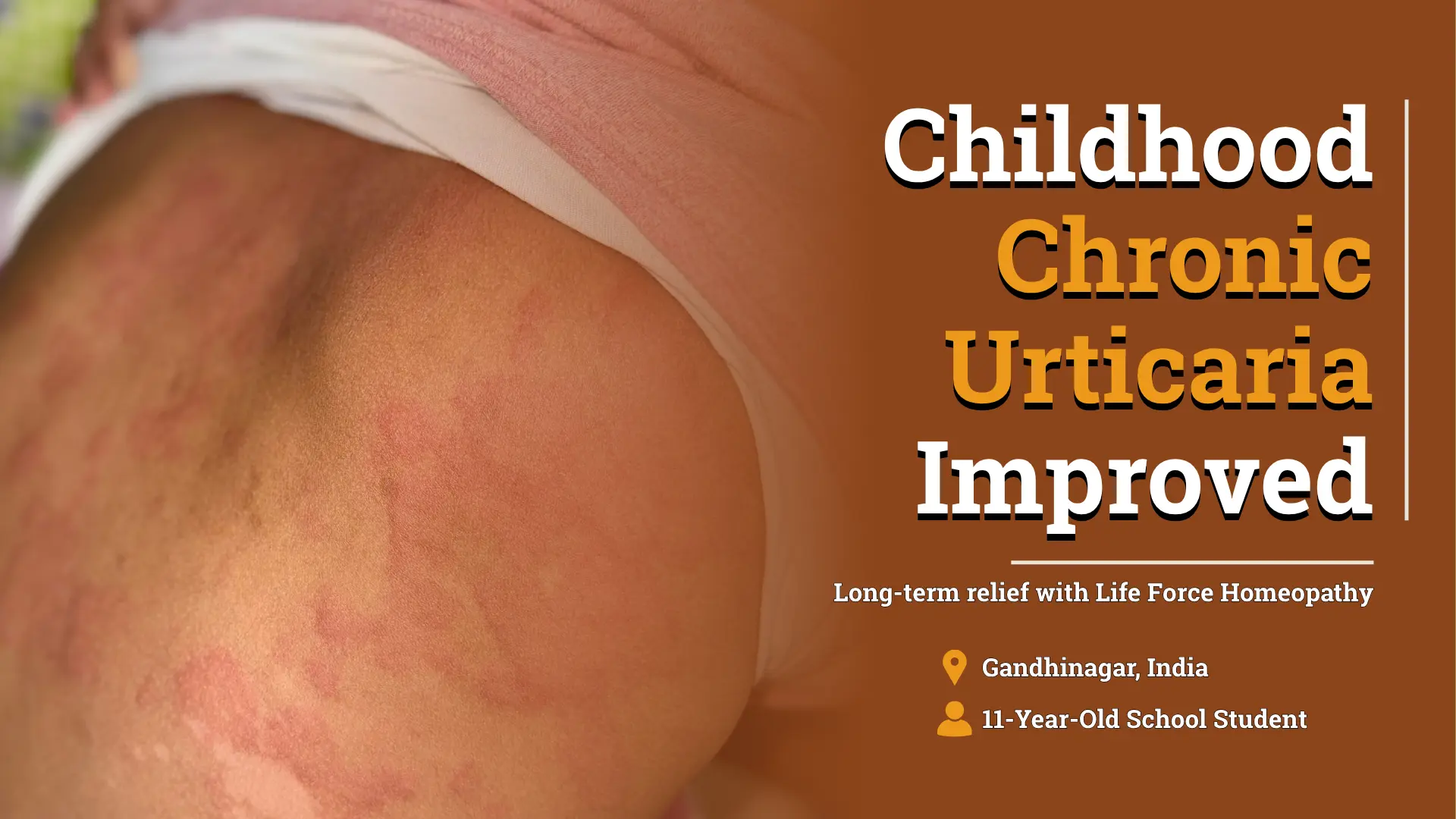
Ms.SSI, aged 32 years (Patient ID:46241), a school teacher by profession, visited Life Force Homeopathy Thane branch on 21st September 2021 seeking treatment for her chronic urticaria, for which she had been suffering for around 3 years. Her Urticaria would exacerbate during the rainy season. Her symptoms were small, red, papular eruptions with pruritic pain. The locations of Urticaria would be mainly on the back and abdomen. The symptoms were small red spots with pricking pain and episodes of hives, mainly on the abdomen, back, and occasionally other areas. The severity ranged from mild to moderate. The triggers included rainy weather, exposure to certain fabrics, beach sand, artificial jewelry, and exposure to gulal (colored powder). Her IgE levels were high, around 627.6 IU/ml, dated 21/08/2021. She had been treated with Antihistamines such as Teczineand Elina. Still, when she approached Life Force Homeopathy, she had stopped all treatment since nothing was helping her to treat her condition completely.
She occasionally took Allegra 120 mg as needed (twice a month). The other medical conditions she had were mild dysmenorrhea, cramps during menstruation, and she was anemic, her Hb levels were around 10.9 g/dL
Her case was taken in detail, specific blood investigations were advised, and dietary guidelines were suggested. Dr. Rajesh Shah studied the case in detail and prescribed medicines.
Follow-ups:
First follow-up:
On 26th November 2021, the frequency of Urticaria episodes was reduced to two times a week, the severity was lower, the duration of episodes was reduced, and there was no need to take the antihistamine.
Living with a Chronic Condition? Get Expert Guidance.
Talk to Dr. Rajesh Shah — 40+ years of experience in managing chronic conditions with a personalized, long-term approach.
Second follow-up:
By 29th January 2022, further positive changes were noted in her care; she didn’t experience any major episodes of Urticaria, though she reported mild itching due to dry skin, so necessary skin care tips were explained to the patient.
Third follow-up:
On 8th November 2022, her complaints improved by 90%, with her reporting only 1 episode of Urticaria and no need to take the antihistamine.
Fourth follow-up:
After this follow-up, she didn’t give feedback for 6 months. Post 6 months of the gap of the treatment, she experienced a relapse of her complaints, wherein she experienced Urticaria episodes daily with mild itching; however, there was no need to take an antihistamine. She experienced urticarial rashes on her abdomen and back. Her complaints were associated with the rainy season; she had a history of Urticaria being triggered during the rainy season. She restarted the treatment on 6th July 2023.
Fifth follow-up:
By 2nd December 2023, her complaints had decreased, with only 1 episode of beach exposure, during which she took Allegra once.
Sixth follow-up:
In February 2024, the patient reported two episodes of Urticaria triggered by exposure to some chemicals. The hives were better by 70%, and the two episodes occurred after exposure to gulal and wearing artificial jewelry on her wedding day, for which she took the antihistamine.
Final follow-up:
She continued to get better, and in her recent feedback dated 1st July 2024, she reported she is 100% better, with no significant episodes of Urticaria, and that the last antihistamine she took was in February 2024.
Conclusion:
Over three years, this case study highlights fluctuations in her symptoms, responses to Homeopathic treatment, and management strategies. This case underscores the importance of personalized treatment for such chronic, deep-seated allergic conditions, focusing on symptom management, trigger avoidance, and patient education to achieve positive outcomes.