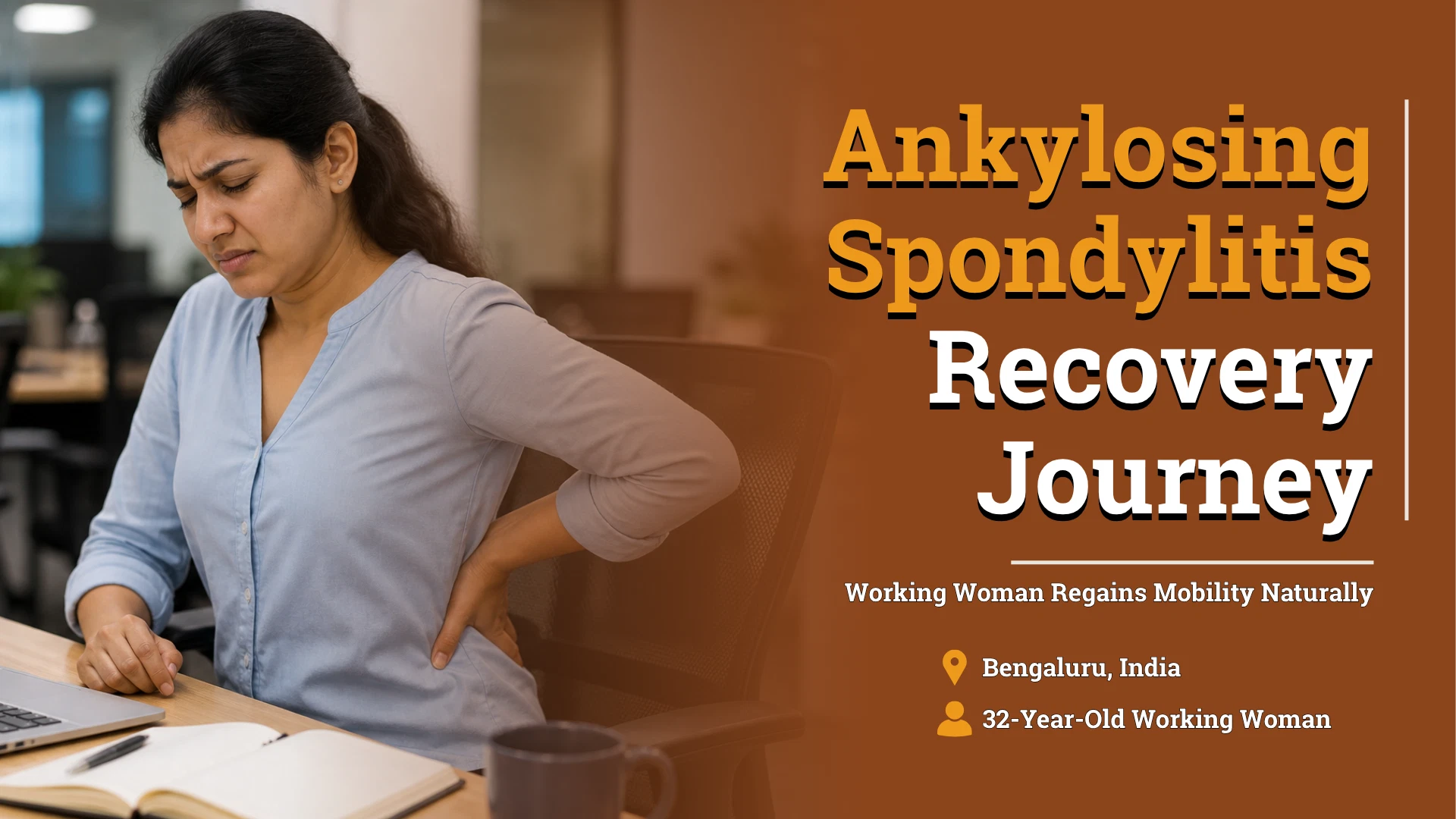



A 42-year-old working professional had been living with ankylosing spondylitis for nearly 15 years, experiencing lower back pain, stiffness, and discomfort affecting sitting, travelling, and work. After beginning individualized homeopathic treatment and regular follow-ups, he reported gradual improvement in pain, stiffness, flexibility, and daily comfort. At the eight-month follow-up, approximately 70% overall improvement was documented, with only mild, occasional lower back symptoms remaining.
Table of Contents
- 01. Hero Introduction
- 02. Patient Details
- 03. Living With a Long-Standing Condition
- 04. Understanding Ankylosing Spondylitis
- 05. His Symptoms at the First Consultation
- 06. Understanding His Overall Health
- 07. How His Treatment Plan Was Planned
- 08. Was There an Ankylosing Spondylitis Test?
- 09. Ready to Know Your Recovery Chances?
- 10. Follow-Up Journey
- 11. What Changed Over Eight Months?
- 12. Ankylosing Spondylitis Specialist Near Me: What Should Patients Look For?
- 13. Can Ankylosing Spondylitis Be Cured?
- 14. Outcome
- 15. Key Learnings From This Case
- 16. Doctor's Perspective
- 17. Conclusion
Hero Introduction
After living with ankylosing spondylitis for nearly 15 years, Mr. A.H., a male patient, had become accustomed to recurring lower back pain, stiffness, and restricted flexibility. His symptoms had gradually become more troublesome over the previous three months, affecting prolonged sitting, travelling, and his professional routine.
He sought ankylosing spondylitis homeopathy treatment through an online consultation with Life Force Homeopathy's Aundh branch in Pune. At the time of consultation, he reported lower back pain radiating alternately to both hips, stiffness involving the neck and upper back, and morning discomfort that was worse after periods of rest.
Over eight months of documented follow-up, he reported gradual changes in pain, stiffness, flexibility, and day-to-day comfort, with approximately 70% overall improvement recorded at the latest follow-up.
Patient Details
| Parameter | Details |
| Patient | Mr. A.H. |
| Patient ID | 58583 |
| Gender | Male |
| Treatment Mode | Online Consultation |
| Centre | Life Force Homeopathy, Aundh Branch, Pune |
| First Consultation | 4 October 2025 |
| Diagnosis | Ankylosing Spondylitis |
| HLA-B27 | Positive |
| Duration | Approximately 15 years |
| Treating Physician | Dr. Rajesh Shah, M.D. (Hom.) |
Living With a Long-Standing Condition
Mr. A.H. had been living with ankylosing spondylitis for almost 15 years. During the earlier years, he had used conventional treatment and physiotherapy, which provided temporary relief. Over time, however, the symptoms began returning more frequently and became increasingly persistent.
His main concerns were ankylosing spondylitis symptoms involving the lower back, hips, neck, shoulders, and upper back. Morning stiffness and discomfort after rest made certain routine activities more difficult.
Prolonged sitting, travelling, and maintaining his regular work schedule had gradually become uncomfortable. He was therefore looking for a long-term management approach that could be followed through regular online consultations.
Understanding Ankylosing Spondylitis
Ankylosing spondylitis is a chronic inflammatory condition that primarily affects the spine and sacroiliac joints. It can cause pain and stiffness in the lower back and hips, particularly after periods of rest.
One of the commonly discussed ankylosing spondylitis early symptoms is morning stiffness that improves with movement. Some people may also experience discomfort in other joints or areas around the spine.
The course varies between individuals. Symptoms can fluctuate, and the condition requires appropriate medical assessment and long-term monitoring.
His Symptoms at the First Consultation
At the time of his online consultation, Mr. A.H. reported:
- Persistent lower back pain radiating alternately to both hips
- Stiffness in the neck, shoulders, and upper back
- Morning stiffness and pain after rest
- Aggravation during weather changes
- Temporary relief from stretching and hot fomentation
- Previous right knee pain and upper back pain dating back to 2010
- Positive HLA-B27 status
His ankylosing spondylitis back pain was particularly relevant to his ability to sit for long periods and travel comfortably.
The combination of longstanding symptoms and a recent increase in discomfort formed the basis for a detailed case assessment.
Understanding His Overall Health
The online consultation covered his physical constitution, lifestyle, food preferences, emotional characteristics, and disease history.
Mr. A.H. was lean, tall, and active. He had a strong liking for spicy food and enjoyed travelling and music. He described himself as confident, extroverted, disciplined, and highly work-oriented.
He also experienced anxiety around professional deadlines and targets. He could become irritated by injustice and indiscipline.
These characteristics were considered alongside the physical symptoms while developing the treatment plan.
How His Treatment Plan Was Planned
Dr. Rajesh Shah reviewed the chronicity of the condition, the pattern of stiffness and pain, HLA-B27 positivity, aggravating and relieving factors, and the patient's broader characteristics.
Based on the totality of symptoms, MEDORRHINUM 30C was prescribed as the constitutional homeopathic medicine.
The treatment plan included regular online consultations approximately every two months, monitoring of pain and stiffness, assessment of mobility, and attention to factors that appeared to aggravate his symptoms.
Patients exploring ankylosing spondylitis homeopathy should understand that treatment suitability can differ according to the individual's symptoms, diagnosis, medical history, and ongoing conventional care.
Was There an Ankylosing Spondylitis Test?
There is no single test that establishes ankylosing spondylitis in every patient. Doctors generally consider the clinical history, physical examination, imaging findings, and laboratory investigations together.
An ankylosing spondylitis test may include blood testing for HLA-B27 in appropriate patients, although being HLA-B27 positive does not by itself confirm the diagnosis.
In this case, the patient was documented as HLA-B27 positive, alongside a longstanding clinical diagnosis of ankylosing spondylitis.
Ready to Know Your Recovery Chances?
Discover your recovery chances from chronic diseases in percentage with Life Force Homeopathy's FREE Assessment Test. Get a personalized evaluation from our experienced doctors.
Start Your FREE Assessment Test →Follow-Up Journey
After 2 Months | 18 November 2025
At the first follow-up, the patient reported early changes in his symptoms. Upper back pain had improved by approximately 70%, while lower back pain had reduced by around 20–30%.
Morning stiffness was still present but was milder than before.
After 4 Months | 1 January 2026
By the fourth month, episodes of pain had become less frequent and less intense.
He experienced some aggravation after prolonged car and bike travel, but the symptoms settled more quickly. He also reported that routine activities had become easier.
After 6 Months | 22 March 2026
Further improvement was reported in neck stiffness, shoulder discomfort, and morning pain, with approximately 30% additional relief.
The patient described feeling more flexible and comfortable while carrying out his daily activities.
After 8 Months | 5 May 2026
At the latest documented follow-up, Mr. A.H. reported approximately 70% overall improvement.
Only mild, occasional lower back stiffness and pain remained. These episodes generally lasted around 5–10 minutes per day and did not significantly interfere with his routine.
He also reported better comfort while sitting for prolonged periods, travelling, and managing his professional responsibilities.
What Changed Over Eight Months?
The improvement was gradual rather than immediate. The earliest follow-up showed a substantial reduction in upper back pain, while lower back symptoms improved more gradually.
As the follow-ups progressed, pain episodes became less frequent and less intense. Neck and shoulder stiffness also reduced, while the patient reported greater flexibility during routine activities.
By the eighth month, the remaining symptoms were described as mild and short-lasting, with approximately 70% overall improvement documented.
Ankylosing Spondylitis Specialist Near Me: What Should Patients Look For?
People searching for an ankylosing spondylitis specialist near me should look for a qualified medical professional experienced in evaluating inflammatory spinal conditions.
An ankylosing spondylitis doctor may assess symptoms, physical findings, medical history, imaging, and laboratory results before discussing an appropriate management plan.
For patients considering complementary approaches, the treating medical team should remain informed about all medicines and therapies being used.
Living with a Ankylosing Spondylitis?
Receive a personalized treatment plan from our experienced homeopathic doctors. Trusted by over 100,000+ patients across 180+ countries for safe, natural and long term management of chronic diseases.
Can Ankylosing Spondylitis Be Cured?
Patients often search ankylosing spondylitis can be cured when they are dealing with persistent pain and stiffness.
Ankylosing spondylitis is a chronic inflammatory condition, and there is no single treatment that can be presented as a guaranteed cure. The goals of management generally include controlling symptoms, maintaining mobility, monitoring disease activity, and supporting day-to-day functioning.
Individual responses can vary, and long-term medical follow-up is important.
Outcome
After eight months of regular follow-up, the case documented:
- Approximately 70% overall improvement
- Reduced lower back pain and stiffness
- Significant improvement in upper back pain
- Reduced neck and shoulder discomfort
- Better flexibility and mobility
- Improved tolerance for prolonged sitting
- Greater comfort while travelling
- Better ability to manage professional and daily activities
- Remaining lower back symptoms limited to mild, short episodes
The patient continued under follow-up after the latest documented consultation.
Key Learnings From This Case
This patient's journey highlights several aspects of managing a long-standing inflammatory spinal condition:
- Symptoms can fluctuate over many years.
- Morning stiffness and pain after rest were important features in this case.
- Improvement in different symptom areas occurred at different stages.
- Prolonged sitting and travel were important functional triggers for this patient.
- Regular follow-up helped track changes in pain, stiffness, and mobility.
- The patient's response developed progressively over several months.
Doctor's Perspective
In long-standing ankylosing spondylitis, the patient's symptom pattern, functional limitations, medical history, and investigations all contribute to understanding the case. Regular follow-up can help document changes in pain, stiffness, mobility, and daily functioning over time.
For patients researching an ankylosing spondylitis homeopathy doctor, it is important to discuss their complete medical history and existing treatment before beginning any complementary approach.
Conclusion
Mr. A.H. had been living with ankylosing spondylitis for approximately 15 years when increasing pain and stiffness began interfering more noticeably with sitting, travelling, and professional activities.
After beginning the treatment plan in October 2025, he reported gradual improvement across several areas. Upper back pain improved substantially during the first follow-up, while lower back pain, neck stiffness, shoulder discomfort, and morning stiffness improved progressively over subsequent months.
At the eight-month follow-up, approximately 70% overall improvement was documented. Only mild, short-lasting lower back stiffness and pain remained, without significant interference with his daily routine.
This case illustrates one patient's experience with long-term symptom management and follow-up. It should not be interpreted as a prediction of outcomes for every person with ankylosing spondylitis.